
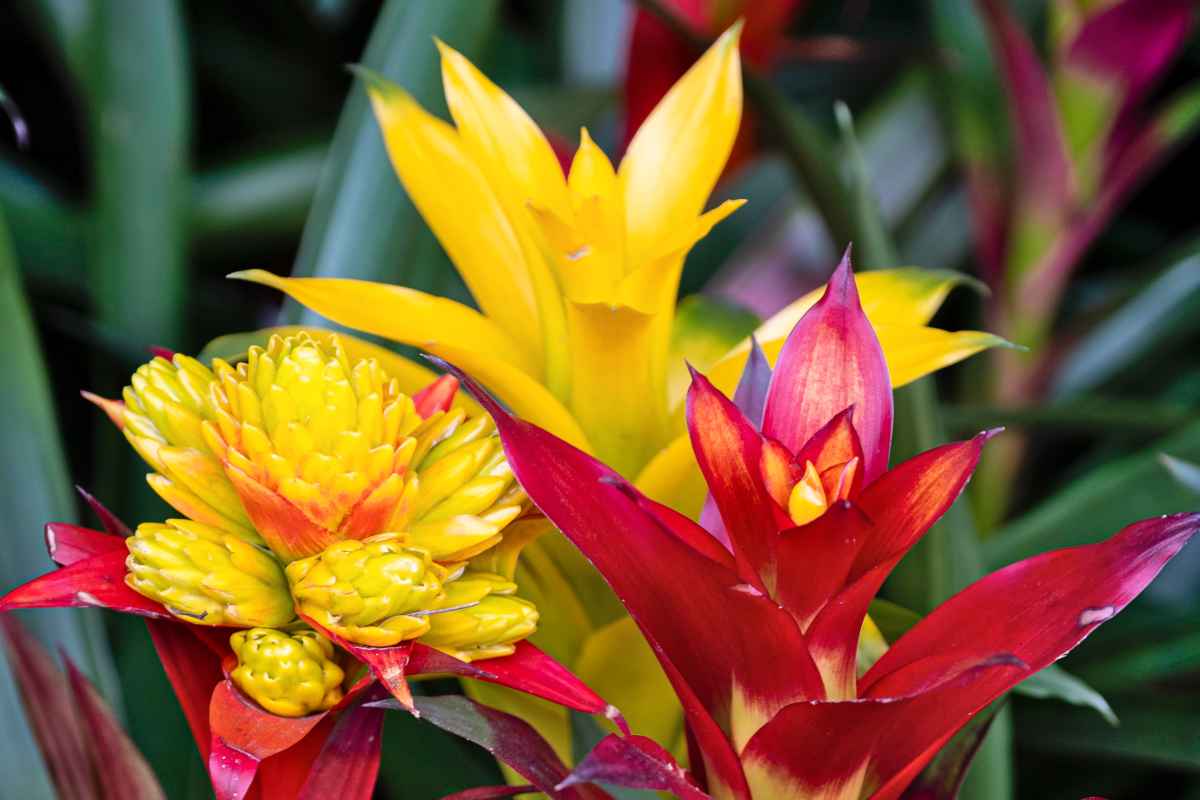
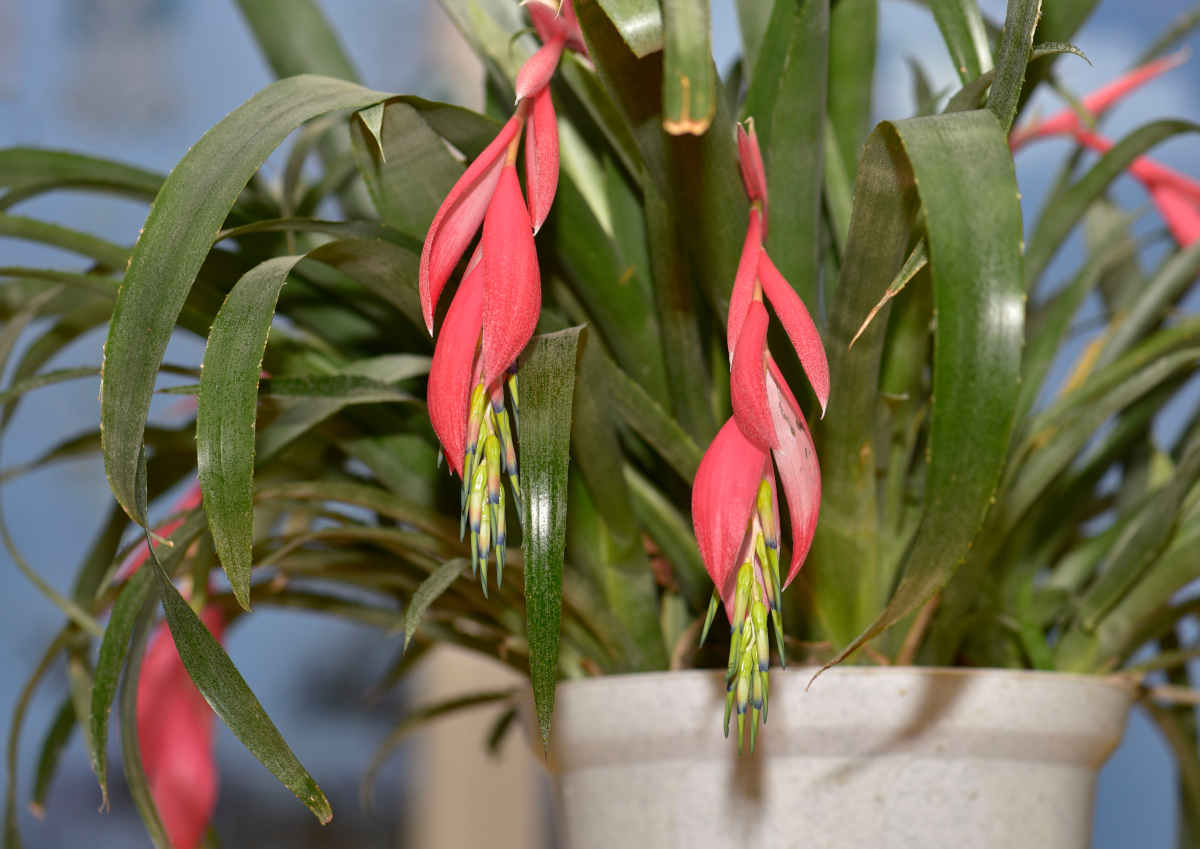
With its amazing colorful bloom girdled with a crown of deep green leaves, Bromelia does every thing it can to catch your eye. This exotic beauty comes in many shapes and varieties, and is often the most original indoor plant of our homes.
Native to Central and South America, belonging to the Bromeliaceae family, bromelia is an epiphyte plant. Just like orchids and Tillandsia, it grows on trees where aerial roots recover the water and nutrients it needs from runoff rainwater.
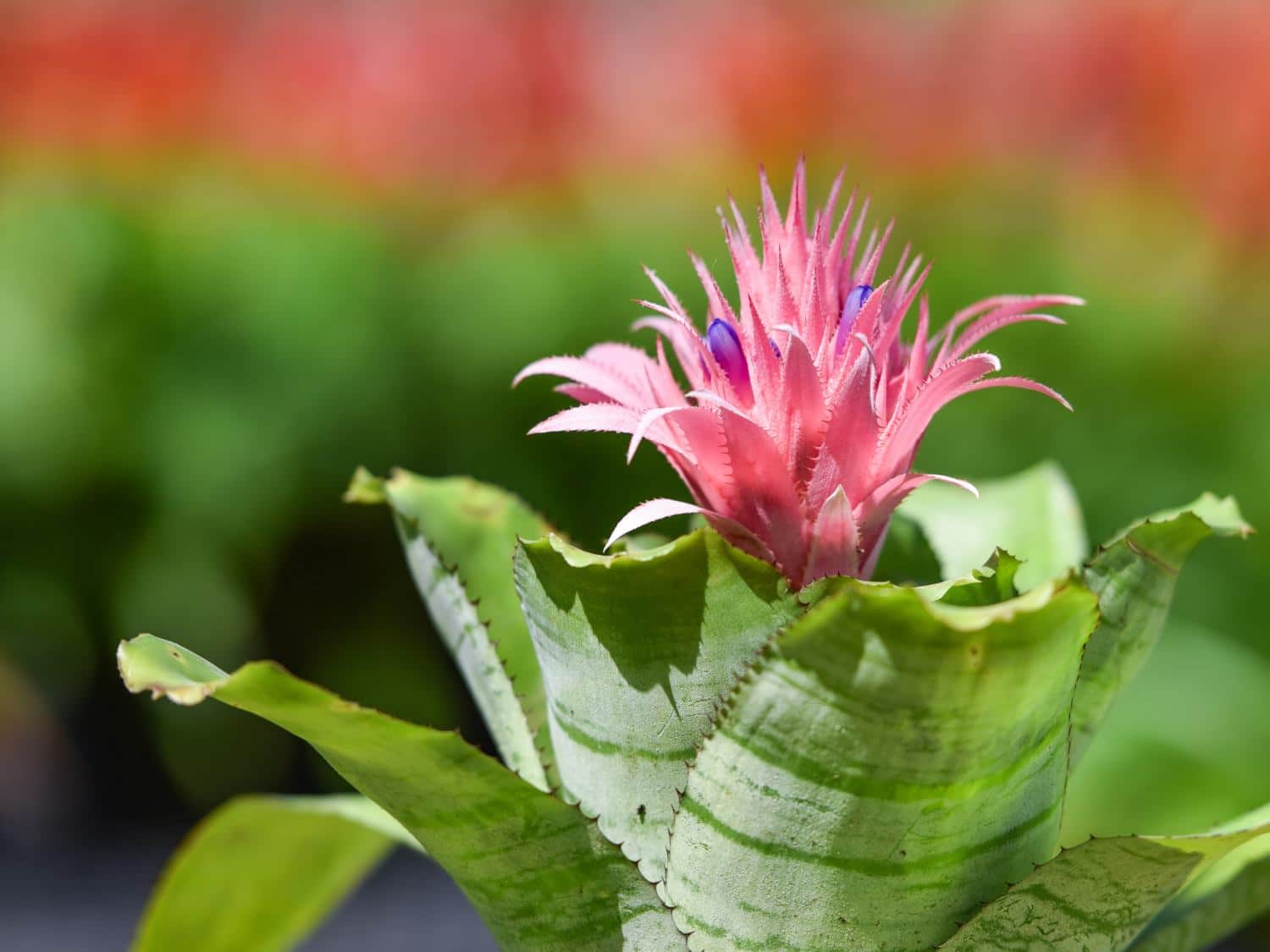
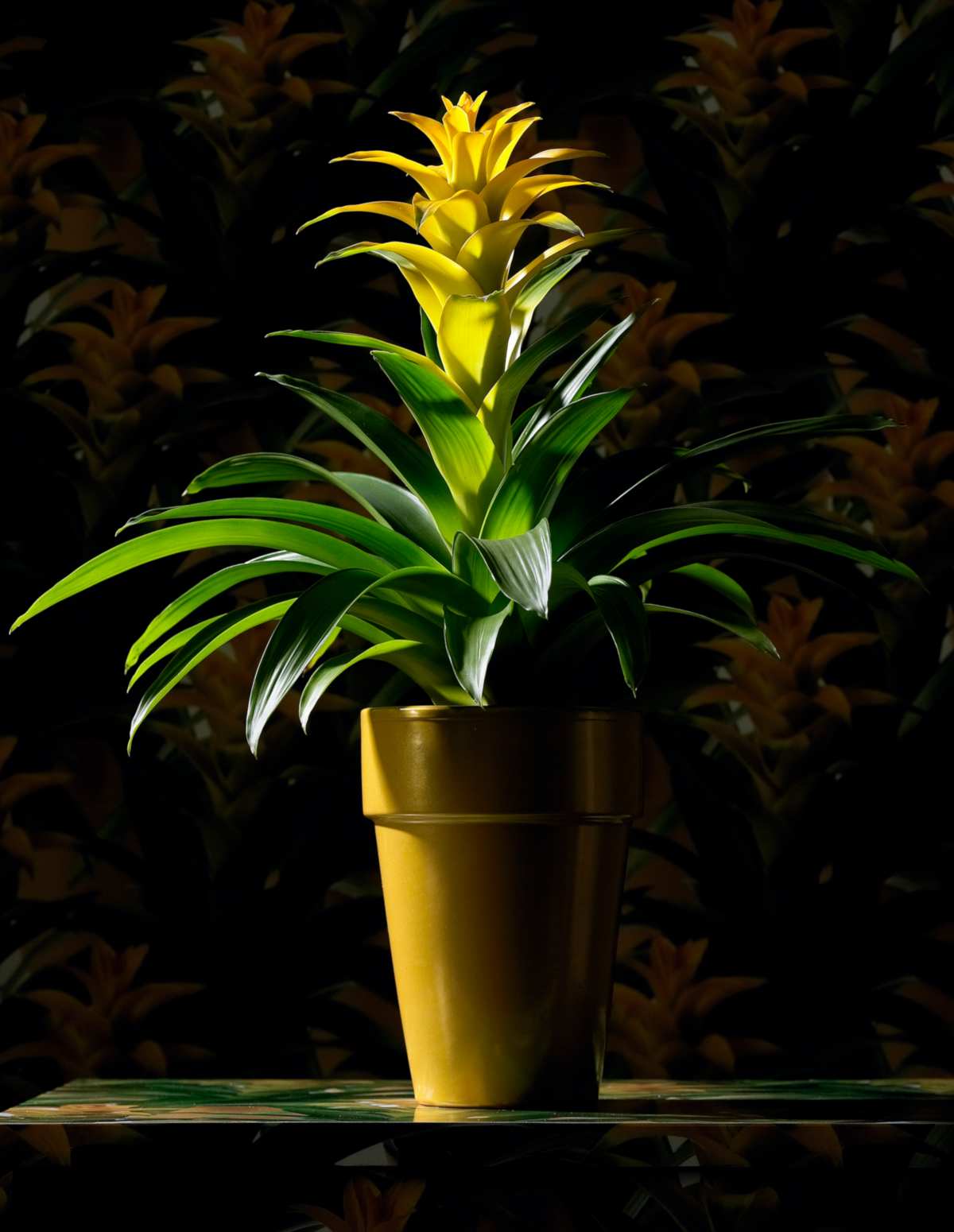
Over fifty different species exist, each with a surprising combination of shape, size, and color: red, yellow, orange, purple, double-colored… The most commonly available for use as indoor plants are Guzmania which bears star-shaped flowers and leaves; Vriesea which has a panicle-shaped flower; and Aechmea fasciata which comes in a surprisingly radiant pink color.
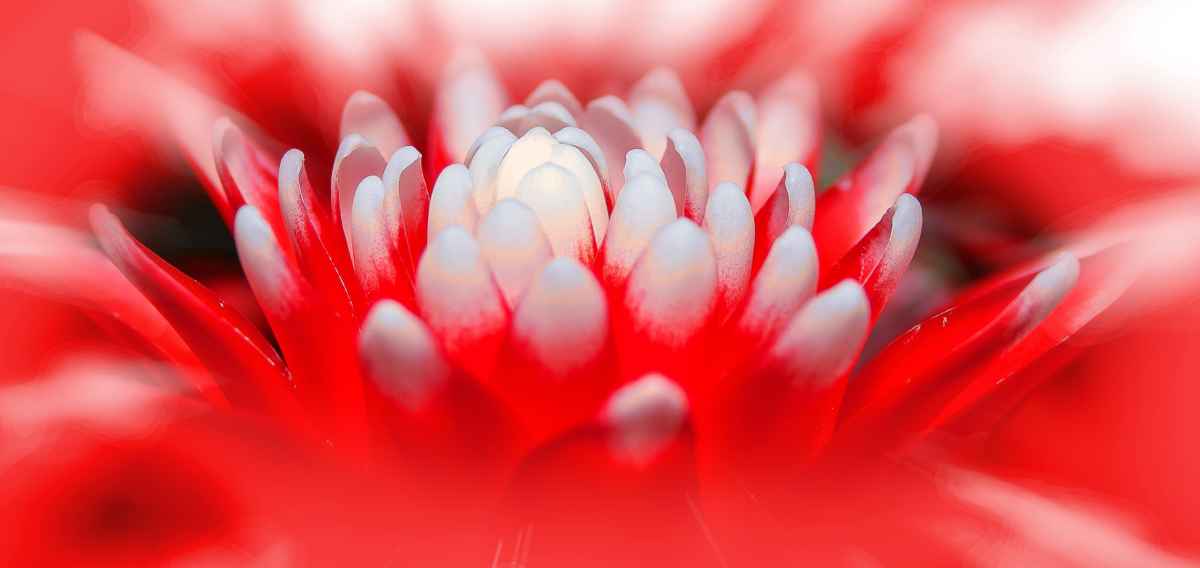
What they all have in common:
It must be said: whether it’s the sole plant in a room or clustered together with other brightly-colored varieties, bromelia definitely sets the tone in the dwelling.
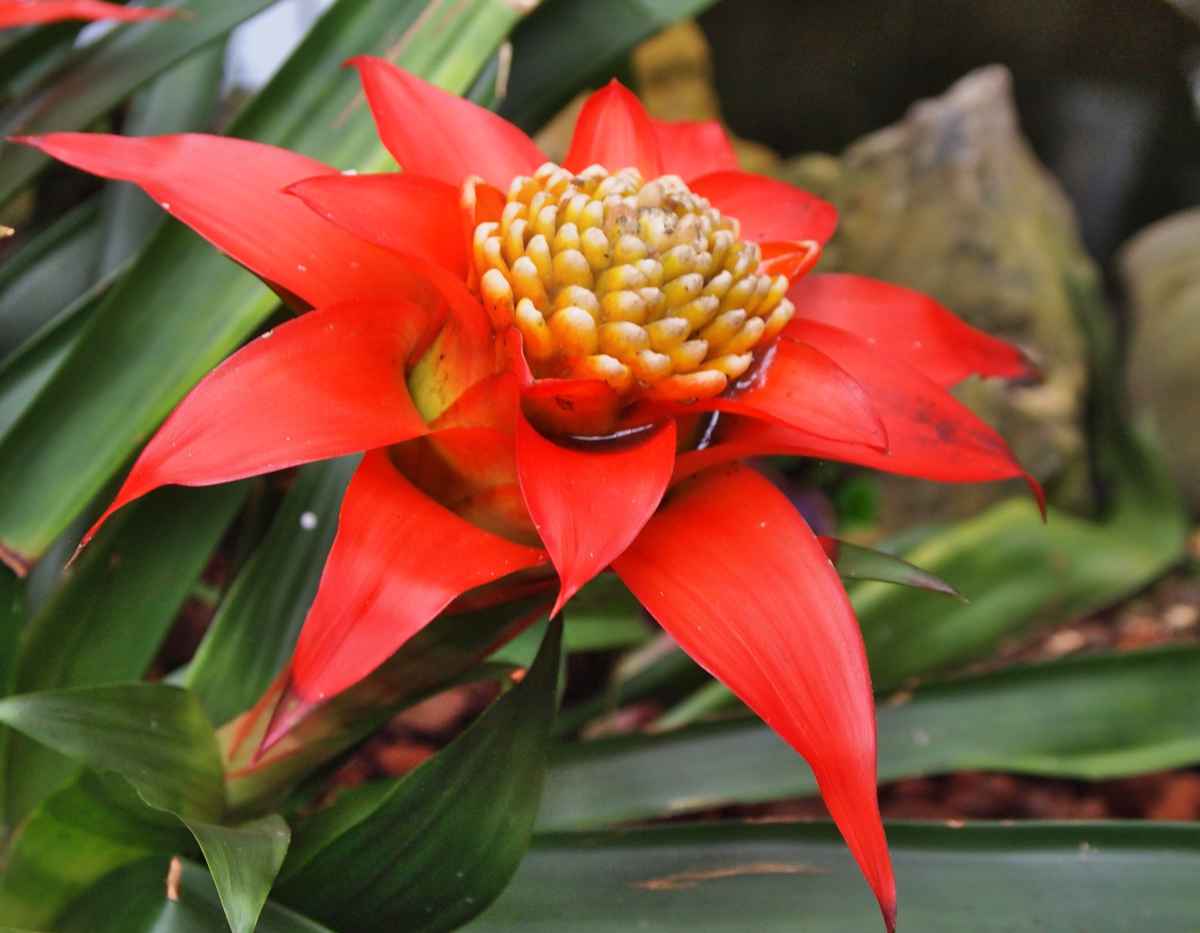 Resilient and easy-going, bromelia requires light. Place it in a very well-lit location but without any direct sun. Like orchids, it has an aversion to standing water which makes its roots rot.
Water the center of the rosette over a sink, letting it drip out entirely before setting the pot back in place.
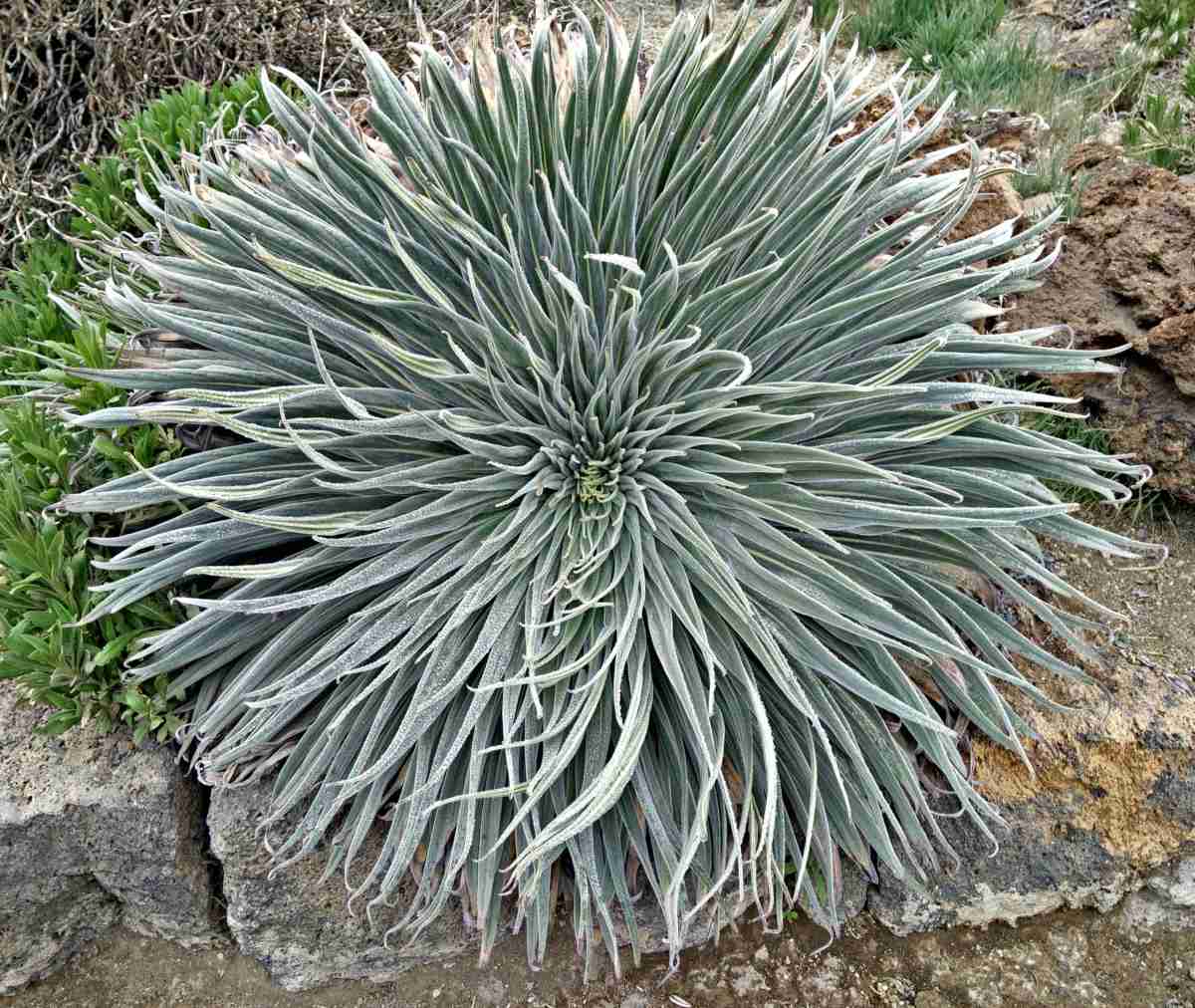 Mist the leaves regularly with a hand sprayer to recreate the moisture normally found in its natural habitat.
Use soft water, either rainwater or filtered water.
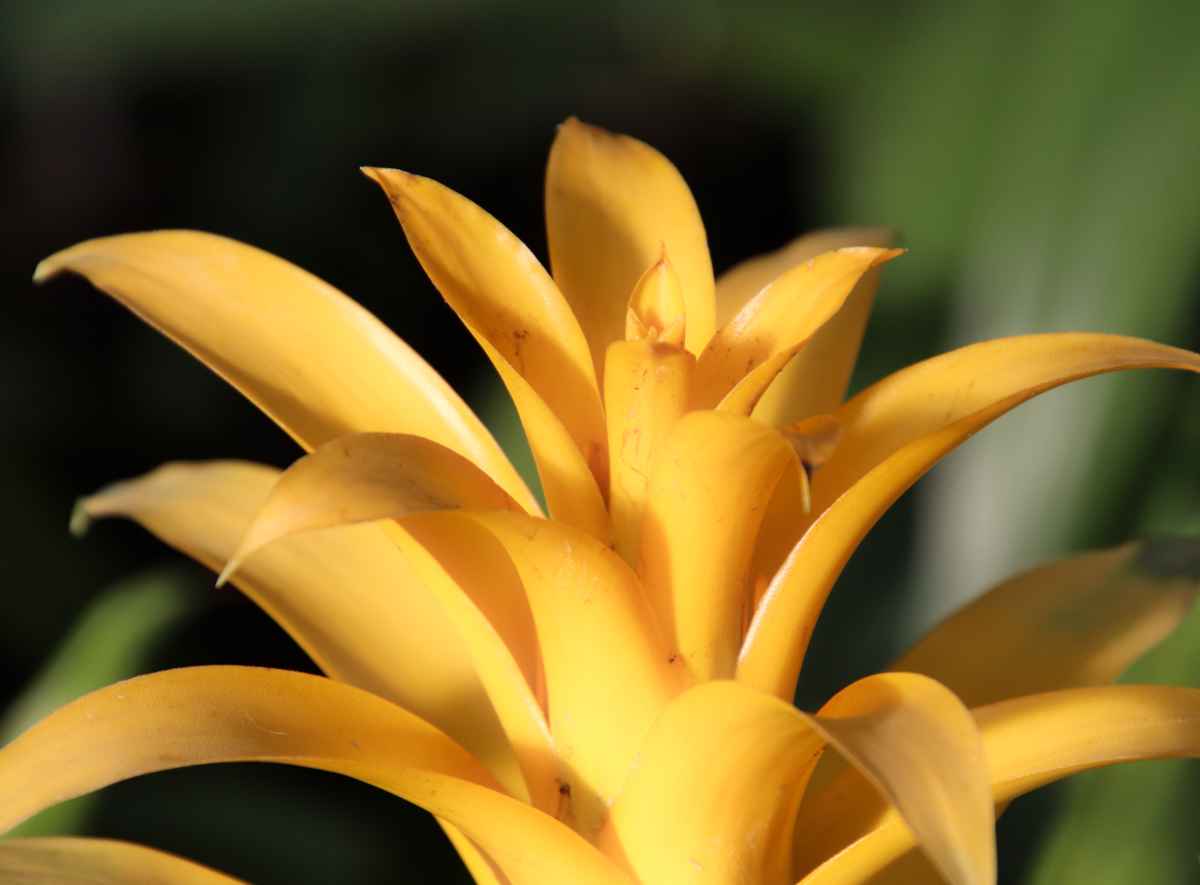 A bromelia plant has the uncommon characteristic of only producing a single flower, but the bloom lasts for three to six months.
Such a long-lasting flower is rare in the plant kingdom.
After the blooming, cut the dead flower out and keep the mother plant for its leafage.
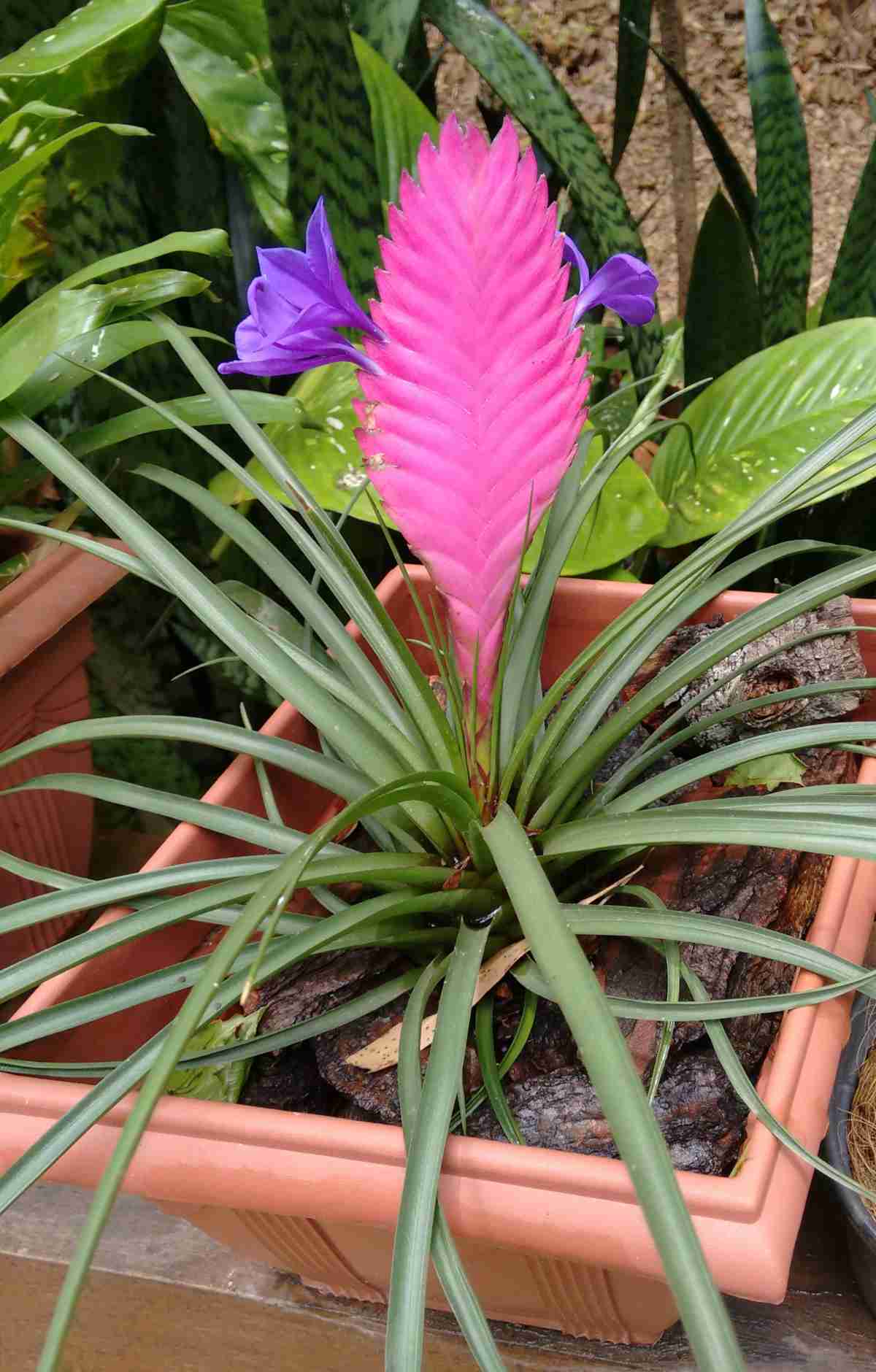 In time, side shoots start popping up. You can detach one of them and transplant it in a well-draining blend of soil mix and peat (orchid flower potting mix).
A year later, you may have the chance of seeing a new flower form on your young bromelia!
Laure Hamann
A bromelia flower lasts for three to six months, which is unusually long-lasting in the plant kingdom. After the bloom dies, you can cut out the dead flower and keep the mother plant for its decorative foliage.
Bromelia requires a very well-lit location but should not be placed in direct sun. This mimics its natural habitat as an epiphyte that grows on trees in dappled forest light.
Water the center of the rosette by pouring water over a sink and letting it drip out entirely before replacing the pot. Additionally, mist the leaves regularly with a hand sprayer using soft water like rainwater or filtered water to recreate its natural moisture conditions.
After the flower blooms and fades, side shoots will eventually pop up from the mother plant. You can detach one of these shoots and transplant it into a well-draining soil mix of potting soil and peat, ideally using orchid flower potting mix, and a new flower may form about a year later.
The main differences are in their flower and leaf shapes: Guzmania bears star-shaped flowers and leaves, Vriesea has panicle-shaped flowers, and Aechmea fasciata is distinguished by its surprisingly radiant pink color. However, all share the common characteristic of a brightly-colored inflorescence that shoots out from a wreath of leaves.
Can I repot Bromelias in ordinary top soil from the garden centre?
Hello Barry, yes but the key is drainage. These plants hate soggy soil. It’s important to increase drainage to the point that when pouring water in the plant, the pot “leaks” excess water before you can count to 10. A good way to do this is to add clean sand, pebbles, gravel or bits of bark and such in your soil mix.
If you’re planting in the ground, not in a pot, a good way forward in addition to the tips above is to mound the soil up where you plant it. Excess rain can then drain outwards to the side.