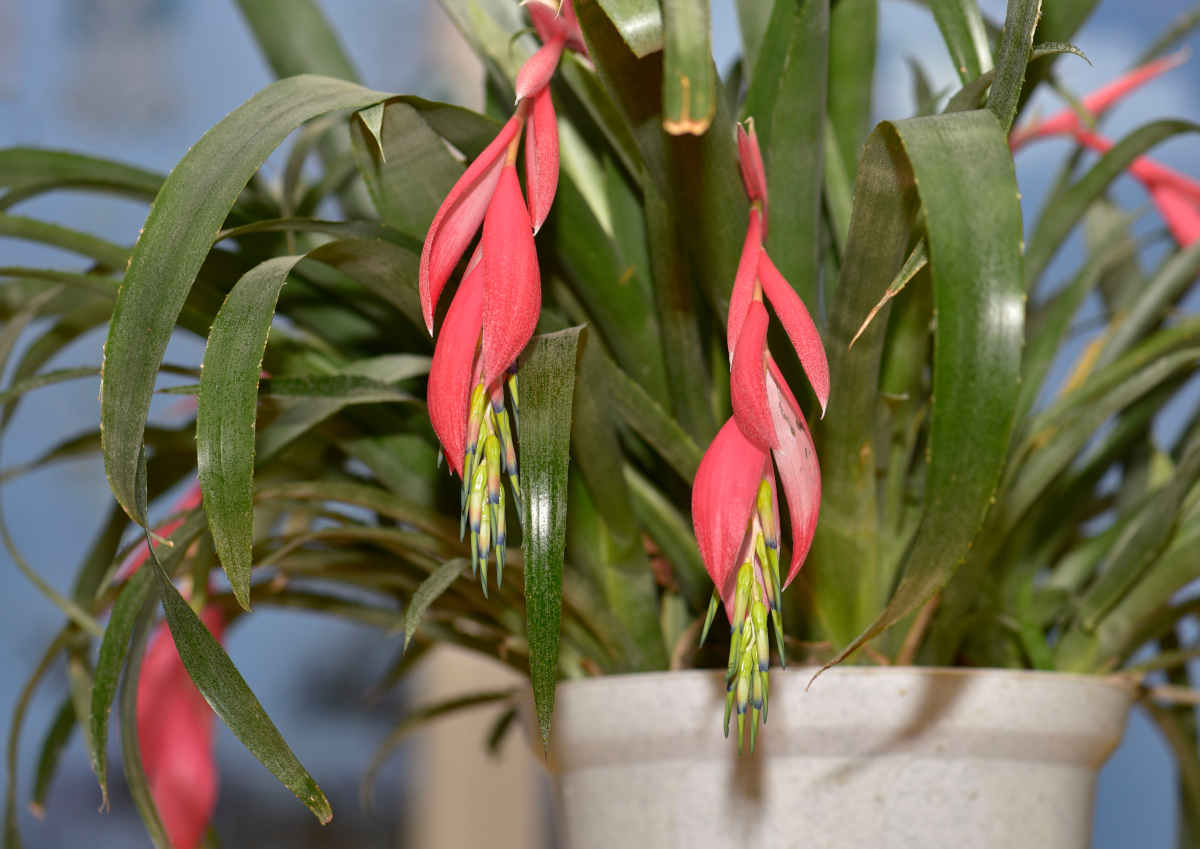
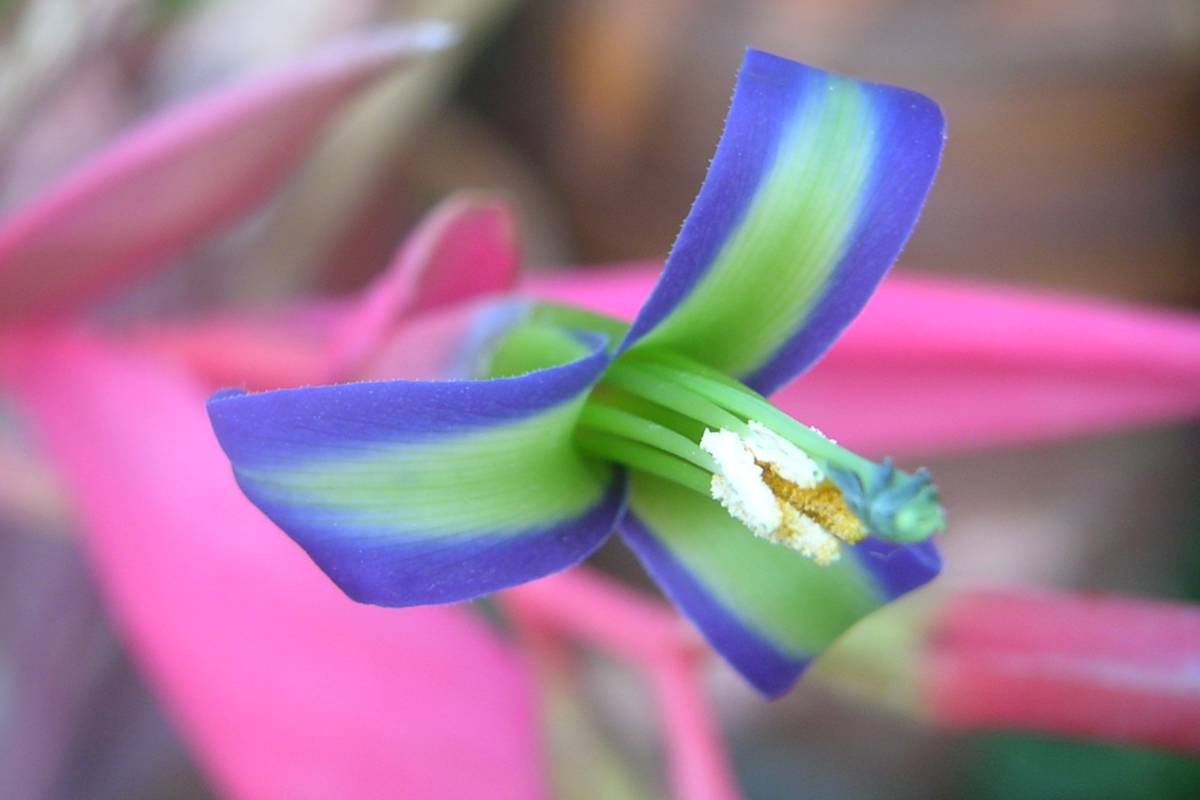
Evergreen leaves arch out of a funnel-shaped rosette, and in late winter or summer come the blooms that make Queen’s tears (Billbergia nutans) worth a windowsill. A bromeliad from the tropical forests of Brazil and Argentina, it is grown indoors for leaf and flower alike, provided the dry air of heated rooms is countered by regular spraying.
Billbergia nutans at a glance
Name
Billbergia nutans
Family
Bromeliaceae
Type
indoor plant
Height
12 to 16 inches (30 to 40 cm) indoors
Exposure
light but without direct light
Foliage
evergreen
Flowering
end of winter or summer
The name is a homage to Swedish botanist Gustav Johan Billberg. Native to South America, more specifically Brazil and Argentina, it’s grown for its leafage and superb blooming.
Planting and re-potting billbergia
Billbergia is a plant that requires soil that is sufficiently rich and well-drained to grow well. Special Bromeliaceae soil mix seems to be the best solution for your Queen’s tears.
Billbergia never grows far-reaching roots, which is why a small pot, about 4 inches (10 cm), is more than enough.
You will only need to repot when you want to split new shoots from the main plant.
Upon repotting your Billbergia
If you plan to repot your billbergia and separate new shoots from the mother plant.
Grown as much for its leafage as its blooming
Billbergia roots hate having too much water.
Double-check that the new pot has a hole in the bottom. Increase drainage with a layer of gravel or clay pebbles along the bottom of the pot, to make water flow through more easily.
Good soil mix is needed. Usually, stores offer special Bromeliaceae potting soil for sale, you can use that if possible.
The plant, when it lives indoors, needs soil mix because that is the only source for the nutrients it needs.
Low but constant moisture levels must be maintained, which you can ensure if you spray the leaves often.
You must rest the pot on a bed of gravel, rocks or clay marbles doused in water.
Best exposure for a billbergia plant
Billbergia requires temperatures that oscillate between 65 and 74°F (18 to 24°C) and never drop below 57°F (-13°C).
The temperature of a house or apartment is thus ideal for growing billbergia.
The best location for your billbergia is any spot where there isn’t any direct sun on the plant.
The billbergia can’t stand the sun’s rays when they touch its leaves directly.
So the plant rejoices in adequate light but not direct sun.
Absolutely avoid setting it near heat sources such as radiators, because moisture is what this tropical plant needs most.
East or West-facing windows are thus usually the best call for your billbergia.
Watering and fertilizing for a Billbergia
Regular but moderate watering is called for because Billbergiadoesn’t usually require a lot of water.
In spring and summer
Keep the soil mix a bit moist and check that water drains properly.
Provide liquid leaf plant fertilizer more or less once a month to extend the blooming to the maximum.
Water from above, ideally with water that is already at room temperature.
It’s ok to let water collect in the little funnel where the leaves meet the stem. This is called the rosette. A couple drops a day are enough.
Take care to dry this vulnerable spot whenever the temperature drops below 65°F (18°C).
To retain a certain moisture level, it is best to put the pot on a bed of clay pebbles wallowing in water.
In fall and winter
Reduce watering and wait for the soil to be thoroughly dry in the surface before watering again.
Stop adding fertilizer.
If the color of the leaves turns pale, it is probably due to a lack of fertilizer.
If the inside leaves turn yellow or brown, it is probably due to too much watering.
Fine webbing between leaves indicates a heavy glasshouse red spider mite infestation; earlier signs are pale stippling or mottling on the upper leaf surface, so check undersides before webbing appears.
Red spider mite thrives in the dry warmth of heated rooms, so misting foliage and raising humidity can help deter it, though such measures alone rarely prevent or cure an established infestation.
Reading the signs on a billbergia
Most billbergia troubles come down to water, light or dry air. Match what you can see on the plant with the likely cause before you change anything.
Reading the signs on a billbergia
What you see
Likely cause
What to do
Leaf colour turns pale
Lack of fertiliser
Give liquid leaf plant fertiliser about once a month in spring and summer
Inside leaves turn yellow or brown
Too much watering
Reduce watering and wait until the soil surface is thoroughly dry
Red spider mite, scale insects, aphids, powdery mildew
The typical indoor plant problems
Treat as you would on any other indoor plant
Leaves suffering where the sun strikes them
Direct sun on the foliage
Move to an east or west-facing window, with light but no direct sun
Plant weakens in a heated room
Dry air, radiators, drafty spots
Spray often and stand the pot on a bed of wet gravel or clay pebbles
Adjust one factor at a time and give the plant a few weeks to respond.
Smart tip about Billbergia
A fabulous indoor plant, billbergia is native to tropical forests and is rendered vulnerable by the dry air in our homes.
Spraying the plant regularly and placing the pot atop a bed of wet gravel will help re-create the plant’s natural habitat.
Image credits (edits Gaspard Lorthiois):
CC BY 2.0: Acer Hwang
Written by Gaspard Lorthiois | Loves helping out, especially when it comes to growing things. Worked in herbal medicine, runs a farm, and dabbles in tech. Master's degree and engineer.