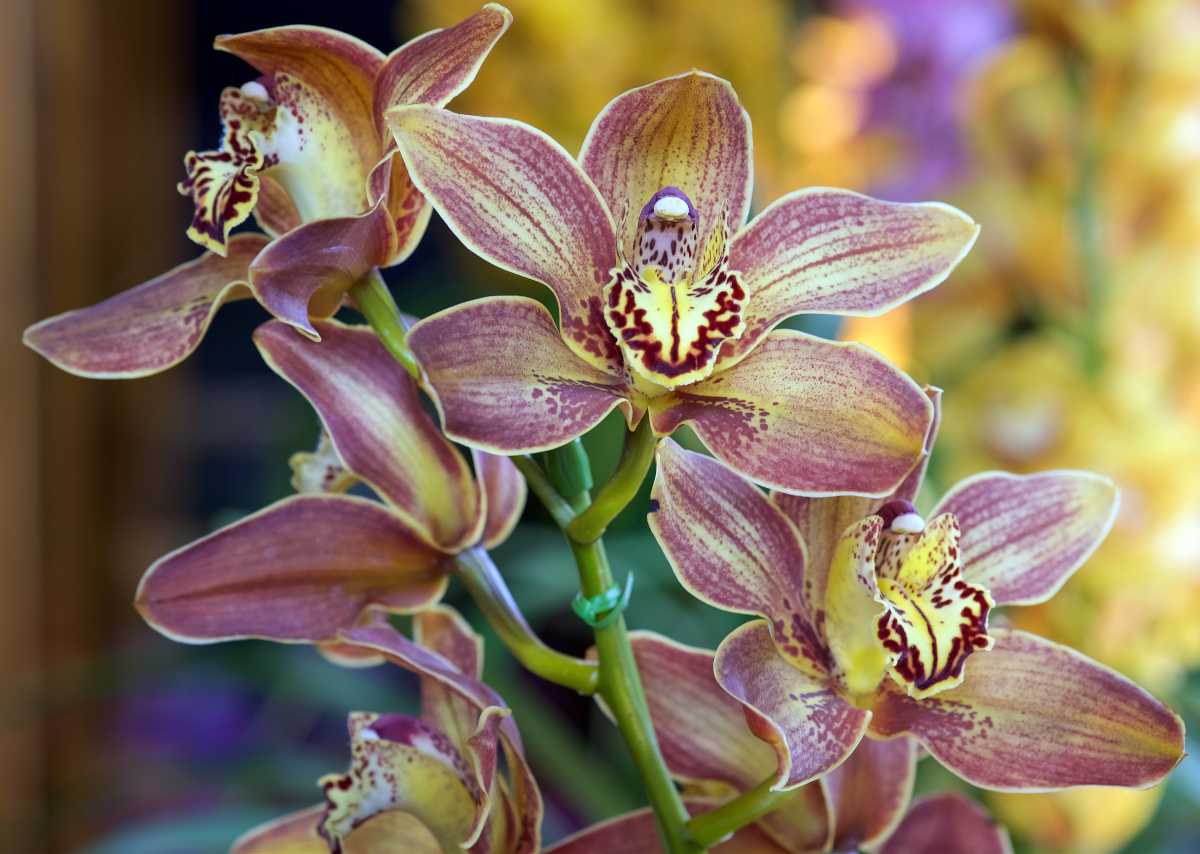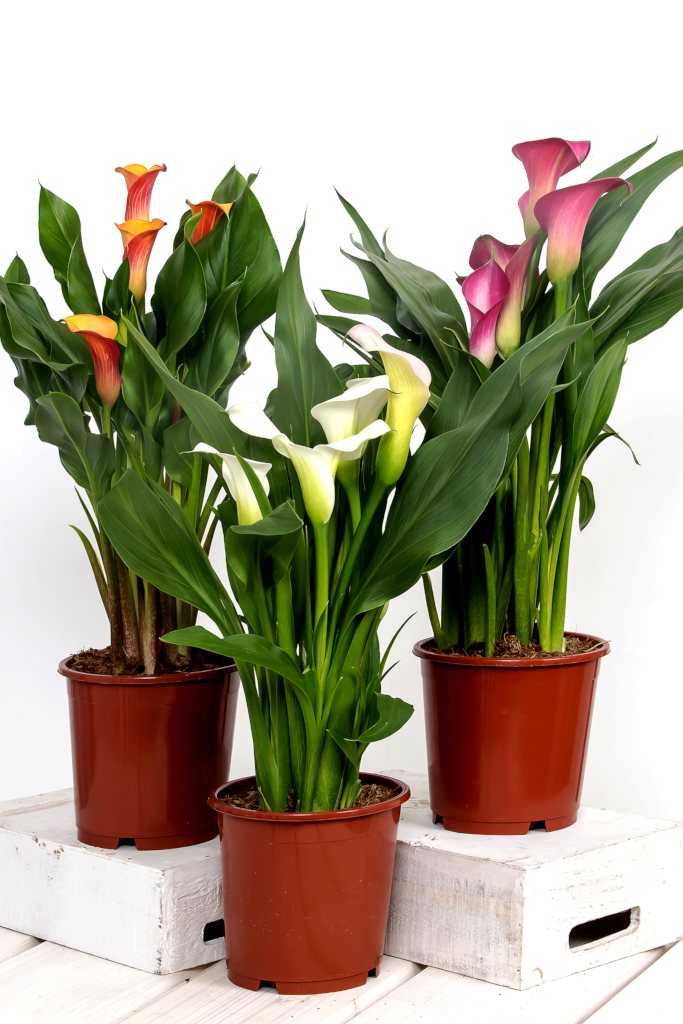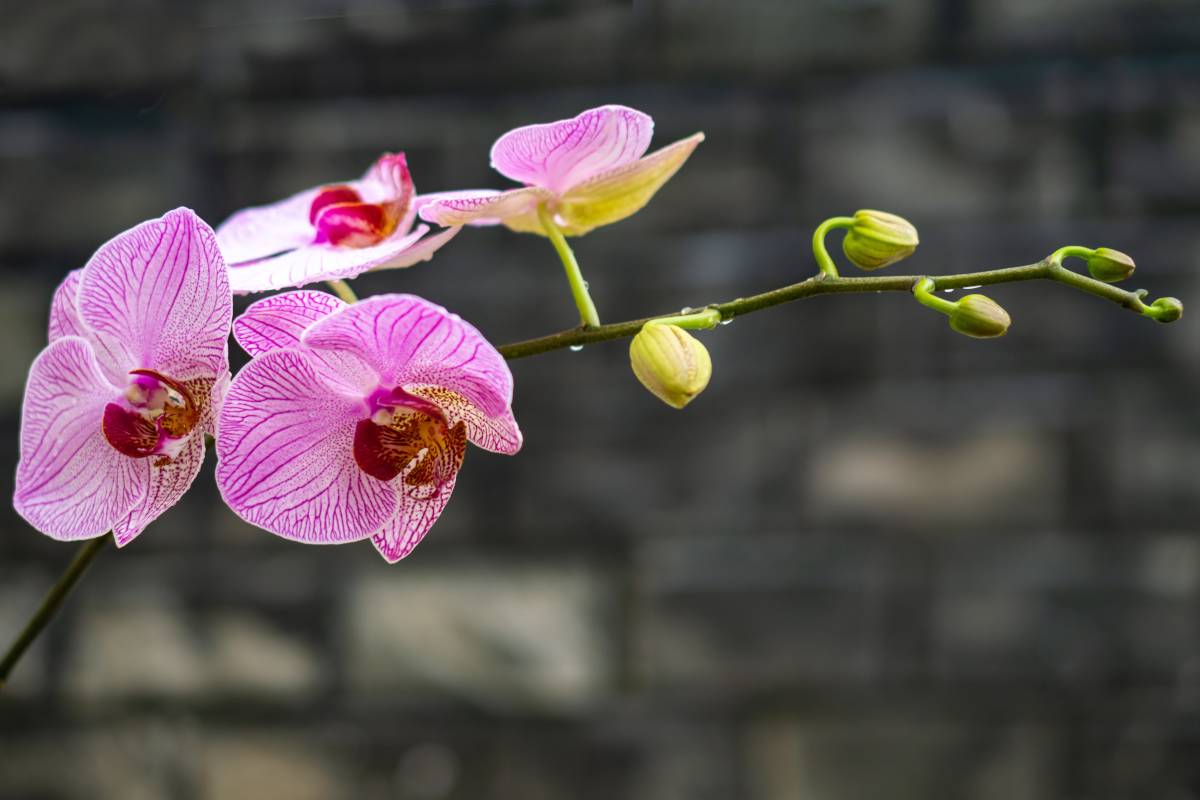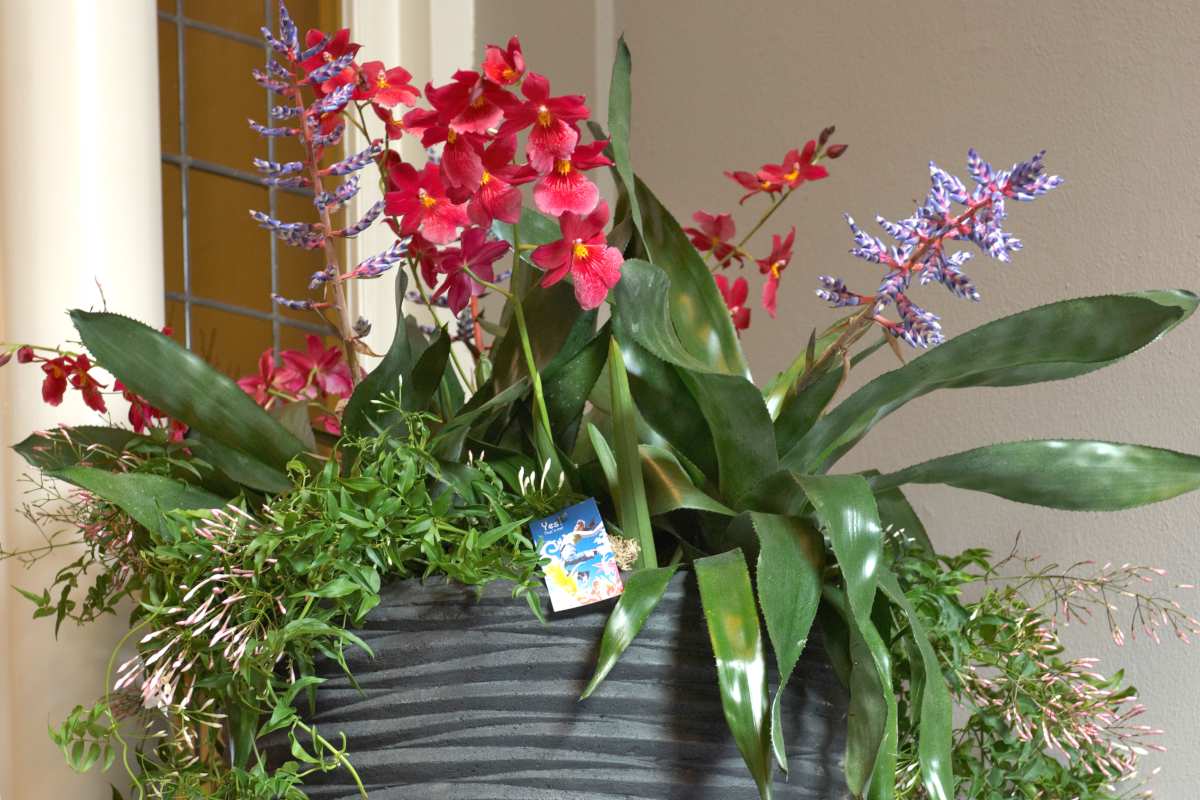
A rosette of leaves cupping a red or orange flower, elegant yellow petals encasing a labellum of a different hue, a calyx as soft as velvet in white or purple: guzmania, dendrobium and zantedeschia bring the tropics indoors. None of the three appreciates standing water around its roots — get that right and they flower through the greyest winter weeks.
The three plants below all brighten the house in winter, but they ask for different light levels, watering habits and rest periods. Use the table to pick the one that matches the spot you have in mind.
| Plant | Origin | Where to place it | Watering | Rest period |
|---|---|---|---|---|
| Guzmania | Tropical forests of South America | Warm and moist spot (kitchen, bathroom), away from the sun | Fill the rosette with a little water while it flowers; avoid roots wallowing in water | Only new offshoots can bloom, not old spent ones |
| Dendrobium | Himalayan mountain range, Southern Japan and New Zealand | Luminous and ventilated spot, away from direct sun | Immerse the roots from time to time or mist them with water | Six to eight weeks dormant after blooming, no fertiliser |
| Zantedeschia (calla, arum) | South Africa | A space that is well exposed, since it loves light | Regular watering so the soil mix stays moist | In fall, stop watering and store in a cool, frost-free spot |
Whichever you choose, none of the three appreciates standing water around its roots.
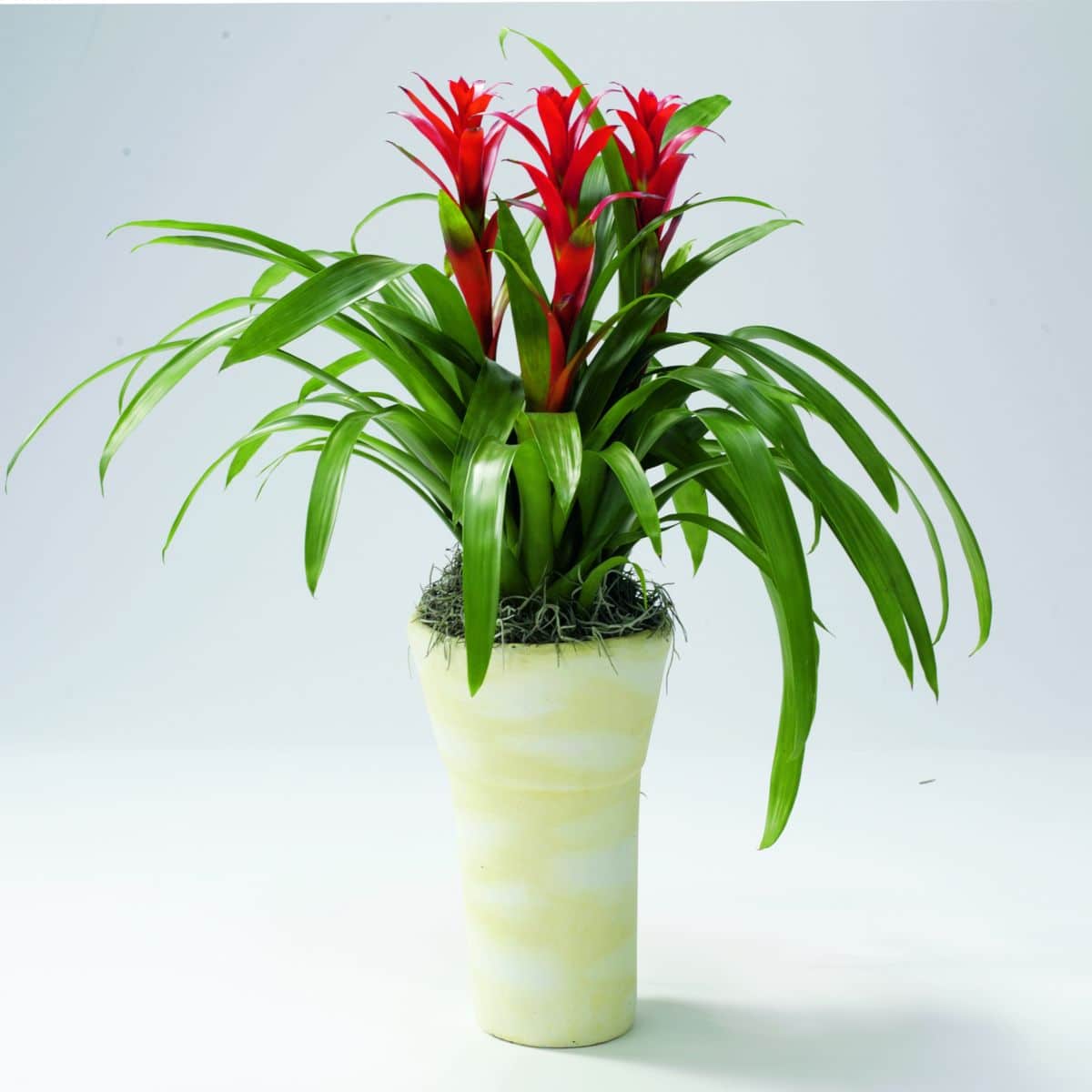
With its yellow, red or bright orange flower surrounded by a rosette of leaves, guzmania is truly unique. Hailing from the tropical forests of South America, this close cousin to the pineapple is a Bromeliaceae.
Like all the varieties that belong to this family, it absorbs moisture from the air: its leaves capture suspended water micro-droplets.
Set it up in a warm and moist spot (kitchen, bathroom), away from the sun.
While it flowers, which can last up to three months, water by filling the rosette with a little water. It’s better to avoid having its roots wallow in water.
However, you’ll need a green thumb and a lot of patience before you’ll get the guzmania to flower again, since only new offshoots can bloom and not old, spent ones.
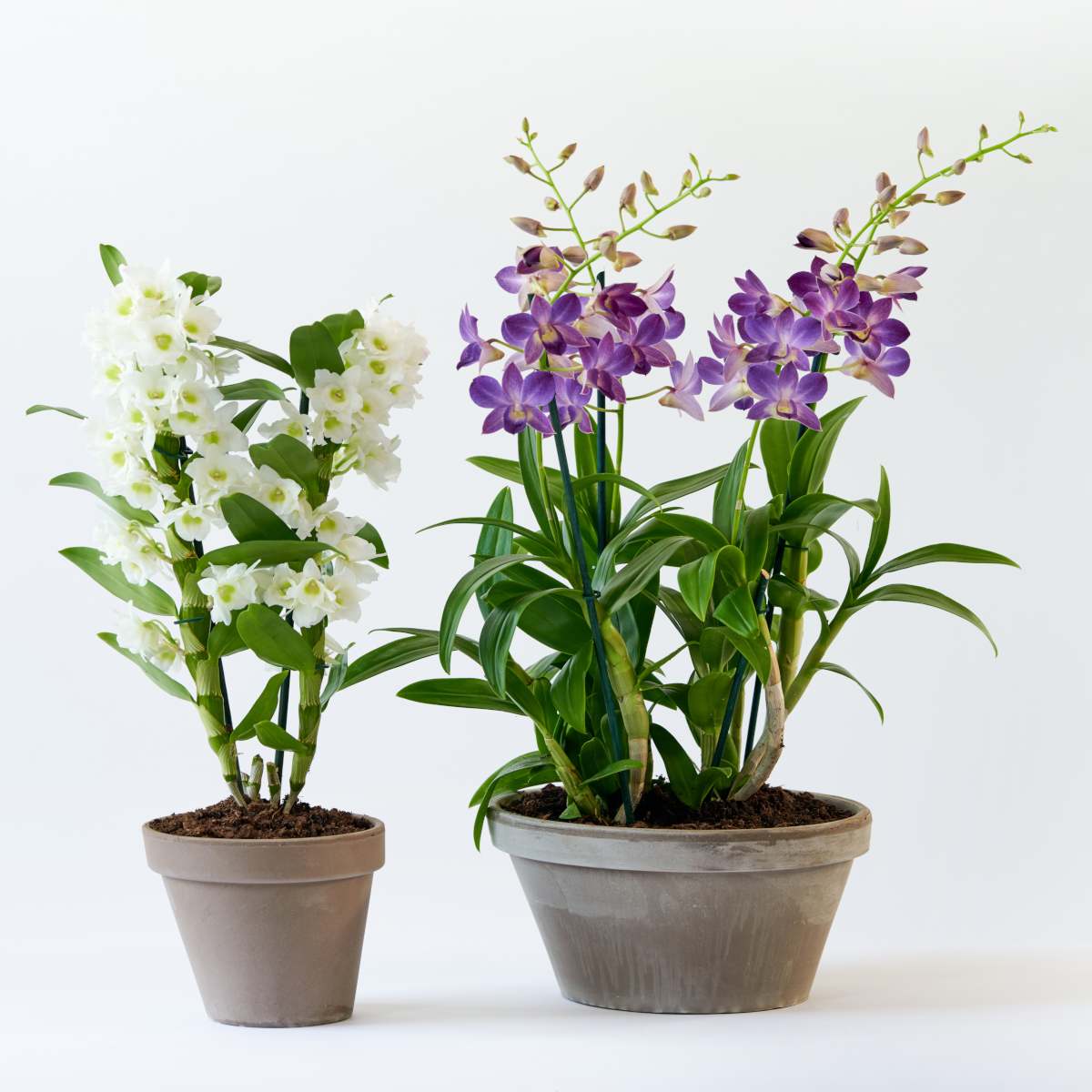
Native to a triangle bordered by the Himalayan mountain range, Southern Japan and New Zealand, dendrobium is an epiphyte orchid. Its elegant yellow, white or pink-petaled flowers encase a labellum that has a different hue. This is an easy flatmate that doesn’t require much attention.
Place it in a luminous and ventilated spot, away from direct sun.
Like all orchids, it has an aversion to standing water: simply immerse the roots from time to time or mist them with water.
After the blooming, let it stay dormant for six to eight weeks without fertilizer and just a little water. The signal to start caring for it as usual is when new buds start blooming.
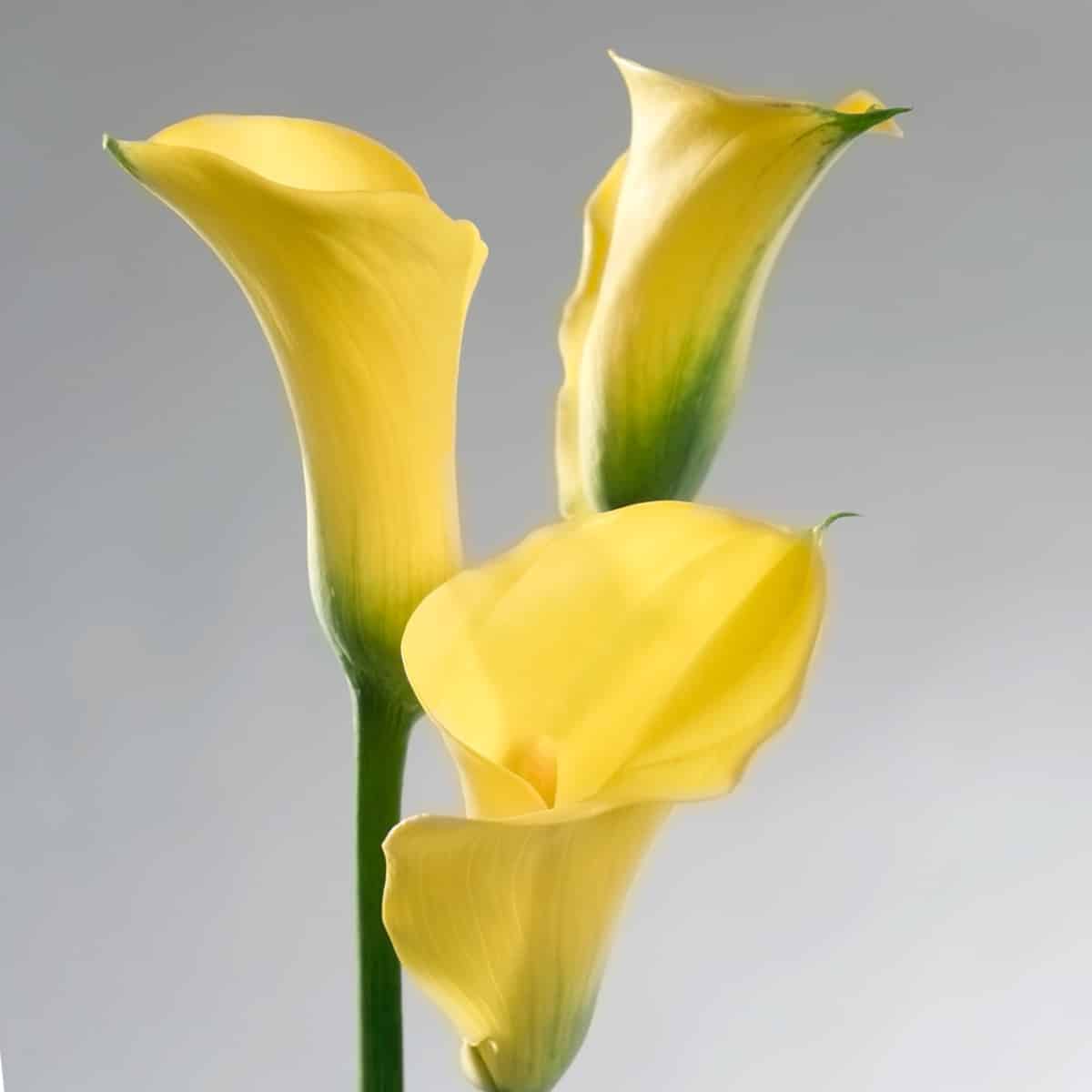
As soft as velvet, the calyx of zantedeschia (also called calla or arum) exists in white, yellow, orange or purple. Apart from its ornamental quality, this plant native to South Africa contributes to purifying the air in the house.
Zantedeschia loves light, place it in a space that is well exposed, and ensure that the soil mix stays moist thanks to regular watering.
In fall, stop watering and store it in a cool spot, protected from freezing. In spring, wake the plant up with a little water and set it in a warm spot.
Mathilde Dubois