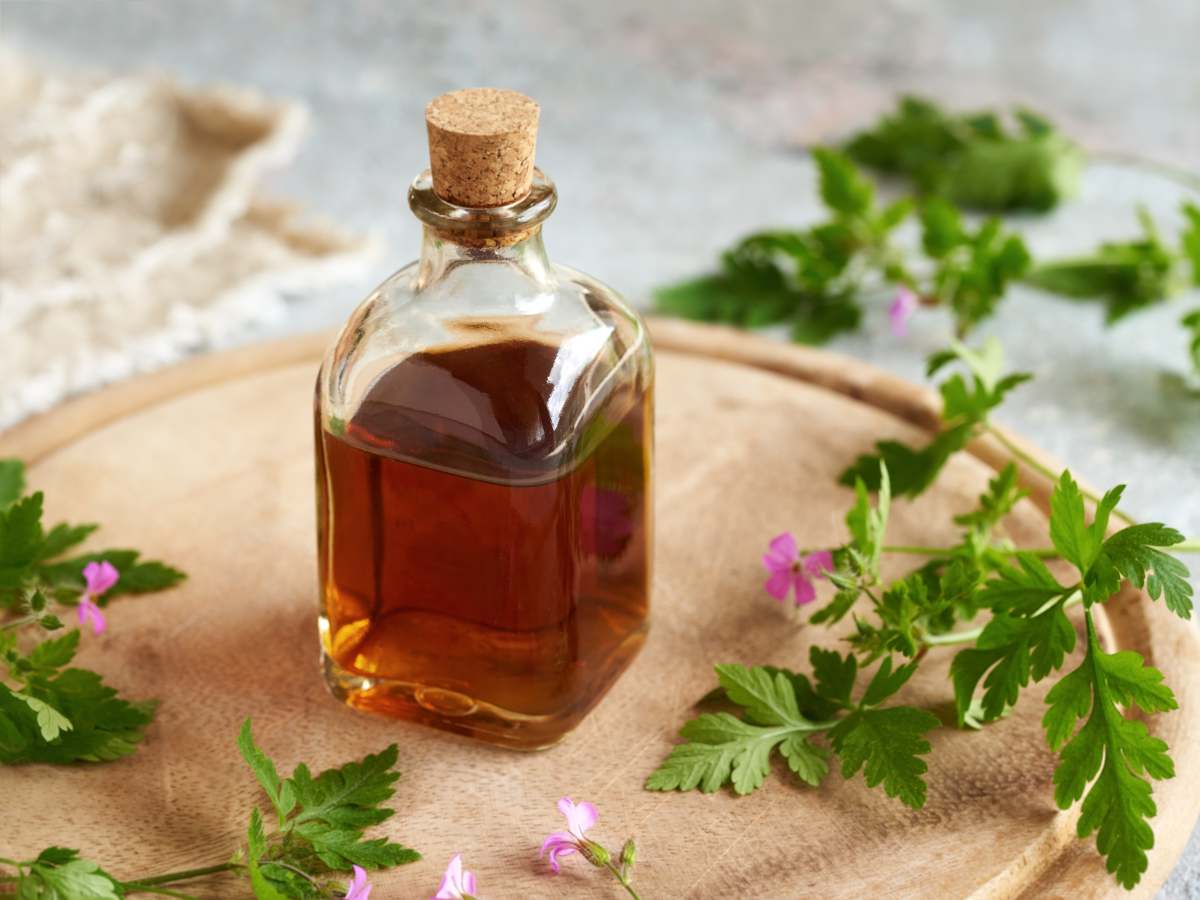
Herb-Robert is the small, red-stemmed wild geranium that grows along hedges, walls and waste ground. It is not the balcony plant with big round flower heads — that one is a pelargonium. This page covers what the plant is, what country herbalism has long credited it with, how to make an infusion, a gargle or a poultice from it, and when to leave it alone.
A plant with two names and a long memory
The genus name comes from the Greek geranos, “crane”, because the seed capsule looks like a crane’s long beak.
The species name robertianum is usually linked either to the Latin ruber, “red”, or to a Saint Robert of medieval herb lore.
The pelargoniums that fill window boxes take their name from pelargos, “stork”, for the same beak-shaped fruit.
The plant appears in European herbals from the seventeenth century onwards, notably in the writings of the physician Sennert, who ranked it among the notable simples of his day.
Herb-Robert at a glance
Item
Detail
Botanical name
Geranium robertianum
Common names
Herb-Robert, Robert geranium, Stinking Bob, red robin
Family
Geraniaceae
Part used
Aerial parts: leaves, stems, flowering tops
Forms of use
Infusion, gargle, compress, poultice of crushed fresh leaves
Harvest season
Late spring to early autumn, while the plant is in flower
Taste and smell
Bitter, grassy and strongly astringent; pungent musky scent when bruised
What it is credited with
Herb-Robert is the wild geranium most used in folk herbalism
All of the following belong to tradition and to herbalists’ practice, not to proof:
It has a long-standing reputation as an astringent, because of its tannin content — the puckering sensation on the tongue is the whole basis of its folk use.
Country herbalism traditionally used the infusion to settle a loose, upset digestion.
It is traditionally used as a mouthwash and gargle for a scratchy throat and irritated gums.
Naturopathy credits the cooled infusion with a toning, tightening effect on tired skin, used as a face rinse or compress.
In old rural practice, the crushed fresh leaf was pressed on grazes, small cuts and insect bites as a simple field remedy.
Herbalists also mention it as a soothing compress for skin that itches or feels inflamed.
It carries a folk reputation as a plant of women’s traditional medicine in several European regions, where it was drunk as a bitter tonic infusion.
One point of confusion worth clearing up: the “geranium essential oil” sold in shops is distilled from Pelargonium graveolens, a scented pelargonium, not from herb-Robert. Herb-Robert itself is used fresh or dried, not as an essential oil.
How to use it
The infusion
Use about a heaped teaspoon of dried aerial parts per cup, or a small loose handful of fresh chopped plant.
Pour water that has just come off the boil over it and cover the cup or pot.
Steep 10 to 15 minutes, then strain.
Traditional use is two to three cups spread across the day, for a few days at a time rather than as a daily habit.
It is frankly bitter and dry on the palate. A slice of lemon, a little honey or a pinch of mint makes it easier to finish.
The gargle
Make the infusion a little stronger — double the plant, same water — or simmer it gently for a few minutes for a light decoction.
Let it cool to lukewarm and strain it well through a fine sieve or cloth.
Gargle and spit; do not swallow the gargle liquid.
Repeat two or three times a day while the throat feels rough.
The compress and the poultice
Compress: soak a clean cloth in the cooled, strained infusion, wring it out and lay it on the skin for ten minutes.
Poultice: crush a small handful of washed fresh leaves between clean fingers or in a mortar until the sap runs, wrap in a thin cloth and hold in place briefly.
Use it on intact or barely grazed skin only, and always on a clean, freshly picked plant.
In the kitchen
Herb-Robert is not a salad herb. The smell and the bitterness put most people off after one leaf.
A very small amount of finely chopped young leaf can be stirred into a wild-green soup if you enjoy bitter flavours.
Its real place is the teapot and the compress bowl, not the plate.
Forms of use compared
Form
How it is made
Traditionally used for
Infusion
Heaped teaspoon dried plant per cup, steeped 10 to 15 minutes, covered
A bitter, astringent drink for digestive comfort
Strong infusion or light decoction
Double the plant, or simmer briefly; cooled and strained
Gargle for a rough throat, mouth rinse for irritated gums
Cooled compress
Clean cloth soaked in the strained infusion
Toning rinse for tired skin, soothing pad for itchy patches
Fresh poultice
Washed leaves crushed until the sap runs, wrapped in cloth
Old field remedy for grazes, scratches and insect bites
Frequently Asked Questions
The one thing to remember: pick the flowering tops from clean ground in summer, dry them in the shade, and use them as a short course of bitter infusion, a gargle or a cooled compress.
Is herb-Robert the same plant as the geranium on my balcony?
No. Balcony geraniums with big rounded flower heads are pelargoniums, mostly derived from South African species. Herb-Robert is Geranium robertianum, a small wild European geranium with ferny leaves, pink five-petalled flowers and red stems. It is the wild one, not the bedding one, that folk herbalism uses.
What does it taste like?
Bitter, grassy and very astringent — it dries the mouth the way strong black tea does. The bruised plant also smells musky and pungent, which is why it is nicknamed Stinking Bob. Lemon, honey or a little mint makes the infusion easier to drink.
When should I harvest it?
From late spring to early autumn, while the plant is flowering, on a dry morning. Cut the aerial parts and leave the root so the plant can reseed. Dry it in thin layers in a shaded, airy spot and store it in a sealed jar away from light.
Can I drink the infusion every day?
Traditional practice keeps it to a few days at a time rather than a permanent daily drink, because of the high tannin content. Skip it altogether during pregnancy and breastfeeding, and keep it away from young children. If you take any medication, ask a pharmacist or doctor before starting.
Is there a herb-Robert essential oil?
Not in practice. The essential oil sold as “geranium oil” is distilled from scented pelargoniums, chiefly Pelargonium graveolens, and it is a different plant with a different profile. Herb-Robert is used fresh or dried, as an infusion, a gargle or a poultice.
This information is provided for general interest and reflects the traditional use of plants. It is not a substitute for medical advice. If you are on medication, pregnant, or in any doubt, ask a healthcare professional.
Written by Gaspard Lorthiois | Loves helping out, especially when it comes to growing things. Worked in herbal medicine, runs a farm, and dabbles in tech. Master's degree and engineer.