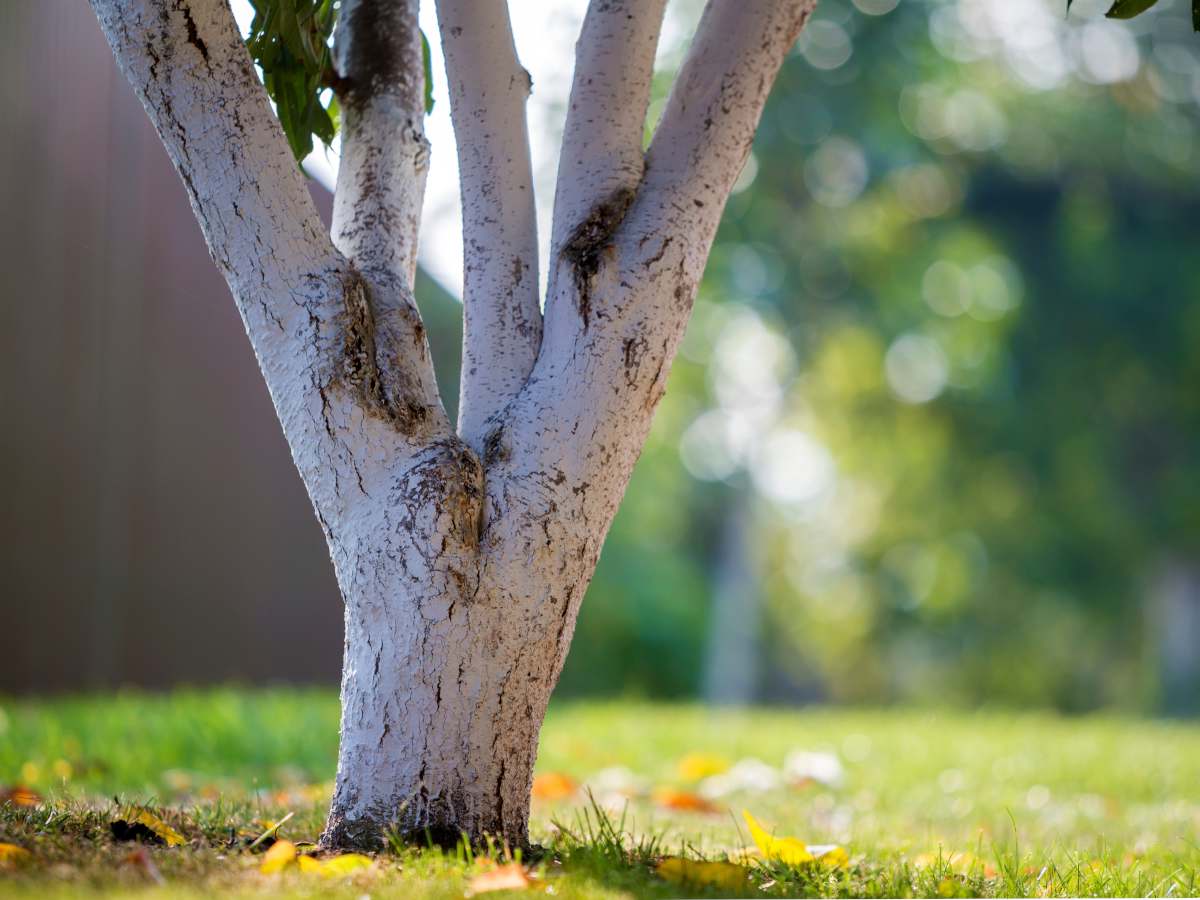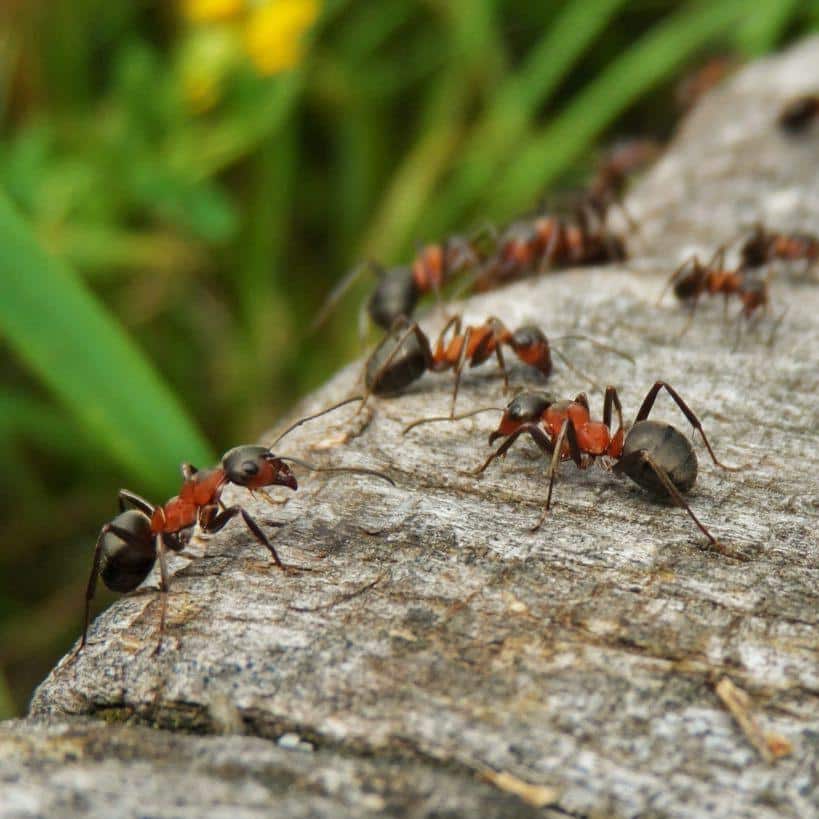
A few lemon slices laid round a trunk, a line of chalk across a doorway or a scatter of coffee grounds is often all it takes to turn an ant column back. Ants cause little real damage, so organic methods suffice — and keeping aphids in check keeps ants away too.
Although they aren’t directly pests for plants and for humans, ants quickly turn invasive when they decide to set up shop…
Since ants usually only bring on minimal damage, it is strongly recommended to use organic solutions to treat against them. No need to go for nature-damaging chemical products to get rid of these insects.
Since ants tend to always follow the same paths in a house, it is recommended to attract them outside with products that they particularly like, such as honey, jam, etc.
The article gathers several organic ways of turning ants back, each suited to a different situation. The table below sums up what each one does and where it works best.
| Remedy | How it works | Where to use | Good to know |
|---|---|---|---|
| Lemon slices | Smell and acidity disturb the colony | Near a nest, or ringed around a tree trunk | Works with the fruit, not the lemon tree itself |
| Lemon juice | Poured along the trail to break it | Indoors, on the routes ants follow | One or two lemons pressed is enough |
| Coffee grounds | A barrier they shun, and pushes a nest to move | On an anthill, or round plant stems | A few spoonfuls on the ground around the stem |
| Chalk line | Ants will not cross the mark | Indoors, across doorways and floors | Stops working once water washes the line out |
| Mint | The smell of the plant drives them off | Spots where colonies keep starting up | Planted, so it keeps working season after season |
| Tansy, lavender, French marigold | Ant repellent properties of the plants | Beds and borders to be protected | Repel rather than destroy the colony |
| Honey or jam bait | Lures them away from the house | Outdoors, away from the rooms invaded | Uses the fact that ants keep to the same paths |
If you need to act quickly, ready-made organic ant repellents are sold in horticulture stores.
Some plants directly repel ants, while others offer ant-repelling materials like fruit, flowers and more.
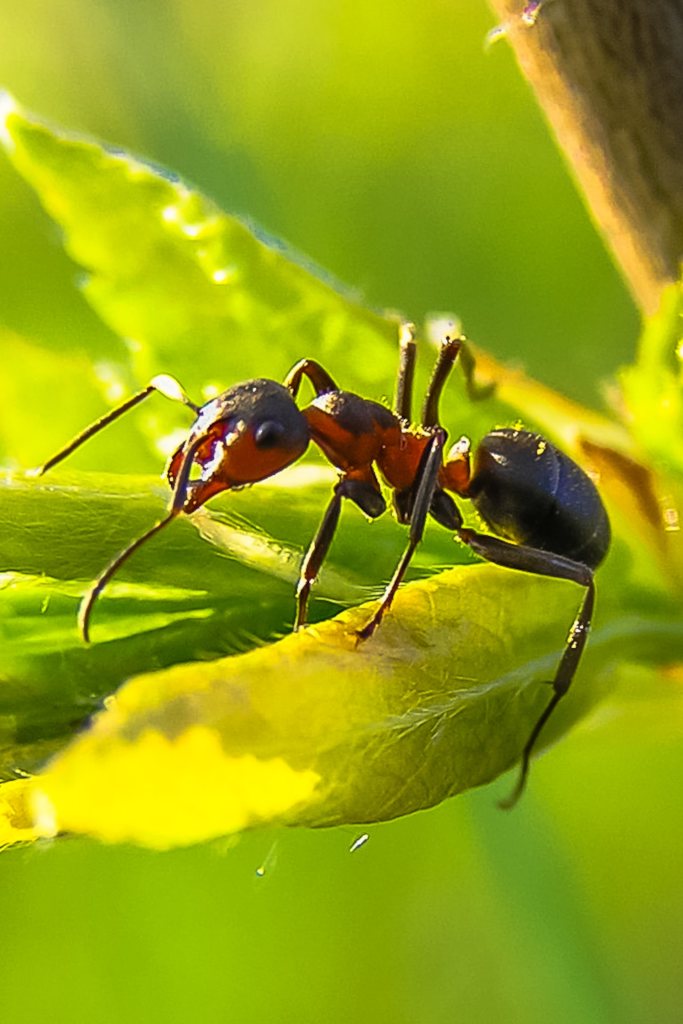
Spread coffee grounds on an anthill to make it move out. Protect target plants by sprinkling a few spoonfuls of ground coffee on the ground around the stem. More on garden uses for ground coffee.
Some plants have the property of attracting ants. For example, they might produce nectar or sweet substances to attract them. Usually such plants have a symbiotic relationship with ants.
Fighting against ants in the garden is often required when aphids have become a nuisance.
Indeed, aphids attract ants with the honeydew they secrete.
If you control the ant population, you’ll be able to control aphid populations, too.