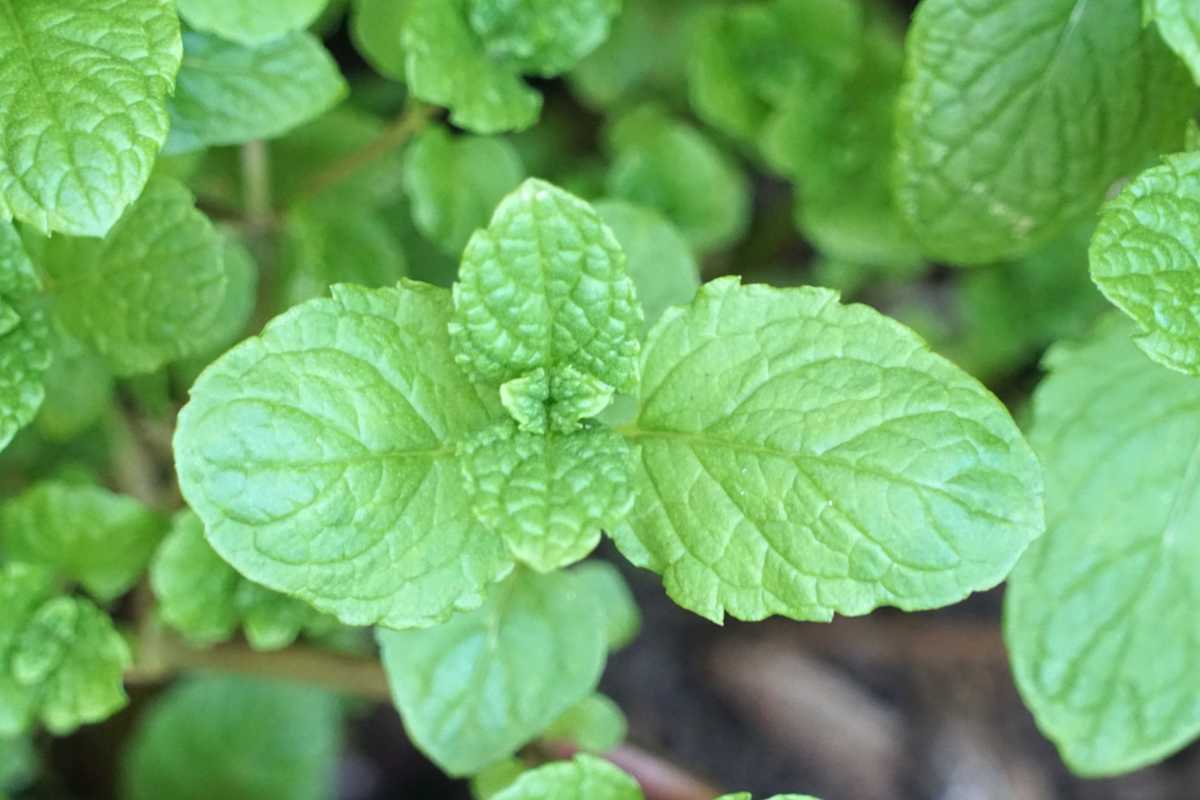
Snip a whole stem of the largest leaves early in the morning and the fragrance follows you indoors. Mint (Mentha) is a Lamiaceae herb of 8 to 24 inches that flavours desserts, fruit salads, sauces, tea and mojitos; give it sun that never scorches and soil kept consistently moist, and the picking never stops.
| Name | Mentha |
|---|---|
| Family | Lamiaceae |
| Type | herbs and spices |
| Height | 8 to 24 inches (20 to 60 cm) |
| Exposure | full sun, part sun |
| Soil | light, well-drained |
| Harvest | May to October |
Forget about store-bought mint wrapped in plastic. That only keeps for a couple days. Best grow your own and pick a few leaves when you need it!
Rediscover what real mint tastes like!
You’ll often be purchasing your mint in pots: transplant it to the ground sometime in April.
You can also leave it in its original pot for a while for easy picking indoors or on a balcony.
What is best, though, for growing potted mint is to re-pot immediately after purchasing in a larger pot.
This plant is perfectly suited to indoor growing, or on a balcony, in a pot or garden box.
Take care to water regularly so that the soil mix never dries up.
Mint takes to three very different situations, and each one has its own planting moment and its own watering discipline. Use the table to pick the one that matches your space.
| Situation | When to plant | Key point |
|---|---|---|
| In the ground, outdoors | Transplant from the purchase pot in April | Grown mostly from April to September-October |
| Indoors, in a pot | Any time of year, even in winter | Sunny, well-lit spot such as a windowsill, but no direct sun |
| Balcony or terrace, pot or garden box | Re-pot into a larger pot straight after purchase | Water regularly so the soil mix never dries up |
| In pots among vegetables | Set out alongside kale and lettuce | Keeps white butterfly caterpillars away |
Whichever you choose, a pot or garden box is the safest option since most mints are rather invasive.
You can harvest mint leaves all spring and summer long right when you need it.
Select larger leaves, and snip the entire stem off, so that new shoots can appear.
It is preferable to pick the leaves early morning before the sun alters the flavor-bearing compounds in the leaves.
It is very easy to grow your mint inside your house, on a balcony or terrace. The powerful fragrance released also spreads an agreeable smell throughout the house or along the terrace.
There isn’t any “better” season to grow mint indoors.
You can really grow it all year long, even in winter.
Usually it is added to summer meals.
It is mostly grown from April to September-October, both indoors and outdoors.
Choose a sunny, well-lit space like a windowsill, but avoid direct sun.
Mint flavor pairs well with many meals, fruit salads and sauces and it is also famous for flavoring certain drinks, especially tea and mojito.
Growing it is rather easy as long as basic rules are followed.
There are 25 mint species. Simply remember that most of them are rather invasive and that growing them in pots or garden boxes will prevent them from spreading everywhere in the garden.
Mint excels at repelling various pests. Place it in pots or containers around kale and lettuce to keep caterpillars of the white butterfly away.
| Variety | Flavour and scent | Best used for |
|---|---|---|
| Pineapple Mint | Soft fruity apple mint, cream-edged leaves | Fruit salads, ornamental pots |
| Black Mitcham | Very strong menthol, dark stems | Drying, strong tea |
| Ginger Mint | Warm spicy mint, gold-splashed leaves | Melon, fruit cups, edging pots |
| Chocolate Mint | Mint with a cocoa note | Puddings, ice cream, hot chocolate |
| Moroccan Mint | Clean, sweet spearmint | Mint tea, mojitos |
Discover strawberry mint, a deliciously flavorful variety that tastes like strawberry!
In this video on mint, you’ll have the tips that a producer will give you directly to grow it well, use it in the kitchen, and he’ll give you his smart tip, too!
Mint is difficult to freeze and tends to turn black. It’s always best to use it fresh, or dried. Fresh mint is always more flavorful.
Read also on herbs and spices: