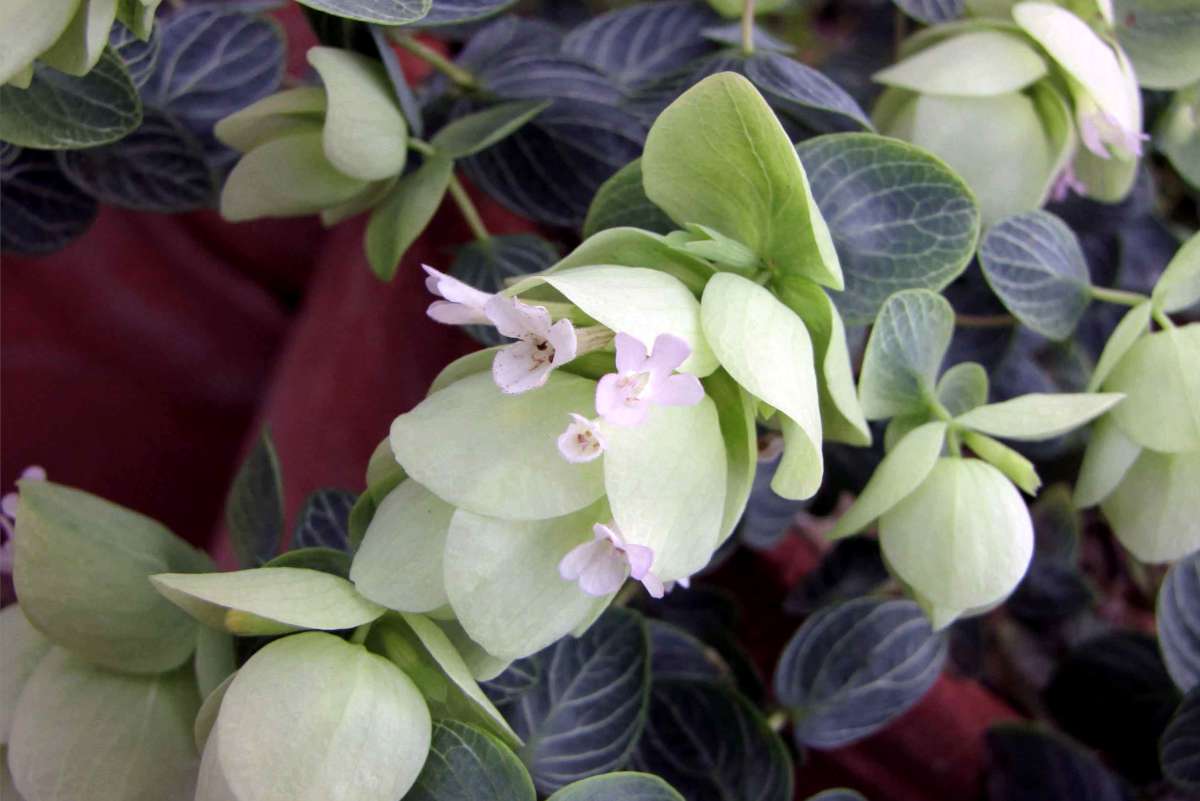
Beautiful pink bracts and flowers above evergreen leaves: the Kent Beauty oregano (Origanum rotundifolium) is a fragrant, strong-tasting perennial herb for gravies, pizzas and marinades. It asks for full sun and light, well-draining ground, since winter cold and moisture together are what it cannot take; keep it dry and it flavours meals all year.
| Name | Origanum rotundifolium |
|---|---|
| Family | Lamiaceae |
| Type | herbs and spices, perennial |
| Height | 16 to 24 inches (40 to 60 cm) |
| Exposure | full sun |
| Soil | ordinary and light |
| Foliage | evergreen |
| Flowering | summer |
It is perfect to flavor meals, pizzas and barbecues.
Sowing Origanum rotundifolium normally takes place at the very beginning of spring, towards March, in a sheltered place. You can transplant them in the ground at the end of the feasts of the Ice Saints, in the middle of May.
It is also possible to sow directly in the plot, either in the ground or in a garden box for herbs and spices, but wait for the middle of May to avoid late frosts.
Whichever is practiced, thin to 4 inches (10 cm) to let the most vigorous young plants develop well.
Beyond ‘Kent Beauty’ and ‘Dingle Fairy’, a handful of oreganos are sold in almost every garden centre and seed catalogue. Some are chosen for the kitchen, others purely for their flowers and foliage.
| Variety | Grown for | Height | Flowering |
|---|---|---|---|
| ‘Kent Beauty’ | Trailing hop-like pink bracts, pots and walls | 6–8 in (15–20 cm) | Midsummer to early autumn |
| ‘Country Cream’ | Cream-edged leaves for edging and pots | 8–12 in (20–30 cm) | Midsummer to late summer |
| ‘Aureum’ | Golden foliage plus culinary leaves | 12 in (30 cm) | Midsummer |
| Greek oregano | Strongest culinary flavour, drying | 12–18 in (30–45 cm) | Midsummer to late summer |
| ‘Herrenhausen’ | Purple-pink flower heads for pollinators | 18–24 in (45–60 cm) | Midsummer to early autumn |
| ‘Rosenkuppel’ | Deep rose-purple flowers, gravel gardens | 16–20 in (40–50 cm) | Midsummer to early autumn |
Pick your Origanum rotundifolium leaves when you need them.
If possible, pick them in the morning: that is when they are most savory and your harvest will retain more of the aromas.
Origanum rotundifolium doesn’t like it when winter cold and moisture meet, so it is best to plant it on a small mound.
It isn’t all that hardy, and that is why even though it is a perennial, marjoram is grown as an annual.
Very tasty, Origanum rotundifolium is particularly well suited to meals with gravy, and also match pizzas and marinades when used dry.
Some varieties are very ornamental, such as ‘Kent Beauty’ which bears beautiful pink bracts and flowers.
Another drought-resistant variety that offers nice flowers is the ‘Dingle Fairy’.
Its evergreen leaves make this plant a perfect vegetable patch herb that can be used along edges, or in your pots and garden boxes.