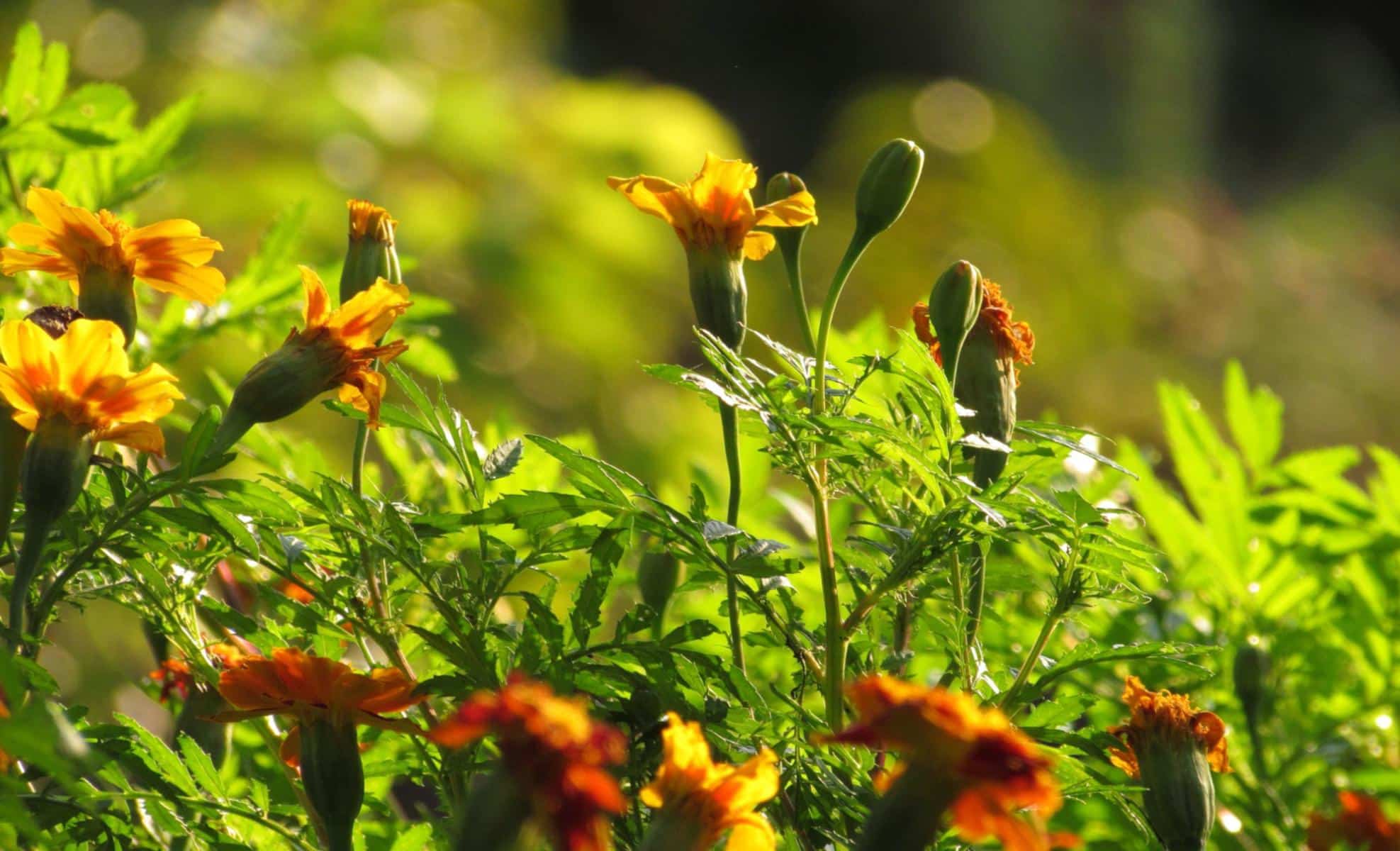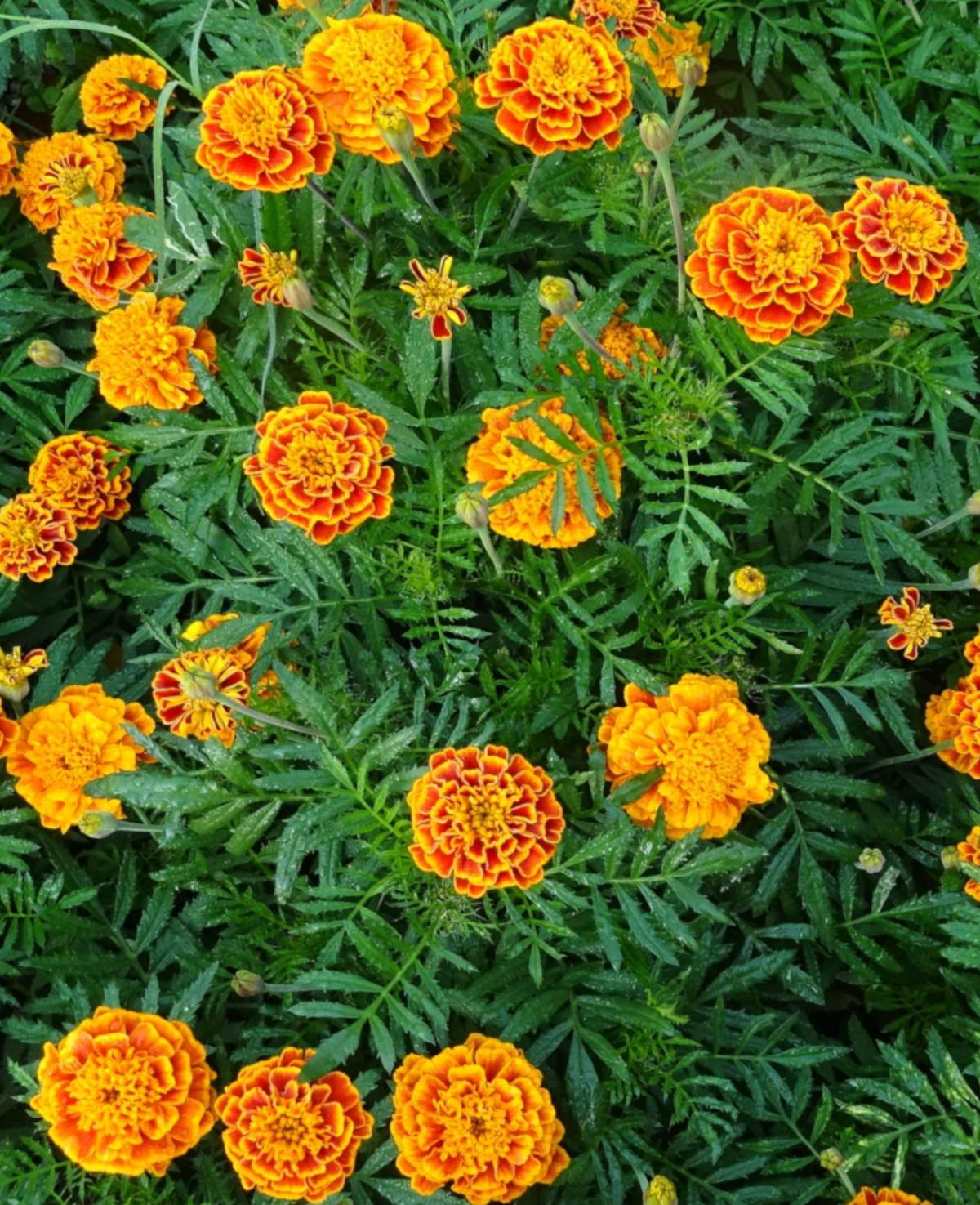
Big round blooms in stark, powerful colours, set off against green leaves, carry French marigold (Tagetes patula) from late spring right through to early autumn. Grown as an annual beside tomatoes or roses, its strong smell repels aphids, nematodes and whiteflies; give it full sun and deadhead regularly, and the flowers keep coming.
| Name | Tagetes patula |
|---|---|
| Family | Asteraceae |
| Type | annual |
| Height | 8 to 36 inches (20 to 90 cm) |
| Exposure | full sun |
| Soil | ordinary |
| Flowering | late spring to early autumn |
This plant is also often planted in the vegetable patch to fight aphids or nematodes. Planting and care are important to enhance blooming.
The planting is an important step, because it determines how the plant will grow and the expected blooming of the French marigold.
Easy to care for, French marigolds are plants that require very little care, especially when already well settled in.
French marigold earns its place in the vegetable patch as much as in the flower bed. Here is what it is planted against, and where it does the job.
| Pest | Where to plant | How it acts |
|---|---|---|
| Nematodes | In the middle of the vegetable patch | Planted among the crops themselves |
| Aphids | Near roses, or in the vegetable patch | Grown alongside the plants being attacked |
| Ants and whiteflies | Among garden plants generally | Strong smell acts as a natural repellent |
One plant, then, that pays for itself twice over: flowers above ground and fewer parasites around it.
Most French marigolds sold in garden centres and seed catalogues belong to a handful of well-known varieties and series. The table below sets out what separates them, so you can match flower form, colour and habit to the spot you have in mind.
| Variety | Flower colour | Flower form | Habit | Best use |
|---|---|---|---|---|
| ‘Naughty Marietta’ | Golden yellow, mahogany blotch | Single | Dwarf | Bedding, pollinator-friendly |
| Disco Series | Yellow to deep mahogany | Single | Dwarf | Edging and containers |
| Safari Series | Tangerine, scarlet, yellow | Double crested | Dwarf | Containers and mass bedding |
| Bonanza Series | Orange, gold, bicolour | Double crested | Dwarf | Bedding blocks |
| ‘Jolly Jester’ | Red and yellow striped | Single | Medium | Cottage planting, cutting |
| ‘Mr Majestic’ | Yellow, striped red | Single | Medium | Mixed borders, vegetable patch |
| ‘Queen Sophia’ | Russet-red, gold edges | Double | Dwarf to medium | Bedding and containers |
All there is to know about French marigold

French marigold, which is actually native to Latin America, comes in multiple varieties and as many shapes and colors.
This is a plant with affirmed, striking flowers thanks to their size of course, but also thanks to the stark powerful colors that mark a contrast with their green leaves or those of other plants in your garden.
Also use French marigold to fight against a good number of insects like ants, aphids or whiteflies. In effect, their strong smell is a natural repellent against these garden parasites.
French marigold normally refers specifically to Tagetes patula.
The name “marigold” has been used for centuries for a great number of flowers – somehow, any low-growing flower that was bunched and bright yellow had a chance of being called marigold. To date, this has led to the name being used for many different flowers:
French marigold make great additions to flower bouquets.
Just take a few stems and pair them with greens from the garden, and the impact is guaranteed!