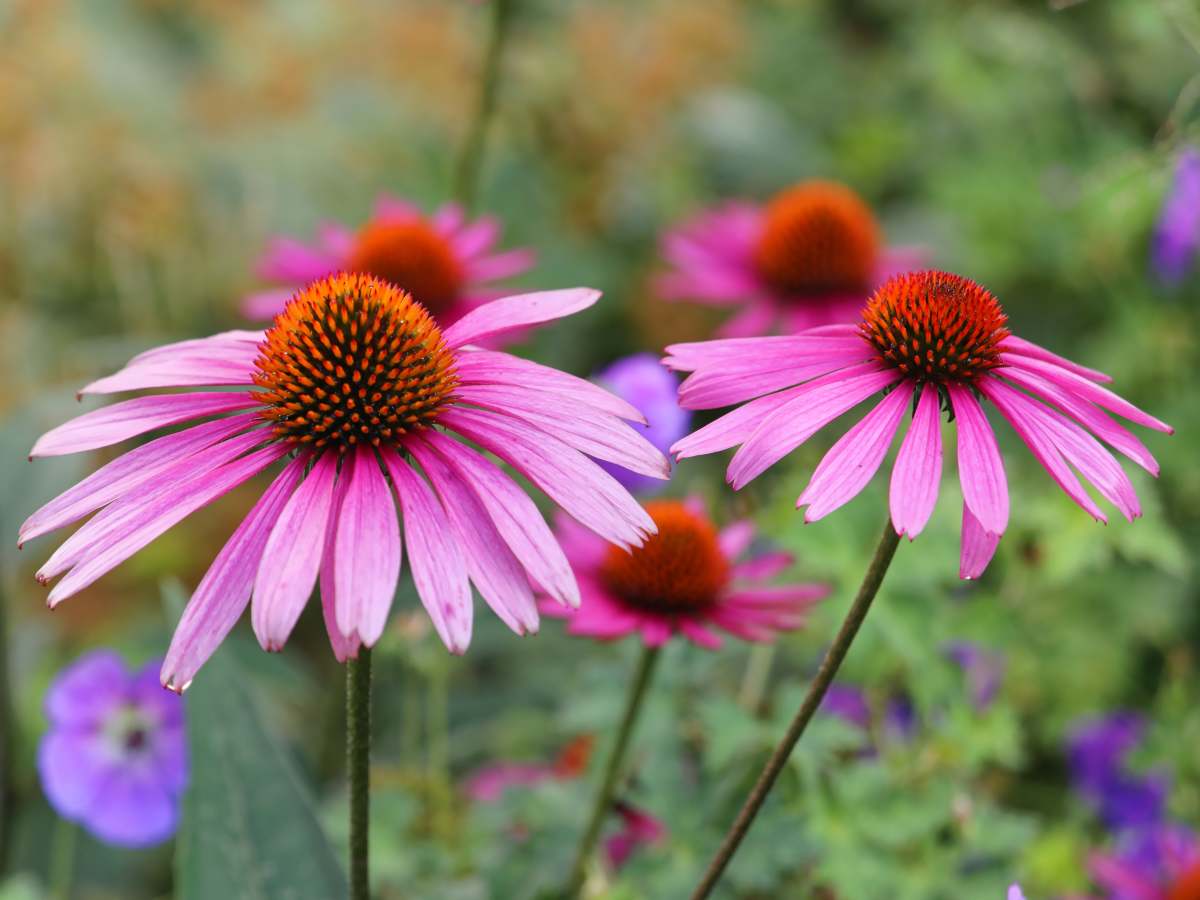
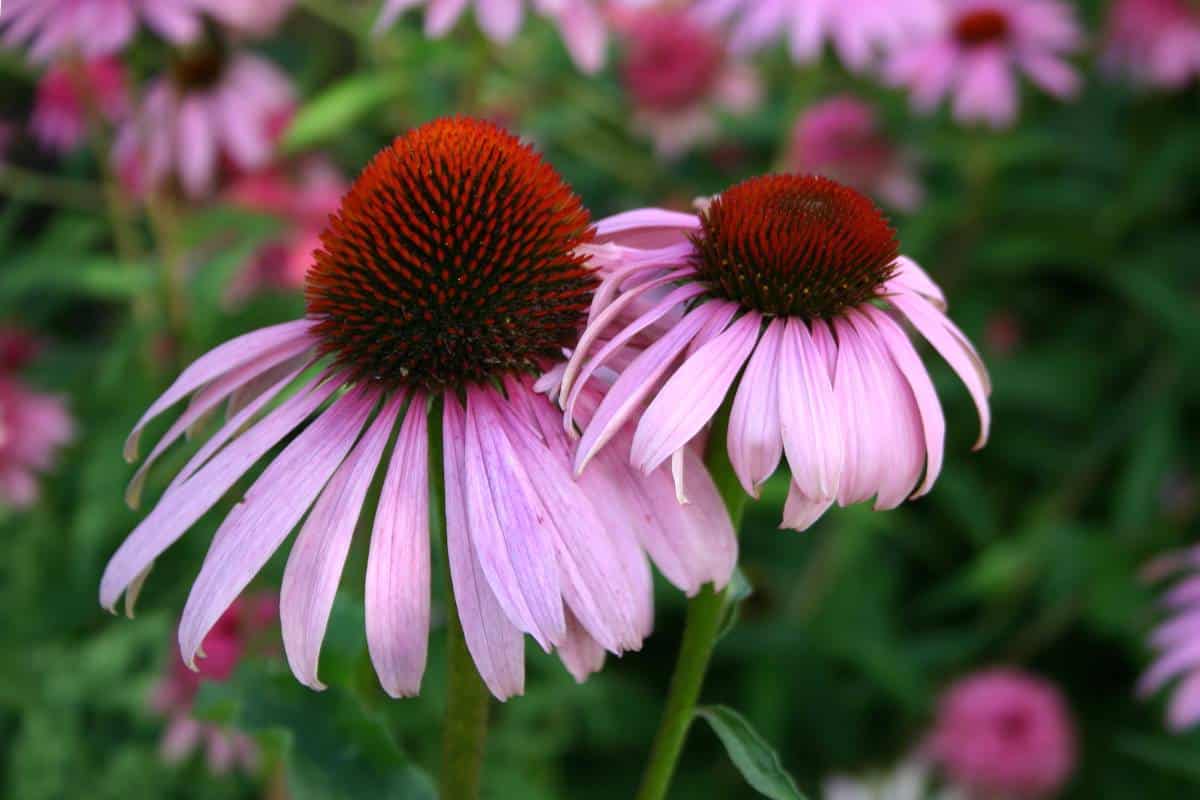
Often mistaken for a daisy, echinacea carries tall stems of coloured flowers from summer right through to autumn, and its roots have long been used to reinforce the immune system. Give it full sun and rich, well-drained soil, for it loathes having its roots in water, and it will bloom abundantly all summer.
| Name | Echinacea |
|---|---|
| Family | Asteraceae |
| Type | perennial |
| Height | 36 to 48 inches (90-120 cm) |
| Exposure | full sun |
| Soil | ordinary |
| Foliage | evergreen |
| Flowering | July to October |
Purple coneflower blooms from summer to fall and it is simply beautiful. Take delight in these beautiful flowers that adapt to our climates so well. Care is so easy, it is perfect for beginners.
In spring in a sheltered spot and in full sun. Purple coneflower requires rather rich and well drained soil because it loathes having its roots dwell in water.
Particularly resilient to drought, feel very free to place it in a very hot and sun-bathed corner.
Easy to grow and care for, purple coneflower requires little attention and will bloom abundantly all summer long. A few good tips should help you increase the blooming still more.
Every task the plant asks for is tied to a moment in the season. Here is what to do, when, and what each job achieves.
| Task | When | What it achieves |
|---|---|---|
| Planting | Spring | A sheltered, sunny spot in rich, well-drained soil |
| Cuttings | Spring or end of summer | The easiest way to make more plants |
| Dividing the crown | Spring or fall, every 3-4 years | Regenerates an ageing plant |
| Deadheading | Regularly through flowering | Boosts flower-bearing |
| Light pruning | Beginning of spring | Gives a round shape, cutting back about ⅓ of the stems |
| Feeding | Spring | Flower plant fertilizer stimulates the blooming |
Keep to this rhythm and the plant will bloom abundantly all summer long with very little else asked of you.
Purple coneflower is a plant for which many health benefits have been recognized, and it is widely included in capsule preparations for herbalism.
From the purple coneflower, the root and the rest of the part are used for therapeutic purposes. Three varieties often come up for medicinal use: Echinacea angustifolia, Echinacea pallida and Echinacea purpurea.
Beyond the familiar purple type, garden centres and seed catalogues offer coneflowers in white, green and warm shades, on plants from knee-high to shoulder-high. The table below compares the most widely sold varieties.
| Variety | Flower colour | Height | Best for |
|---|---|---|---|
| Green Jewel | Lime green | 18-24 in (45-60 cm) | Compact, unusual colour |
| Rubinstern (Ruby Star) | Carmine red-pink | 32-36 in (80-90 cm) | Strong stems, cut flowers |
| Magnus | Deep rosy purple, flat petals | 35-40 in (90-100 cm) | Back of a sunny border |
| White Swan | White with orange cone | 28-36 in (70-90 cm) | Pale schemes and cutting |
| PowWow Wild Berry | Magenta pink | 20-24 in (50-60 cm) | Easy from seed, containers |
| Kim’s Knee High | Clear rose pink | 18-24 in (45-60 cm) | Pots and border fronts |
| Ruby Giant | Rich pink-red, very large heads | 30-36 in (75-90 cm) | Bold massed planting |
Native to North America, and sometimes mistaken to be a daisy, echinacea will offer you beautiful flowers from summer to fall. This plant is part of same family as the aster.
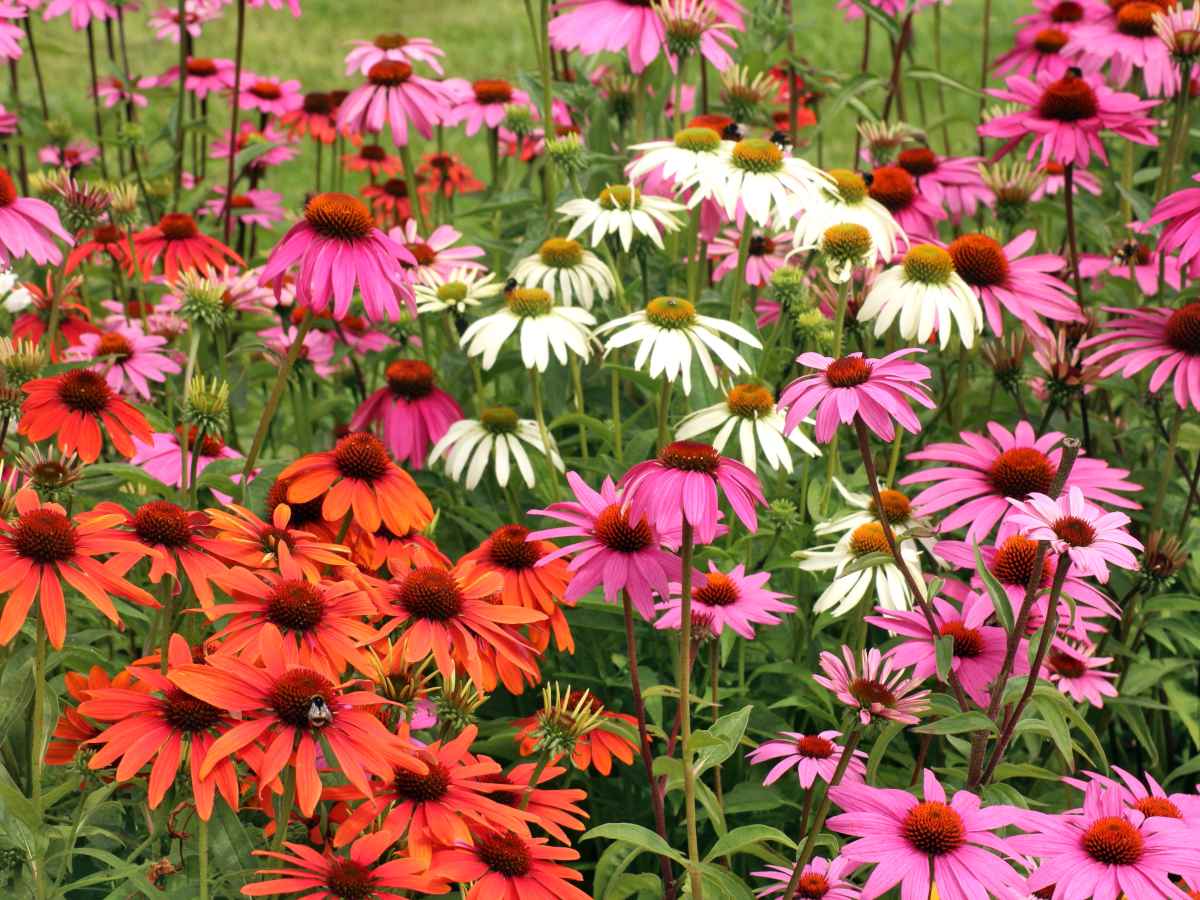
Quite hardy and disease-resistant, it poses absolutely no problems in terms of care.
Echinacea purpurea, a close cousin to rudbeckia, will bear leafage and flowers that will give your flower beds new colors, but there are many other colors and varieties.
Also, echinacea has medicinal properties that the Indians had discovered long ago, and which are still part today of many therapeutic solutions for them, and increasingly for the rest of the Western world, too.
Echinacea purpurea or angustifolia are both very much at ease in pots, and the result is often a great success.