
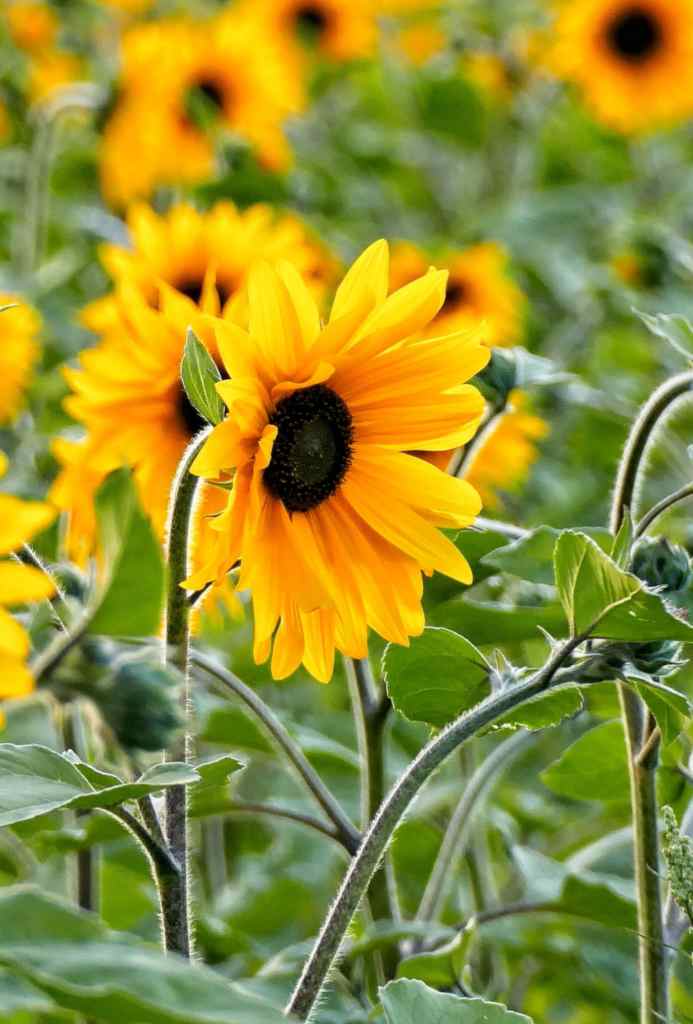
Broad yellow flower heads that seem to give back the sun’s own light, carried on stems that can reach 10 feet (3 metres): the sunflower (Helianthus) comes from the Americas, grows as a perennial or an annual, and feeds bees with its pollen. Give it full sun and soil rich enough, and flowering runs from midsummer to mid-autumn.
| Name | Helianthus |
|---|---|
| Family | Asteraceae |
| Type | Perennial or annual |
| Height | 1½ to 10 feet (0.5 to 3 metres) depending on the species |
| Exposure | Full sun |
| Soil | Rich enough |
| Flowering | Midsummer to mid-autumn |
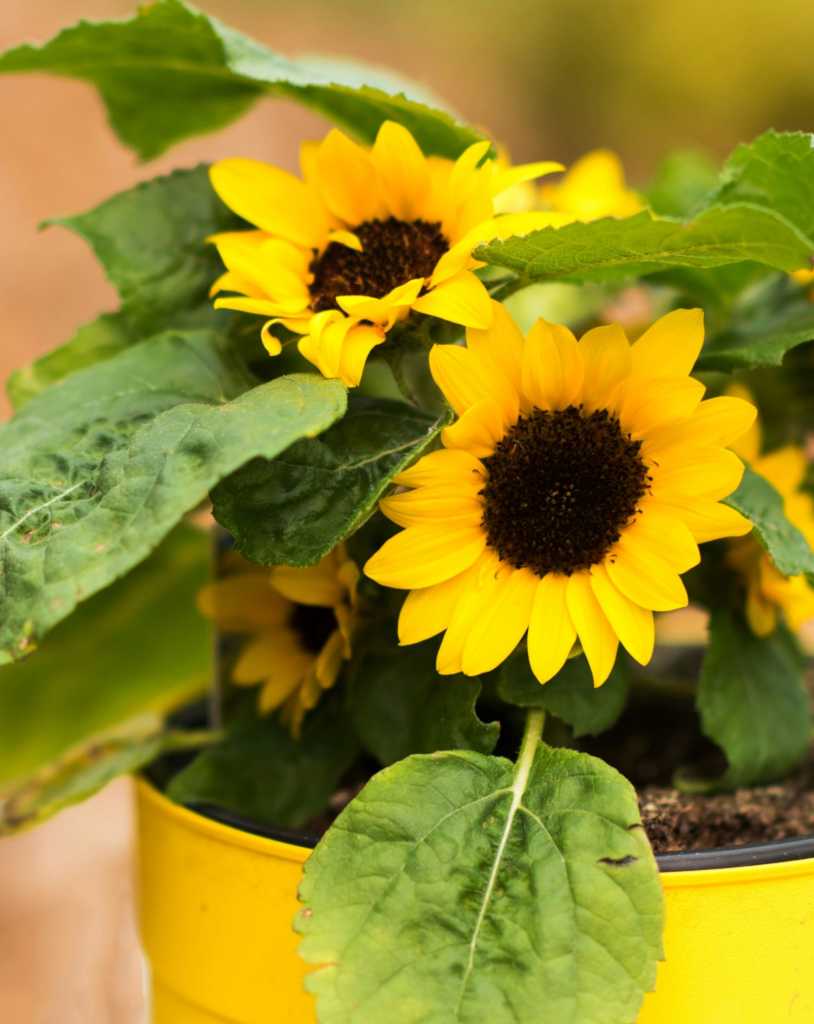
The planting rules are different depending on whether the Helianthus is a perennial or an annual.
Helianthus counts numerous varieties, some of which are “dwarf” varieties. These can easily be grown in pots indoors. They will flower within a year and seeds can be sown again for more potted wonders!
How you begin depends on whether your Helianthus is a perennial, raised from seed, or bought as a young plant. The table below sets out what each route asks of you and when.
| Starting point | How to go about it | When | Spacing or place |
|---|---|---|---|
| Perennial Helianthus | Plant out, then propagate by crown division | Spring, with division in autumn | 16 to 20 inches (30 to 40 cm) between plants |
| Sown from seed | Sow in place, several seeds to a shallow hole | Spring | Straight into the ground, in seed holes |
| Bought young seedlings | Transplant from the nursery pot | Mid-spring to early summer | Out in the ground, in a sunny spot |
| Dwarf varieties | Grow in a pot, water when the surface feels dry | Flowers within a year of sowing | Indoors in good light, away from heat sources |
Whichever route you take, full sun and soil that is rich enough do most of the work.
Remove wilted flowers regularly (deadheading).
Leave a few heads uncut to ripen: finches will strip the seeds.
On perennial Helianthus, you can cut the spent stems back to near ground level after flowering, taking care not to damage any low basal growth or crown buds present at the base.
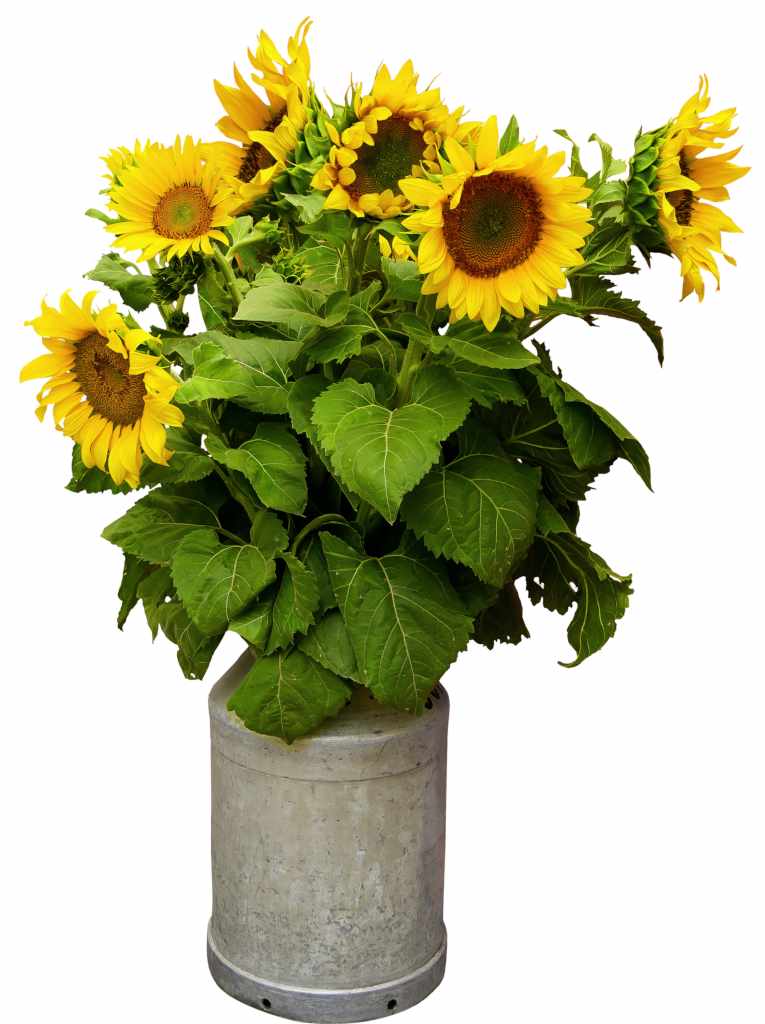
Native to the Americas, the sunflower is a perennial often grown as an annual. It is definitely the most famous member of the Helianthus genus.
It also is among the tallest, since it can reach heights of up to 10 feet (3 meters).
Whatever the species, almost all have in common the yellow color that reflects the sun’s light.
Sunflowers are particularly melliferous, and they help bees with their pollen and thus support the ecosystem.
Growing them is very easy and their blooming is an easy source of peaceful pride.
Since these plants grow quite fast, they’re perfect for flower beds, to hide a wall that’s in a sunny spot, and can even be grown potted for smaller species.
Someone gave me one as a gift. It is in a pot and the tag on it says bright light, average room temperature, feed monthly, keep soil evenly moist. Is this supposed to be kept indoors in a pot? I have never heard of that, I always they they were planted outdoors.
Hi Kara! There are many types of Helianthus, and some are dwarf species. They’ll grow perfectly fine in a container or pot. They stay smaller than if they were planted outdoors, though.
Even a larger variety can be grown in a pot:
Once it reaches the limits of the pot and becomes somewhat rootbound, it will start feeling stressed.
This will trigger blooming, which won’t be nearly as big as if it were outside. But still plenty enough to be a happy indoor ornamental!