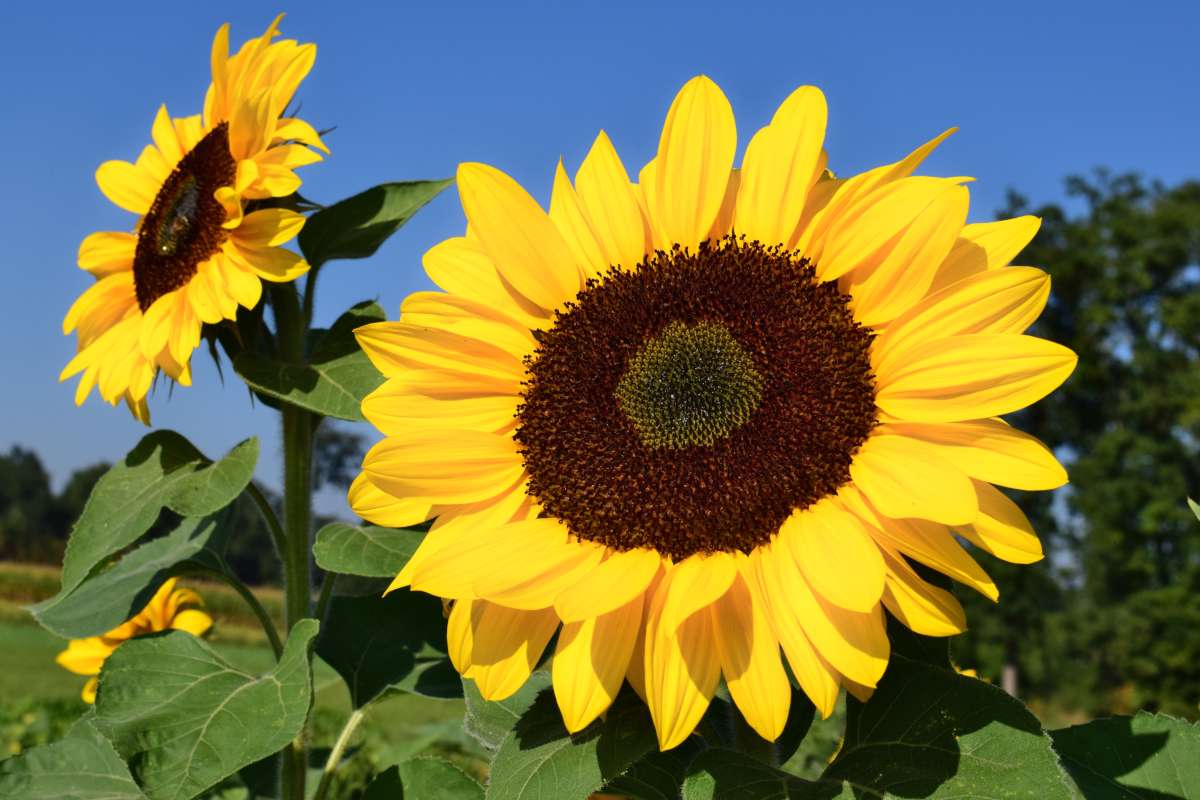
Flower heads over a foot across, carried on stems that can climb past 13 feet, with the whole head turning to follow the sun. Native to the Americas, the sunflower is grown for that yellow glare, for long-lasting bouquets and for the pollen it gives bees; give it full sun and soil that drains, and it asks for little else.
Sunflower at a glance
Name
Helianthus annus
Family
Asteraceae
Type
annual
Height
6 to 13 feet (2 to 4 meters)
Exposure
full sun
Soil
rich enough
Flowering
July to October
The ornamental impact of this great flower is amazing in the garden. It is very easy to grow in your own home, both in pots and in the ground.
Sowing and planting sunflower
First of all, check that your soil drains well when it rains, because sunflower is quite vulnerable to moist soil.
The right time to sow sunflower begins in spring under shelter but but you’ll have to wait for May if you want to sow directly in the ground.
Sow direct once the last frosts are past
Sprouting and growth of sunflower is quite rapid, which is why it is preferable to sow directly in the ground in the open when the last frosts are past.
Loosen first the soil by turning it over to a great depth.
Dig a furrow more or less 1 inch (3 cm) deep.
Sow in seed holes. A “seed hole” is simply a shallow hole in which several seeds are planted.
Position a couple seeds in the ridges at 8 inch (20 cm) intervals and cover them over.
Water on a regular basis with a fine drizzle whenever the soil is dry.
Planting sunflower
If you’ve purchased your sunflower plants already formed as young seedlings, transplant them from their nursery pot to the ground from April to June.
Water often at the start, especially in case of elevated temperatures.
Planting sunflower in pots
In pots, stake the stem against wind
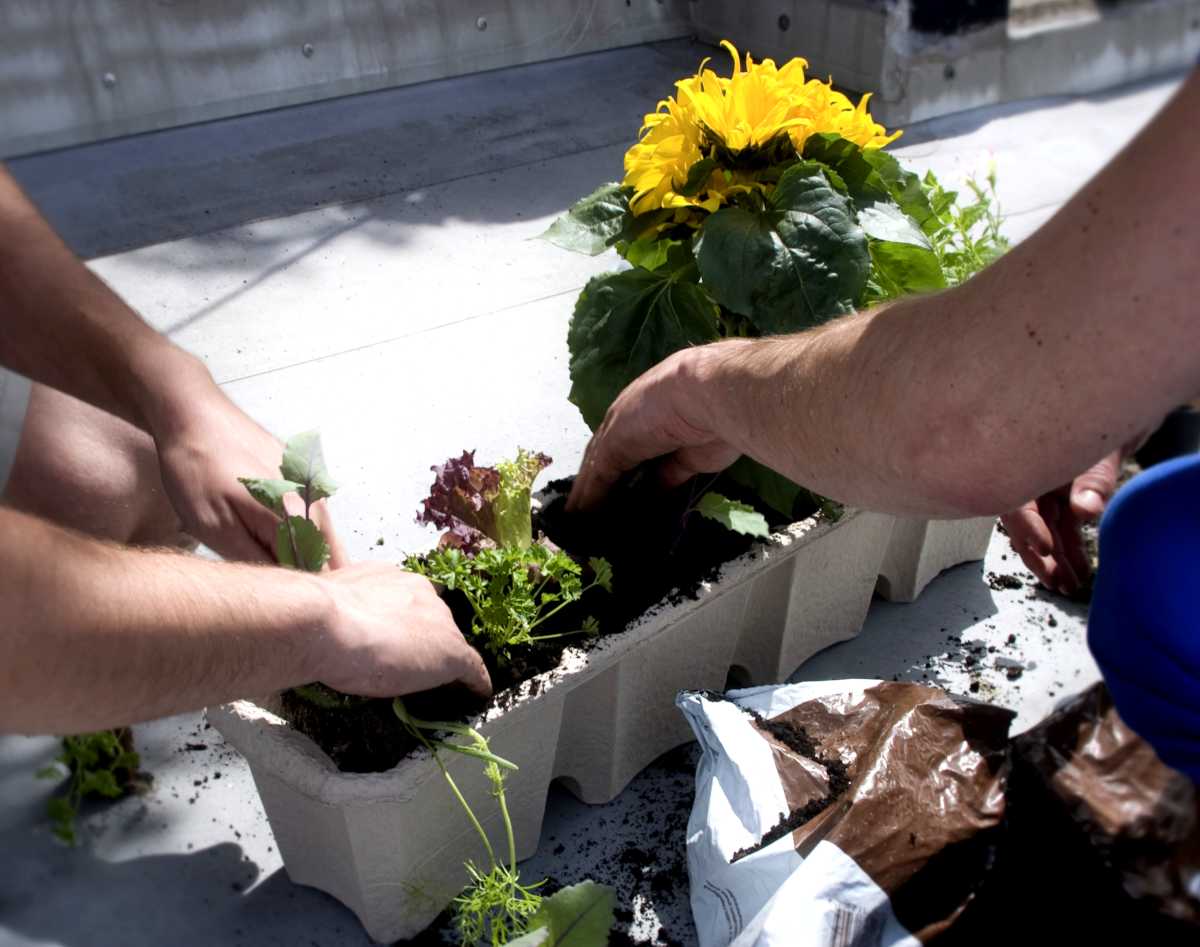
It is perfectly possible to grow sunflowers in pots and it even makes a lot of sense for those who have a terrace or balcony.
Select a pot that is large enough for the roots to feel at ease, at least 12 inches (30 cm).
Fill in with soil mix.
Prepare a small hole in the center, and plop 3 or 4 sunflower seeds in the center.
Water regularly.
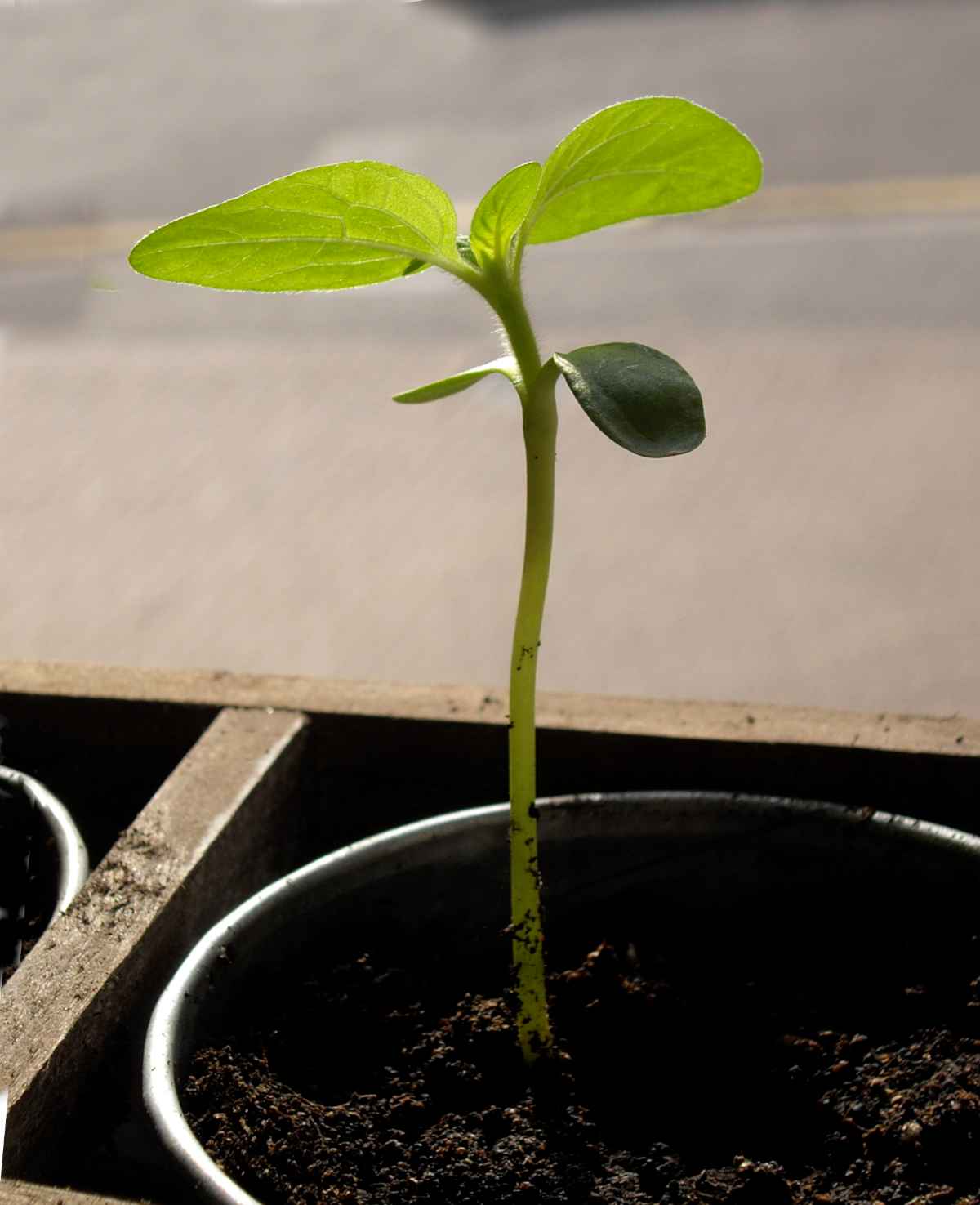
When your sunflower sprouts have formed 3 or 4 leaves, select the most vigorous plant and remove the others.
Keep watering regularly.
When in a pot, it is often best to stake the plant to avoid having the sunflower tip over under the wind.
Caring for sunflower
Deadheading sunflowers
Quite an easy plant to care for, sunflower can get by with very little care once it is comfortably settled in. However, a few proper practices will help extend the blooming and maximize appearance of new flowers.
Remove wilted flowers regularly (deadheading).
At the end of the season, you can pull the entire sunflower out because it won’t grow back from one year to the next.
Watering sunflower
Water whenever the ground dries, but sparingly
It’s one of the most critical items when caring for sunflower, especially if in a pot.
Sunflower is very vulnerable to drought. It must be watered whenever the ground is dry.
However, it hates wet soil, so only water in small amounts.
Container-grown sunflower plants require regular watering, as soon as the soil mix runs dry at the surface.
Diseases and insects that attack sunflower
Although the sunflower can grow tall and resist diseases particularly well, young sprouts can be devoured by slugs and snails.
If you start discovery whitish or pale yellow spots on leaves, you’re probably dealing with downy mildew.
Slugs and snails target the young sprouts
Ripening seed heads attract finches and sparrows, so slip a paper bag or a piece of netting over the head if you want to keep the seeds.
Cultivars and notable sunflower species
Annual species are the ones most gardeners grow
There are perennial and annual species. Annuals are more often grown and they’re the ones most people are familiar with.
Remarkable perennial species are for example Helianthus decapetulus and atrorubens. They are quite tall, but never reach the heights that annual species routinely reach.
The most common annual sunflower is Helianthus annus which bears flowers over 16 inches (40 cm) across and grow over 13 feet (4 meters) tall.
Smaller red blooms last well in bouquets
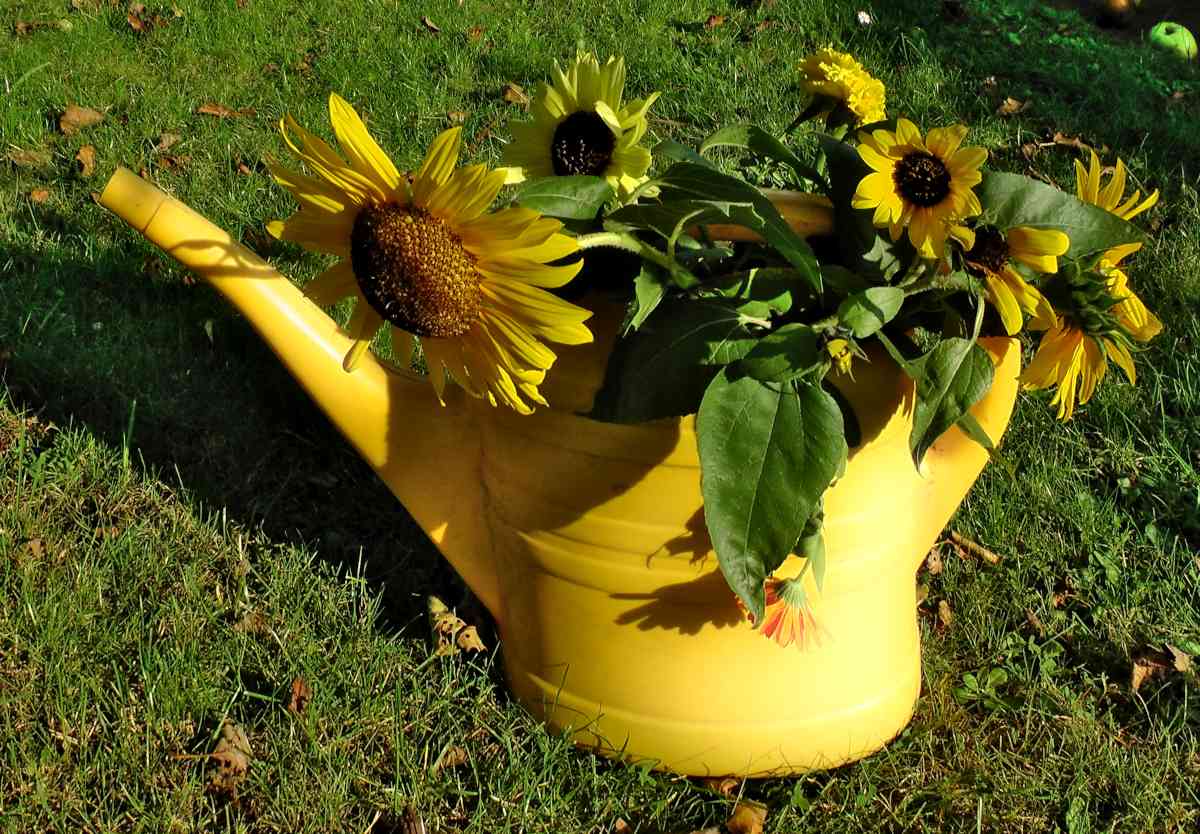
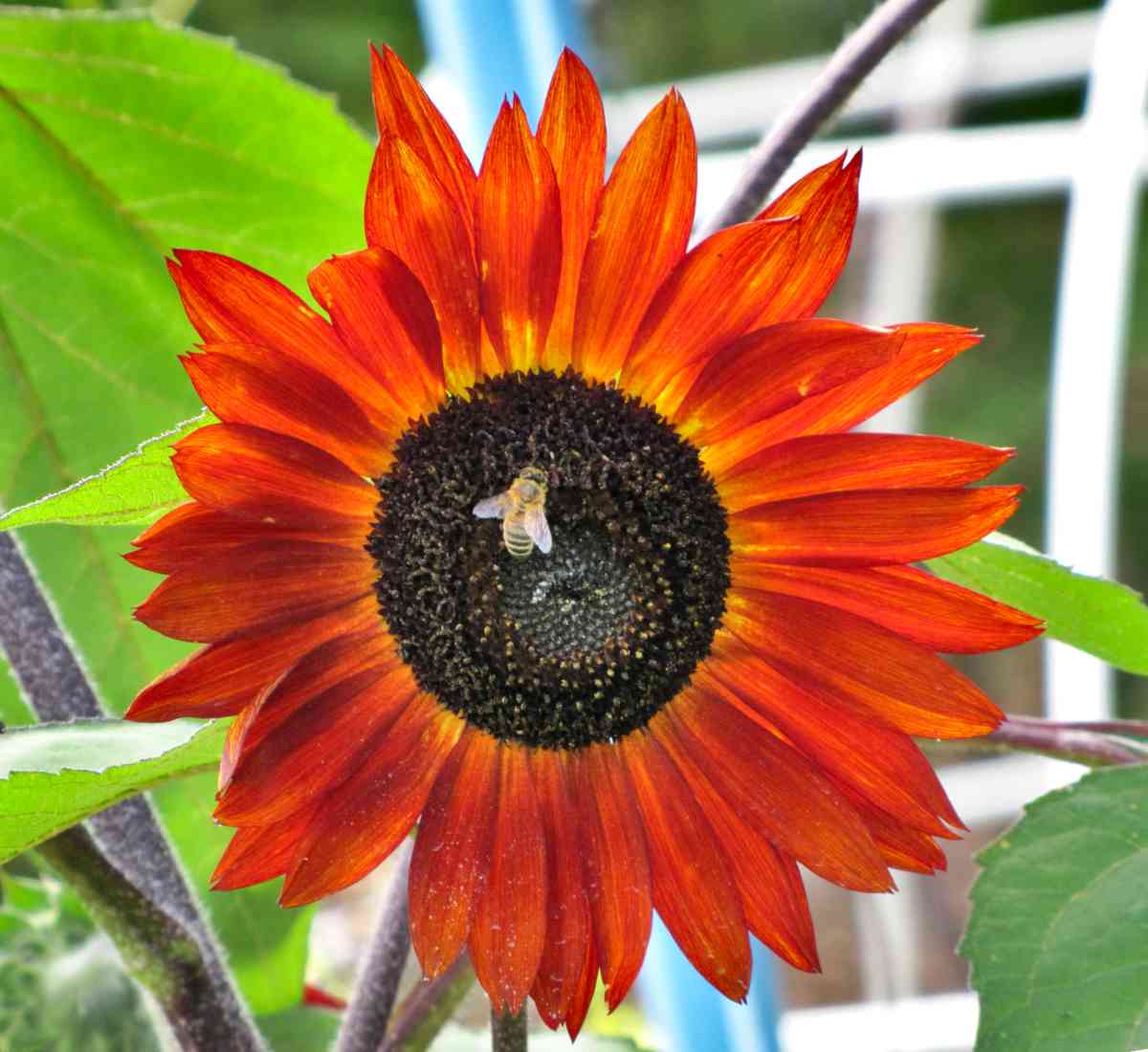
Flower bouquets can be prepared from Helianthus ‘Prado red’, these are perfect because they aren’t too large at about 4 inches (10 cm) across, and they hold for a very long time.
It’s actually possible to set up a sunflower hedge, for that, simply choose Helianthus ‘Russian Giant’, it’s a great way to mark the edge of a vegetable patch or to hide out and relax in the sun.
Which sunflower for which purpose?
Sunflowers are not interchangeable: some tower over a vegetable patch, others are bred small enough for a vase. Here is what the article says about each of them.
Which sunflower for which purpose?
Sunflower
Type
Height / flower size
Best for
Helianthus annus
Annual
Over 13 feet (4 m) tall, flowers over 16 inches (40 cm) across
The classic garden sunflower, back of a flower bed
Helianthus ‘Prado red’
Annual
Flowers about 4 inches (10 cm) across
Cut flowers, as they hold for a very long time
Helianthus ‘Russian Giant’
Annual
Tall
A sunflower hedge, marking the edge of a vegetable patch
Helianthus decapetulus, H. atrorubens
Perennial
Quite tall, but shorter than the annuals
Permanent plantings rather than yearly sowing
Smaller species can even be grown in pots, which suits a terrace or balcony.
Learn more about the sunflower
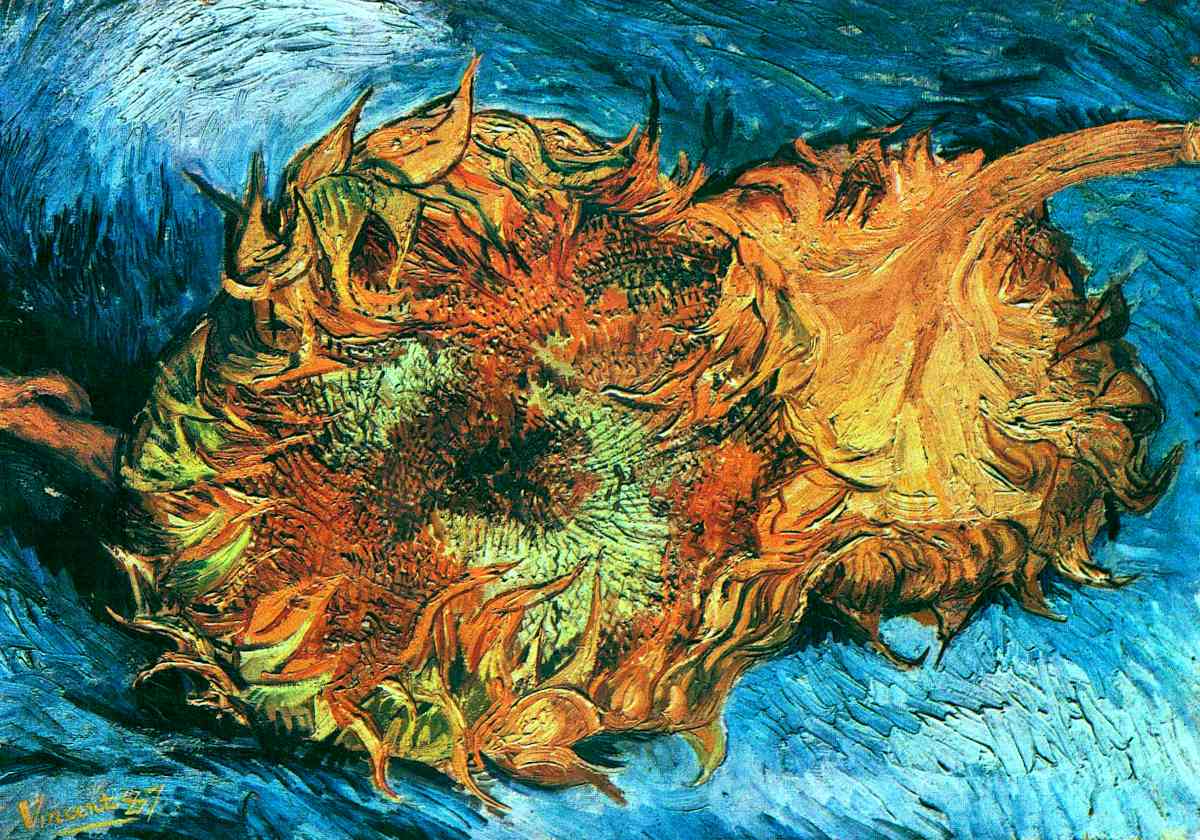
Van Gogh made the sunflower famous worldwide
Van Gogh brought fame to the sunflower the world over, but having it grow in the garden in a flower bed is where the flower really belongs. Its gorgeous yellow flower will enchant bystanders.
Native to the Americas, the sunflower is often grown as an annual. It is definitely the most famous member of the Helianthus genus. Proof that sunflowers were cultivated over 4000 years ago has been found in Mexico.
It also is among the tallest, since it can reach heights of up to 13 feet (4 meters).
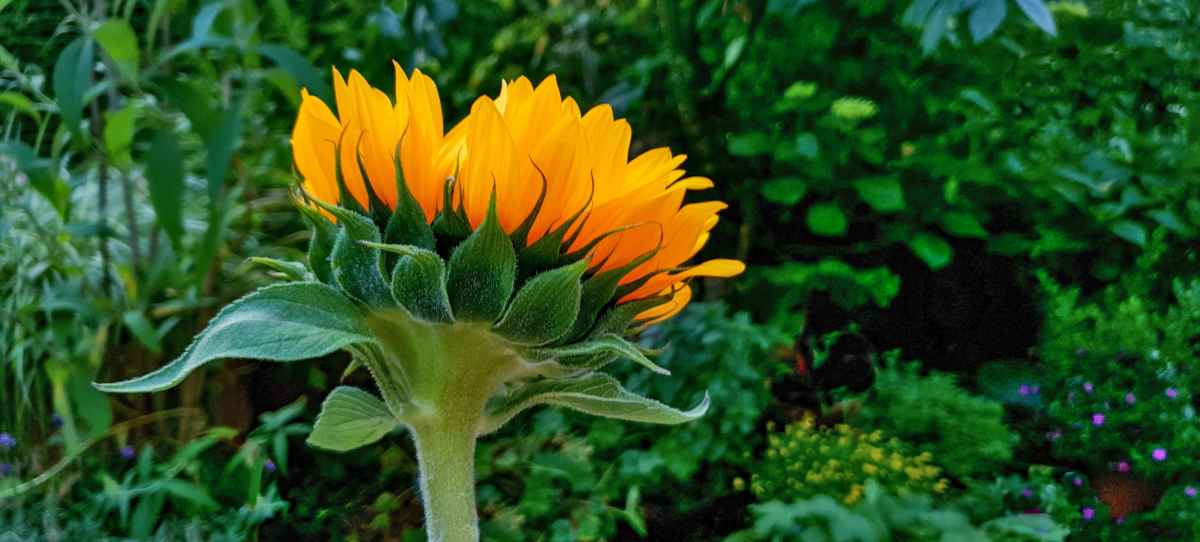
Whatever the sunflower species, they all have in common the yellow color that reflects the sun’s light, and the flower head rotates to follow the sun.
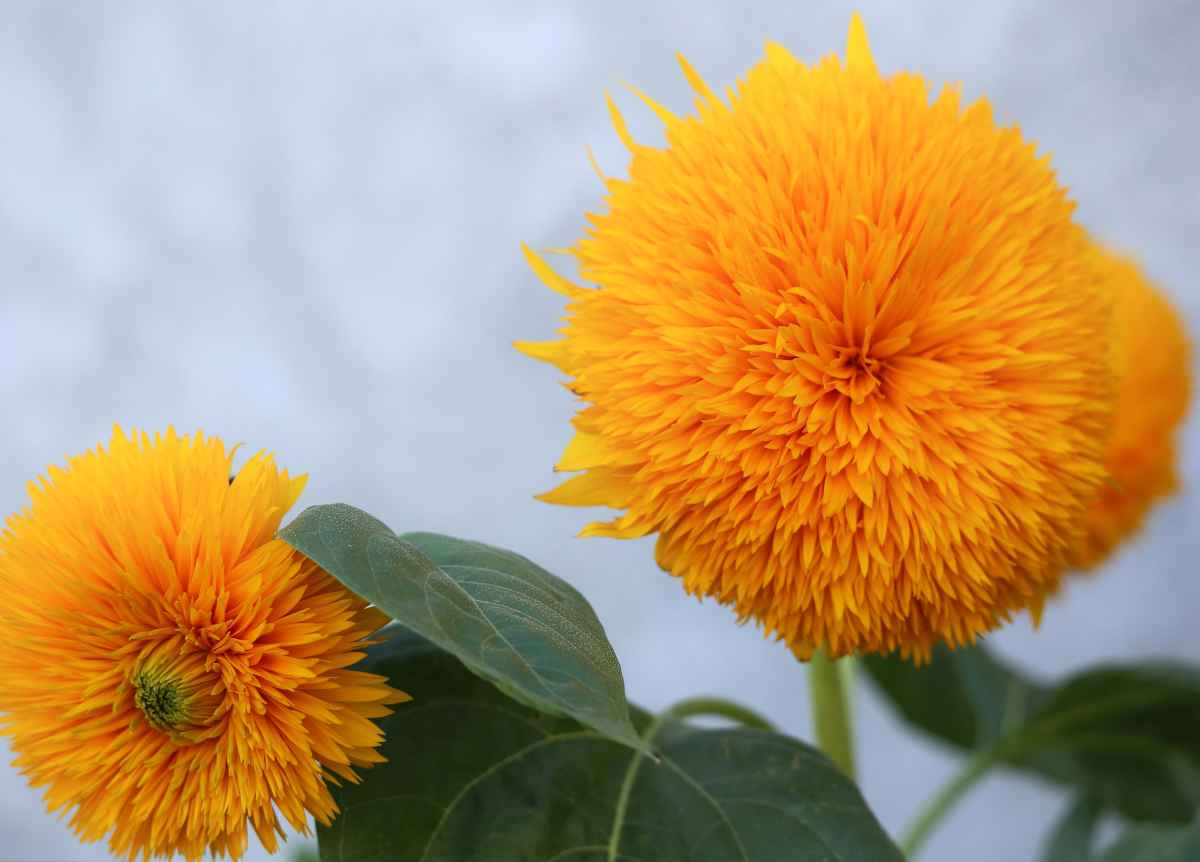
More rare sunflower varieties come in hues of orange and red.
Sunflowers are particularly melliferous. They help bees with their pollen which bees use to raise their brood.
Growing them is easy and their blooming is a gift that will make you feel proud with very little effort!
Smart tip about sunflower, helianthus
Since these plants grow quite fast, they’re perfect for the back of flower beds, to hide a wall that’s in a sunny spot. Smaller species can even be grown in pots.
Images: 123RF: Mariia Boiko, CC BY 2.0: Brett and Sue Coulstock, Rev Stan; Pixabay: Goran Horvat, heimgruen, Gabriele M. Reinhardt, Iris Hamelmann, Ulrike Leone; Public Domain: Art Gallery ErgsArt
🌿 Nature & Garden Newsletter
Gardening tips, recipes & seasonal advice, twice a week.
Should the side shoots of sunflowers be removed as with tomatoes?
Gaspard wrote on 27 July 2020 at 14 h 11 min
Hello Lola, as a rule sunflowers fall into either of two categories: branching and single stem.
If your variety is a single-stem sunflower, it’s very rare that it sends side shoots out. If it does, then pinching these will make sure the main flower will grow as massive as it should.
If, on the other hand, it’s a branching sunflower, then each side shoot should bear a flower of its own, which is nicer. It’s possible to pinch side shoots but only when they’re very young. As soon as 4 leaves have appeared on the side shoot, you can pinch the tip off and from that one side shoot, two or three will form after this. But if you pinch too late, the flower bud will have been cut off and extra side shoots won’t form. So in a nutshell, on branching sunflowers, it’s best not to pinch off side shoots because it isn’t very easy to time it right.
🌿 Nature & Garden Newsletter
Gardening tips, recipes & seasonal advice, twice a week.



Should the side shoots of sunflowers be removed as with tomatoes?
Hello Lola, as a rule sunflowers fall into either of two categories: branching and single stem.
If your variety is a single-stem sunflower, it’s very rare that it sends side shoots out. If it does, then pinching these will make sure the main flower will grow as massive as it should.
If, on the other hand, it’s a branching sunflower, then each side shoot should bear a flower of its own, which is nicer. It’s possible to pinch side shoots but only when they’re very young. As soon as 4 leaves have appeared on the side shoot, you can pinch the tip off and from that one side shoot, two or three will form after this. But if you pinch too late, the flower bud will have been cut off and extra side shoots won’t form. So in a nutshell, on branching sunflowers, it’s best not to pinch off side shoots because it isn’t very easy to time it right.