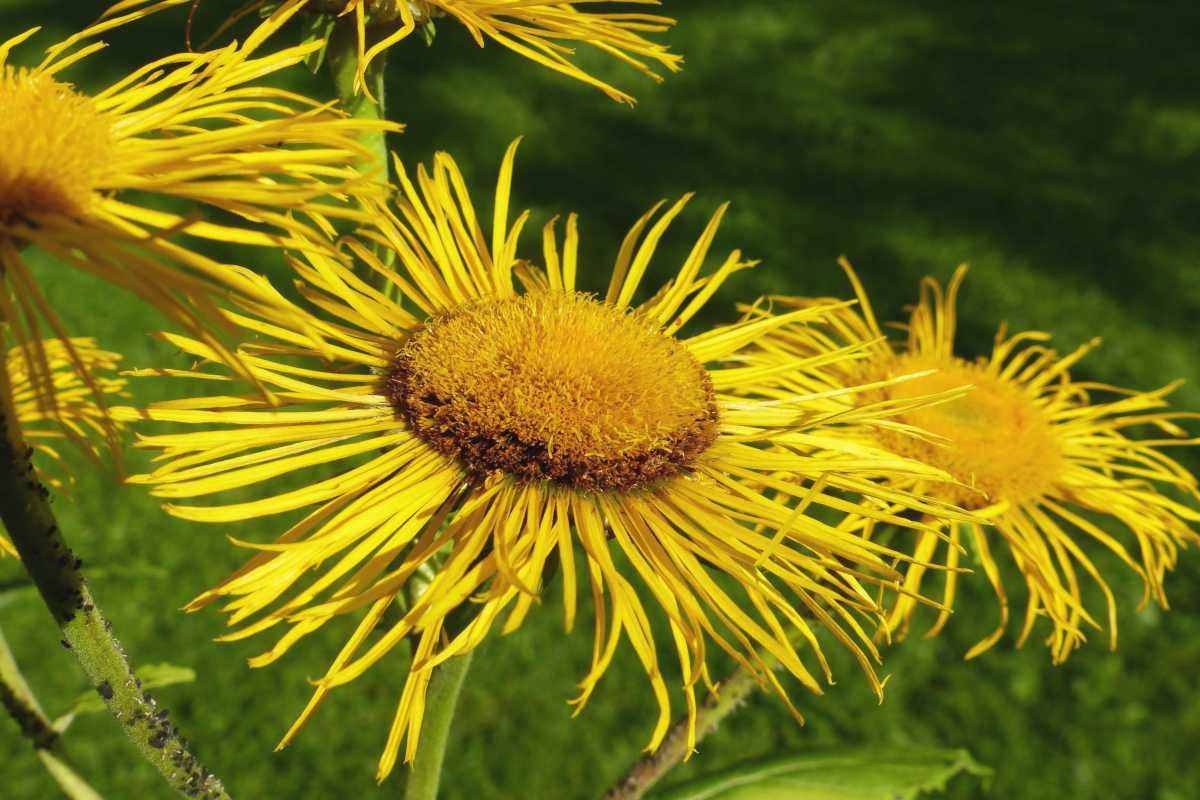
Golden daisy heads with huge, sun-like centres open through the height of summer, on plants that range from ankle-high edging to six-foot giants. Inula is the flower-bed perennial grown for easy colour and for the bees and butterflies its blooms attract; give it full sun and soil that drains freely, and flowering is flamboyant.
| Botanical name | Inula sp. |
|---|---|
| Common names | horseheal, elfdock, fleabane… |
| Family | Asteraceae |
| Type | perennial |
| Bearing | bushy or upright, depending on the species |
| Height | from 8 inches to 6 feet, again depending on species |
| Planting density | variable (per species) |
| Exposure | sunny to partly sunny |
| Soil | any type, well drained |
| Flowering | midsummer to late summer |
Ease of care, choice of many sizes, shapes and leafage make it a guaranteed asset in your landscaping.

To make sure each inula plant grows well, prepare soil so that it’s full of organic humus and make sure it drains well. The goal is to retail as much moisture as possible without drowning roots in excess water. For a flamboyant blooming, best results are in full sun. Part sun is also tolerated by Inula. Planting is in fall (spring eventually), just follow these 5 steps:
The genus runs from ankle-high edging plants to six-foot giants, so the species you choose decides where it can go. Compare height and use before you plant.
| Species | Height | Best use | Standout feature |
|---|---|---|---|
| Inula helenium | Up to 6 ft (2 m) | Standalone specimen or large flower beds | Voluminous root clump and large leaves |
| Inula ensifolia ‘Compacta’ | 8 in (20 cm) | Small flower beds and bed edges | One of the smallest species |
| Inula royleana | About 20 in (50 cm) | Mid-height summer border | Large 5-inch golden yellow flowers |
Height is the deciding factor: match the species to the scale of the bed you are filling.

Diligently do the following for healthy flowers:
Snap or snip off faded flowerheads as they brown to keep the clump looking tidy and to limit prolific self-seeding, though this will not necessarily bring a fresh flush of blooms.
Leave a few seedheads if you want self-sown plants, or cut them all off before the fluffy seed ripens.
The best way to get new Inula specimens is clump division. To do so, pull the plant out with a spade fork and tear the root ball apart with your hands. If it’s too difficult, a sharp spade can wedge and cut its way through. Then simply replant each half in the ground, separately.
Lift and split the clump while it is dormant, before new shoots push through, so the divisions barely notice the move.
When dividing Inula, make sure every piece keeps healthy roots and at least one growth point or crown bud, which may still be dormant and not visibly swollen at division time.
Water each replanted division in generously and keep the soil damp until fresh leaves appear, as the cut roots cannot yet draw much moisture.
Depending on weather, you might discover bouts of powdery mildew. If this lasts for more than a week or two, start applying a treatment.
Powdery mildew hits inula hardest when the clump is crowded and the roots are dry, so keep plants spaced enough for air to move between them and water before the soil bakes.
Pick off the worst mildewed lower leaves and bin them instead of adding them to the compost heap.
Taller species (Inula helenium for instance) will look great as standalones. However, for most other species, Inula looks best when surrounded with other flowers such as:
The daisy heads are a magnet for bees and butterflies, so inula earns its place in a pollinator border.
Give elecampane an arm’s width of clear ground, because its broad basal leaves quickly swamp anything tucked in too close.
Slip late-flowering companions such as asters or rudbeckia nearby, so the bed keeps colour once the inula heads fade.
Inula helenium: topping off at nearly 6 feet (2 meters), this is one of the tallest inula species. The voluminous root clump, large leaves and flowers hint to its vocation and calling: I. heleniumlarge flower beds.

Inula ensifolia ‘Compacta’: the complete opposite of I. helenium, this is probably one of the smallest species. Never will it grow any higher than 8 inches (20 cm) and its simply perfect for small flower beds and along edges.
Inula royleana: an in-between, just the right size compared to I. helenium and I. ensifolia ‘Compacta’: it only measures about 20 inches (50 cm). Its large 5-inch golden yellow flowers will flash their joy around your summer garden.
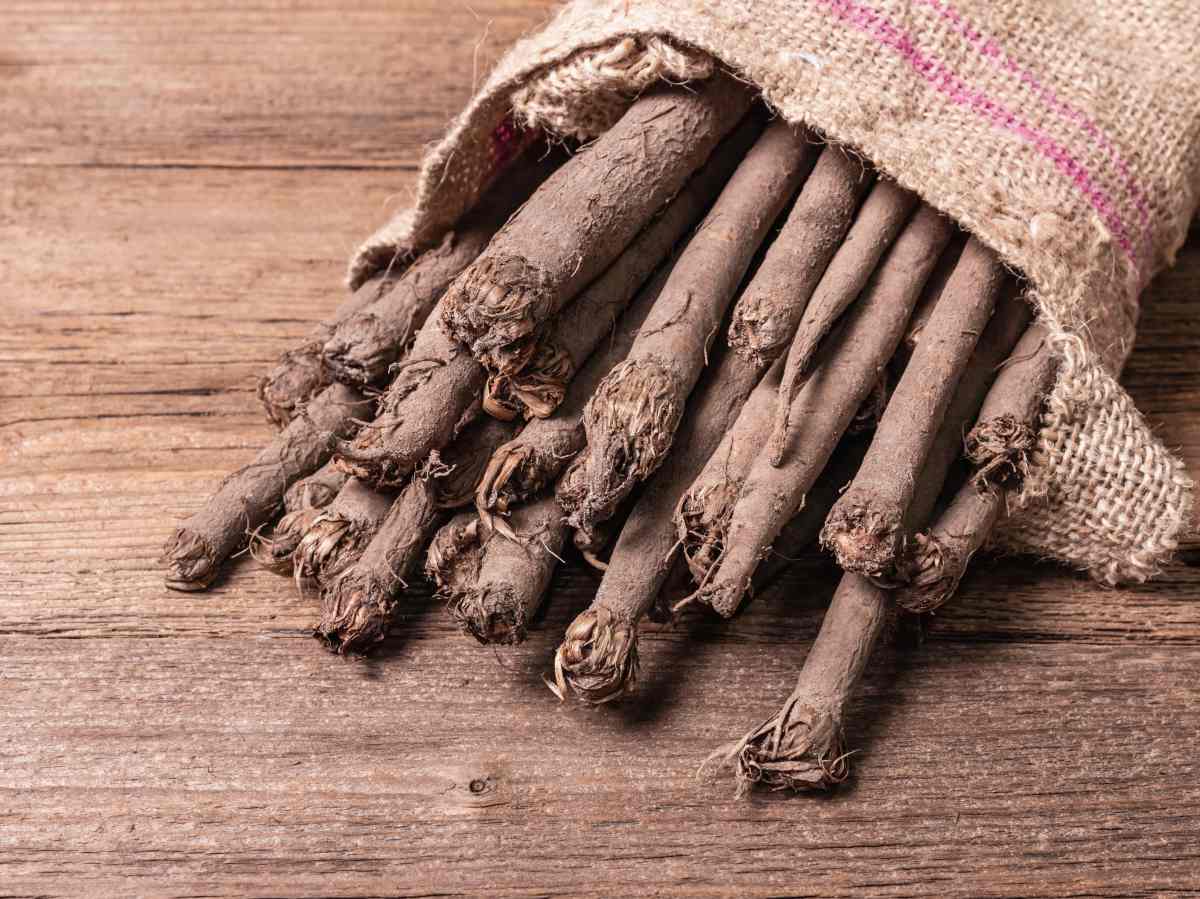
Inula helenium or Great Inula is an edible plant, it’s even quite often used for its medicinal benefits. The roots of Inula helenium is indeed often categorized as a herb. It works for several different types of ailments, for instance against cough and various inflammations of organs involved in breathing.
The most common manner of using Inula is simply to brew an infusion. Steep the powdered roots in hot water and it will soothe sore throat and clear airways.
Slice the thick roots thinly before drying, since whole pieces stay damp in the middle and go mouldy.
Elecampane (Inula helenium) root has a bitter, camphoraceous flavour, and it has traditionally been candied as a sweetmeat and used to flavour bitters, vermouth and absinthe-style liqueurs.
Using Inula helenium is not recommended for pregnant women.