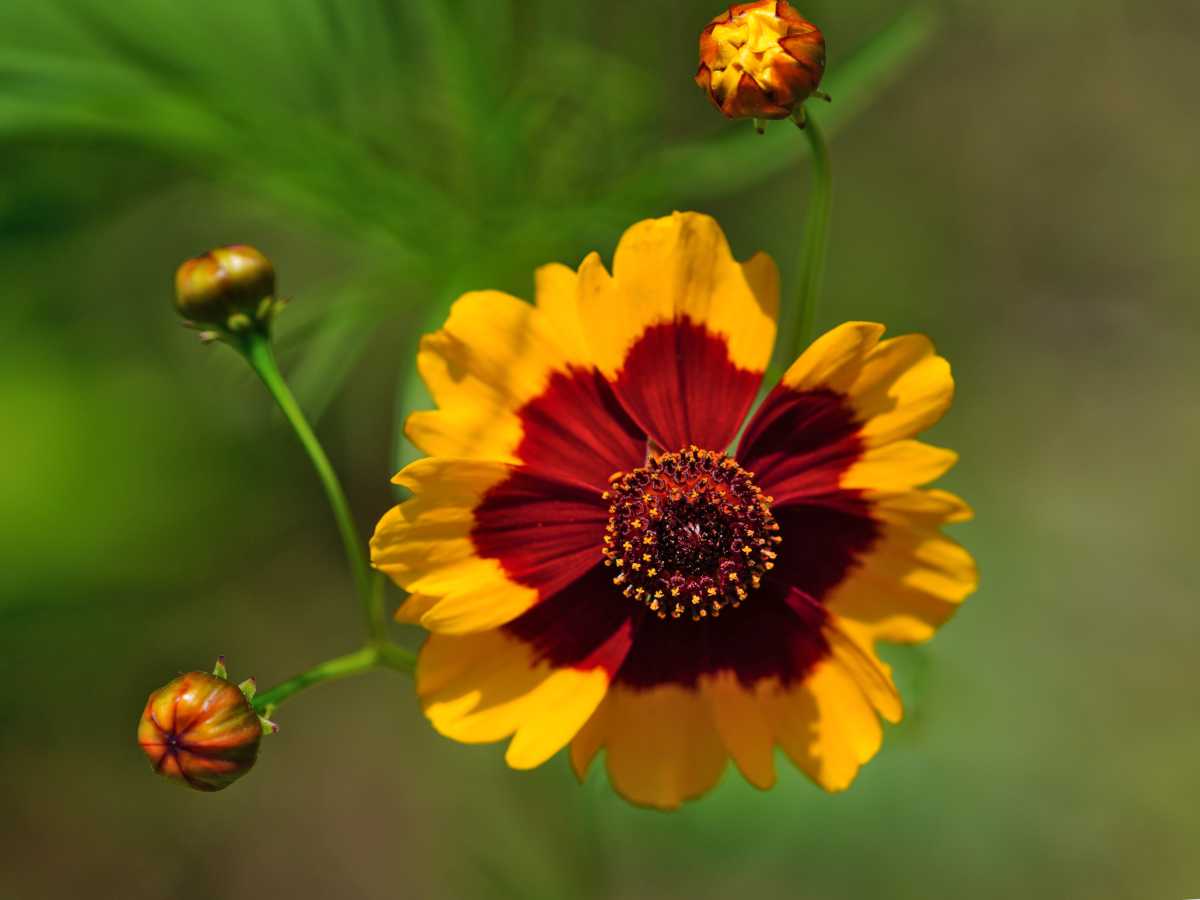
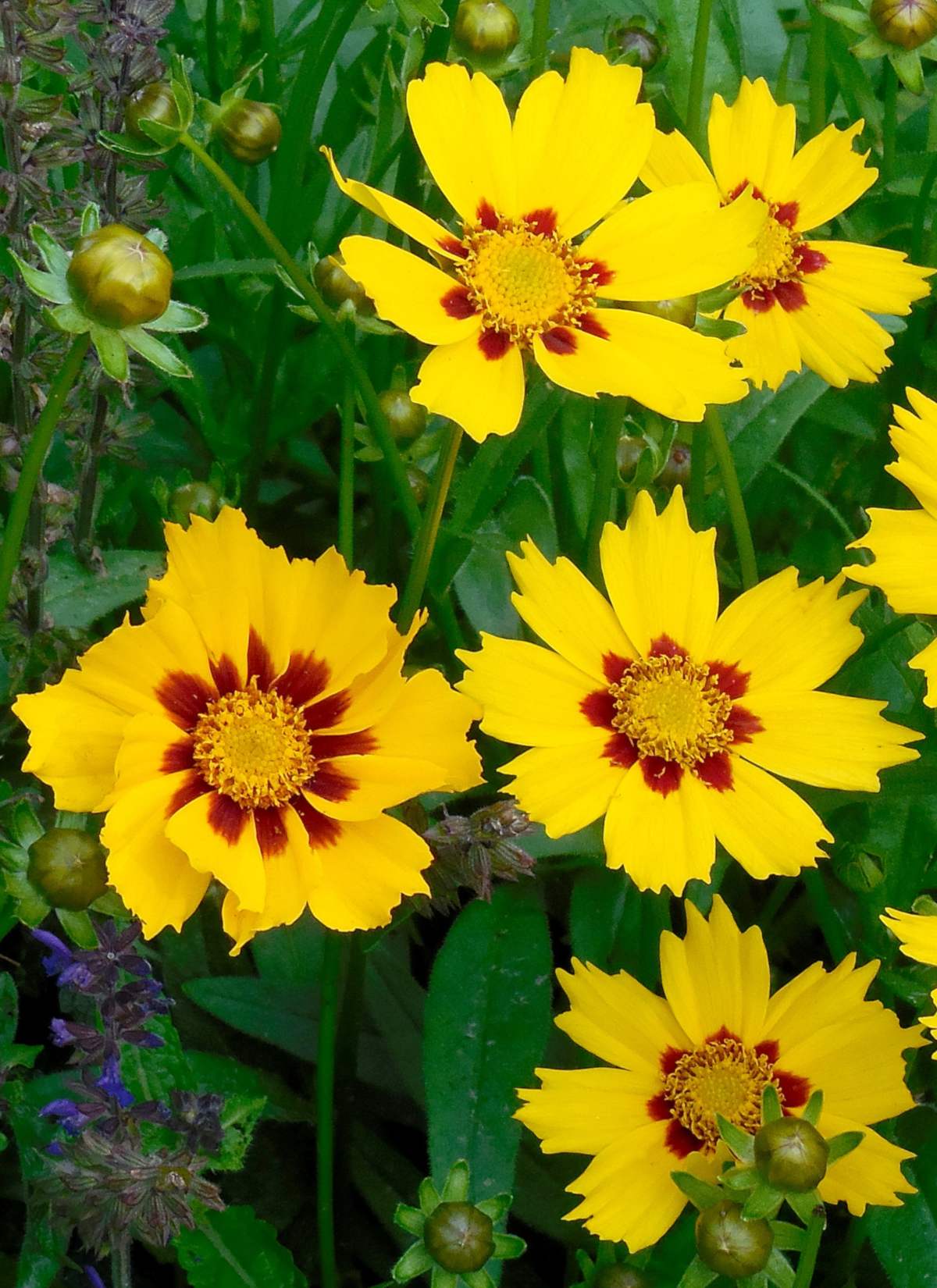
Bright yellow daisy flowers with a purple heart rise from a bushy, herbaceous clump native to North America, opening from late spring to early fall. Tickseed (Coreopsis) brightens beds, edges, garden boxes and containers, and asks little in return: give it full sun and ordinary, well-drained soil, even dry, and flowers come abundantly.
| Name | Coreopsis |
|---|---|
| Family | Asteraceae |
| Type | perennial |
| Height | 15 to 40 inches (40 to 100 cm) depending on the variety |
| Exposure | full sun |
| Soil | ordinary, well drained |
| Flowering | late spring to early fall |
Both easy to care for and bearing abundant flowers, the ornamental impact is guaranteed, whether in flower beds, garden boxes or containers.
Depending on the place you live, and on the variety you’re growing, Coreopsis either grows as a perennial or an annual.
Coreopsis planting is either in fall or in spring, but avoid times of frost and high temperatures.
Propagate it through crown division at the beginning of spring.
Sowing early in the season (April) under shelter or in a nursery, transplant to the ground when the last frost date has passed.
It’s possible to sow directly in the plot after this date (last frost) but the blooming will appear much later.
For an even earlier blooming, such as end of spring, sow directly in the plot in March with protection. A tunnel or cold frame are perfect.
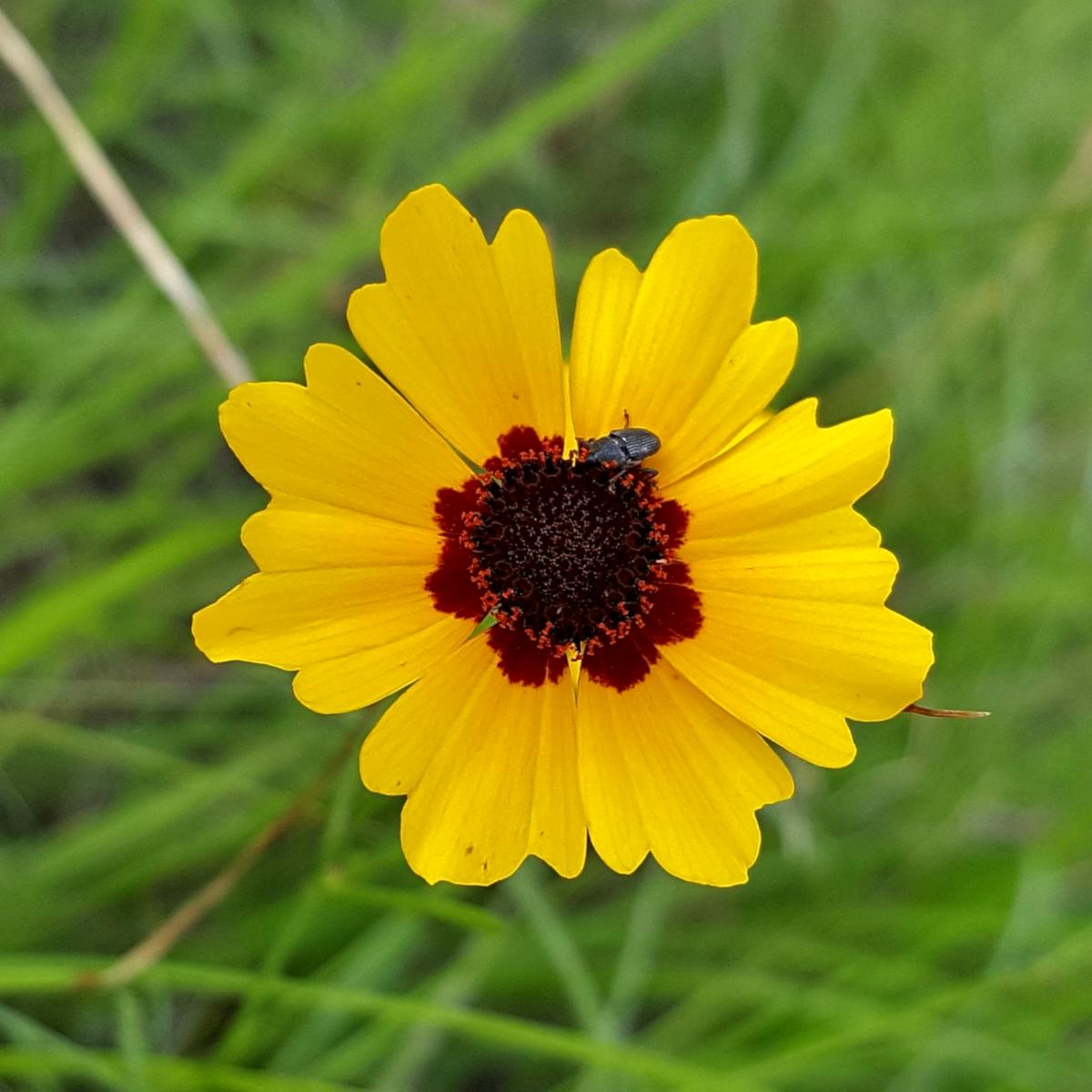
Cut wilting flowers off as they die away to stimulate new blossoms.
Pull annual varieties out after they’ve given you new seeds to plant for next year. Lay the stems across the growing bed for mulch and fertilizer.
Water in case of strong heat wave or of extended drought.
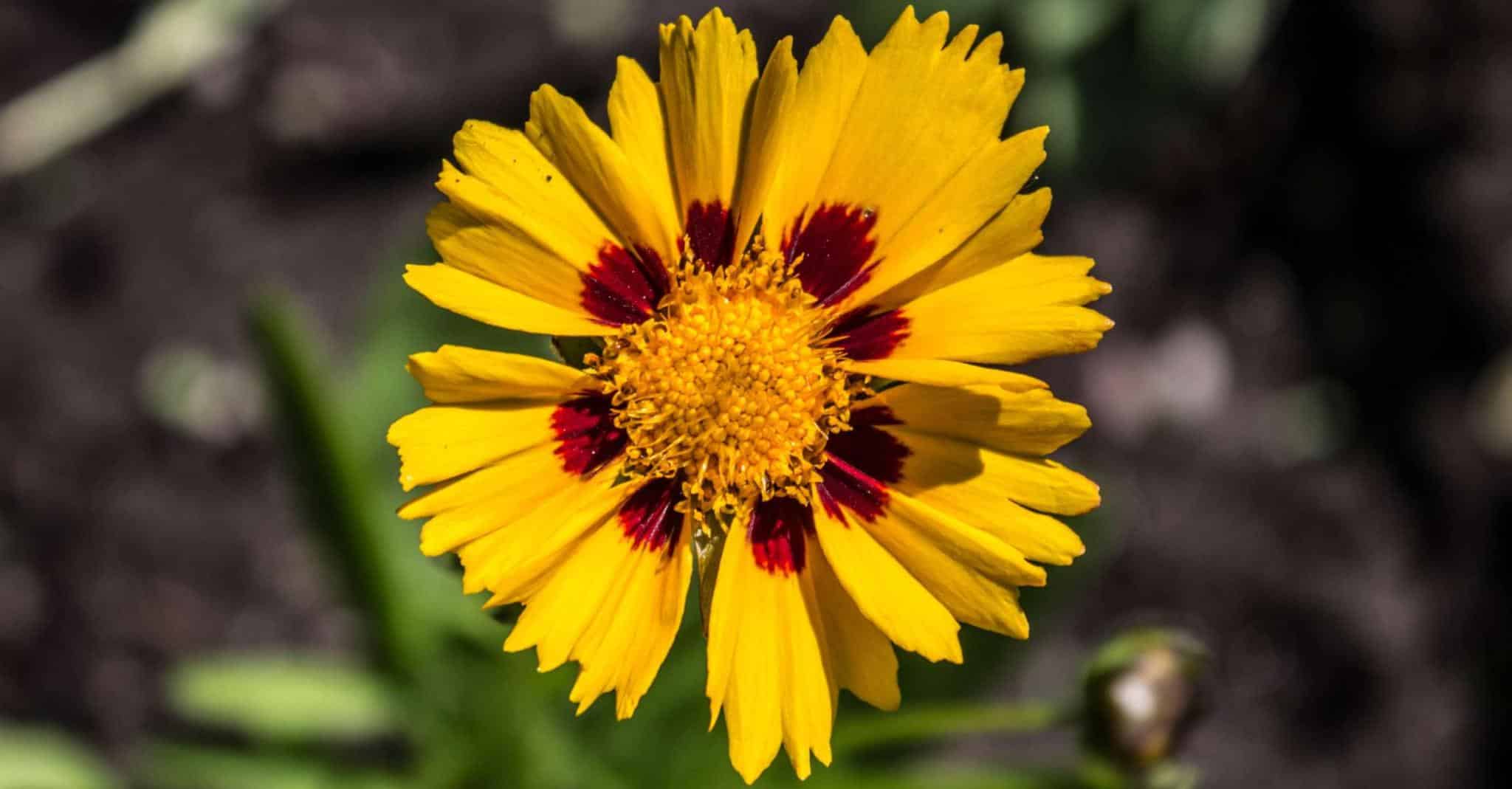
This herbaceous plant native to North America exists both as an annual and as a perennial.
It grows to a bushy shape.
It often brightens flower beds and edges with its bright yellow flowers.
There are a few interesting Coreopsis varieties, for instance:
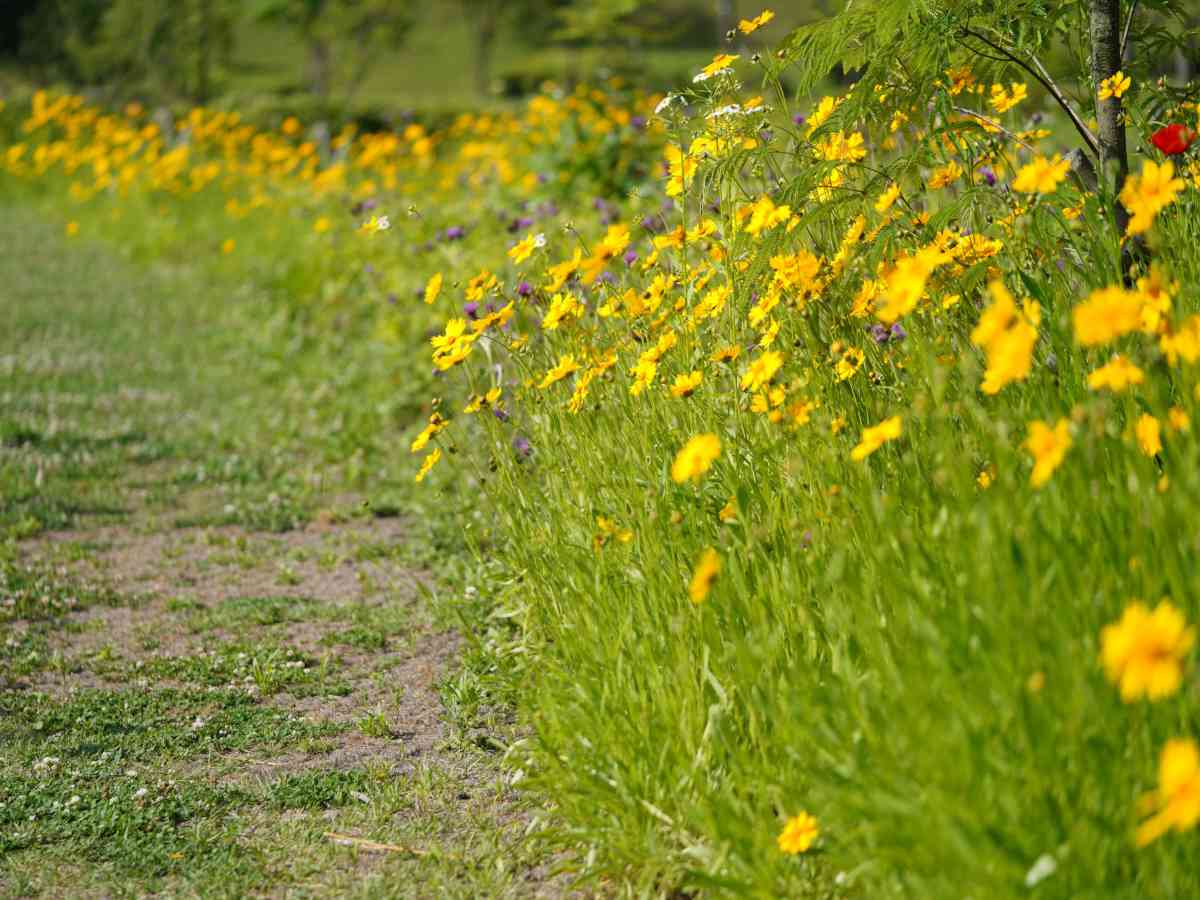
Coreopsis grandiflora is remarkable: it grows over 3 feet tall (1m). Its yellow flowers bloom from May to September.
Coreopsis lanceola is shorter, only 1½ feet tall (40-45 cm). Yellow flowers as well.
Coreopsis rosea has flowers that are an elegant pink hue.
To appeal to other senses, try Coreopsis tripteris that releases an anis-like fragrance.
Coreopsis verticillata is taller than the lanceolata, reaching 2 feet / 60 cm very quickly.
There are also a great many hybrid tickseed flowers with many different shapes and colors.
This is most often Coreopsis tinctoria which has a beautiful blooming during the entire summer. Flowers are yellow with a purple heart.
The species grown in gardens differ mainly in height, in flower colour and in whether they return each year. Here is what the article says about each one.
| Species | Type | Height | Flowers and features |
|---|---|---|---|
| Coreopsis grandiflora | Perennial | Over 3 feet (1 m) | Yellow, from May to September; best off staked |
| Coreopsis lanceola | Perennial | 1½ feet (40–45 cm) | Yellow flowers |
| Coreopsis rosea | Perennial | Not stated | Elegant pink hue |
| Coreopsis tripteris | Perennial | Not stated | Releases an anis-like fragrance |
| Coreopsis verticillata | Perennial | 2 feet (60 cm) | Reaches its height very quickly |
| Coreopsis tinctoria | Annual | Not stated | Yellow with a purple heart, all summer long |
Beyond these, many hybrid tickseeds offer further shapes and colours.
Stake taller stems to avoid having them break due to wind.
Divide clumps every 2-3 years.