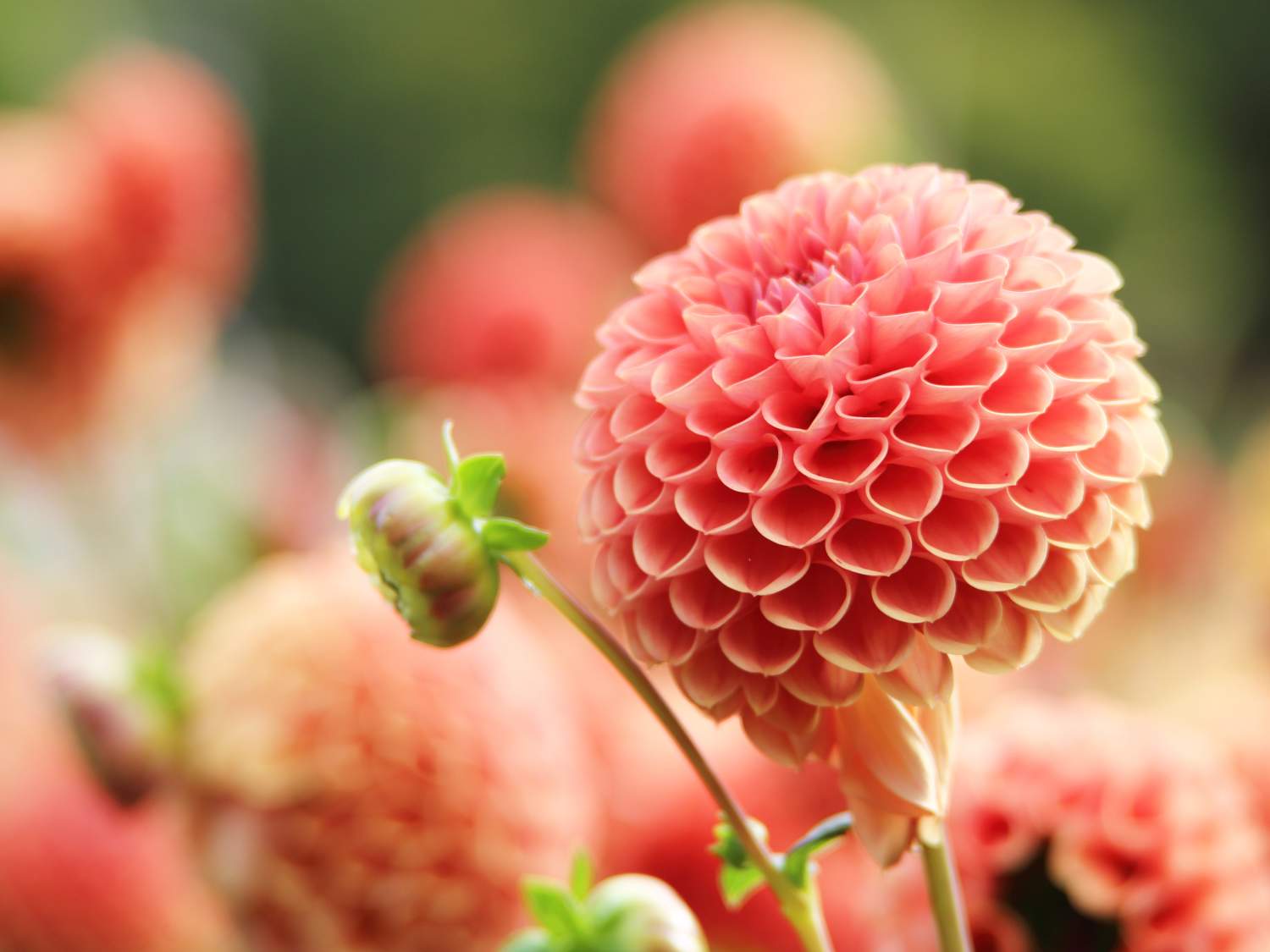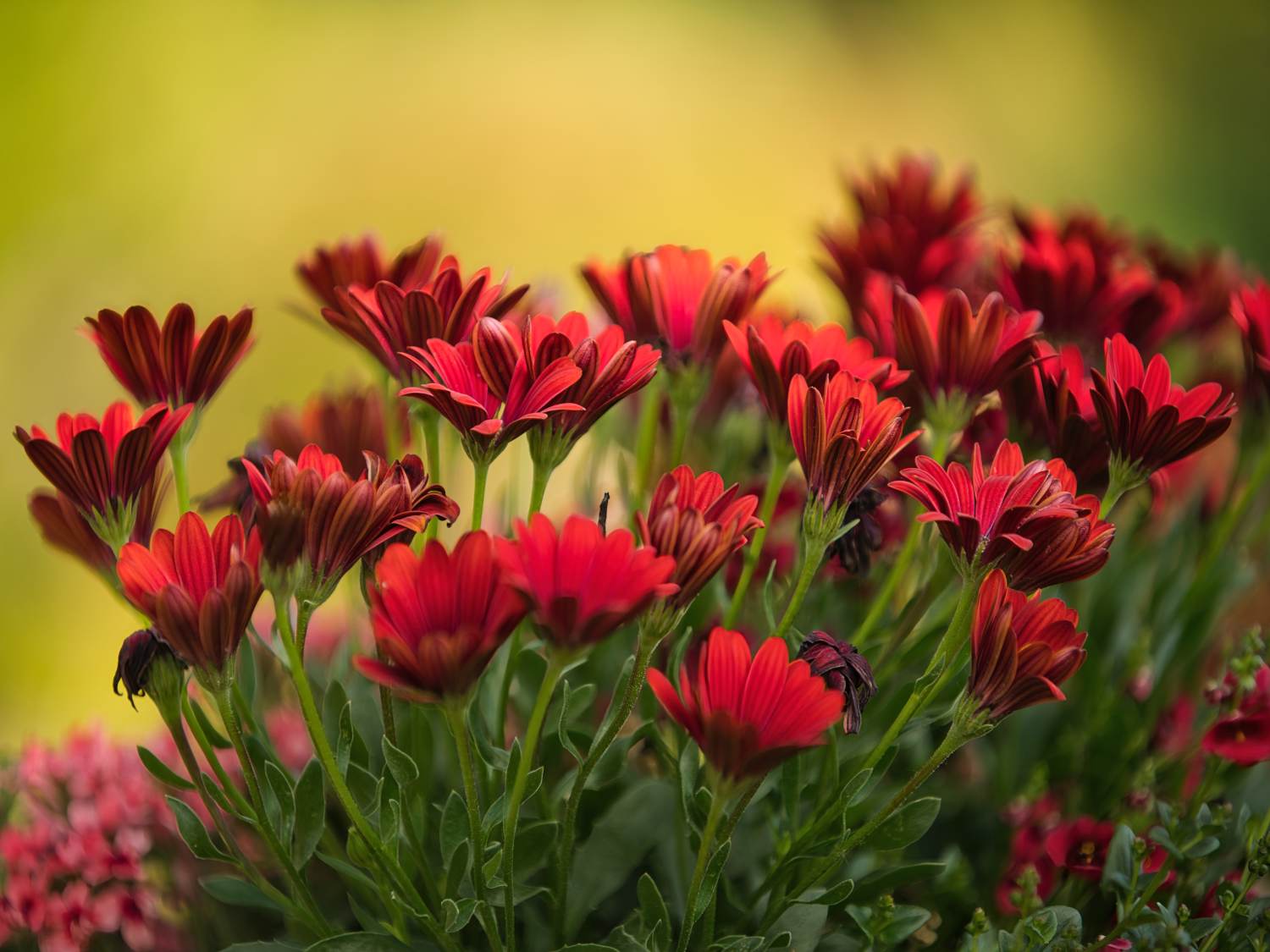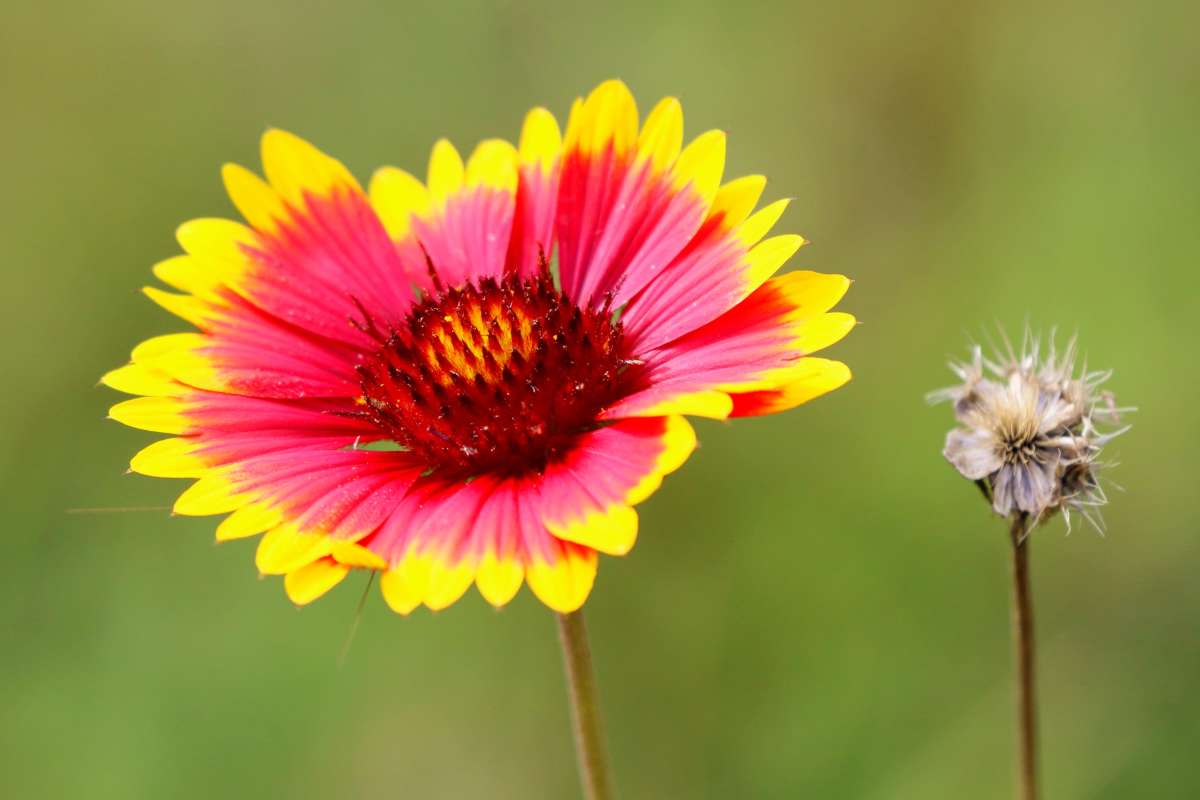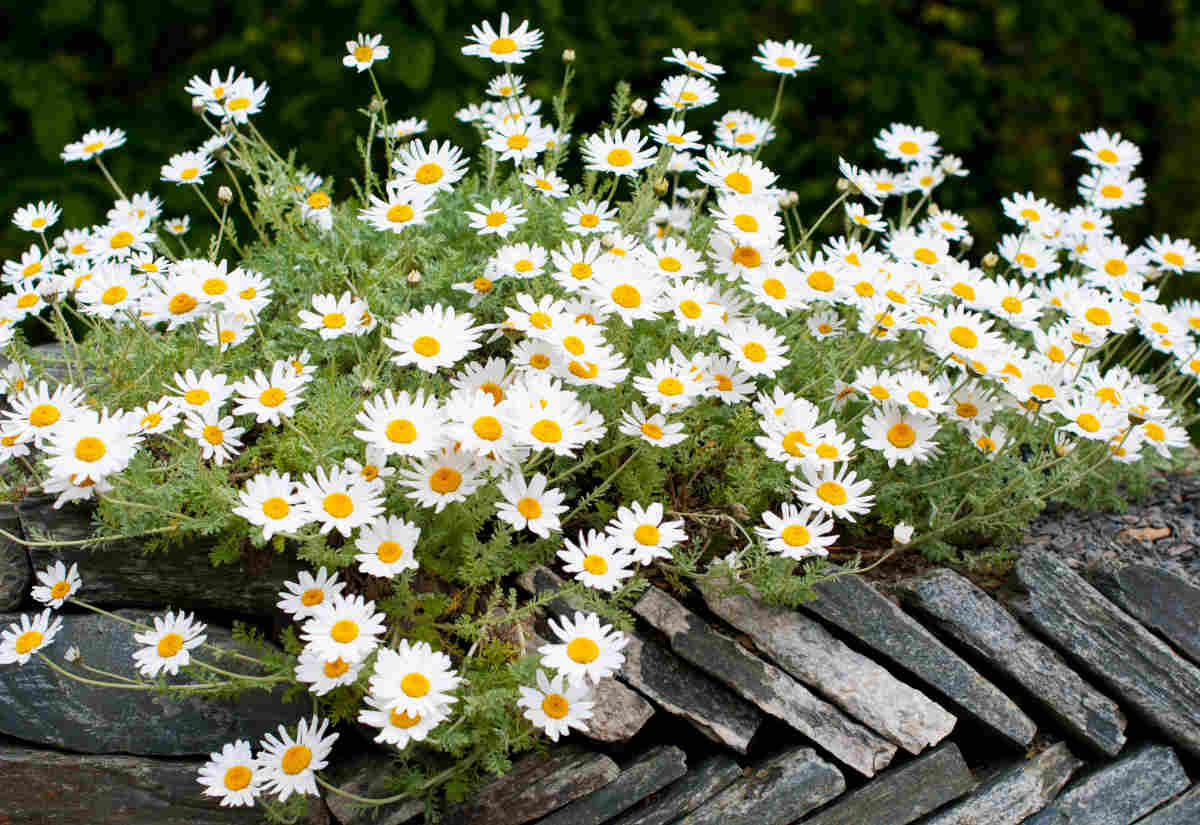
Daisy-like flowerheads on a rounded, evergreen clump around 40 inches (1 m) tall, produced without pause from spring to fall: anthemis belongs to the same family as the aster and earns its keep in any sunny border. Give it full sun, rich soil that drains freely, and shelter from frost, and the flowers keep coming.
| Name | Anthemis |
|---|---|
| Family | Asteraceae |
| Type | perennial |
| Height | 40 inches (1 m) |
| Exposure | full sun |
| Soil | ordinary |
| Foliage | evergreen |
| Flowering | Summer/Autumn |
Take delight in these little flowers that adapt to our climates so well.

In spring in a sheltered spot and in full sun. Anthemis requires rich and well drained soil because it loathes having its roots dwell in water.
Since anthemis fears winter frost spells, it will have to be planted in a pot if the temperature lastingly drops below 40°F (5°C).
If that’s the case, bring the pots inside in November in a cool dry room, and leave them there until spring.
Remove wilted flowers regularly (deadheading) in order to boost flower-bearing.
Give it a round shape at the beginning of spring, pruning the plant back lightly (about ⅓ the height of the stems).
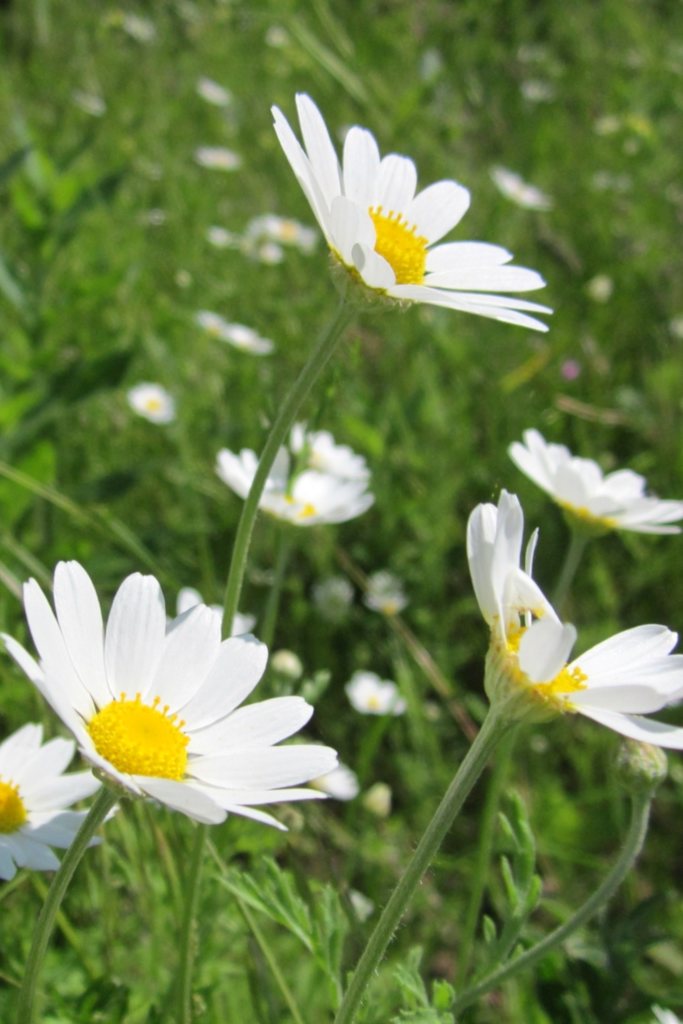
This plant is vulnerable to freezing and won’t survive extended cold spells.
If you’ve kept them in pots, simply bring them indoors in a room that doesn’t experience freezing and keep watering them small amounts 1 or 2 times a month.
In the ground, it will survive from one year to the next if doesn’t freeze in your area.
If it freezes in your area, cut all the stems back short enough and spread thick mulch (an inch or two, several centimeters) on the bunch.
Anthemis asks for very little, but each job has its moment. Here is what the plant needs, and when.
| Task | When | What to do |
|---|---|---|
| Planting | Spring | A sheltered spot in full sun, in rich, well-drained soil that never waterlogs |
| Taking cuttings | Spring or end of summer | Straightforward propagation for this perennial |
| Deadheading | Throughout flowering | Remove wilted flowers regularly to boost flower-bearing |
| Pruning | Beginning of spring | Light trim of about a third of the stem height, to a round shape |
| Moving pots under cover | November until spring | A cool, dry, frost-free room, with small waterings once or twice a month |
| Protecting plants in the ground | Before cold sets in | Cut the stems back short and spread an inch or two of mulch over the clump |
Get the winter right and the rest of the year looks after itself.
Most garden anthemis are forms of dyer’s chamomile (Anthemis tinctoria) or the silver-leaved Anthemis punctata, and they differ mainly in flower colour and in how tall the clump builds up. The table below sets the popular ones side by side.
| Variety | Flower colour | Foliage | Best use |
|---|---|---|---|
| ‘E.C. Buxton’ | Soft lemon, yellow eye | Green, finely cut | Mixed sunny borders |
| ‘Susanna Mitchell’ | White, yellow eye | Silvery grey | Front of border |
| ‘Kelwayi’ | Bright golden yellow | Green, aromatic | Cut flowers |
| ‘Sauce Hollandaise’ | Pale cream, yellow eye | Green, ferny | Pastel schemes, pots |
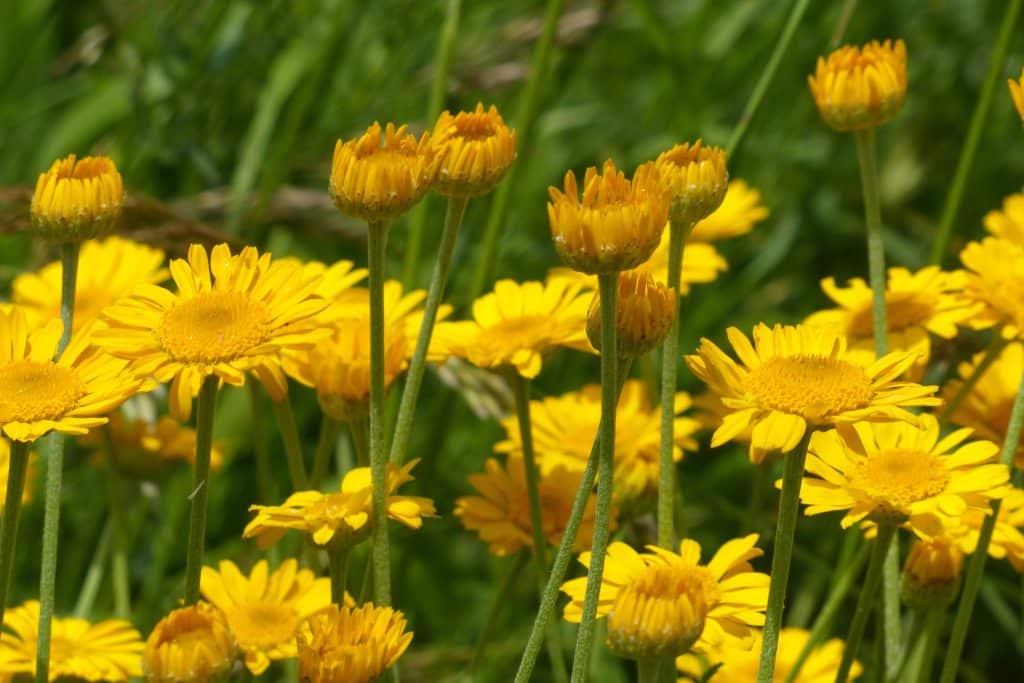
Sometimes mistakenly thought to be a daisy, anthemis will give you a very beautiful bunch of flowers from spring to fall. This plant is part of same family as the aster.
Its vulnerability to the cold is perhaps the only drawback one can pin on this otherwise appealing plant.
If you expect cold in the next few weeks and that your plant is rooted directly in the ground, surround it with mulch for the winter and even cover it with horticultural fleece.
If you have the option to bring your plant in to a cool lit place where it never freezes, do so.
Anthemis is very much at ease in pots, and the result is often a great success.