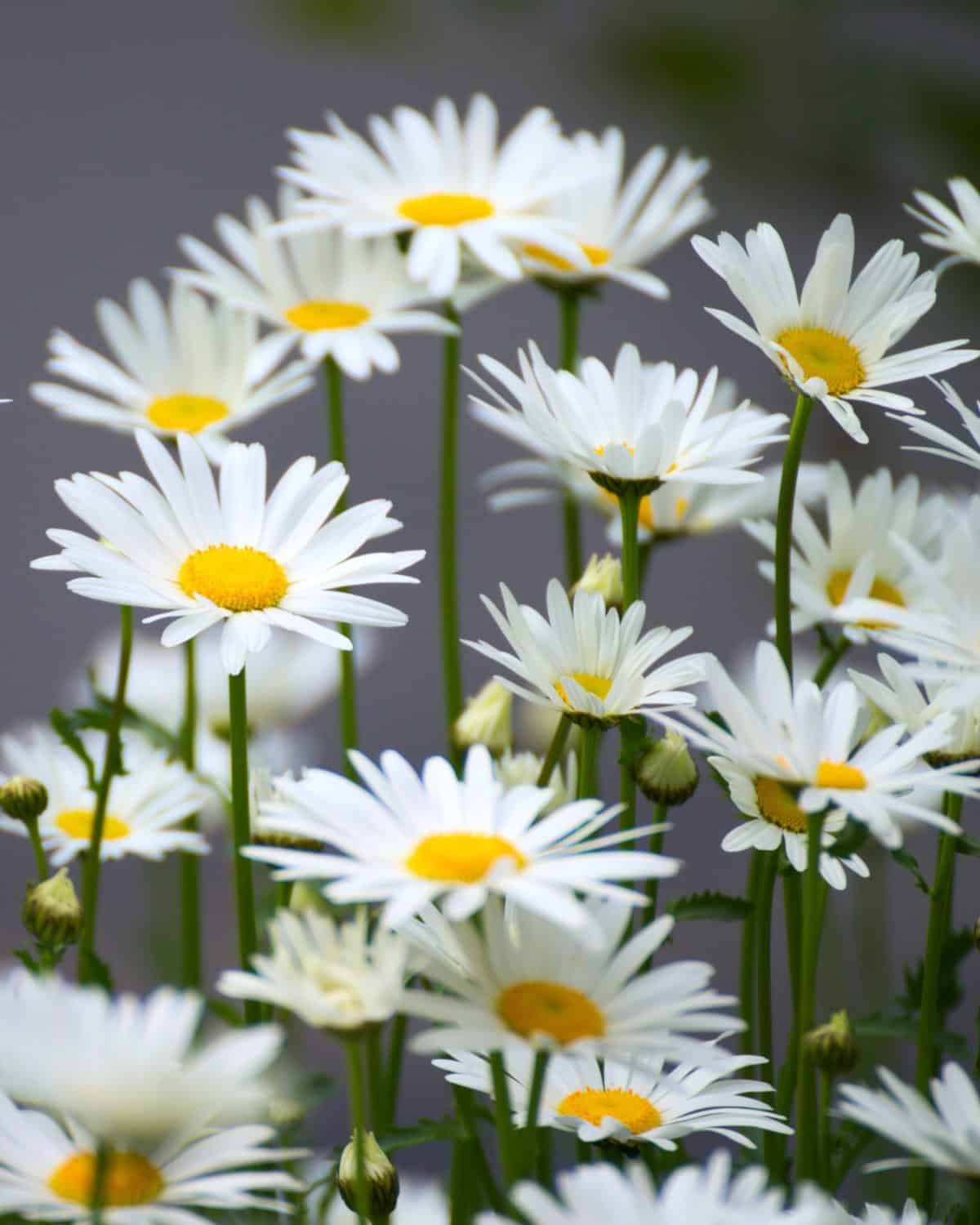
Chamomile (Chamomilla recutita) flowers from early summer to mid-autumn on stems anywhere between 8 and 40 inches tall, and it sows itself into any free space nearby. Give it full sun and ordinary soil and it asks for virtually no care at all, repaying you with flowers for relaxing, digestion-friendly herbal tea.
| Name | Chamomilla recutita |
|---|---|
| Family | Asteraceae |
| Type | perennial |
| Height | 8 to 40 inches (20 to 100 cm) |
| Exposure | full sun |
| Soil | ordinary |
| Flowering | early summer to mid-autumn |
There are a great many chamomile varieties. The blooming season differs slightly for each, even though they bloom from early summer to mid-autumn.
All the chamomile varieties are inclined to full sun emplacements. Oftentimes, however, light shade is enough, especially if the weather is hot and dry.
Chamomile spontaneously self-seeds. You’ll learn that when planted in the ground, it tends to naturally spread out wherever space is available.
Chamomile can be sown, divided, or simply left to spread by itself. The table below sets out what each route involves and when to begin.
| Method | When | What it involves |
|---|---|---|
| Direct sowing | Spring, once frost risk has passed | Seeds sown straight into the ground where the plants are to grow |
| Sowing under a cold frame | Earlier than spring sowing | Seedlings raised under protection, then moved out at the beginning of summer |
| Natural self-seeding | No action needed | The plant sows itself and colonises any free space nearby |
Whichever route you take, the plant then grows on with almost no follow-up.
Chamomile requires virtually not the least bit of care because it is an easy-going plant that has the advantage of growing without being followed-up at all.
Cutting off wilted flowers as soon as they wilt. The rationale behind this is that it will spur the plant into growing new flower heads, but this practice isn’t absolutely necessary.
At the end of the season, cut the stems as short as you can and it will burst back in the following spring.
Potted chamomile, like all plants that grow and bloom in garden boxes or pots, requires regular watering.
Chamomile flowers are harvested when they are still freshly opened while already having matured to the point where is different parts are clearly visible and distinct.
To prepare a good mug of chamomile herbal tea, simply steep about a full table spoon of flowers in boiling water for 10 minutes.
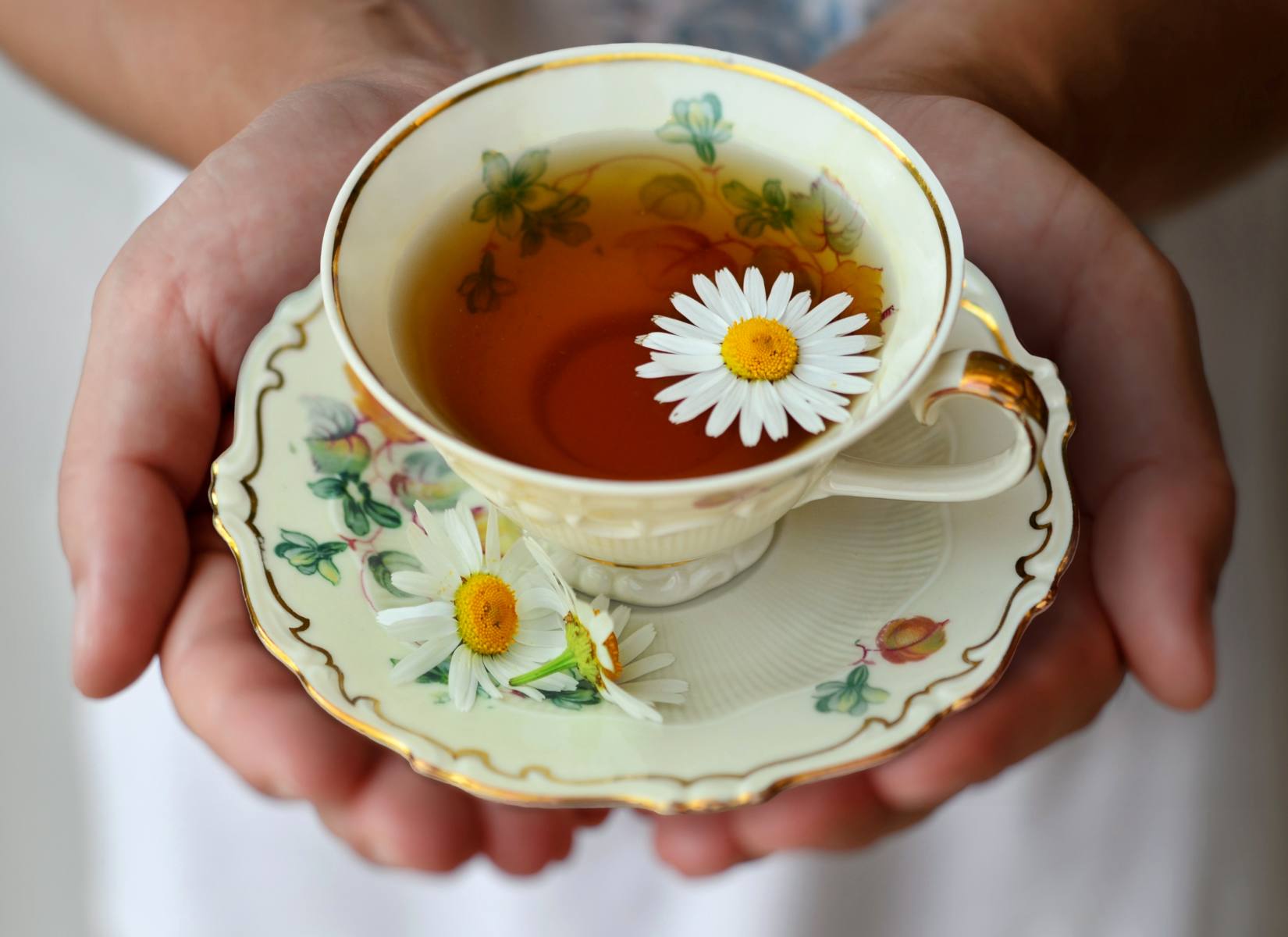
This perennial isn’t only a cute flower, it also has activity that has long been qualified as medicinal.
Thanks to its relaxing effects and its benefits for digestion, chamomile is probably one of the most used flowers.
Its impact on sleeping disorders make it a very common plant in evening herbal tea.
And it also helps treat certain anxiety disorders when used over several weeks.
Chamomile even has properties beneficial for plants. It helps fortify and protect them from insects, aphids and cabbage butterfly especially.
Its flowers also impart delicious flavors, and the growth of the plant will lead to even more flowers if exposed to the sun.
You can thus use its flowers in mixed salads, infusions or to flavor gravy.
Dried flowers of this plant will keep for many long months, and are perfect for your winter evening herbal tea!