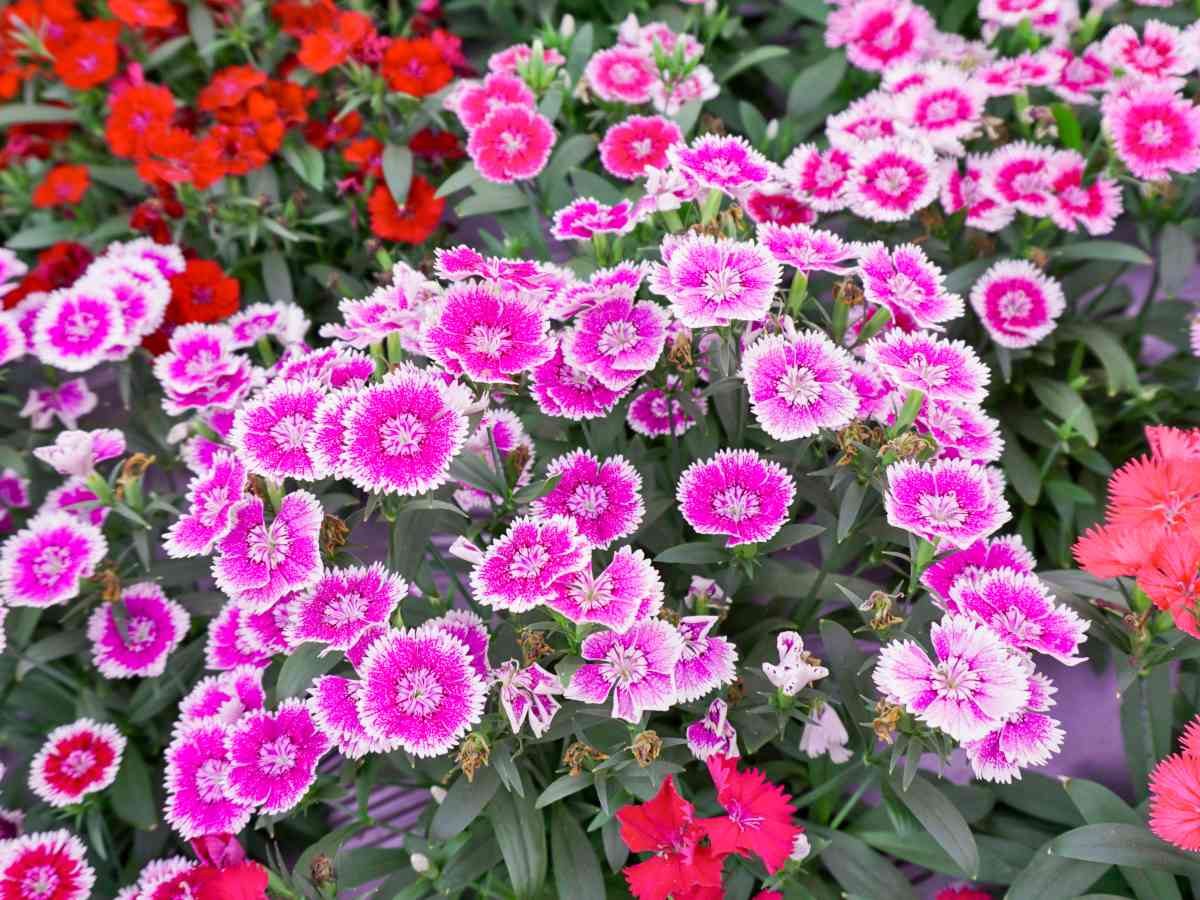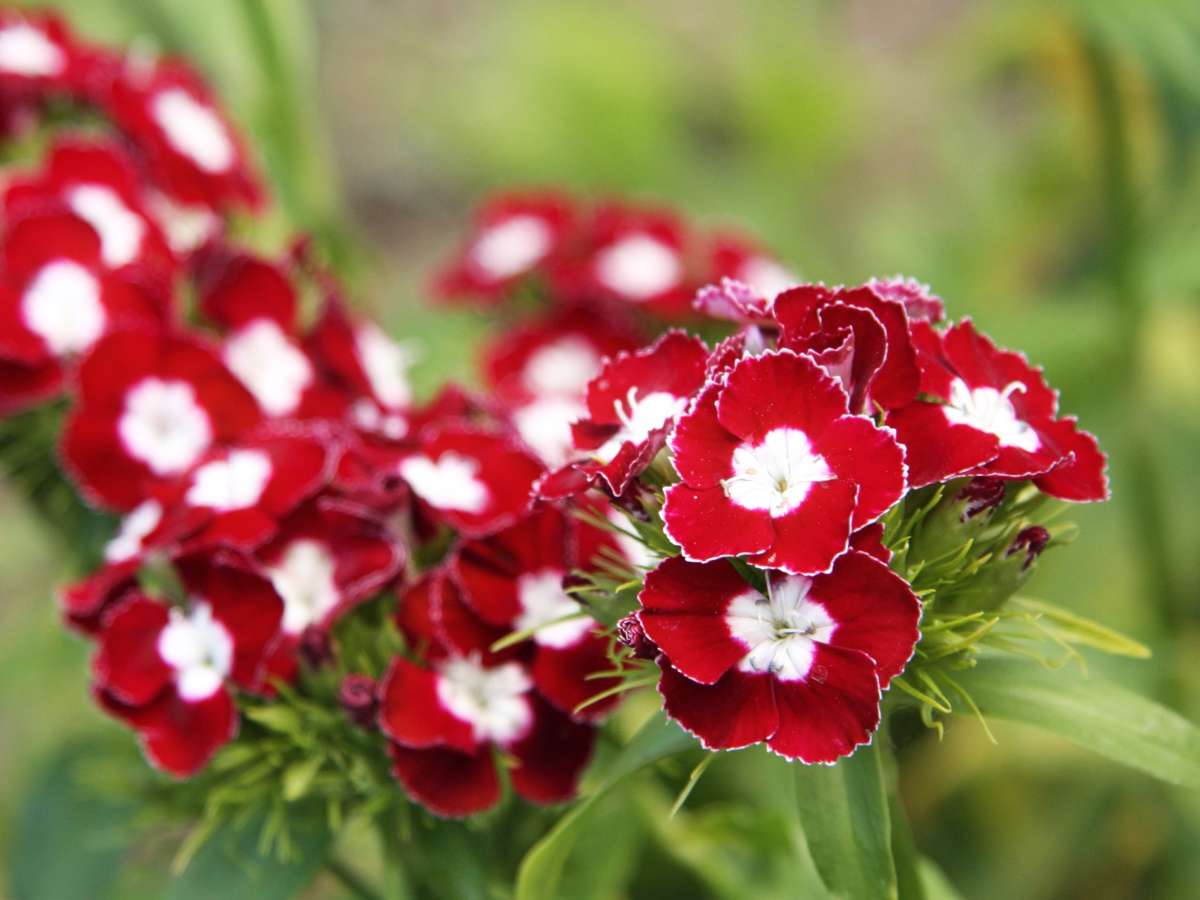
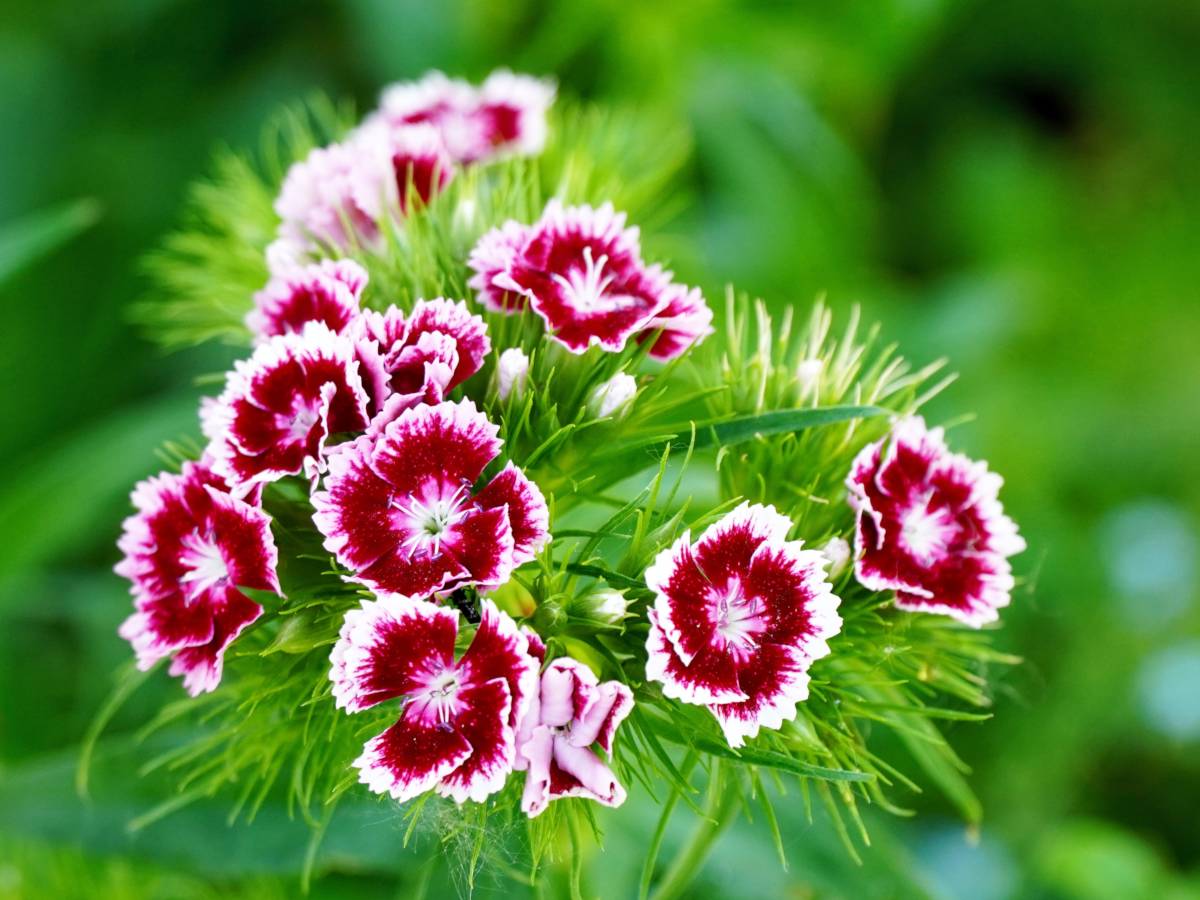
Barely six to eight inches high, the garden pinks (Dianthus) send up brightly coloured, strongly fragrant flowers from the end of spring to early autumn, furnishing flower beds, edges, low walls, rocky surfaces and garden boxes. Give them a warm spot in full sun and they flower generously, shrugging off drought with almost no watering.
| Name | Dianthus |
|---|---|
| Family | Caryophyllaceae |
| Type | perennial, annual or biennial |
| Height | 6 to 8 inches (15 to 20 cm) |
| Exposure | full sun |
| Soil | ordinary |
| Flowering | end of spring to early fall |
Nicknamed the Flower of the Gods, this is most certainly due to the amazing beauty of its flowers. It is excellent to decorate gardens.
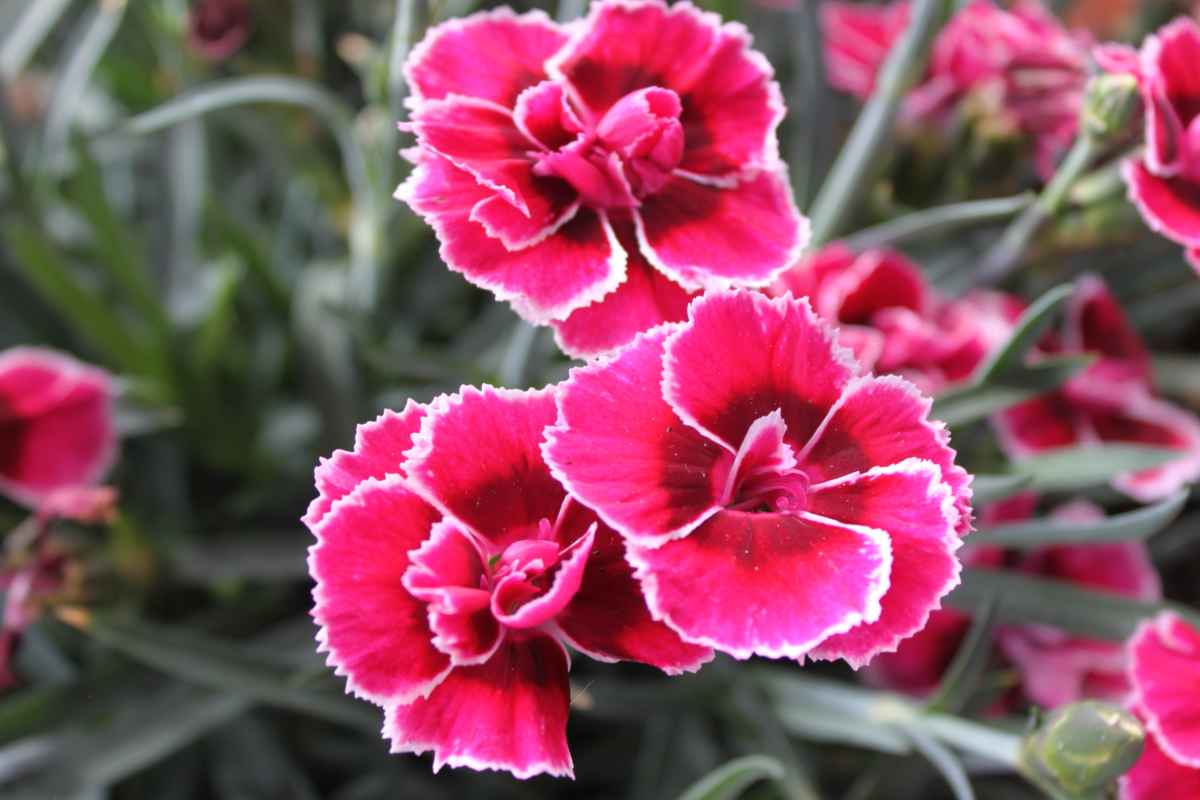
Dianthus loves warm and sunny spots, it’s important for beautiful blooming.
If planting in garden boxes or pots, better to use only soil mix.
Sowing dianthus is best when performed in late winter, indoors. Ideal temperatures are around 70°F (20°C).
Dianthus can be raised from seed, from cuttings, by division or simply planted out as clumps. The method you choose mainly decides when you have to be ready.
| Method | When | How | What to expect |
|---|---|---|---|
| Sowing indoors | late winter | Bury the seed slightly with your thumb and cover with soil mix at around 70°F (20°C) | Sprouting in 8 to 10 days, then grow on cooler, around 55°F (12°C) |
| Stem cuttings | From late spring onwards | Take cuttings from dianthus stems | Easy to succeed with |
| Crown division | Fall | Divide the crown of an established plant | Extra plants identical to the parent |
| Planting clumps | Fall or spring | Dip the clump in water for a minute or two, then settle it in a blend of soil mix and garden soil | Space plants 8/10 inches (20/25 cm) apart |
Whichever route you take, the warm sunny spot matters more than the method.

Dianthus is very resilient and only requires little care, at most simply removing wilted flowers as they come and go.
Note that dianthus resists particularly well to drought and normally doesn’t require any water.
Garden centres and seed catalogues carry dozens of pinks, but a handful turn up again and again because they are reliable and easy to place. The table below sorts the best-known ones by colour, scent and where they earn their keep.
| Variety | Flower colour | Fragrance | Habit | Best use |
|---|---|---|---|---|
| ‘Haytor White’ | White, double | Strong | Medium clump | Cutting and borders |
| ‘Doris’ | Pale salmon-pink, dark eye | Strong | Medium clump | Borders and cut flowers |
| ‘Gran’s Favourite’ | White with raspberry lacing | Strong, clove-like | Medium clump | Cottage borders, posies |
| ‘Sooty’ | Deep maroon, almost black | Light, clove-like | Tall for a pink | Borders, cutting (biennial) |
| ‘Flashing Light’ (‘Leuchtfunk’) | Deep carmine-red, single | Little to none | Spreading mat, dwarf | Ground cover, wall tops |
| ‘Firewitch’ (‘Feuerhexe’) | Magenta-pink, single | Strong, clove-like | Dense low mat, dwarf | Edging, rockeries, gravel |
| ‘Mrs Sinkins’ | Pure white, fully double | Very strong | Medium, rather sprawling | Cottage borders, low walls |
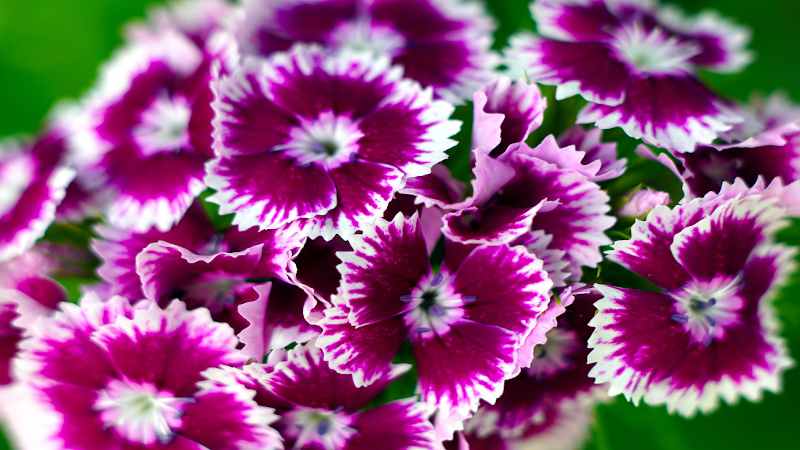
“Dianthus” comes from the ancient Greek word “Dios” which stood for Zeus and Jupiter (for Romans), combined with the word “anthos” to produce the phrase “Flower of the Gods”, most certainly because this flower is so appealing to the eye.
The vast range of Dianthus varieties offers just as vast an array of possible colors.
This small perennial is nonetheless always very generous in flowering and it helps to furnish your flower beds, edges, low walls, rocky surfaces and garden boxes.
With bright colors and very fragrant, seize the opportunity of mixing several species within the same flower bed.
Note that these days, it’s possible to find among the many carnation breeds. Several of these resist both frost and summer heat, such as sweet william carnation and China pink hybrids.
These carnations hold very well in a bouquet and are beautiful in a floral composition.