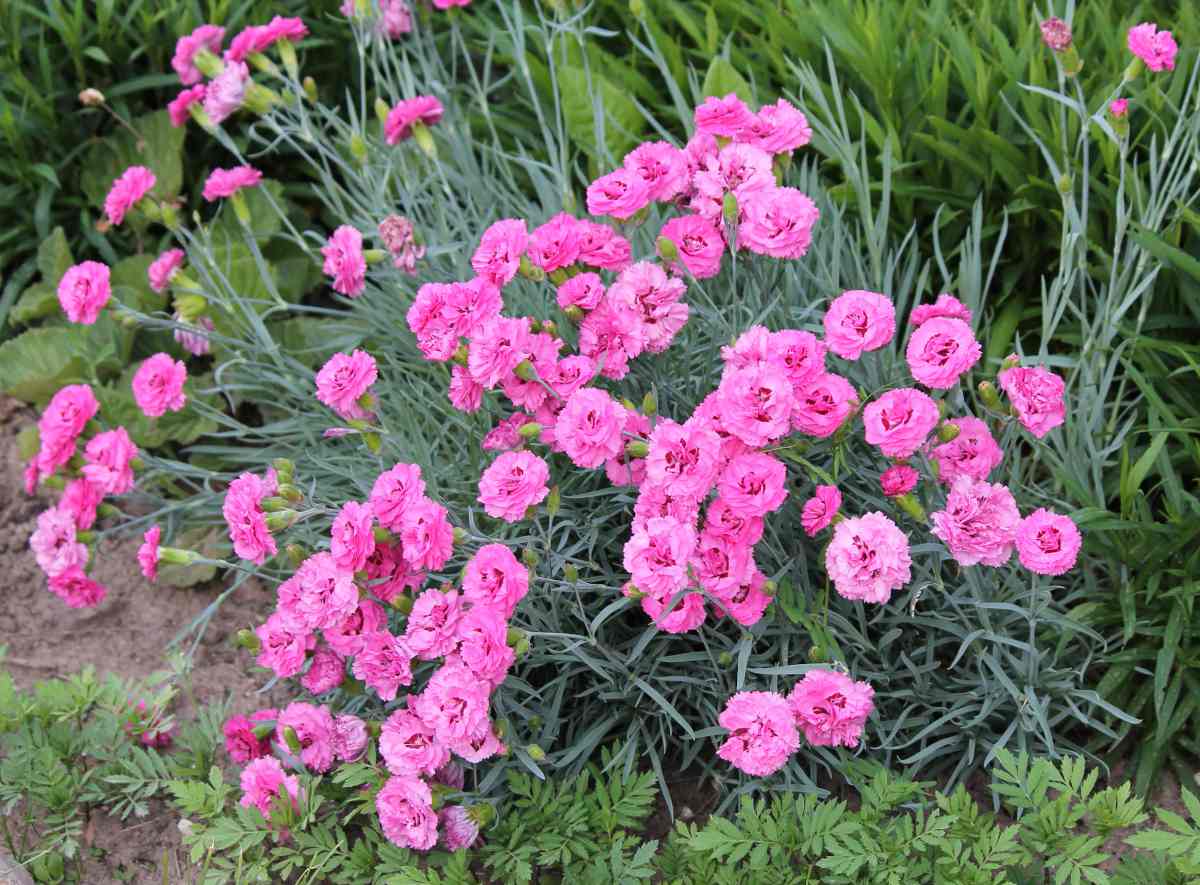
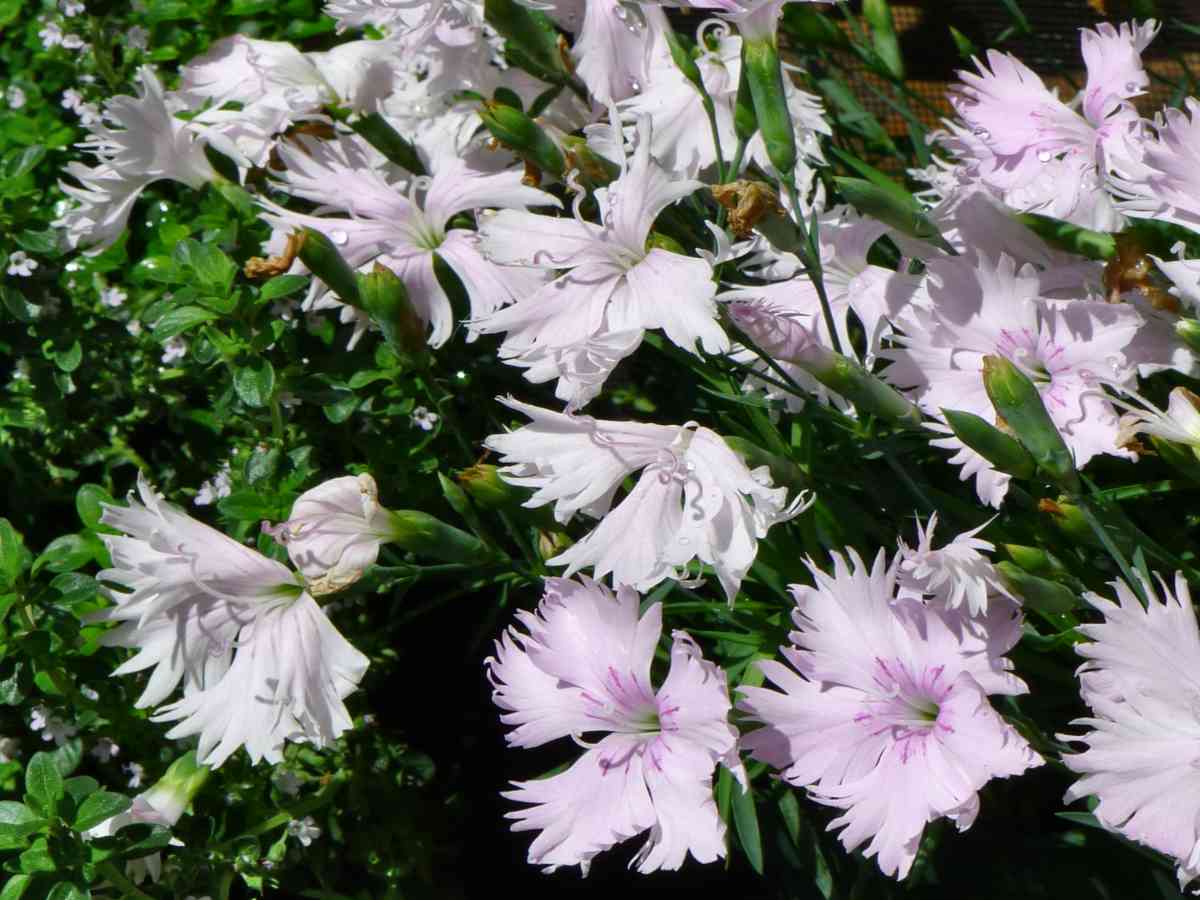
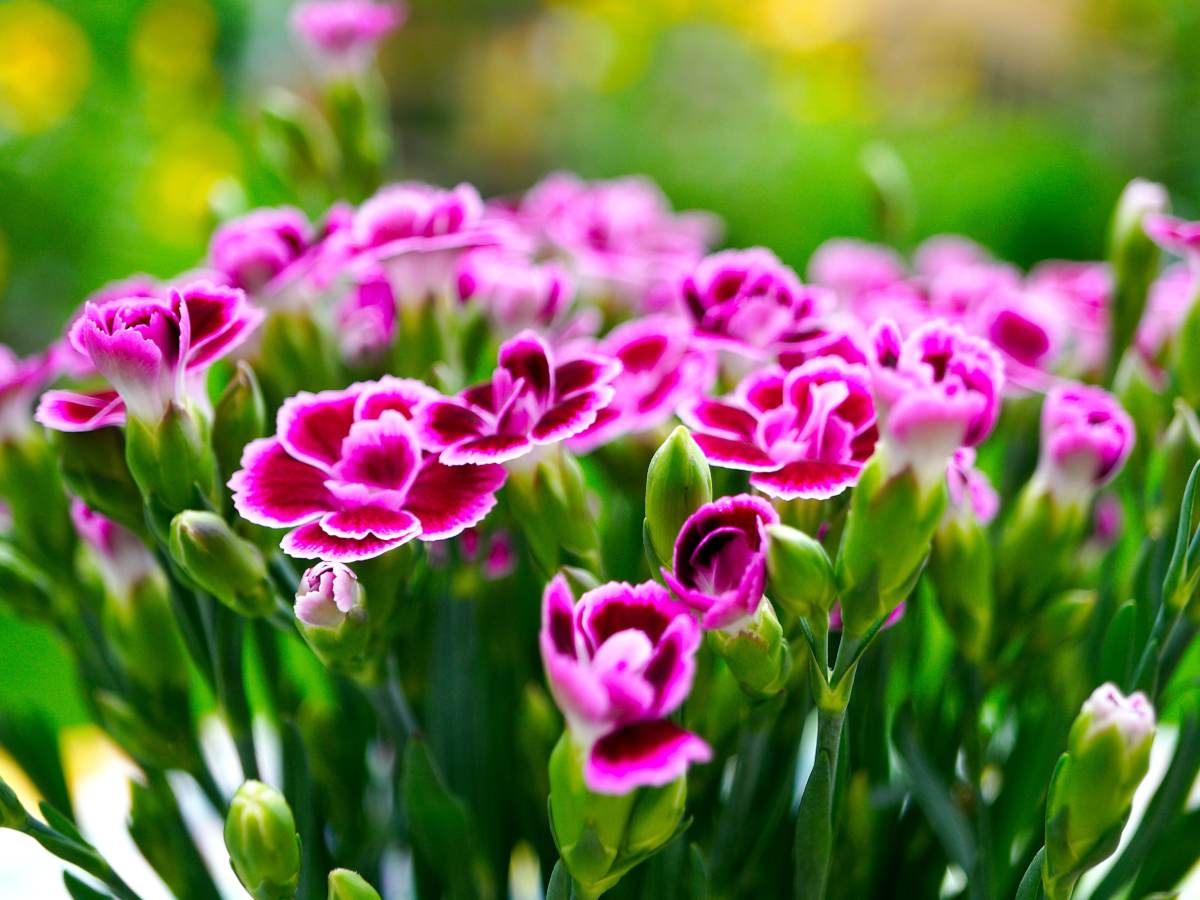
Slender, faintly blueish foliage sets off single or double flowers, sweetly scented, that keep on coming from late spring to mid-autumn. Garden pink is the perennial among the carnations, and it asks for very little: a warm, sunny spot in ordinary, well-drained soil, and it will flower in droves all summer long.
Garden pink at a glance
Family
Caryophyllaceae
Type
Perennial
Height
20 to 32 inches (50 to 80 cm)
Soil
Well drained, ordinary
Exposure
Full sun to part sun
Sowing
Spring
Flowering
Late spring to late autumn
It is a very beautiful perennial that flowers in droves all summer long.
Planting, sowing garden pink
How to sow garden pink
Garden pink can be sown as early as February, even a bit earlier for regions that are more in the South.
Sow under shelter from late winter onwards
You may proceed to sow under shelter starting from the month of February.
Transplant your garden pink once in nursery pots before planting them outside during the month of May-June, after any risk of freezing has disappeared.
You may sow directly in the ground starting in April or May if the climate in your area permits (no more risk of freezing).
Note that garden pink loves warm and sunny spots for it to bloom well.
Planting garden pink
For your garden pinks purchased in nursery pots, plant in spring and summer in light soil.
To make the soil lighter, you can add river sand.
Water after planting to speed root development up.
Provide fertilizer every year to spur the growth of your garden pinks.
Caring for garden pink
Garden pink actually doesn’t need much care, but a few good practices will help enhance and extend the blooming.
Trim after the first flush for denser repeat flowering
After the first summer blooming, cut an inch (a couple centimeters) or so off the growth with small shears. This will make your garden pinks denser for the subsequent blooming.
Watering is often superfluous since garden pinks resist dry spells so well.
But if leaves start drooping down, it means it does need a bit of water, especially in pots and garden boxes.
Garden pinks are sold as named cultivars, and the choice comes down to flower colour, height and how strong the clove scent is. These are widely grown and easy to find in garden centres.
Garden pinks worth looking out for
Variety
Flower colour
Height
Scent
‘Tickled Pink’
Mid-pink double
10in (25cm)
Very strongly perfumed
‘Devon Wizard’
Purple-red with a magenta eye
10–12in (25–30cm)
Scented
‘Doris’
Salmon pink double with a deeper red eye
12–16in (30–40cm)
Strong clove scent
‘Mrs Sinkins’
Pure white, shaggy double
12in (30cm)
Powerfully fragrant
‘Memories’
White double
10in (25cm)
Very strongly perfumed
All there is to know about garden pink
This is one of the perennial carnations and it truly is a desert flower that blooms and spreads its fragrance even in the most difficult spots to cultivate.
Garden pink is much loved for its fragrant flowers, of course, and its many different colors that range from white to red with some flowering in purple or yellow.
It bears simple or double flowers depending on the variety and its blooming lasts from May to October.
Today, it is among the most famous carnations and rightly so, because its fragrant and colorful flowers please so many of us!
Smart tip about garden pink
Garden pinks can also simply be broadcast sown in spring, and they’ll bloom in bright colors until fall.
Images: kazakovmaksim/AdobeStock, CC BY-SA 2.0: Alvin Kho
Written by Gaspard Lorthiois | Loves helping out, especially when it comes to growing things. Worked in herbal medicine, runs a farm, and dabbles in tech. Master's degree and engineer.