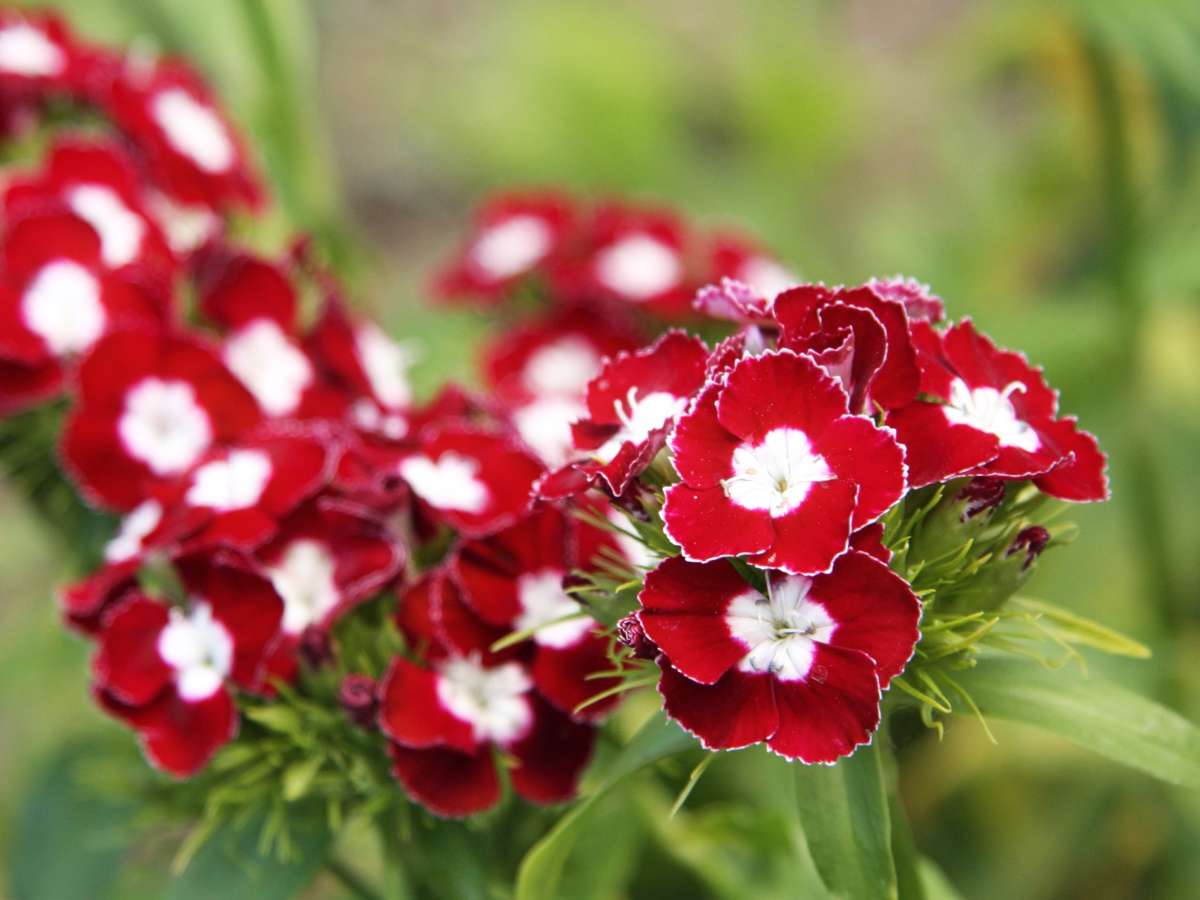
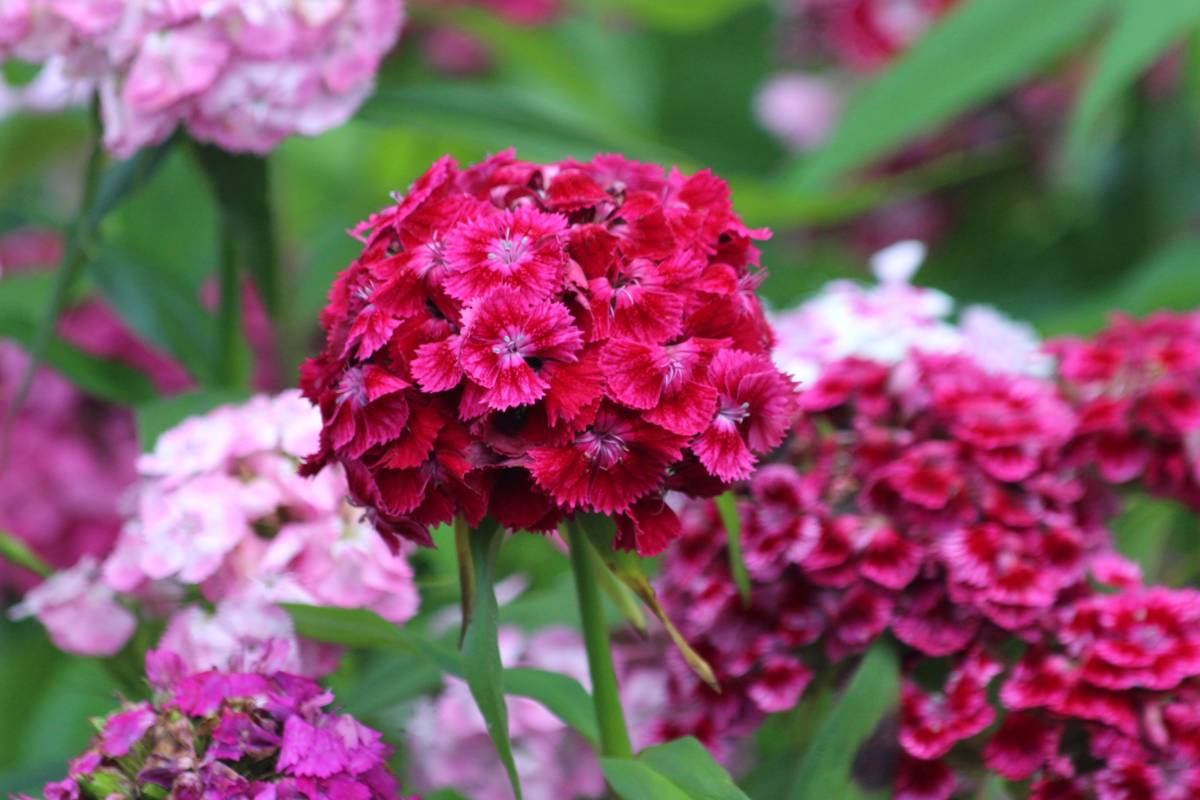
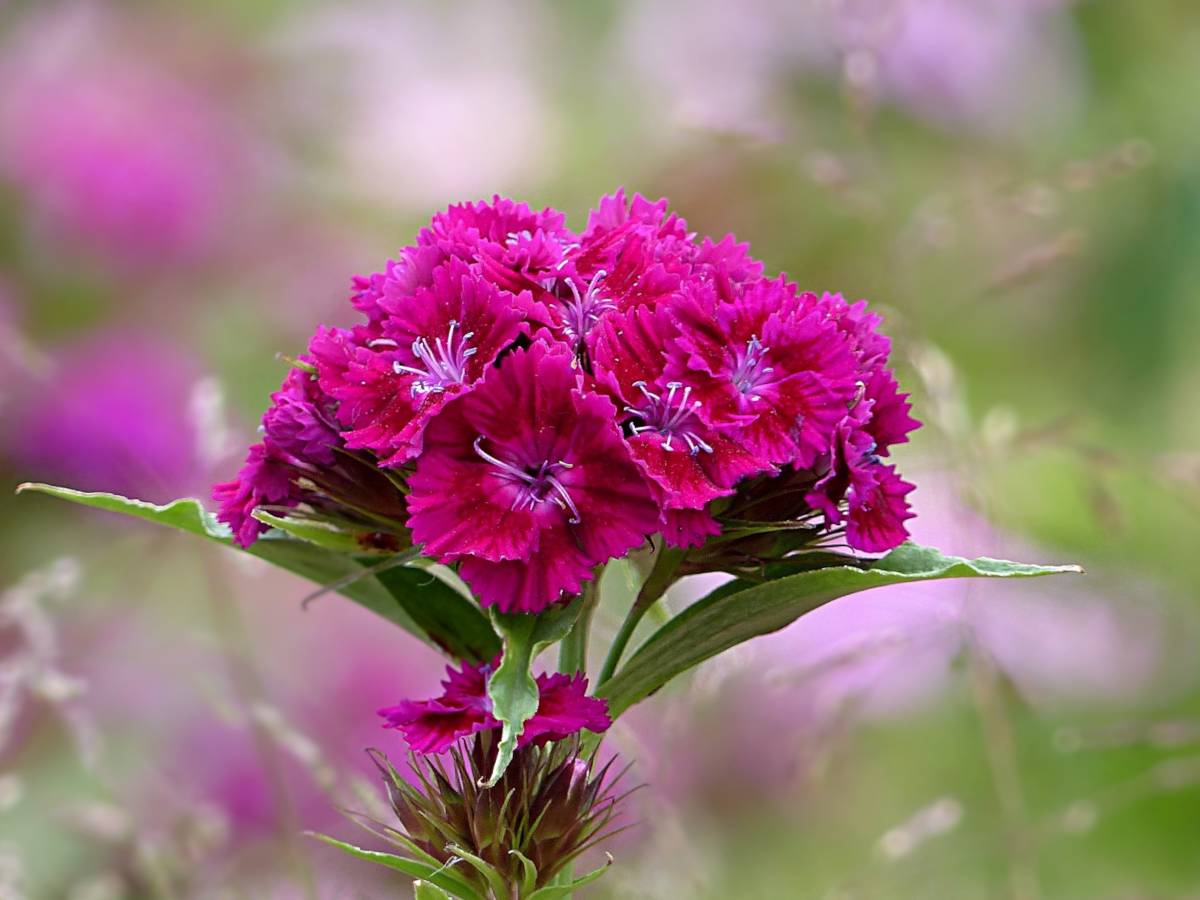
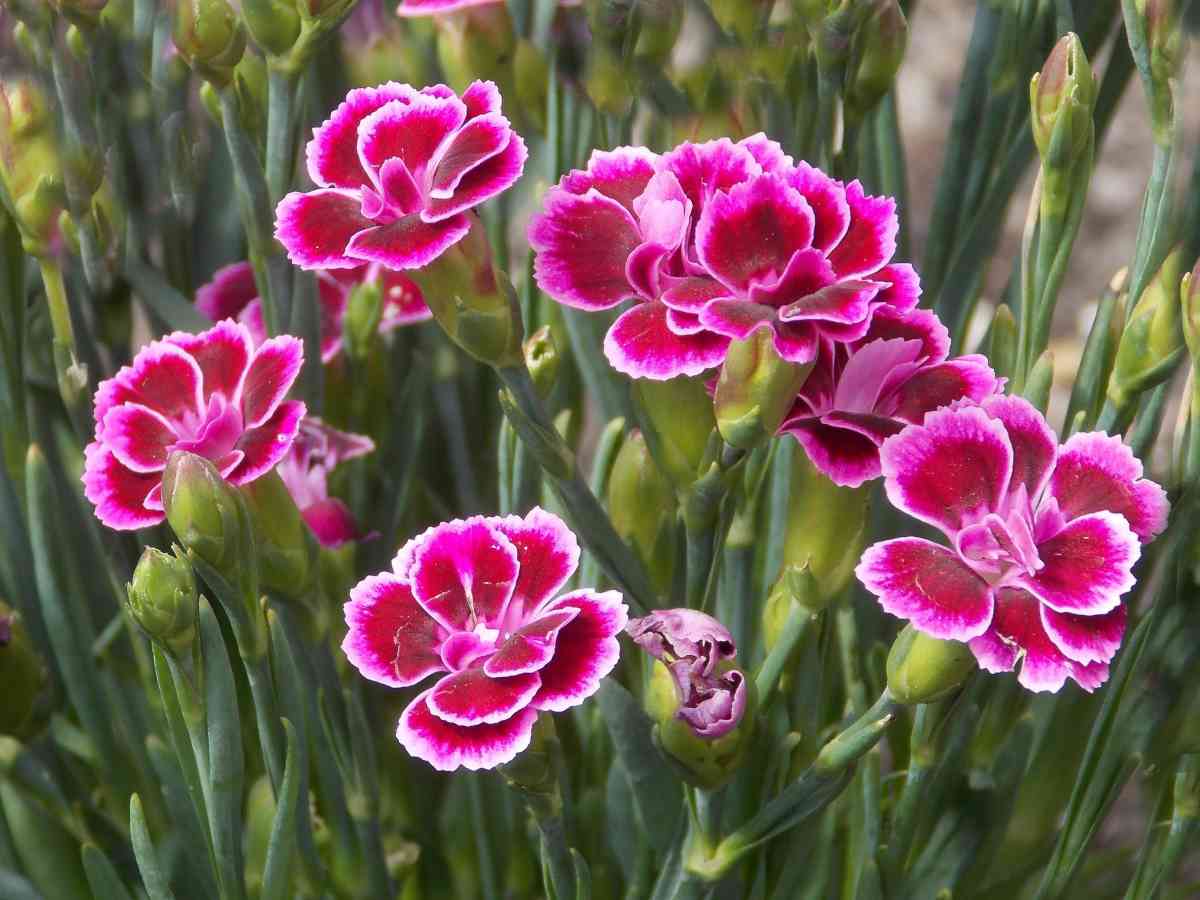
Large clusters of small striped flowers, rarely a solid colour, bring pinks and whites, purples and creams, fuchsia and even violet and black on stems only 8 to 16 inches tall. Sweet William (Dianthus barbatus) is a biennial grown for beds, boxes and cutting: give it three to four hours of direct sun and it flowers from summer into autumn.
Sweet William at a glance
Name
Dianthus barbatus
Family
Caryophyllaceae
Type
biennial
Height
8 to 16 inches (20 to 40 cm)
Exposure
full sun, part sun
Soil
well drained, ordinary
Sowing
late spring to summer
Flowering
summer to autumn
Large clusters of flowers are what make the Dianthus barbatus carnation stand out.
Planting, sowing sweet William
How to sow sweet William
Sweet William is sown at the end of spring or in summer for it to bloom in the following year.
Seed is left uncovered because light triggers germination
Broadcast seeds without covering them after sowing, since they need light of day to sprout.
Water using a gentle spray until seeds sprout without flooding your Sweet William seeds.
Sprouting usually occurs about 1 week after sowing.
Transplant sweet William in fall outdoors, spacing them about 8 inches (20 cm) apart.
Let your carnation spend the winter outdoors.
Note that your sweet William will need sufficient sun to bloom, at least 3 to 4 hours of direct sunlight a day.
Sweet William, stage by stage
Sweet William is grown across two seasons, so it helps to know what happens when. Here is the sequence from sowing to the second flush of flowers.
Sweet William, stage by stage
Stage
When
What to do
Sowing
late spring to summer
Broadcast the seed and leave it uncovered, as it needs daylight to sprout
Sprouting
about a week after sowing
Water with a gentle spray until the seedlings appear, without flooding them
Transplanting
autumn
Move plants outdoors, spacing them about 8 inches (20 cm) apart, and let them overwinter
Flowering
summer to autumn
Cut wilted flowers off regularly to bring on new ones
Keep up the deadheading and a second, later blooming often follows towards the end of the season.
Caring for sweet William
Once settled, the plant asks for almost nothing
Sweet William carnation doesn’t require any care once it is properly settled in. Performing these few tasks will help enhance and extend the blooming.
To stimulate appearance of new flowers, cut wilted flowers regularly (deadheading).
The act of cutting wilting flowers off as they die helps prepare a second blooming towards the end of the season.
Water in case of prolonged dry spells or heat wave only.
All there is to know about sweet William
Native to Northern Europe and Asia, the Sweet William carnation variety is sought after for its cute flowers that make superb colored bouquets, and also for its leaves and stems that make it an easy flower to cut and pair.
Its flowers are striped and only rarely of a solid color, and thus bestow pinks and whites, purples and cream colors, fuchsia and pink or even violet and black.
Smart tip about Sweet William
Sweet William flowers are vulnerable to rust. To avoid this, rotate them to a different spot from one year to the next.
Images: CC BY 2.0: Maja Dumat, Pixabay: Manfred Richter, Christiane Hölting, Светлана Гурьева
Written by Gaspard Lorthiois | Loves helping out, especially when it comes to growing things. Worked in herbal medicine, runs a farm, and dabbles in tech. Master's degree and engineer.