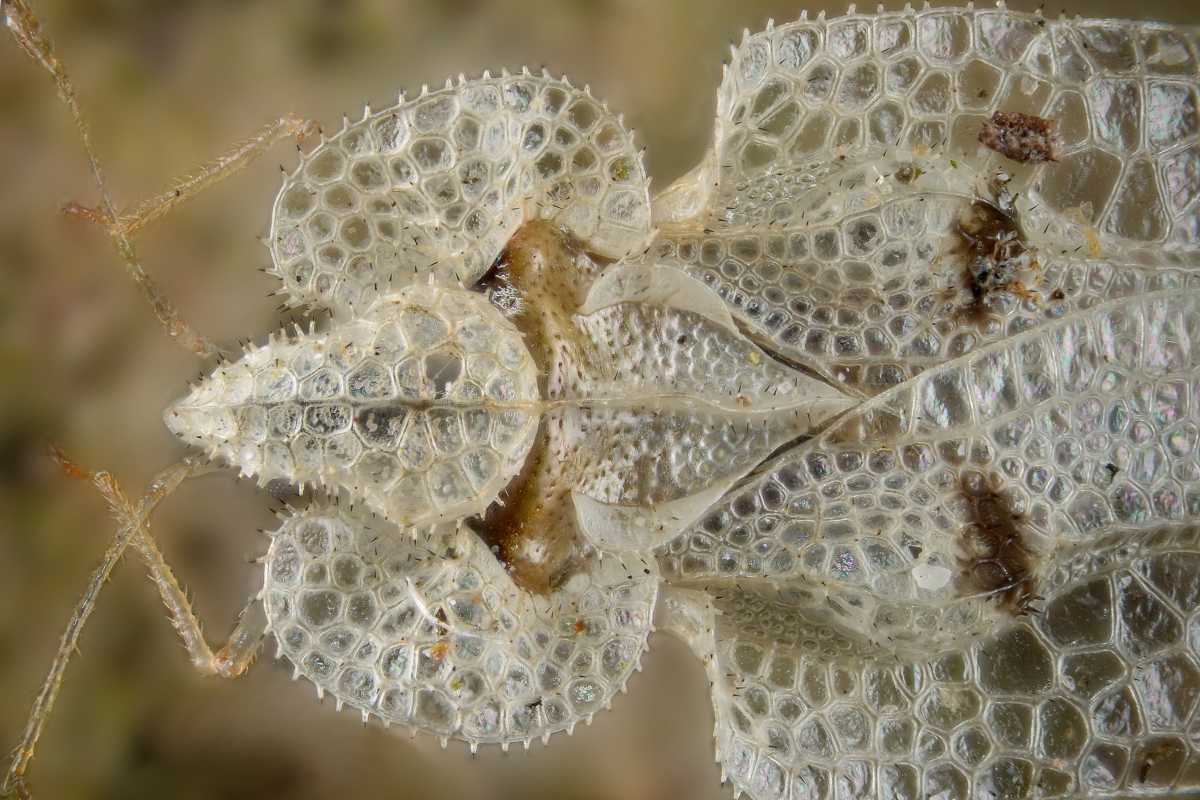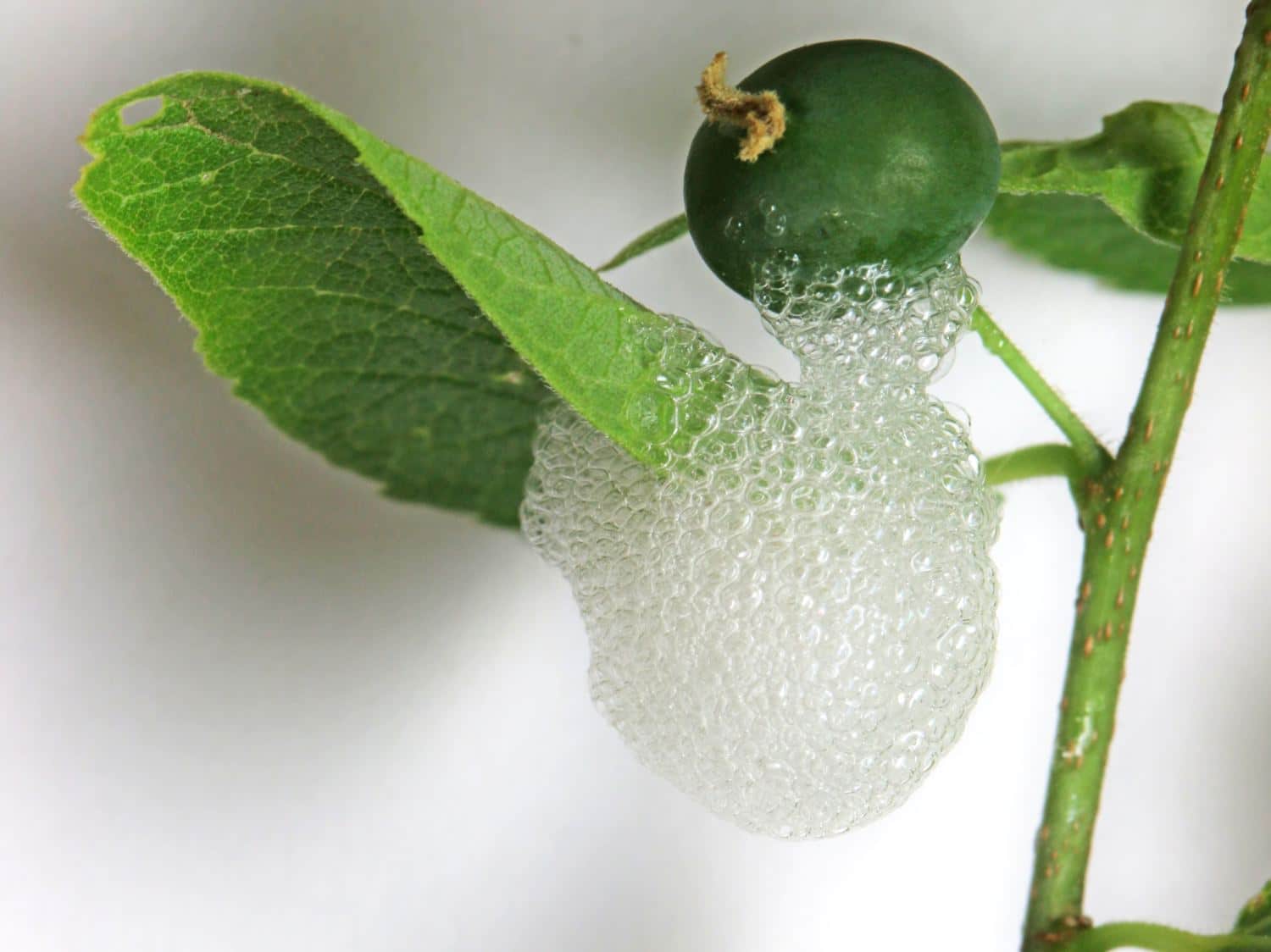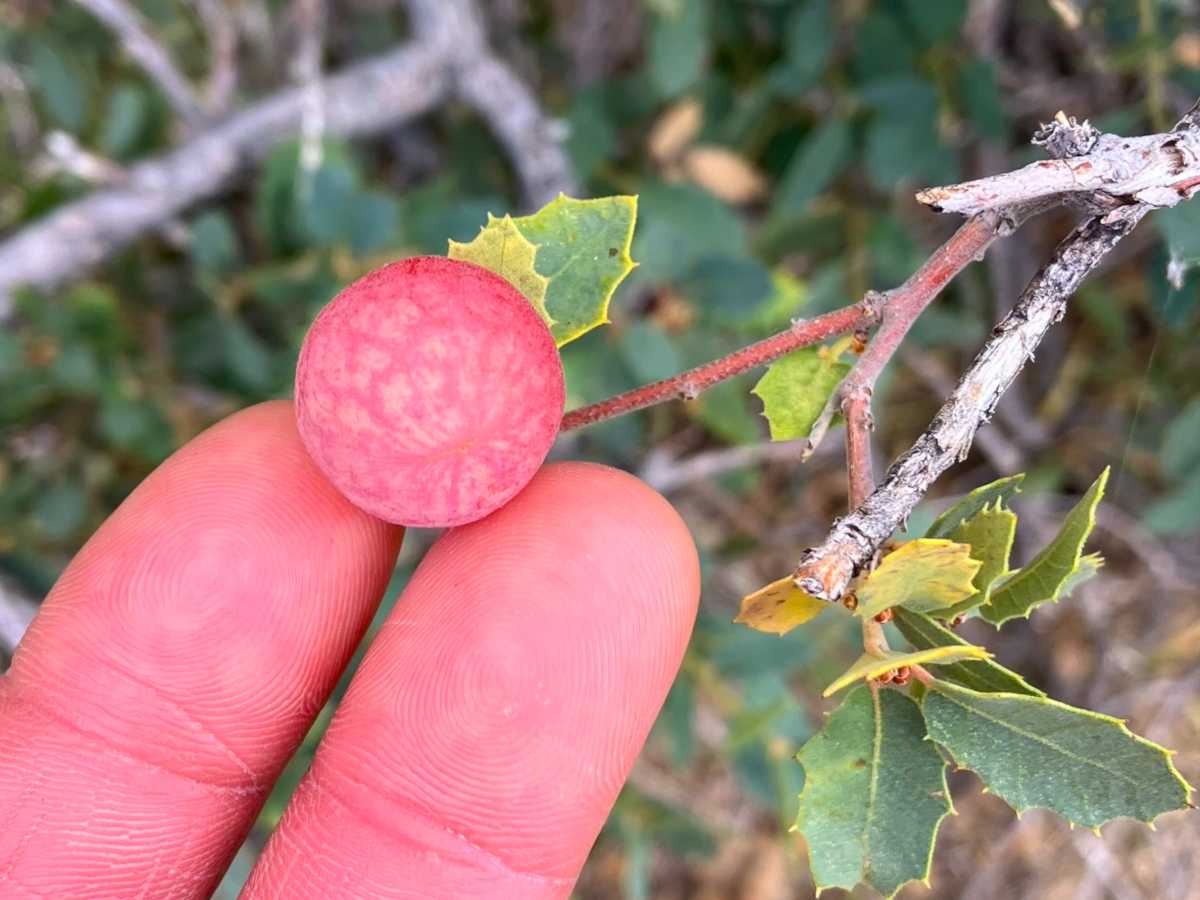
From perfectly round marbles to formless gobs, the swellings on oak leaves, rose stems and citrus twigs are nurseries: a gall wasp has laid its eggs in the soft tissue. Each species keeps to a single host plant or genus, so cutting out the galls before the adults drill their way free is what keeps numbers down.
| Name | Cynips, Diplolepis, Neuroterus… |
|---|---|
| Common name | gall wasp |
| Appears in | spring to summer |
| Type | insect (wasp) |
| Spread | worldwide |
| Infects | shoots, leaves, buds |
| Size | 1/16th of an inch (2 mm) → 1/3rd of an inch (8 mm), depending on species |
| Generations per year | variable, up to a half-dozen |
Usually, a single given insect will only contaminate a single plant species, or at most only members of the same plant family. In severe cases, the harvest is compromised and the plant may die.
Read also:
There are different kinds of gall wasp, and their impact on host species also differs, but there is one symptom that all have in common. They all cause galls!
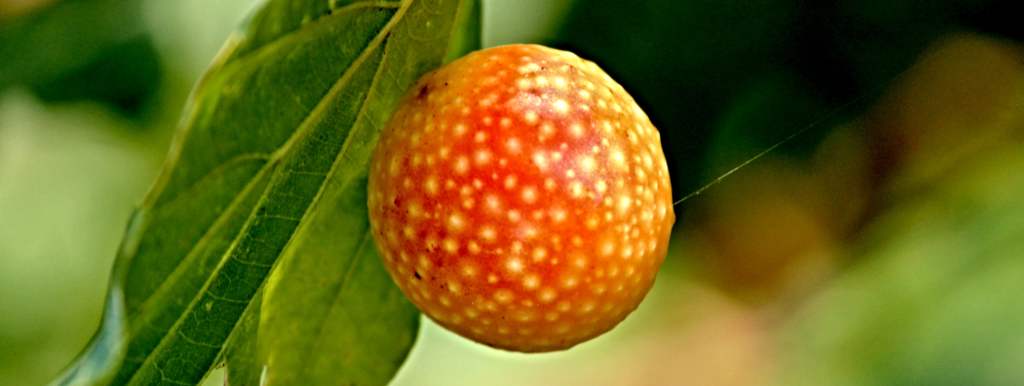
→ Good to know: galls are for the larvae. Adult gall wasps often feed on nectar or other food. They make great pollinators.
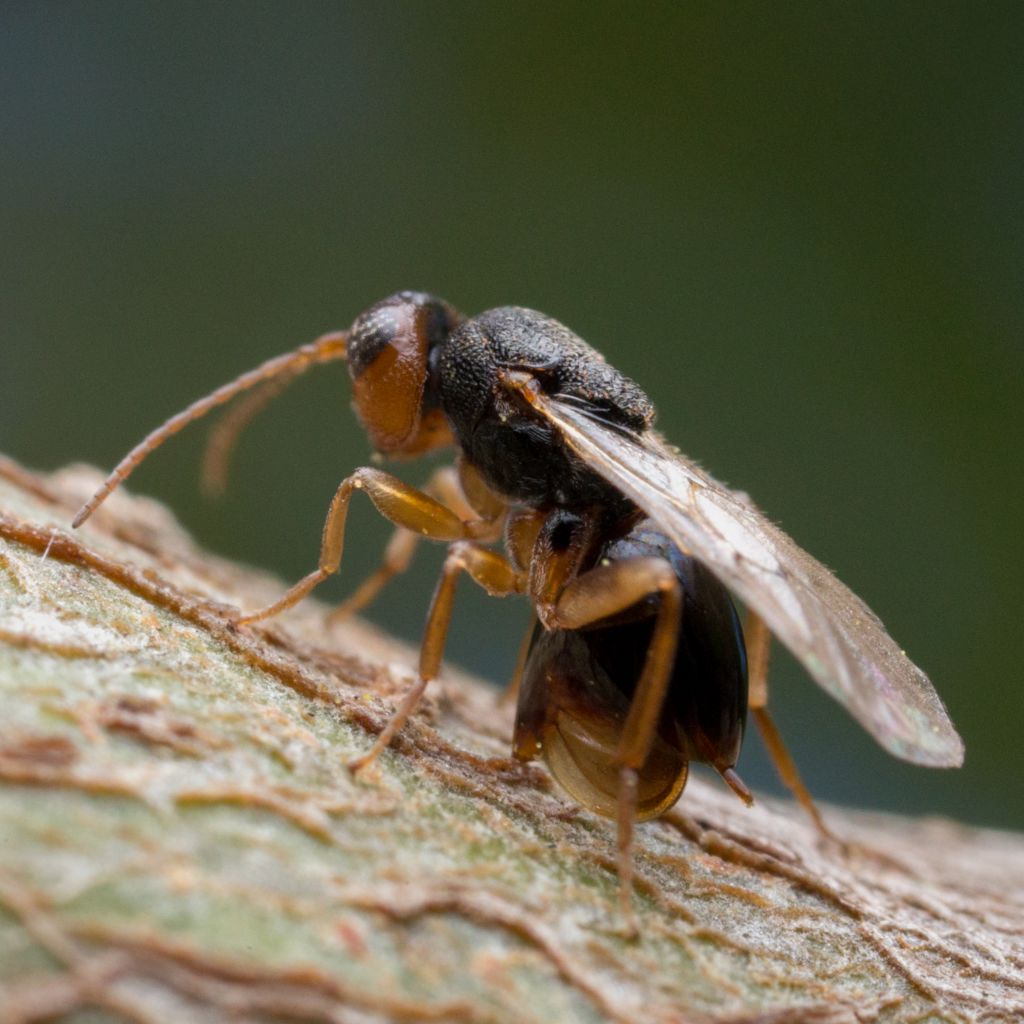
A gall wasp is a flying insect of the same family as the common wasp. It has the particularity of requiring a specific host plant as part of its reproductive cycle.
For example, the citrus gall wasp will only infect citrus trees. Other plants and trees will not be infected by it. If no citrus tree is available, the citrus gall wasp will not be able to reproduce. Originally, it only infected finger lime, but when other citrus trees were introduced, it infected those, too.
Usually, a gall becomes visible to the eye around 1 to 6 weeks after the eggs were laid.
Each gall wasp keeps to one host plant or genus, so the plant you are looking at narrows down what you are dealing with. The table gathers the hosts described below, where the gall forms and what it looks like.
| Host plant | Where the gall forms | Gall appearance | Notable detail |
|---|---|---|---|
| Oak | Leaves, buds and twigs | Many shapes, from round marbles to formless gobs | Hundreds of species infect one or all oak species |
| Chestnut | Young branch shoots, flower buds, leaf buds | Swellings on shoots and buds | The female needs no mate and lays only female eggs |
| Coral tree | Leaves, near the main veins | Distorted, deformed leaves | Easily mistaken for leaf curl |
| Rose | Shrub stems and shoots | Mossy rose gall and spiny rose gall | Both are the work of gallflies |
| Raspberry | Stems | Roundish gall, like a donut around the stem | Girdles the stem |
| Blueberry | Twigs | Kidney-shaped gall around the twig | Consumes all the sap going to the branch |
| Citrus | Stems, sometimes leaf veins | Swollen portions of stems and veins on leaf undersides | Originally a finger lime pest that moved onto introduced citrus |
Bear in mind that not every gall on this list is a wasp’s work: mites, midges, aphids, fungus and bacteria all produce galls too.
Every day, botanists and entomologists discover new species. Only a fraction of all possible gall wasp and host plant relationships are know and described so far.
In gardens throughout the world, all types and families of plants have been known to support at least one or more gall wasps.
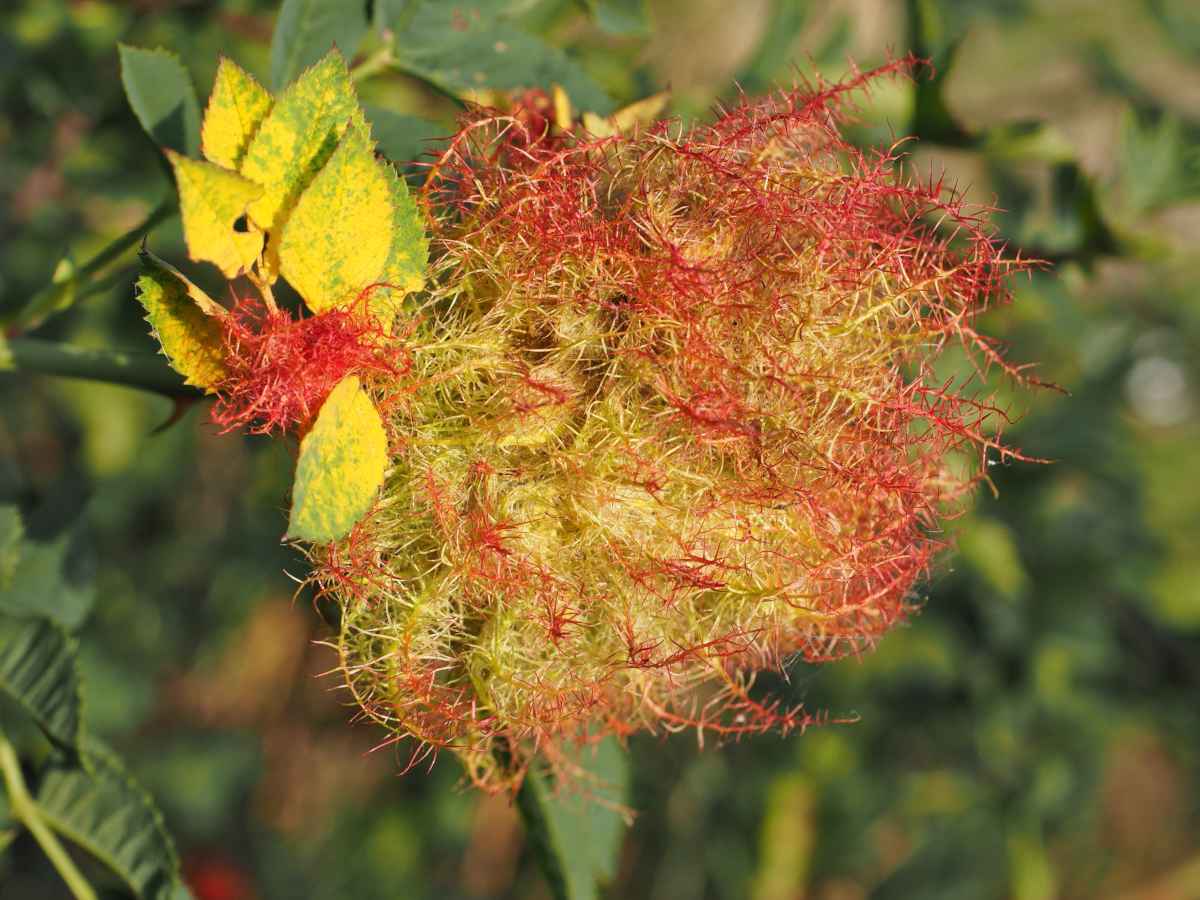
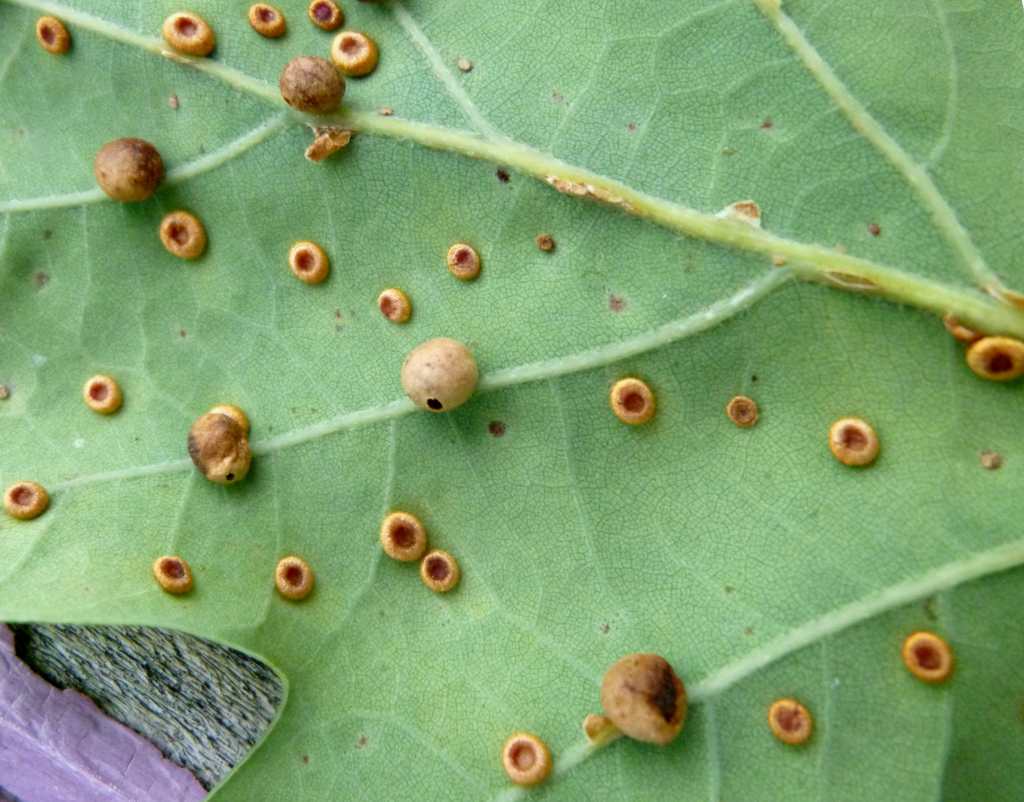
People often prefer to let nature do its work, since gall wasps rarely take over an entire tree. Typical natural ways to control gall wasp involve predators that feed on gall wasp larvae.
When natural predators aren’t common, manual removal is also very effective. Pruning off the gall-infected branches and leaves and then burning them works best when the timing is right: the new generation of wasps should not have emerged yet.
A neat round exit hole shows that something has emerged, but it doesn’t prove the gall is empty, since multi-chambered galls may still shelter other larvae, inquilines or parasitoids inside.
Never toss galls onto the compost heap, because the larvae inside carry on developing and simply emerge from the pile.
Insecticide sprays achieve little against gall wasp, since the larvae are sealed inside plant tissue, and the spray kills the parasitoid wasps that would have attacked them.
Go easy on high-nitrogen feeds around citrus trees, as the resulting flush of soft young stems is exactly what egg-laying females target.
Over 1400 species of gall wasps have been identified and catalogued to date. This doesn’t include other types of galls, such as those due to fungus or mites.
Each wasp is usually specific to a single host plant species. This is because the chemical cocktail required to trigger gall formation is unique to each plant species.
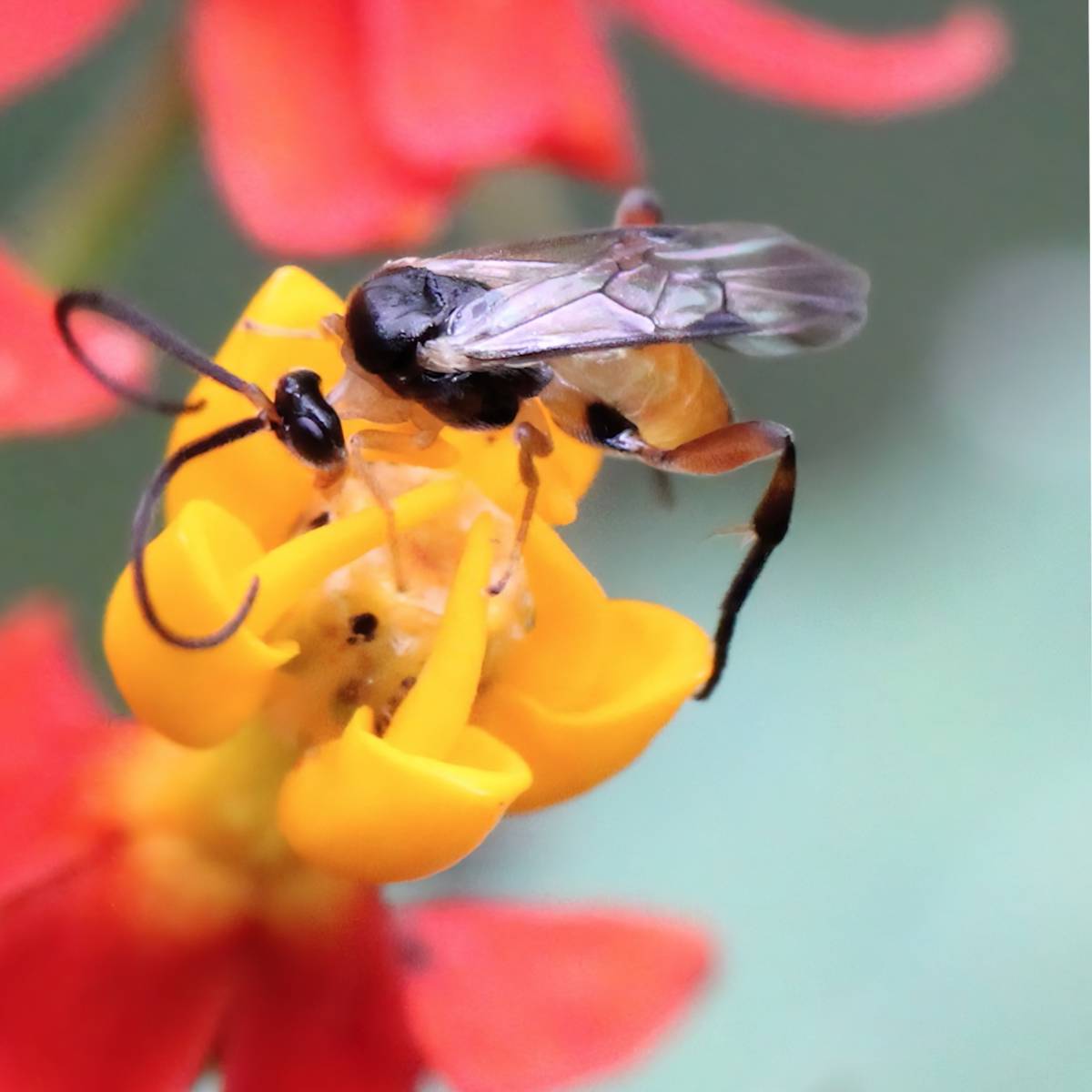
In the course of time, each parasite wasp evolved to produce exactly the mix that would trigger the “ideal” gall for it. This would afford the hatched pupa protection, food and safety from predators.
Some gall wasp species only lay eggs where other gall wasps have laid them, in the gall. They then benefit from the gall without having had to trigger it. These are called inquiline gall wasp. Usually they out-compete the original gall wasp for nutrients, much like a cuckoo replaces its siblings in the host bird nest.
Gall wasps won’t sting persons or animals. Their sting isn’t designed for attack, it’s actually simply a tube that lays eggs. It can pierce through woody tissue but the wasp won’t use it to defend itself.
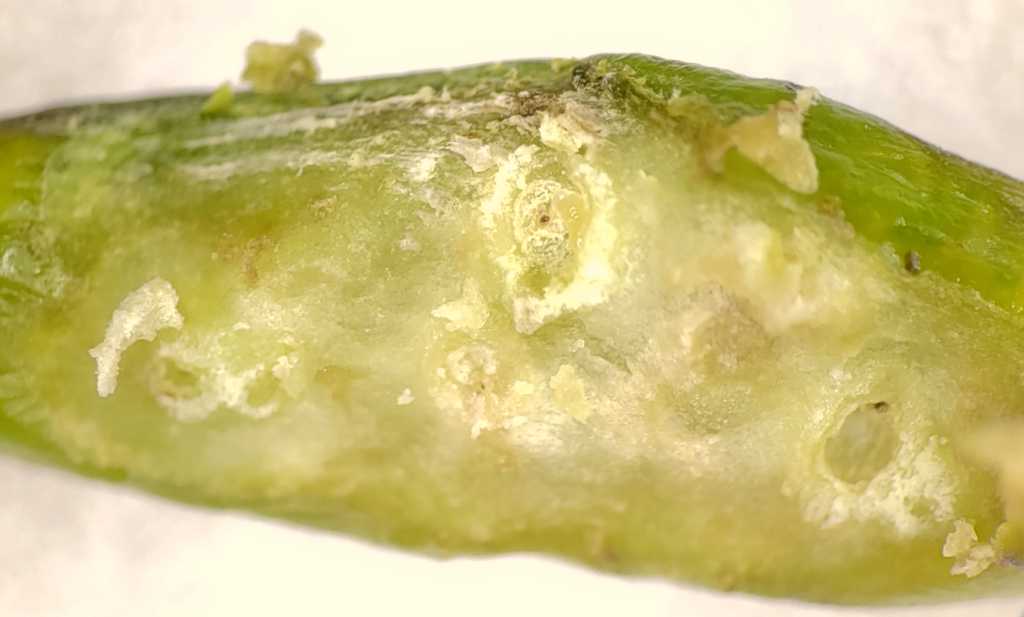
These are so tiny, bring a magnifying glass out when you are on the lookout for them!
Indeed, the largest are only a few millimeters long (¼ inch). Another fitting name for them is “gallfly” or “gallflies”.
A sharp blade can slice open galls, revealing parasites inside.
Once gall wasp larvae are sealed inside plant tissue, contact sprays cannot reach them, so any chemical control must instead target adults during their emergence and flight period, alongside pruning out galls.
Before cutting, check the gall for tiny round exit holes: these show some wasps have emerged, though multi-chambered galls such as citrus gall wasp’s can still hold larvae that emerge later.
Don’t leave cut galls in a cool, open compost heap, since the insects inside can still emerge; bag, burn or bury them, or use a hot heap that reliably kills the larvae.