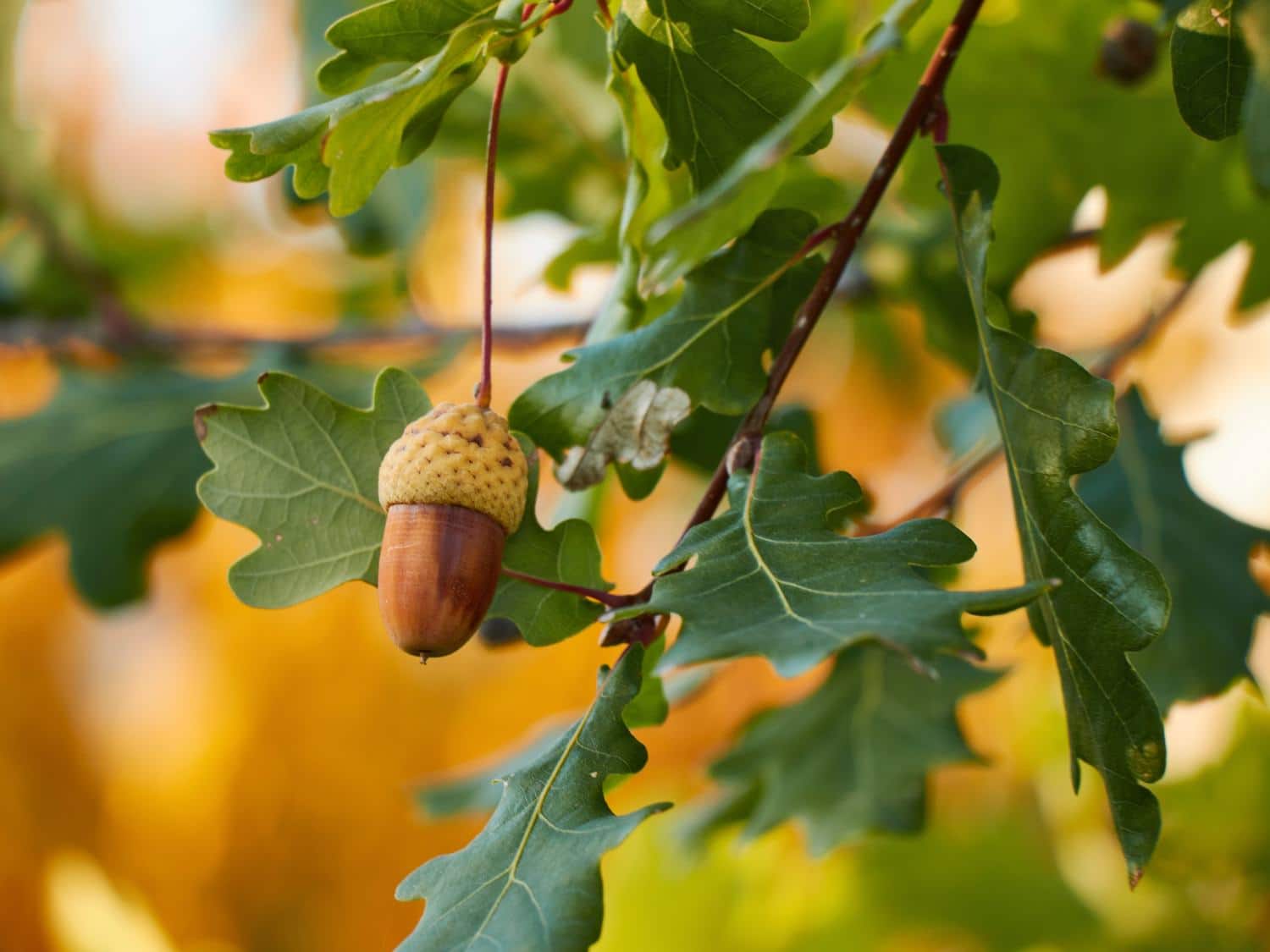
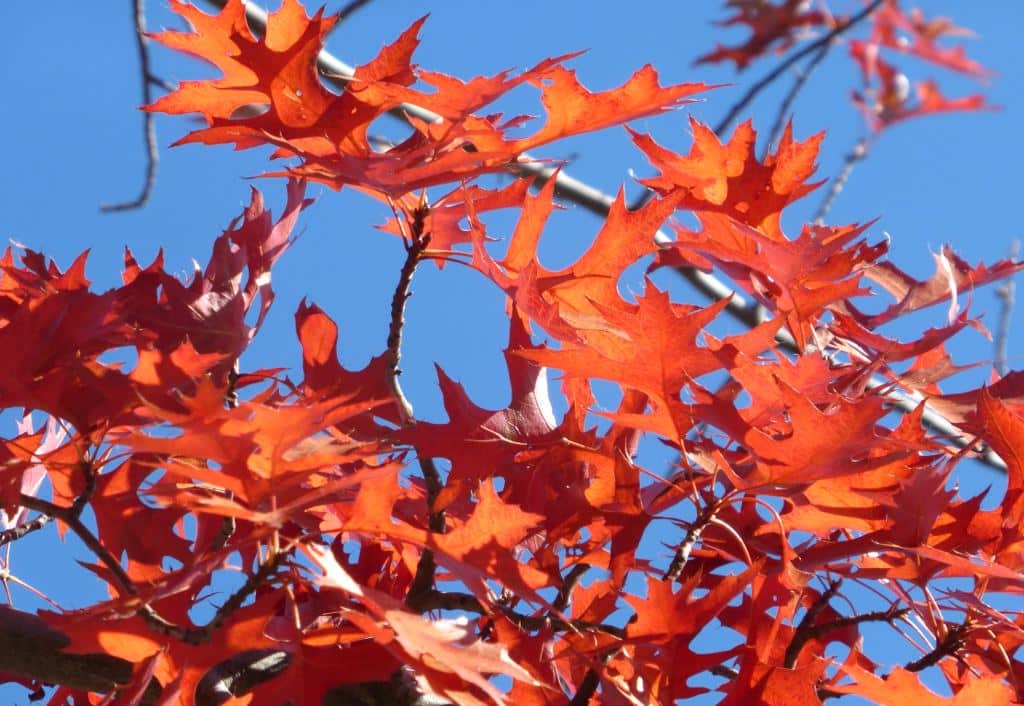
Fire-coloured leaves in autumn — red, orange and yellow — acorns ripening in early autumn, and a silhouette that grows majestic as it climbs dozens of feet: this is oak (Quercus), the king of the forest. Give it sunlight all day long and an isolated spot, and you get that silhouette; in shade it stays short and stunted.
| Name | Quercus |
|---|---|
| Family | Fagaceae |
| Type | Tree |
| Height | 50 to 115 feet (15-35 metres) |
| Exposure | Full sun |
| Soil | Not too chalky |
| Foliage | Deciduous |
| Flowering | Spring |
| Acorn harvest | Fall |
Often grown in parks or woods, it is only grown in our gardens if sufficient space is available.
But there are actually a great many oak varieties, and choosing the right one is important since some are perfectly suited to growing in smaller gardens.

It’s important to plant your oak tree well, since this is the most crucial part its life. Growth and proper settling in depend on how well it’s planted.
Plant it in an isolated spot, as a standalone, because oak can grow very large, sometimes dozens of feet across and even taller than it is wide…
It isn’t necessary to prune oak trees, if only after a few years to remove branches that jut out of the trunk in the first six feet (two meters). This will help mow the lawn under the tree more easily.
If you must prune oak, winter is best, but not during days when it’s freezing.
Also, remove dead, weak and fragile branches regularly when you notice them.
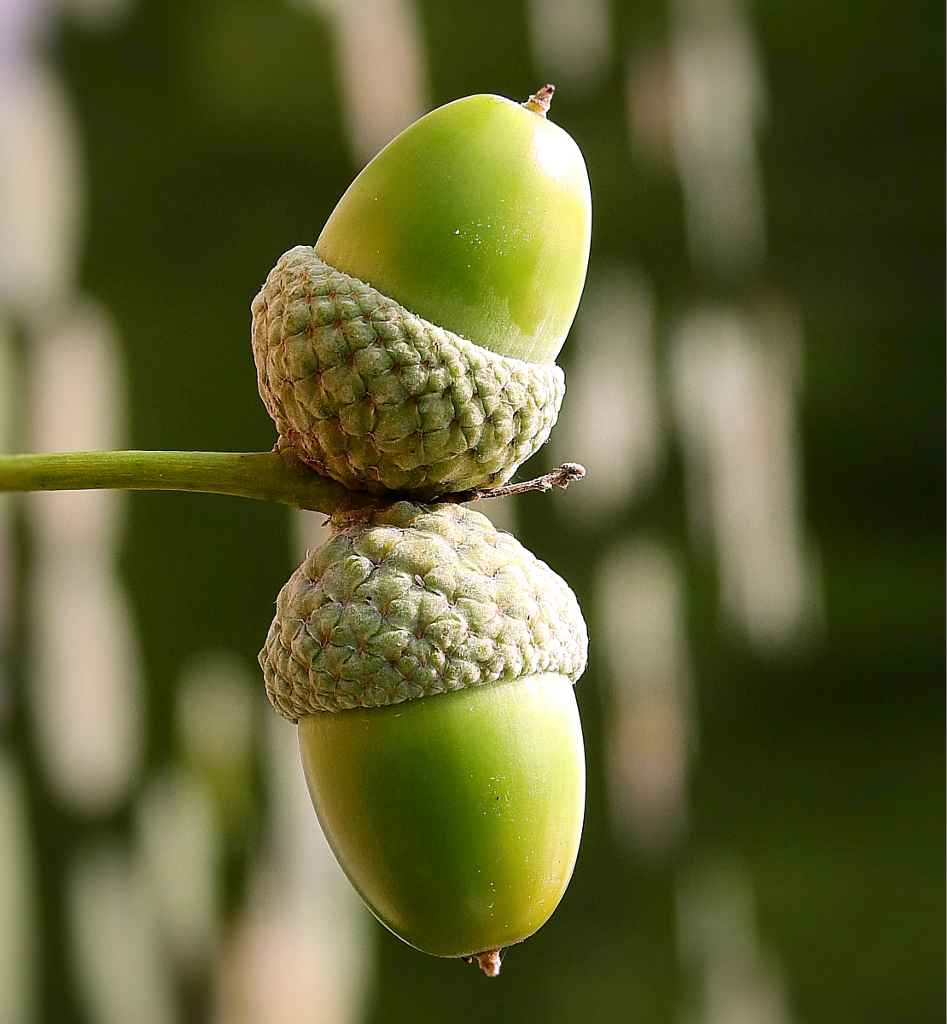
An oak tree’s seed is called an acorn.
It takes several years for the tree to grow large enough to start producing acorns. It’s also interesting to note that acorn production is very irregular: one year might have very many, and the year after that only very few.
Usually, you can harvest or pick the acorns in fall, around early autumn and mid-autumn.
Many animals feast on acorns: squirrels, wild boars, and other forest-dwelling creatures. In days of old, its acorns were eagerly dug up by pig herds left to forage in clearings.
Oak is a name given to a great many trees and shrubs, all belonging to the Quercus genus.
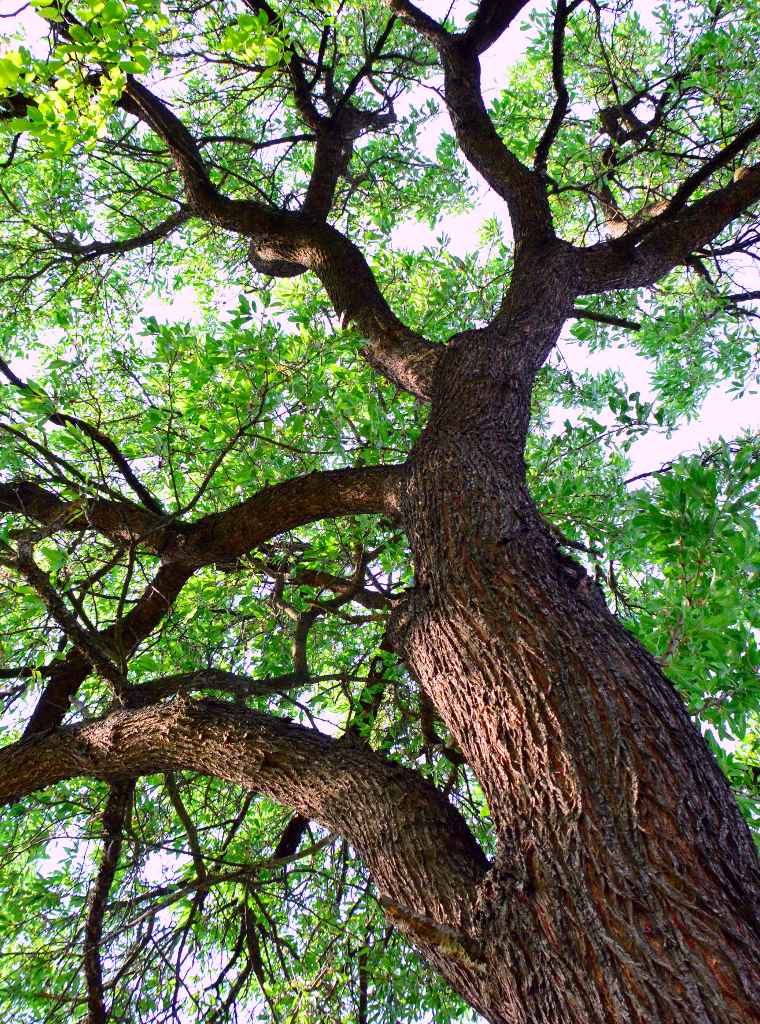
Key species include common oak (described in this post), evergreen oak (Quercus ilex), and cork oak (Quercus suber).
Some species have evergreen leaves, whereas others, like pedunculate oak, lose their leaves every winter.
Oak, sometimes called the “King of the forest”, is remarkable for its wood, the beauty of its leaves, and its majestic inspiring silhouette, especially when it grows to be dozens of feet tall.
In fall, the hues of its leaves are like fire, with bright red, orange and yellow colors.
It’s very easy to sprout acorns in a pot of soil, but avoid planting forest oak in your garden. Though it grows slowly, it will in time reach a spectacular height. You might feel like you made a mistake…
Oak asks for very little once it is in the ground, but the few jobs it does need each have their season. Here is the whole cycle in one view.
| Task | When | Why |
|---|---|---|
| Watering after planting | Through the first year | Planting is the most crucial stage; growth and settling in depend on it |
| Pruning | Winter, never on freezing days | Optional only — oak does not need regular pruning |
| Removing low branches | After the first few years | Clears the first six feet of trunk so the lawn can be mown |
| Acorn harvest | Fall, around early autumn and mid-autumn | Collect seed, though crops are very irregular from year to year |
| Autumn colour | Fall | Leaves turn bright red, orange and yellow |
Dead, weak and fragile branches are the exception to the calendar: cut them out whenever you spot them.
Even though it starts out straggly and twisted, in time, an oak tree will straighten its trunk if surrounded by taller neighbors.