Three diseases, one plant. And a summer that’s making all of them worse. Black spot, powdery mildew, and rose rust are the trio responsible for most summer leaf damage on roses — each behaves, spreads, and demands a different response. Get them confused, and your treatment will fail. You must learn to distinguish them. Stop them before total defoliation.
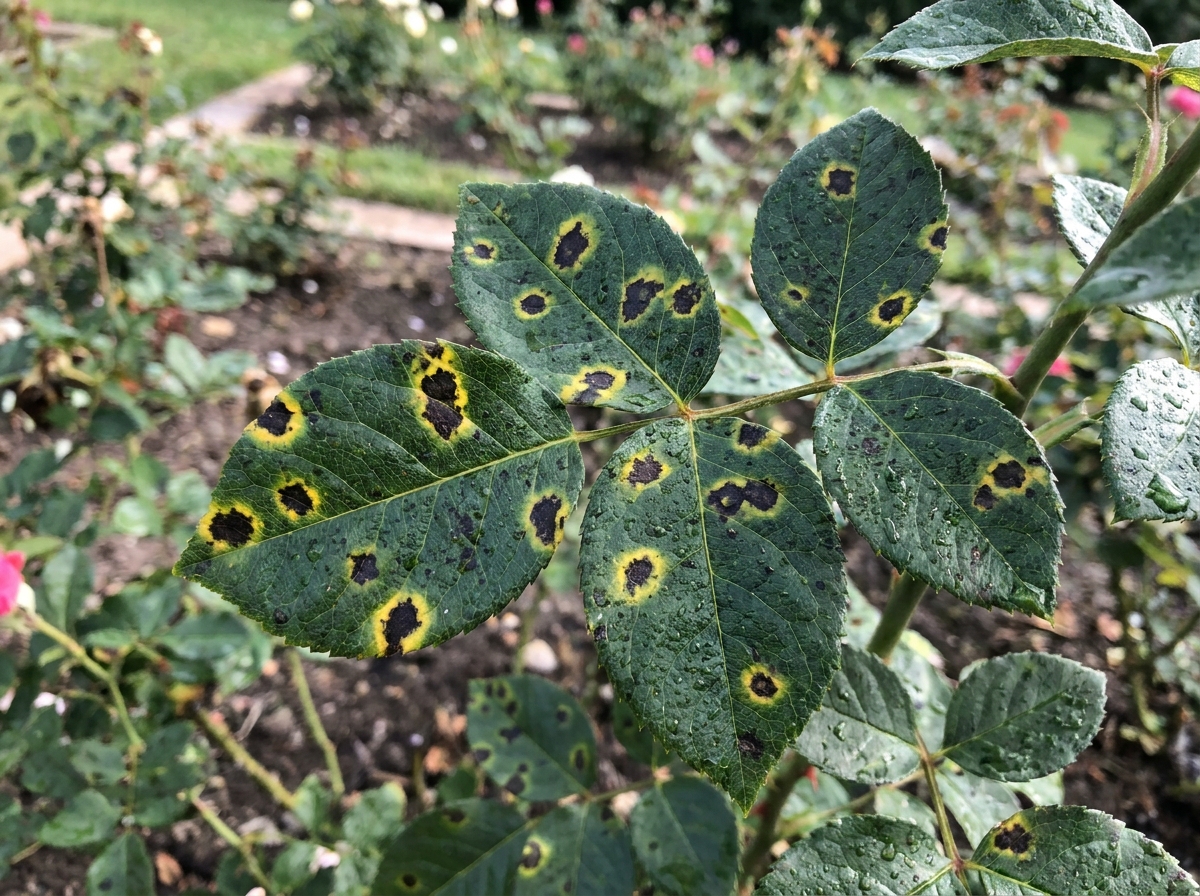
Black spot is unmistakable up close. Circular black or dark brown blotches, roughly 5–15mm across, with fringed or feathery edges. Yellow halos usually form around each spot. It appears first on lower leaves and works its way upward; the infected leaves drop early, sometimes weeks ahead of schedule. The thing is, if your rose is shedding leaves in waves, this is almost certainly why. You can read more about rose leaves covered in spots and why summer makes it worse.
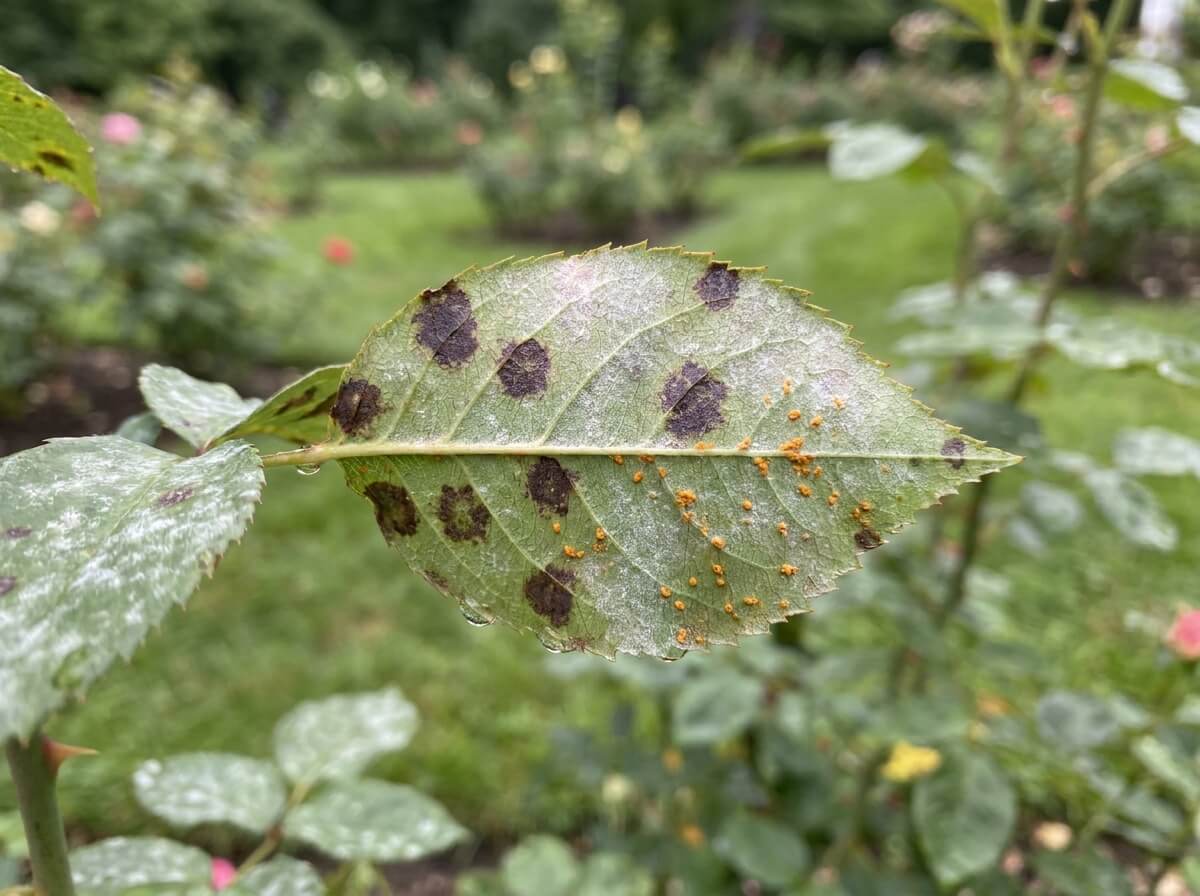
Powdery mildew looks bang on like someone dusted the leaves with plain flour. A white or pale grey powdery coating appears on the upper surface, sometimes even on stems and buds. Young growth shoots up, but it is hit hardest. The texture is soft, almost chalky. Rub it between your fingers and it smears. Get close enough and it has a faint mushroom smell.
Rose rust is the dramatic one. Bright orange or yellow raised pustules cluster on the underside of leaves, with corresponding yellow or brown patches on top. Crush one; it releases a fine orange powder. That’s the spores. They are spreading the moment wind touches them. A proper education in rose tree diseases is non-negotiable, but rust is the one most people mistake for a watering issue.
None of these diseases kill a rose outright in one season. But they weaken it. Badly.
Repeated early defoliation from black spot exhausts the plant’s energy reserves. By autumn, it can’t build the strength it needs to survive winter, and the following spring growth is thin and struggling.
Powdery mildew stunts new growth and, left unchecked, distorts buds so badly they fail to open properly. But rust spreads explosively in warm, humid conditions. The thing is, a single infected plant can reinfect every rose nearby within 10 days if the pustules burst before you act.
Fallen diseased leaves aren’t harmless. Black spot spores overwinter on the soil surface and on dead plant debris, ready to re-launch the infection the following spring. So, skipping clean-up in autumn is a non-negotiable error gardeners make after a diseased season. If you’re already noticing rose leaves turning yellow, check properly — disease and nutrient deficiency can look deceptively similar at first glance.
Strip first. Before any spray touches your plant, pull off every visibly infected leaf by hand — upper canopy, lower canopy, anything that has already fallen to the ground.
Bag it and bin it. Never compost diseased rose material. The thing is, this step alone does wonders for breaking the cycle faster than any fungicide applied over still-infected leaves.
Water at the base, never overhead. Wet foliage for extended periods is exactly what black spot and rust need to germinate. And space matters — if your roses are crowded, poor air circulation is fuelling every infection on this list. Thinning surrounding plants by 30cm does wonders for reducing disease pressure noticeably. If you want to reduce disease risk long-term, disease-resistant rose varieties are a non-negotiable consideration for your next planting.
El Niño conditions — warmer nights, humid spells, erratic rainfall — create near-perfect conditions for all three diseases simultaneously. Check your roses twice a week. Don’t check them once. University of Minnesota Extension notes that disease pressure spikes sharply when night temperatures stay above 15°C (59°F) for several consecutive nights.
Yes, it’s fiddly. Do it anyway. The difference between a plant you caught early and one you left for a fortnight is night and day. Worth it.
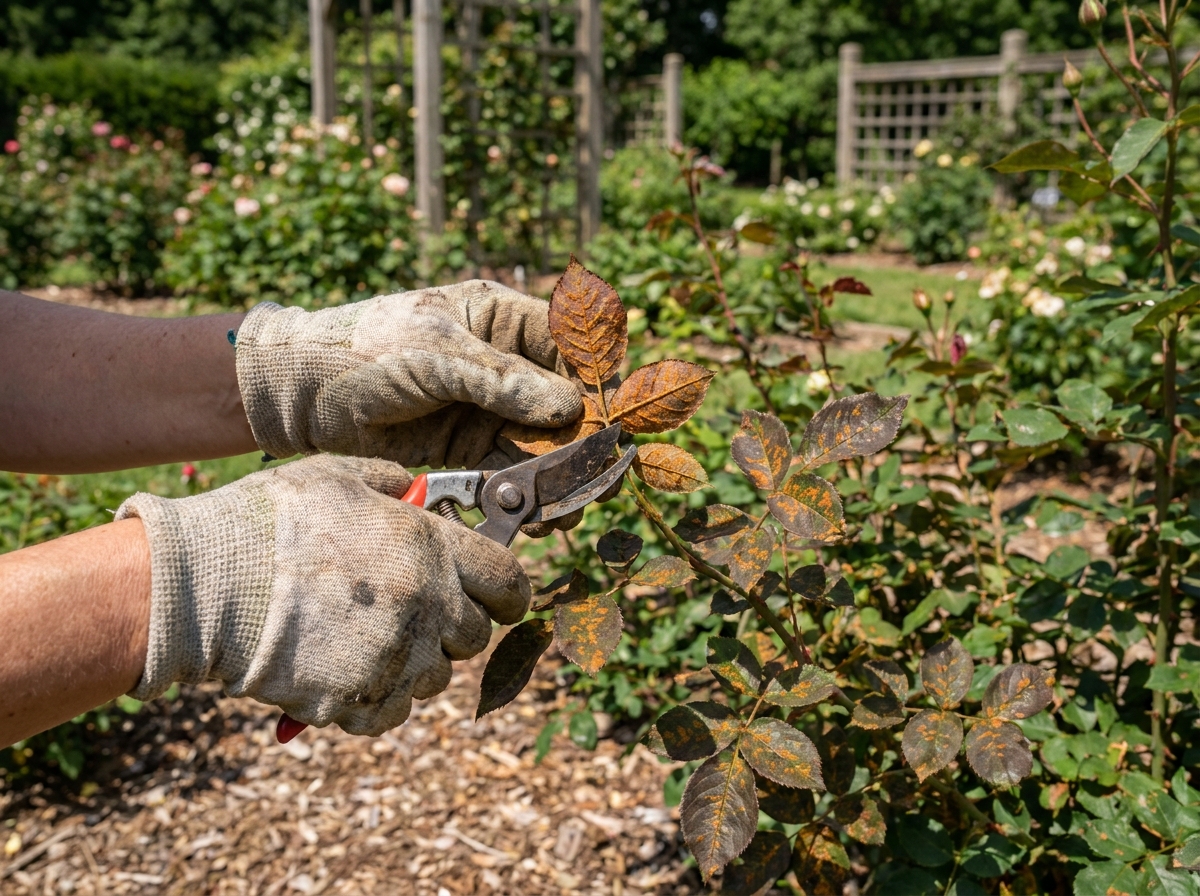
Smart tip: Strip diseased leaves before spraying — fungicide over infected tissue barely works and wastes product. Skip it.
A solution of 1 teaspoon baking soda per litre of water offers mild suppression on very early infections, but it doesn’t penetrate established mildew. For anything beyond a light dusting, use a proper fungicide — the baking soda approach simply can’t keep up with active summer spread.
Only if the stem itself shows orange pustules or is heavily infected along its length. Otherwise, pull off just the affected leaves, bag them immediately, and treat the remaining plant the same day.
Unlikely in one season, but a heavily defoliated rose enters winter significantly weakened and is far more vulnerable to frost damage and winter dieback. A thorough autumn clean-up of all fallen leaves isn’t optional — it directly affects next year’s performance.
In June you’re heading into winter, so active disease spread is sl