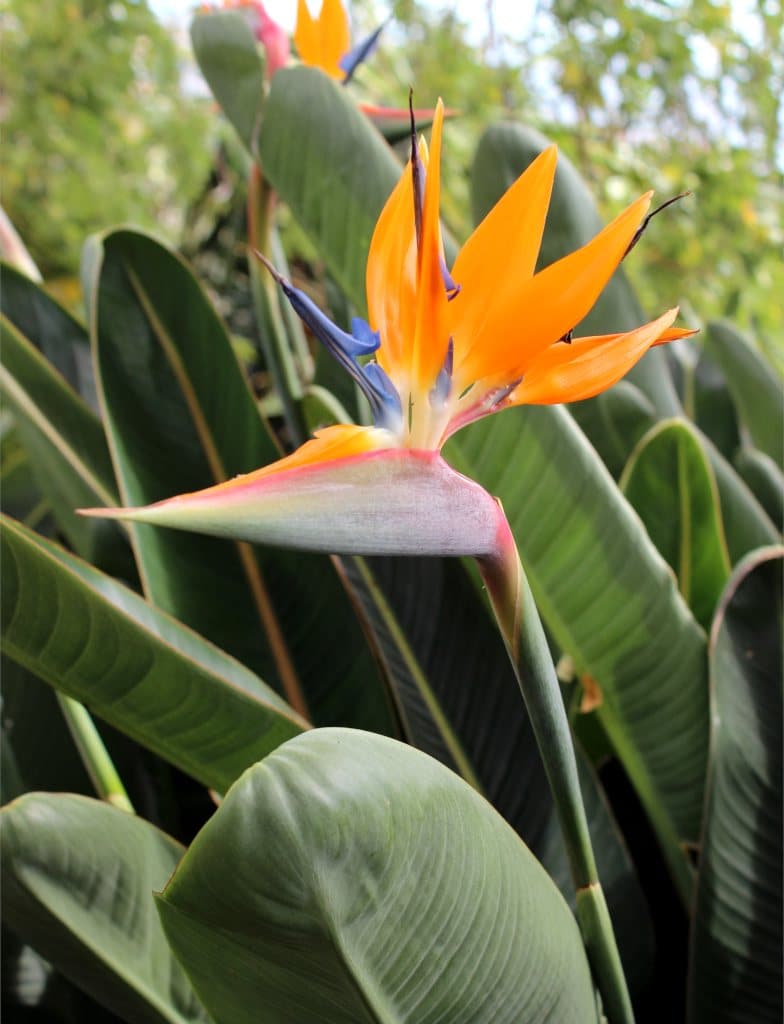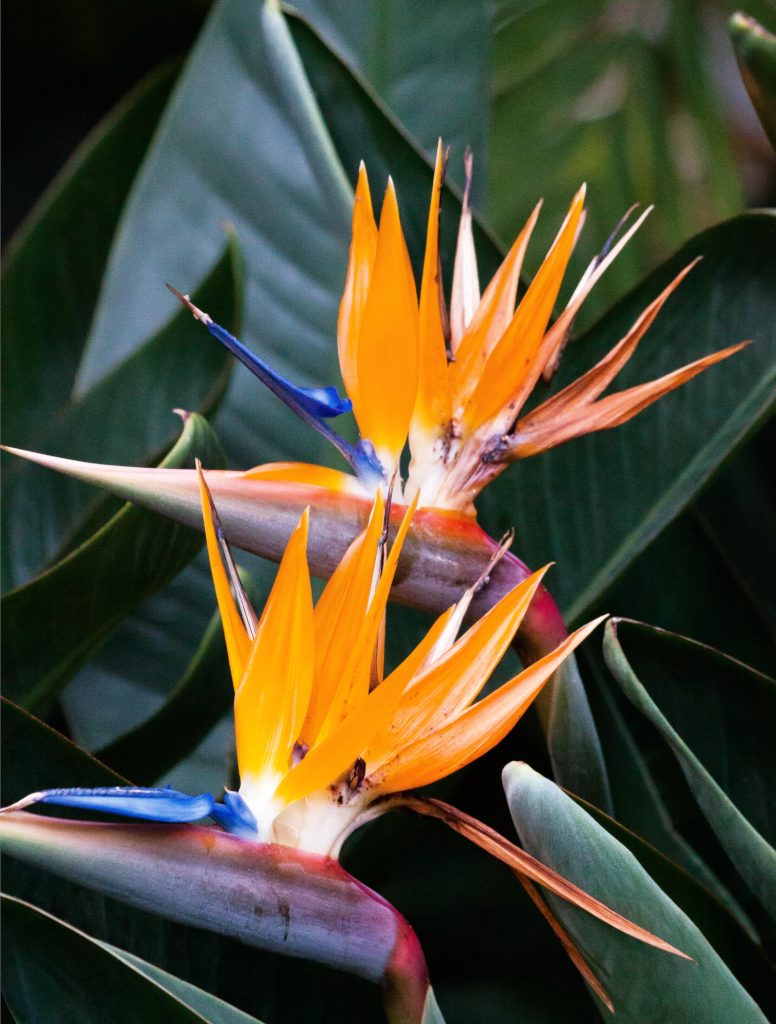
These are wild plants. A bird of paradise grew up baking in South African sun.
A monstera spent its early life climbing rainforest giants. A yucca pushed through desert soil where rain comes twice a year.
And yet here they are — living in your flat, your living room, your kitchen corner. With the right care, summer is when they stop just surviving and start genuinely showing off.
Most houseplant issues trace back to one mistake: treating every plant the same. A dracaena comes from tropical Africa.
A yucca is a North American desert native. A monstera is a Central American jungle climber.
And the gap between those habitats is enormous — your care routine needs to reflect it.
The common thread is that none of these plants evolved in dim, consistently damp rooms. They want:
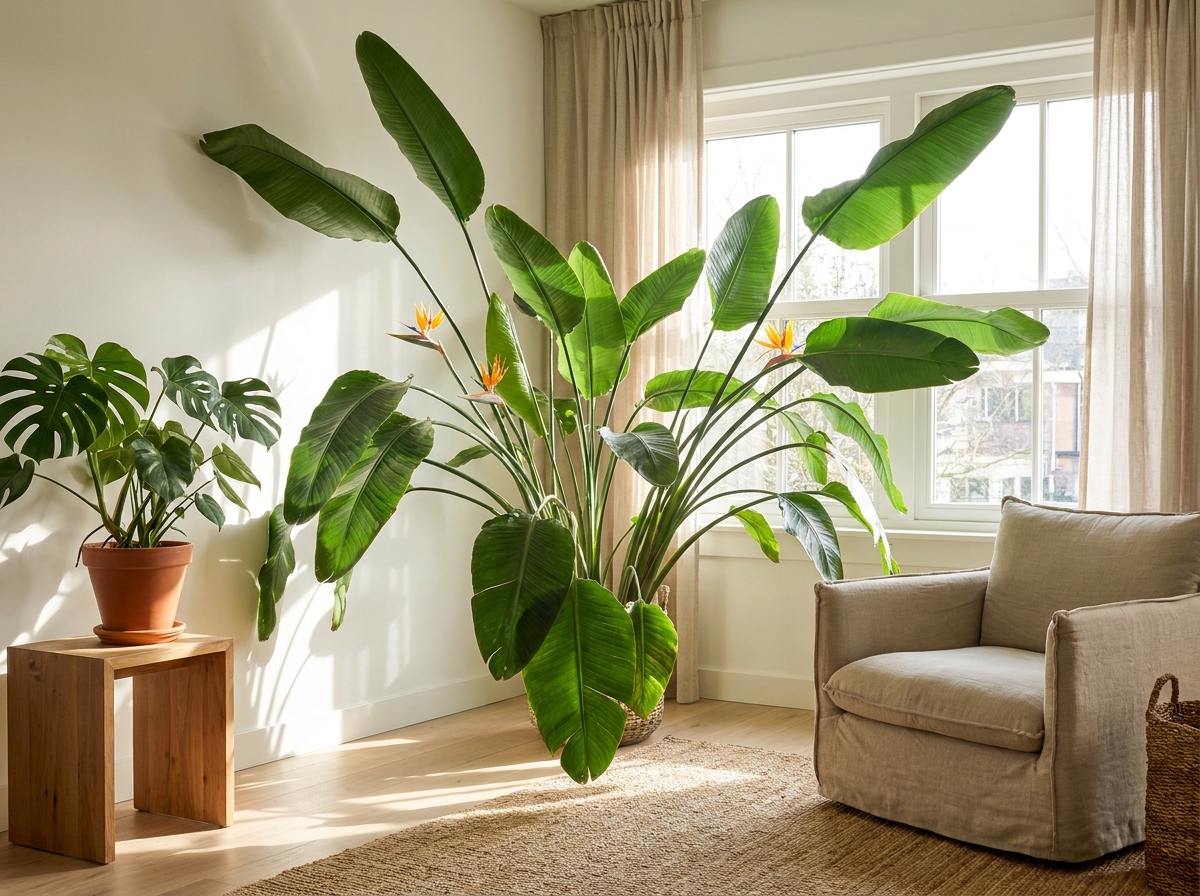
Understanding that a bird of paradise needs 6+ hours of direct sun to bloom indoors changes where you place it completely. Near the glass. Not against the back wall.
Right now, day length is at its annual peak in the Northern Hemisphere. Light pouring through a south- or west-facing window in summer is properly comparable to the conditions these plants evolved in.
A monstera pushed into a bright spot can produce a new leaf every 10 to 14 days. A well-positioned aloe will plump up visibly within weeks.
So, this is also the season where issues get amplified. Stronger light means faster soil drying — if you are still watering on a fixed schedule, you are either overwatering on cool weeks or leaving plants bone-dry during a heatwave. This approach is not quite right.
Check the soil. Push a finger 5cm in.
Water only when it is dry at that depth. For yucca and aloe, go even deeper — 8 to 10cm.
If your pots are drying out unusually fast recently, understand the reasons behind that exact issue before you change your watering routine. The thing is, this demands attention.
Yes, repotting in summer feels counterintuitive. But do it. If roots are circling the pot base, a plant in active summer growth will recover in under two weeks.
In winter, the same stress can take months to heal.
Each of these plants has one specific need most owners ignore:
Positioning and pot choice are non-negotiable. The difference between a plant that looks dramatic and one that just exists in a corner often comes down to these decisions. A bird of paradise in a pale ceramic pot against a white wall becomes a piece of architecture.
The same plant in a terracotta pot on the floor looks like an afterthought.
Dust the leaves. Run a damp cloth along each leaf of your dracaena or monstera — it takes three minutes, unblocks the stomata, and immediately makes the plant look as though it properly costs three times as much.
The smell of warm leaf surface and damp cloth in the morning light is, properly, one of the quiet pleasures of indoor gardening.
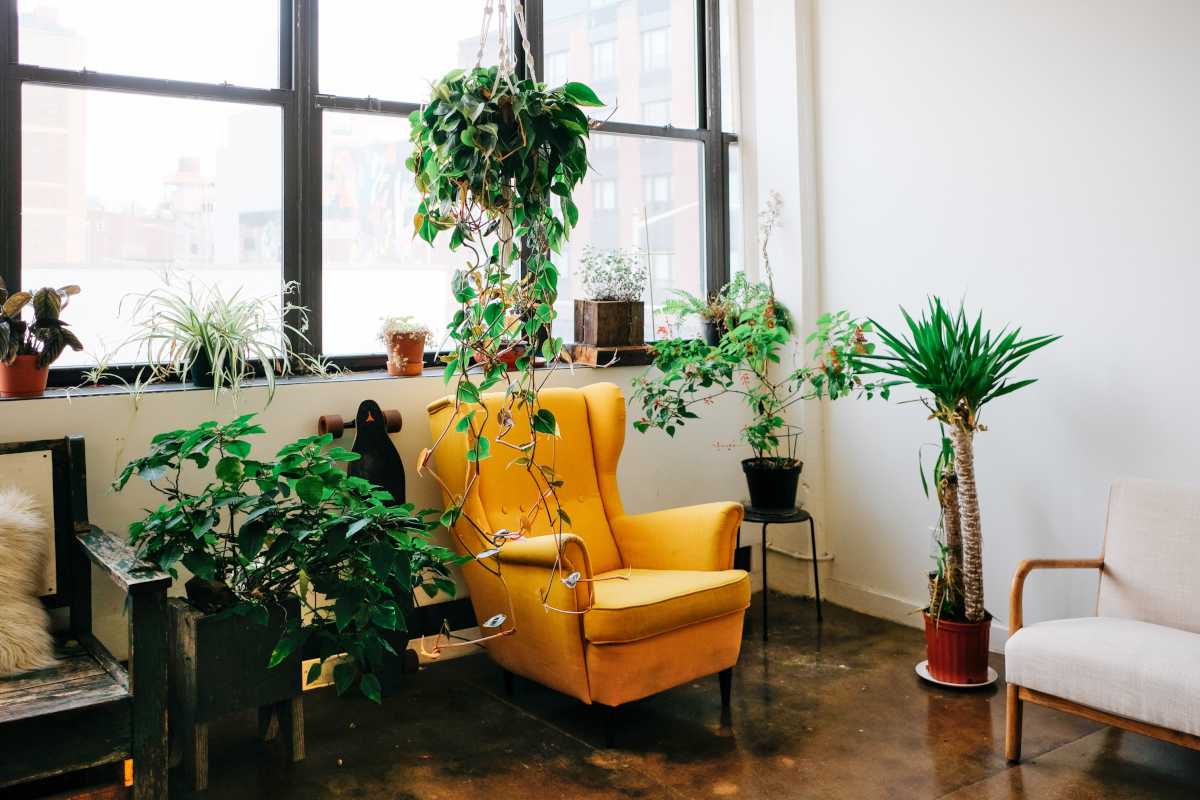
Cluster plants together rather than scattering them. And three different tropical species grouped in a corner create something that looks deliberately designed. For more ideas on building that kind of visual impact, turning your living room into a botanical garden is exactly where to start.
Southern Hemisphere gardeners: this applies to your December and January — your peak summer light window.
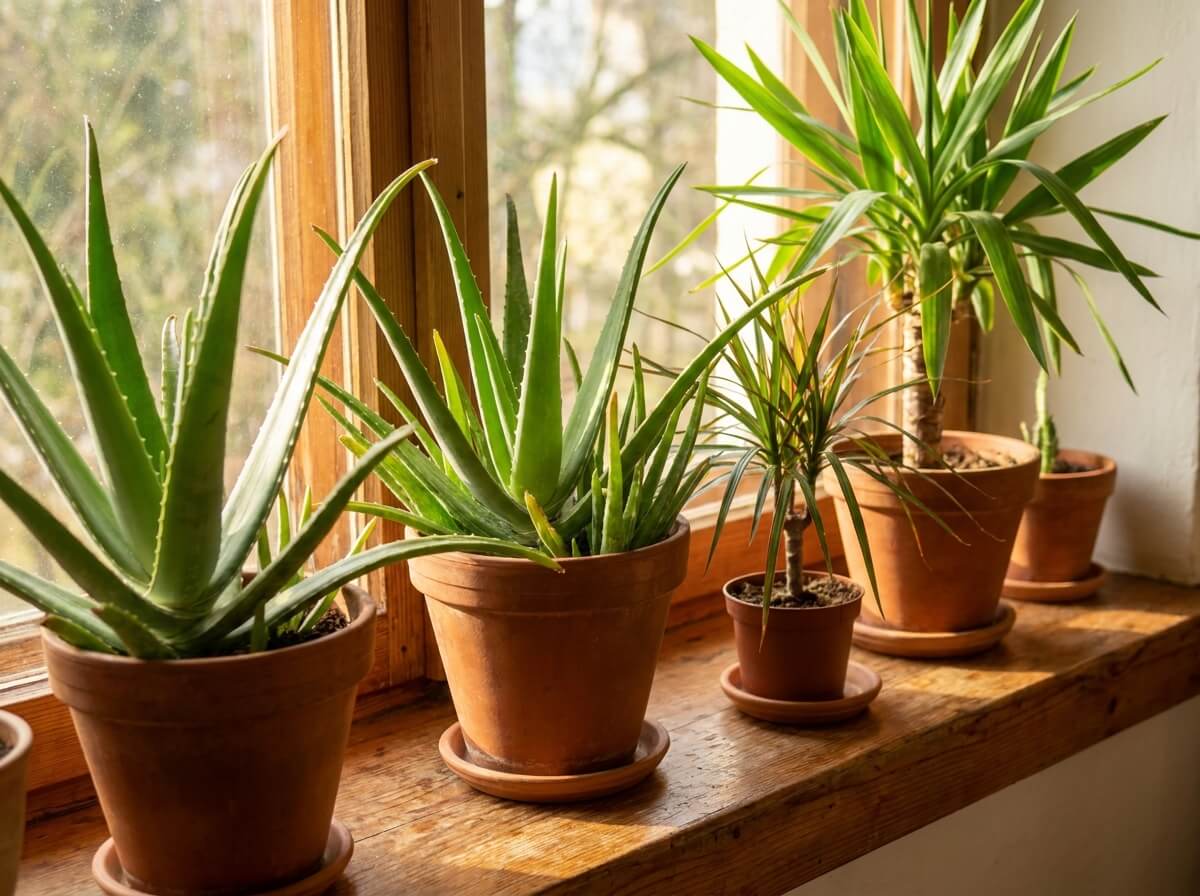
Smart tip: Move your sun-loving tropical houseplants within 30cm of your brightest window this season — light intensity drops by half at just 60cm from the glass.
It almost certainly needs more direct sun and a slightly root-bound pot. Move it to your sunniest window and resist repotting until roots are visibly crowded — this stress actually triggers blooming.
Every 10 to 14 days, watering deeply at the base and then letting the soil dry almost completely before the next watering. Never leave standing water in the drip tray.
Aloe, yucca, and dracaena can go outside in summer once night temperatures stay properly above 10°C — but acclimatise them slowly over 7 to 10 days to avoid sun scorch. According to the RHS, sudden exposure to outdoor sun is a leading cause of leaf bleaching in indoor-grown specimens.
Low light and no vertical support are the two most common causes. Move it closer to a bright window and add a moss pole — new leaves will develop larger fenestrations (splits) within two or three growth cycles.