Your houseplant soil is bone dry again — and you only watered it yesterday. Before you water a third time and wonder what is wrong, stop.
The soil is not broken. Your watering technique is not bang on.
There are two non-negotiable summer mechanisms at work here. Once these are understood, the fix will take you about 45 minutes, requiring no expenditure.
Summer heat does two things to potted plants simultaneously. Both accelerate moisture loss. First, higher ambient temperatures increase transpiration rate; your plant is pulling water from the soil and releasing it through its leaves properly faster than it does in cooler months. A tropical plant like a monstera or pothos can transpire up to three times more moisture on a hot summer day than it does in winter.
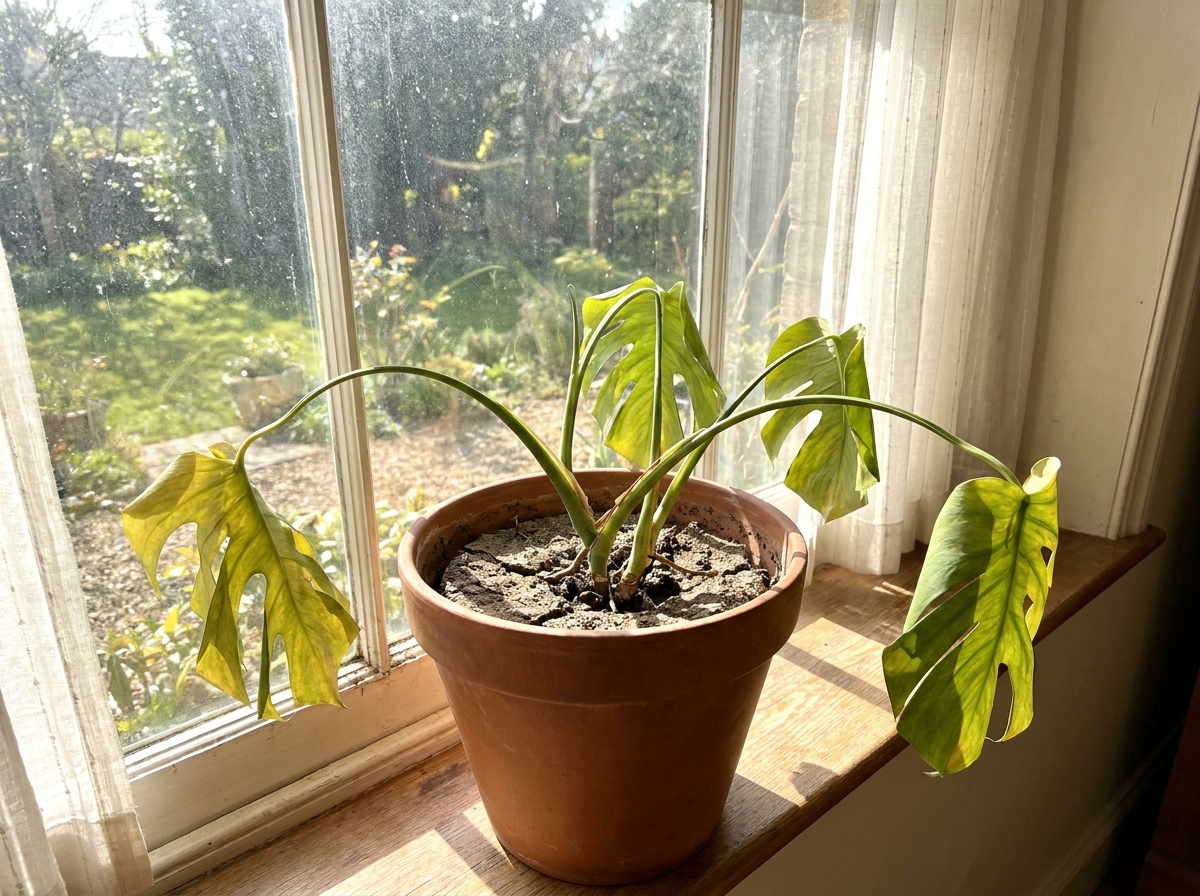
Second, and this factor often goes unnoticed, peat-based potting compost becomes hydrophobic when it dries out completely. The soil physically repels water.
You pour in 500ml. But it channels straight down the sides of the pot and out the drainage hole in under 30 seconds. The root zone, nestled there in the middle, never gets touched by that moisture.
You think you have watered. You have not.
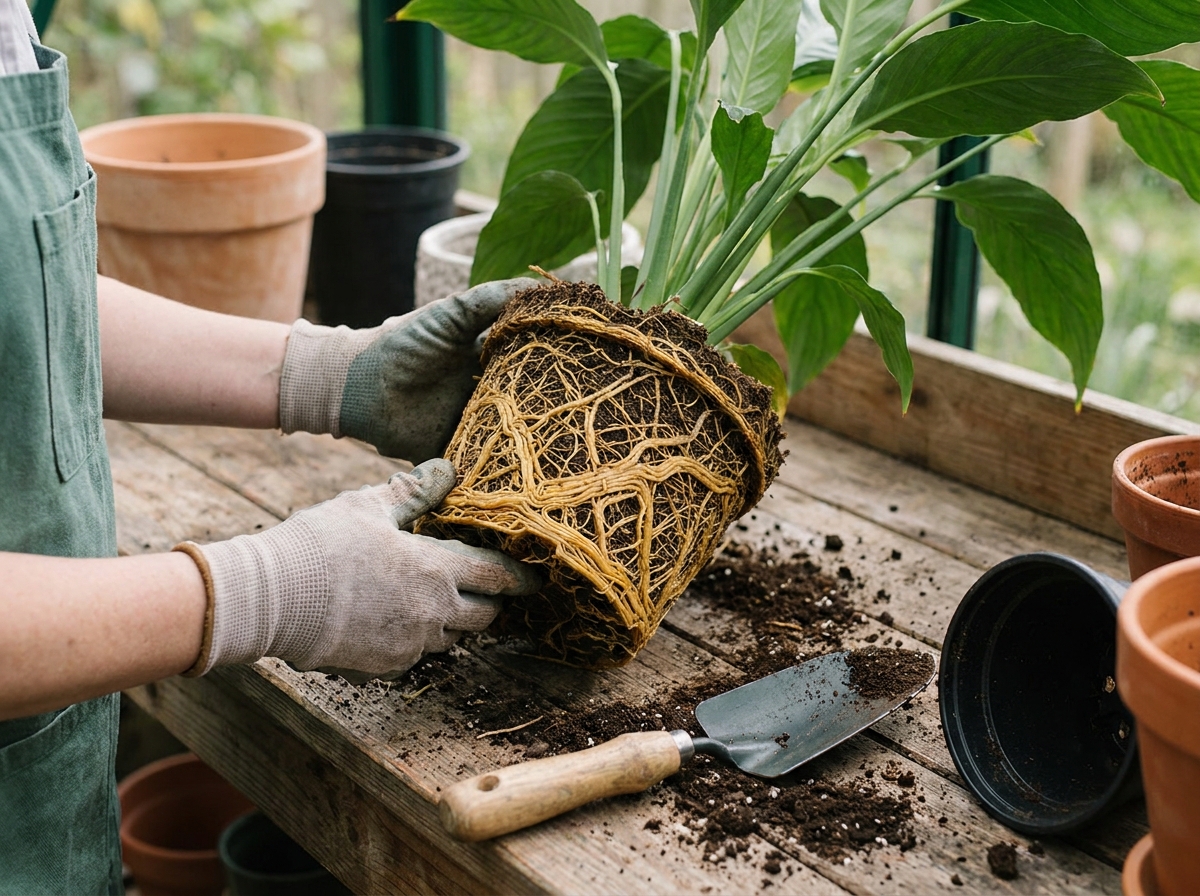
And if your plant has been in the same pot for more than 18 months, there is a third factor. Roots have likely taken over the entire volume of the pot, leaving minimal soil for moisture retention. Check the drainage hole right now.
If roots are spiralling out of it, that is your answer. Sorted.
If you are already dealing with a struggling tropical houseplant this season, the full picture is covered in Your Tropical Houseplant Is Struggling Right Now — and Summer Is Why.
Chronic rapid drying is not just inconvenient; it is damaging. Root cells, once healthy, begin to die back after sustained dehydration. This happens even in species engineered to tolerate drought.
You will start seeing leaf curl, then tip browning, then whole-leaf yellowing, all within a fortnight. That is a dodgy situation for sure.
The more insidious consequence is salt accumulation. But every time water flashes through the pot without being absorbed, any dissolved minerals simply stay behind. It builds up.
Salts build up in the remaining soil, drawing moisture away from roots through osmosis. The plant effectively starts fighting its own growing medium. That white crust forming on the soil surface? That is your signal.
For the hydrophobic soil issue: fill a basin, bucket, or sink with room-temperature water and submerge the entire pot for 45 minutes. The soil will rehydrate slowly from below; the bubbling sound you hear is air escaping as moisture properly replaces it.
Satisfying, actually. It is like the soil is finally exhaling. After this soak, normal top-watering will work again. Yes, it is fiddly. Worth it.
For the root-bound issue: repot now. The plant is in active summer growth and will recover properly quickly. Go up just 5–7cm in diameter; no larger. A pot that is too large holds excess moisture around roots that are not there yet, which causes rot. So, use fresh peat-free multipurpose compost (the RHS recommends peat-free across the board now) and loosen the root ball gently before replanting.
Adjust your watering rhythm too. In summer, most medium-to-large houseplants need watering every 3–4 days rather than weekly.
Water deeply — enough that it flows from the drainage hole — then stop. Do not water again until the top 3cm of soil is dry to the touch.
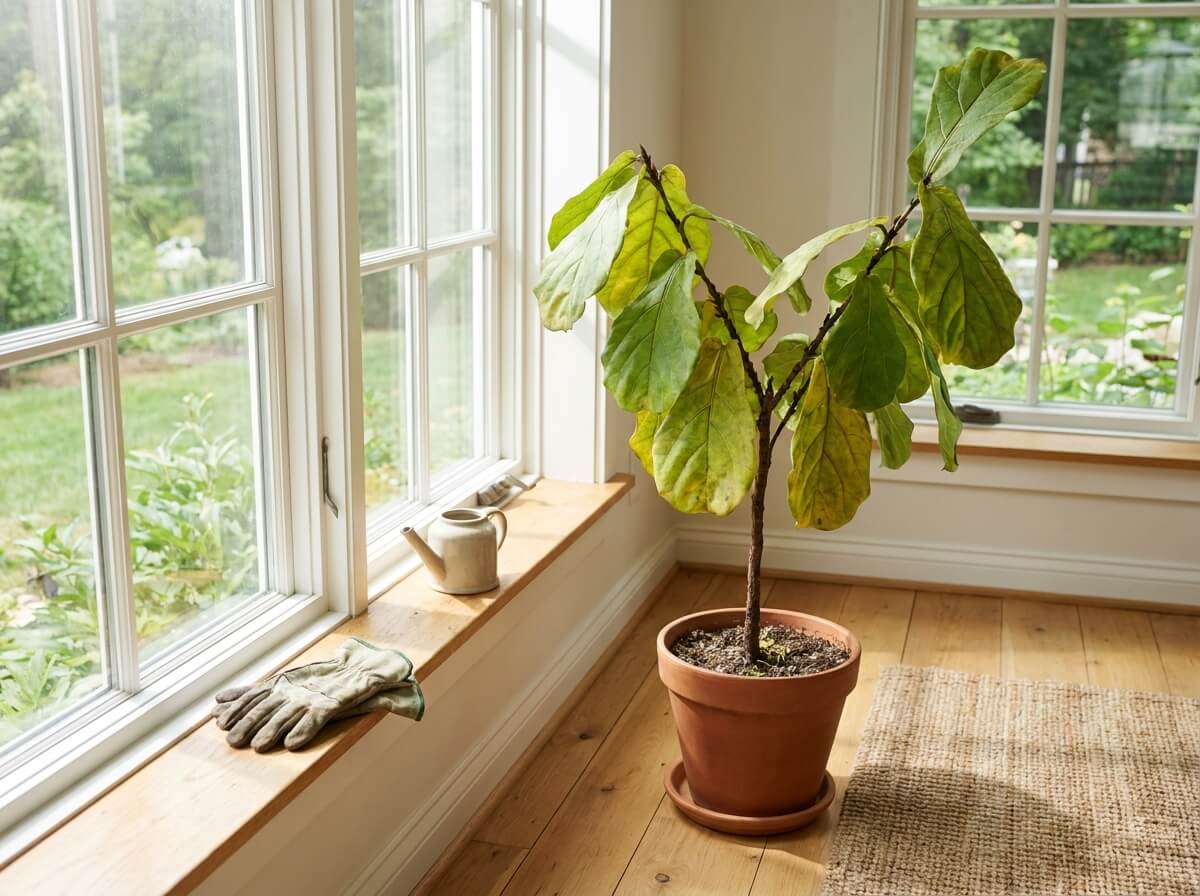
Rapid drying rarely arrives alone. If your plant is also showing pale or yellowing lower leaves, it is likely stress from inconsistent moisture — feast and famine cycles that disrupt root uptake. Steady, frequent, moderate watering beats occasional heavy drenching every time.
Wilting in the morning — before the heat of the day — points to root damage rather than surface dryness. Roots have already suffered, rendering them unable to transport water even when it is available. University of Missouri Extension research confirms that root zone moisture stress is the leading cause of houseplant decline in summer months.
Pot weight is your best diagnostic tool. So, lift the pot immediately after watering, then again 24 hours later.
A dramatic weight difference — one that surprises you — confirms either hydrophobicity or severe root crowding. Neither is fatal. Proper management will fix this.
Both are fixable this afternoon.
Smart tip: Lift your pot 24 hours after watering — unexpected lightness reveals the issue instantly.
Most medium houseplants need watering every 3–4 days in summer rather than weekly. Always check the top 3cm of soil first — if it is dry, water deeply until it drains from the bottom.
Dried-out peat compost becomes hydrophobic and repels water. Submerge the entire pot in a basin of water for 45 minutes to properly rehydrate the soil; top-watering will work normally again after that.
Check the drainage hole. Visible roots circling out of it mean the plant has outgrown its pot. Repot into a container 5–7cm wider, using fresh compost.
Many tropical houseplants benefit from outdoor placement in a sheltered, bright-but-shaded spot during summer. Avoid full direct sun, which scorches foliage, and bring them back inside if temperatures drop below 15°C at night.