Repotting seems straightforward — pull the plant out, put it in a bigger pot, carry on. But this is where most houseplants quietly start to fail. The most damaging mistake is not forgetting to repot — it is repotting into a pot that is far too large. Get the size wrong and you have traded one issue for a worse one. Here is exactly what is going wrong and how to fix it.
Choosing a pot too large is the classic error — and it is almost universal. A pot dramatically bigger than the root ball holds a huge volume of moist soil that roots cannot reach.
That soil stays wet. So, wet, rootless compost becomes anaerobic within days, and root rot follows quietly underneath while the plant above still looks fine.
The rule is simple: move up by no more than 2-5cm (roughly one pot size) at a time. That is it.
The roots should be able to colonise the new space within a single growing season without sitting in a swamp of excess compost.
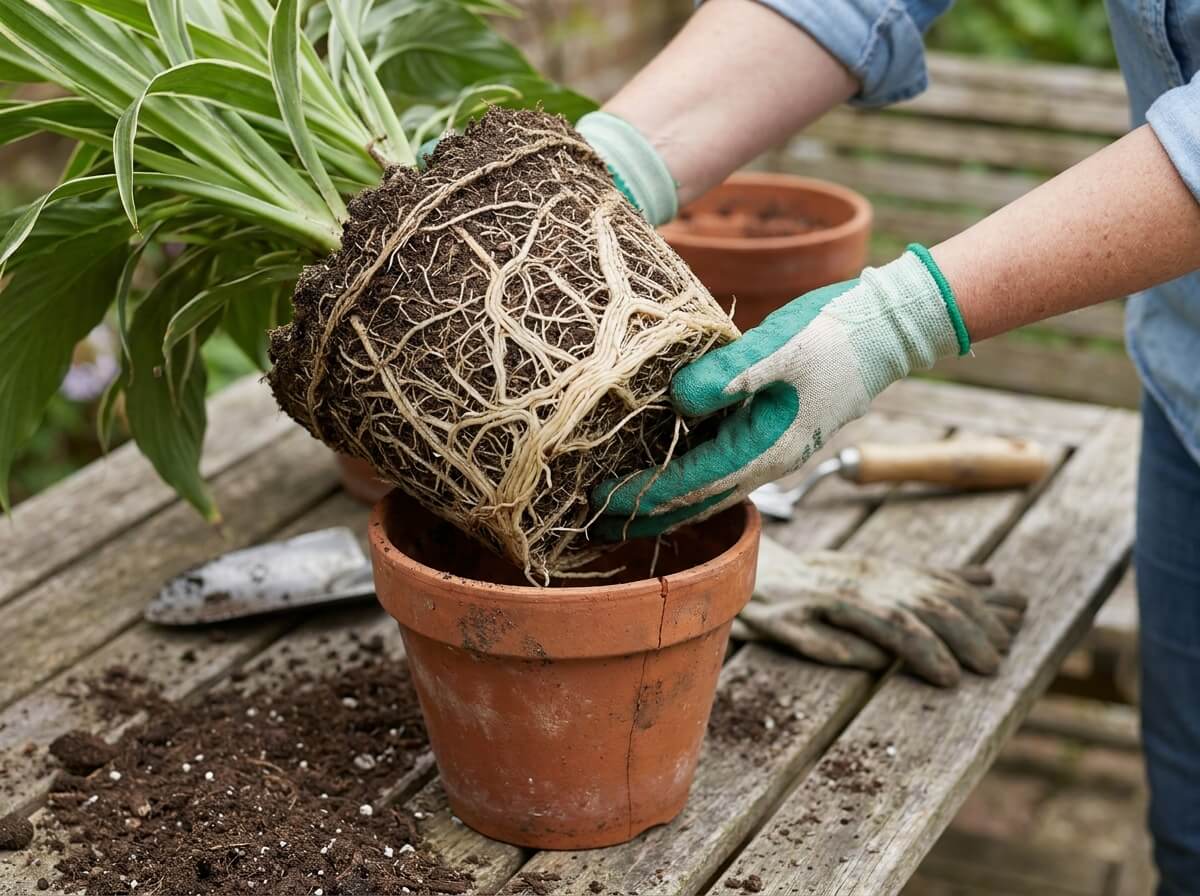
And there is a second mistake hidden inside the first — failing to loosen the root ball. A pot-bound plant has spent months or years circling its roots tightly inward. Drop it straight into fresh compost without teasing those roots apart and they will keep circling indefinitely, never exploring the new soil. Use your fingers or a blunt pencil to gently tease the outer roots outward before planting. Yes, it is fiddly. Worth it. The difference is night and day.
A plant repotted badly does not die dramatically. It sulks. You will see no new leaves shoot up for six to eight weeks, yellowing on older leaves, and a general look of exhausted resignation. Gardeners often diagnose this as underwatering and start watering more — which is exactly the wrong move when the issue is already too much wet soil around the roots. See also: why your houseplant stopped growing.
The thing is, root rot from oversized pots is one of the top causes of houseplant death in the first year of ownership. The RHS confirms that most houseplants prefer to be slightly snug in their containers rather than swimming in space.
Work through this sequence and you will avoid 90% of repotting failures:
No fertiliser for at least four weeks after repotting. This is non-negotiable. But the roots are stressed and fresh fertiliser on damaged roots causes chemical burn, not a boost. If your new potting mix already contains added feed — properly check the bag — that is sufficient for the first six to eight weeks.
A successfully repotted plant will show new leaves shoot up within three weeks during the growing season. The soil should feel barely moist at the surface 7-10 days after that first watering — if it is still sodden, your pot may be too large or drainage is blocked.
Watch for these warning signals in the weeks after repotting:
So, if you are also noticing your plant looking stressed from heat exposure, check whether your houseplant is suffocating in the heat. Summer repotting during a heatwave adds a bit much stress, so proper timing matters too. The RHS advises repotting in spring where possible, but early summer works if temperatures stay below 28°C indoors.
Southern Hemisphere gardeners: this applies to your September/October repotting window as spring arrives.
Smart tip: Always match pot size to root ball size — one size up, never two.
Roots shooting up out of drainage holes, soil drying out within 24 hours of watering, or a plant that tips over its own pot are the clearest signs. You can also gently slide the plant out — if roots form a solid mass with almost no soil visible, it is time.
Avoid it if you can — repotting diverts the plant’s energy away from blooms and the flowers often drop within days. Wait until flowering finishes, then repot within two to three weeks.
Match the mix to the plant. Cacti and succulents need fast-draining gritty mix.
Monstera, pothos, and philodendron do well in peat-free multipurpose with added perlite at roughly 20% by volume. Orchids need bark-based mix — standard compost will suffocate their roots.
Water the plant 24 hours before you repot — moist roots are more flexible and less likely to snap during handling. After repotting, water once thoroughly, then hold off for 10-14 days to let the roots settle and seek moisture.