Xylella fastidiosa does not rot your plants. It suffocates them from the inside. Blocking water movement, it causes leaves to scorch, stems to die back, and entire trees to collapse within a few seasons. It has already killed over 21 million olive trees in Italy. Now, it is spreading north, confirmed in France, Spain, Portugal, and parts of Germany. The thing is, if you shoot up olive trees, lavender, rosemary, or almond, understanding what this looks like is non-negotiable.
The bacterium invades the plant’s xylem — the internal vessels that carry water from roots to leaves. Once inside, it multiplies until those vessels become completely blocked.
The plant can no longer move water upward, even in wet soil.
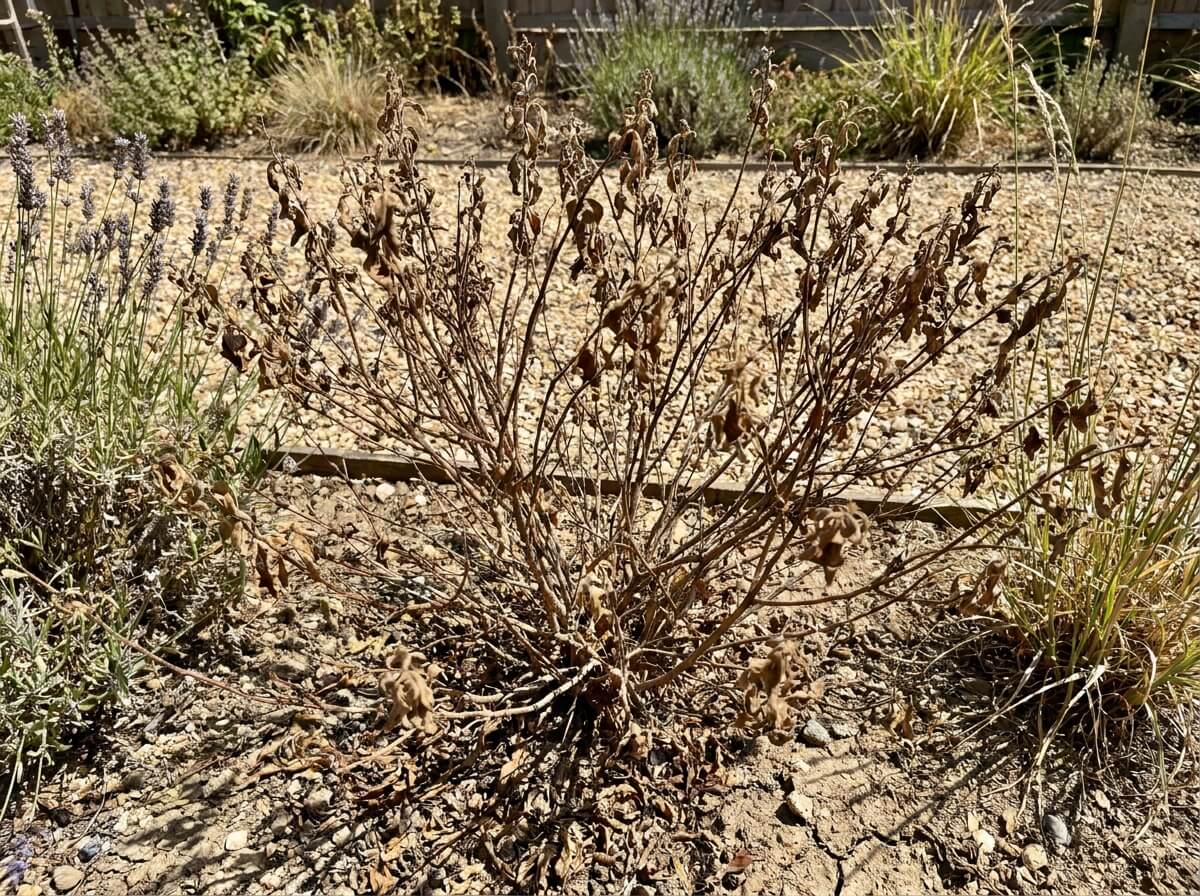
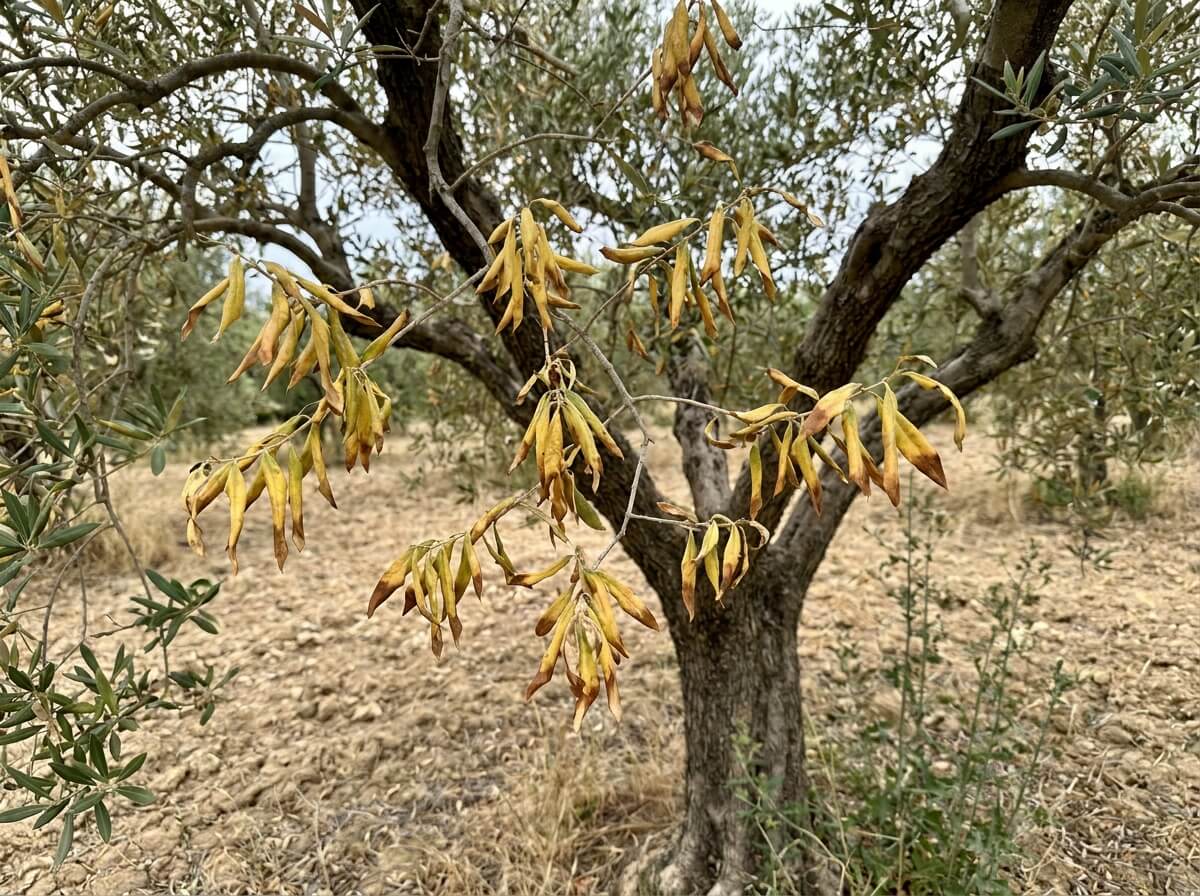
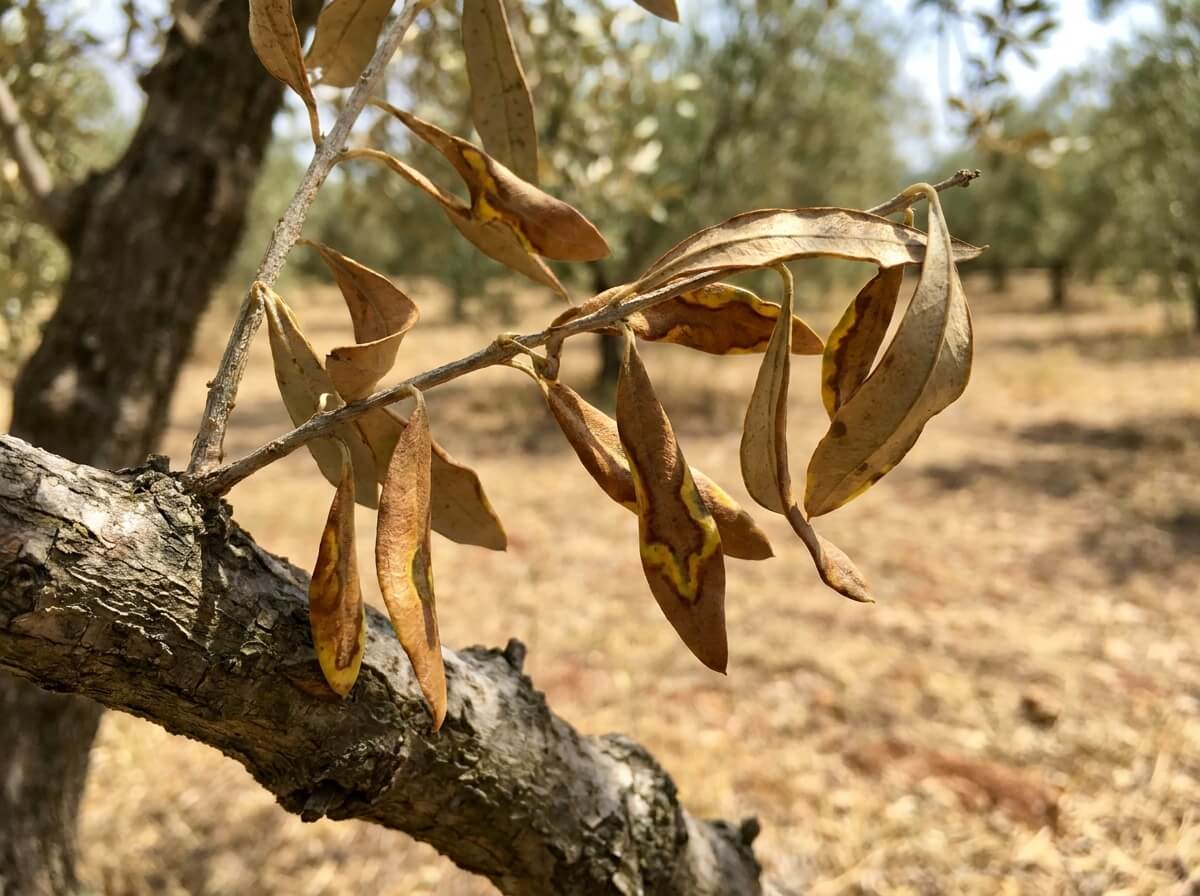
What you see on the outside looks deceptively like drought stress. Leaf tips turn brown and crisp.
Whole branches die back. The damage begins at the tips and works inward.
Watering more does absolutely nothing — the plumbing is already broken.
It spreads through sap-sucking insects, primarily spittlebugs (Philaenus spumarius). These are the tiny insects responsible for the blobs of white foam you sometimes glimpse on plant stems in early summer. Those blobs of foam are proper dodgy. Just one feeding session on an infected plant, then another on yours, is enough. The European Food Safety Authority (EFSA) has tracked its spread across southern Europe with growing alarm since 2013.
There is no cure. None. No fungicide, no pesticide, no treatment undoes infection once it takes hold. It is pointless. The RHS confirms that infected plants cannot be saved and must be removed.
Doing nothing guarantees the disease spreads. Spittlebugs feeding on your dying lavender will carry the bacterium to every other susceptible plant nearby — and that list is long.
In Italy’s Puglia region, the economic and ecological destruction has been catastrophic. Ancient groves that survived centuries were gone within three years of first infection. Southern Hemisphere gardeners, take note: while Xylella has not reached Australia or New Zealand in established form, biosecurity authorities are rigorously tracking for it. Do check Plant Health Australia alerts if you are importing plant material. You do not want a dodgy situation on your hands.
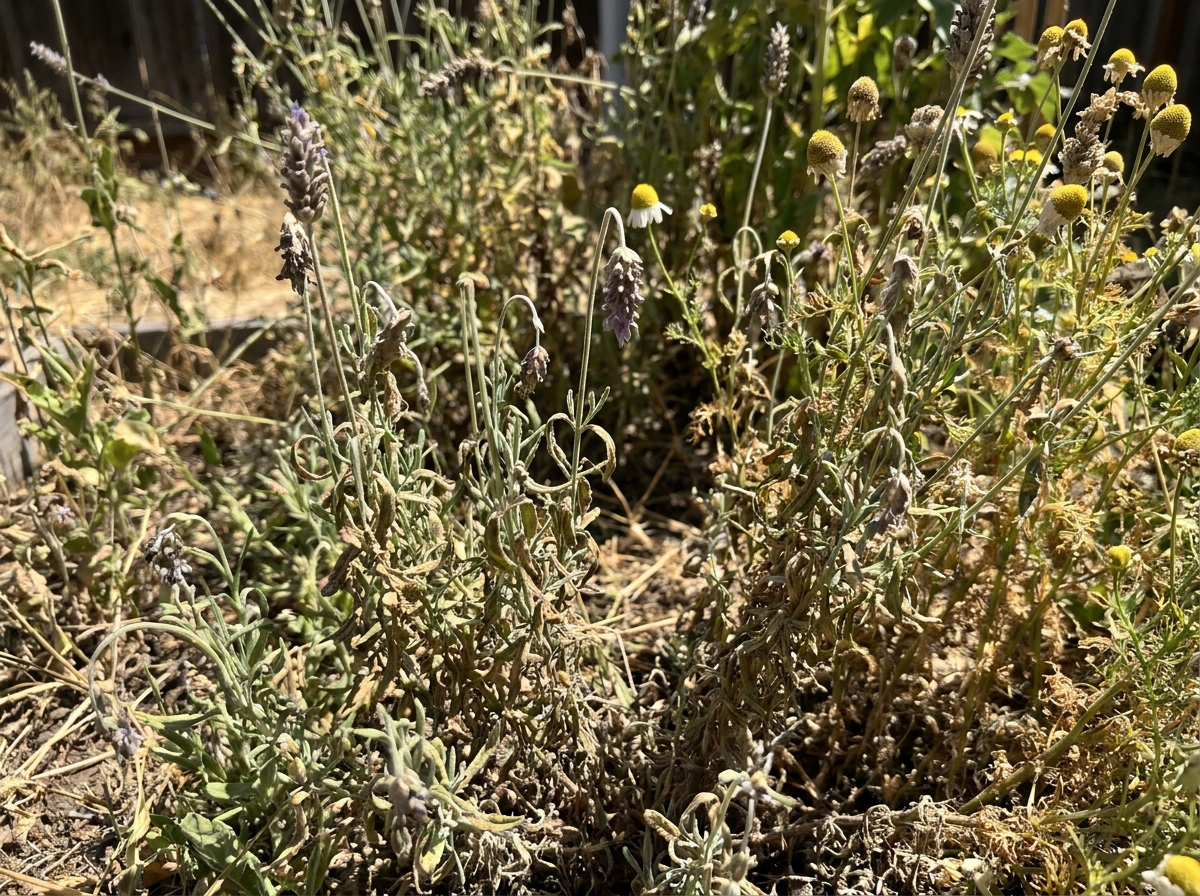
Start with a visual inspection. Get close, get low. Look at the leaf tips and the stems. Scorch that starts at the tips and spreads inward, on a plant that has been watered properly, is the red flag.
And white spittlebug foam on stems nearby makes it more urgent.
If you suspect infection:
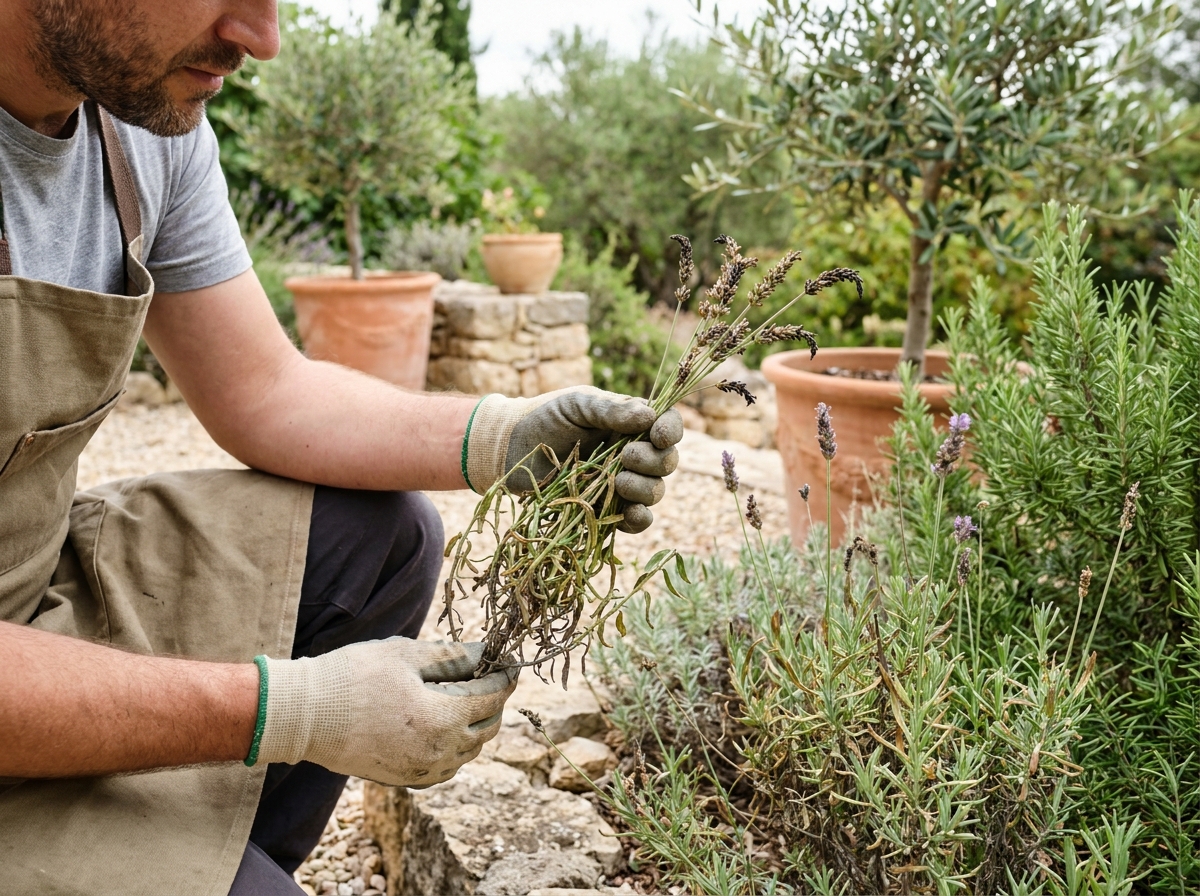
And if you have been trimming your lavender this summer, check the stems as you work — healthy lavender stems are grey-green and slightly flexible. Stems that are brittle, hollow, or discoloured brown inside deserve a second look.
But Xylella is not the only explanation for scorched, struggling Mediterranean plants. It is the one you cannot afford to dismiss. Overwatering Mediterranean plants in summer produces similar-looking decline, and genuine heat stress can scorch leaf tips too. The difference is stark: Xylella damage does not bounce back with better care. Ever.
Watch for these specific patterns:
Yes, reporting a suspected infection feels alarming. Do it anyway. Early reports are the single most effective tool plant health authorities have.
Smart tip: If leaf scorch does not improve after two proper waterings, stop watering more and start investigating the cause.
Only if the houseplant is a susceptible species — rosemary or oleander kept indoors are theoretically at risk if an infected spittlebug enters, though transmission indoors is extremely rare. Outdoor plants in gardens near infected areas face the real risk.
As of 2026, the UK has confirmed isolated interceptions at ports but no established outbreak in the wider environment. APHA tracks it relentlessly — report anything suspicious via the PlantAlert app immediately.
Heat or drought scorch typically affects the youngest leaves first, then recovers once conditions improve. Xylella scorch progresses steadily regardless of weather or watering, and starts on older, established branches — the distinction is in the trajectory, not just the appearance.
Buy from certified, disease-free UK or local nurseries — not from markets or informal sellers importing plants from affected regions. Always scrutinise any plant passport, which is now legally required for most trees sold in the UK and EU.