Lavender, rosemary, cistus, olive — these are plants built for punishment. Rocky hillsides, baking sun, almost no rain for four months. And yet, every summer, gardeners kill them by the thousands. Not from neglect. From too much water. If your Mediterranean plants are looking grey, soft, or collapsing at the crown despite regular watering, the watering is the issue.
The instinct makes sense. Temperatures rise, soil looks dry, so you water.
But lavender, rosemary, and cistus didn’t evolve alongside your good intentions. They evolved in the garrigue — the rocky, thin-soiled scrubland of southern France, Spain, and the Mediterranean basin, where summer rainfall can drop to near zero for 12 straight weeks.
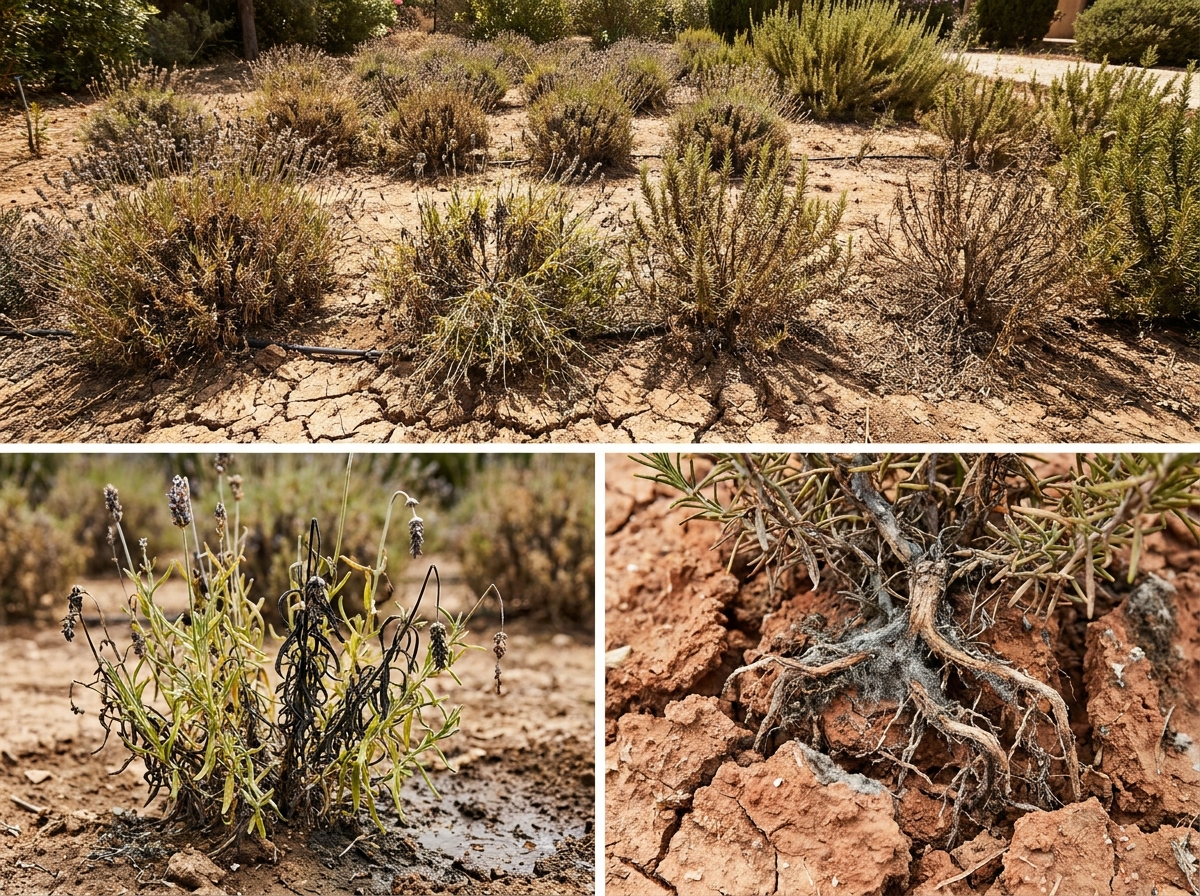
Their root systems are adapted to find deep moisture, not sit in it. When you water frequently in warm weather, soil temperatures above 18°C create perfect conditions for Phytophthora root rot — a waterborne pathogen that spreads fast and it’s essentially invisible until the plant collapses. By then, the root system is already gone.
And this isn’t just a UK or US West Coast issue. South African and Australian gardeners dealing with humid summer conditions face exactly the same trap — the plant looks drought-stressed, so you water, and you accelerate its death.
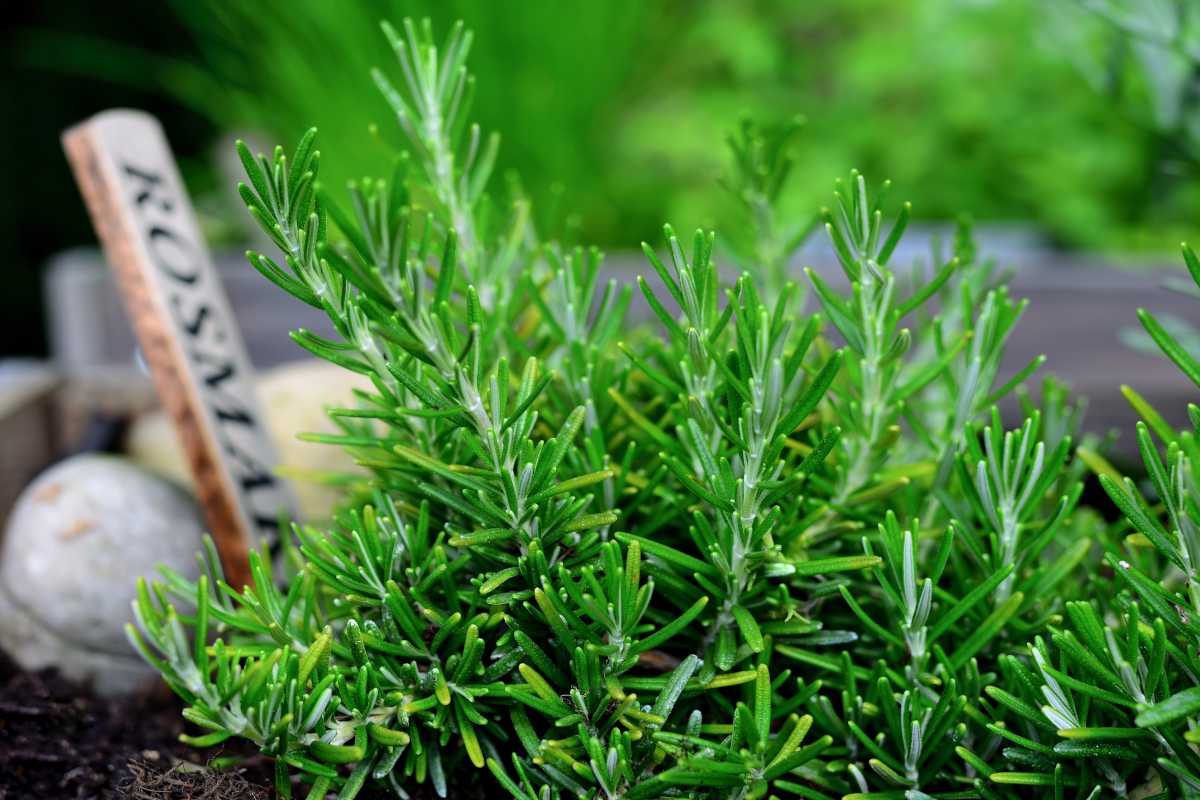
The first sign is subtle: a slight greyness to the foliage, leaves that feel limp rather than firm and resinous. Rub a rosemary stem between your fingers on a healthy plant and it smells sharp, almost medicinal.
On a waterlogged one, that scent is faint, muted.
Left unchecked, the crown — the point where stems meet soil — turns brown and woody, then soft. That’s rot.
Once it reaches the crown, the plant can’t be saved by cutting back. And because lavender doesn’t regenerate from old wood the way roses do, there’s no recovery pruning that fixes this.
Do nothing, and you’re likely to lose the plant within four to six weeks of persistent overwatering in summer heat.
Stop watering immediately and don’t resume until the top 5cm of soil is completely dry. For established lavender and rosemary in the ground, that typically means watering deeply — a proper 25 minutes at the base — just once every fortnight during summer’s peak heat, letting them truly parched between drinks.
Containers need slightly more frequency: every 7 days, but only after the soil surface is visibly dry and the pot feels light when lifted.
Yes, letting a struggling plant dry out feels counterintuitive. Do it anyway — the difference is night and day.
The RHS confirms that poor drainage and overwatering are the non-negotiable causes of lavender death in UK gardens, far outpacing any pest or disease.
Beyond the soft crown, watch for these:
Olive trees are the most forgiving of this group. But even olives grown in containers will develop dodgy root issues if left standing in water after summer rain.
Tip the pot slightly — just 5 degrees — to stop water pooling at the base.
With El Niño conditions driving unpredictable rainfall and heat spikes across the UK, US, and Australia right now, these plants’ll face wet-then-scorching cycles that amplify every watering mistake. The UK Met Office notes that El Niño summers often bring intense short rainfall events followed by prolonged dry heat — exactly the conditions where overwatering instincts do the most damage.
Southern Hemisphere gardeners: this applies to your December and January — bookmark it now.
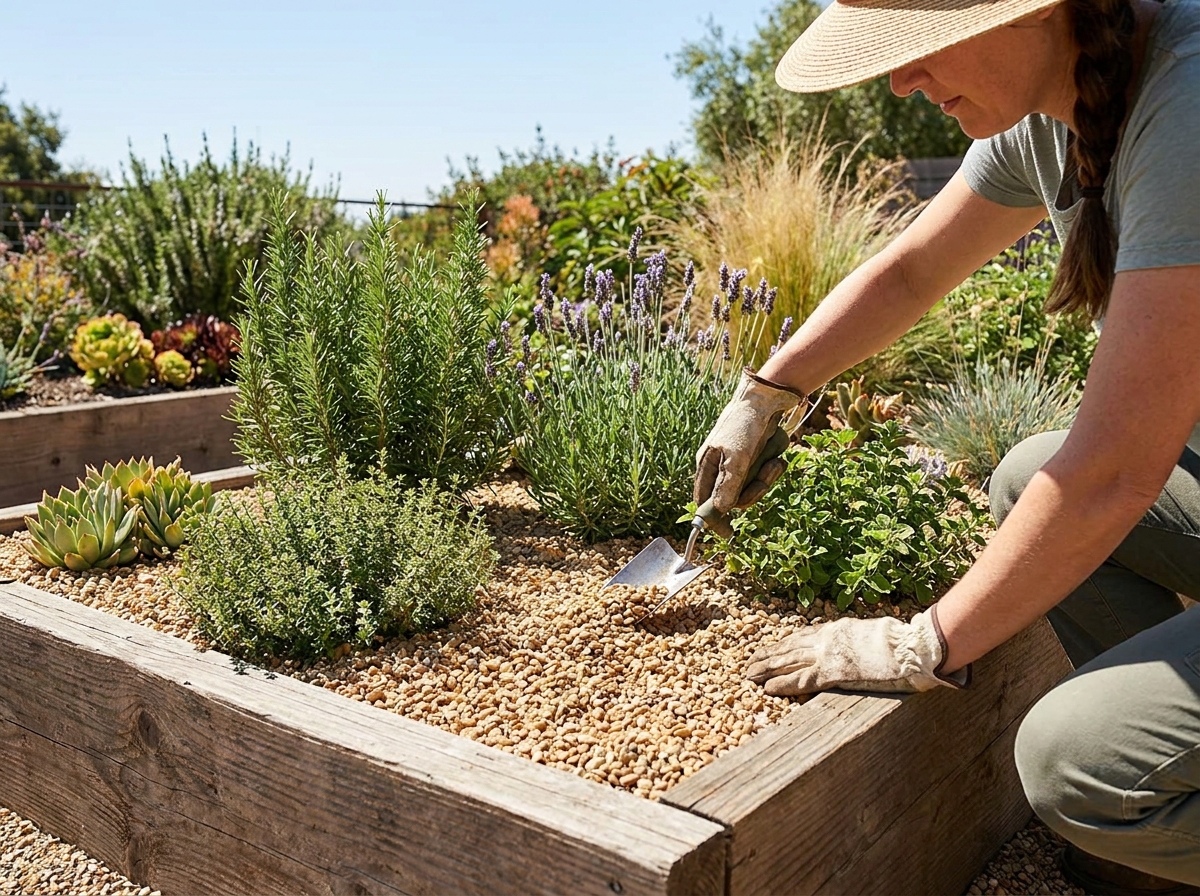
Smart tip: Gravel mulch around the crown of lavender and rosemary is the single highest-impact change you can make this summer.
For established plants in the ground, once every fortnight is enough. You must water deeply at the base for a proper 20-25 minutes, then leave it completely alone. Containers? Check them every 7 days. But only water when the top 5cm of compost is dry. So don’t be shy with that hose initially, then back right off.
If the browning is soft and the stem bends, root rot has set in. Cut back hard to any firm green wood you can find, dust with garden sulphur, and stop all watering for at least 10 days. Yes, it’s drastic. It’s your only shot. If the entire base is soft with no green left, the plant’s gone.
No — and feeding lavender or rosemary in summer actively harms them. High-nitrogen feeds push soft, water-hungry growth that’s prone to rot and frost damage.
These plants thrive on neglect and poor soil.
Rosemary indoors needs the same gritty, fast-draining compost and minimal watering — place it in the sunniest window you have and water only when the soil is completely dry, roughly every 10 days. Lavender rarely does well indoors long-term due to insufficient light.