Cistus — the rock rose — puts on a spectacular show. Through late spring and early summer. Then it drops its tissue-paper petals almost as fast as they opened. That fleeting quality is part of its undeniable charm.
But once peak flowering passes, there is a short, specific window. You will need to do two things. Both shape the entire future of the plant: tidy spent growth properly, and take softwood cuttings. They root with almost suspicious ease. Both jobs take under an hour.
Neither forgives much delay. Never.
Each cistus flower opens at sunrise. It is finished by mid-afternoon on the same day. This is not a sign of stress.
It is just what cistus does. It has always done this.
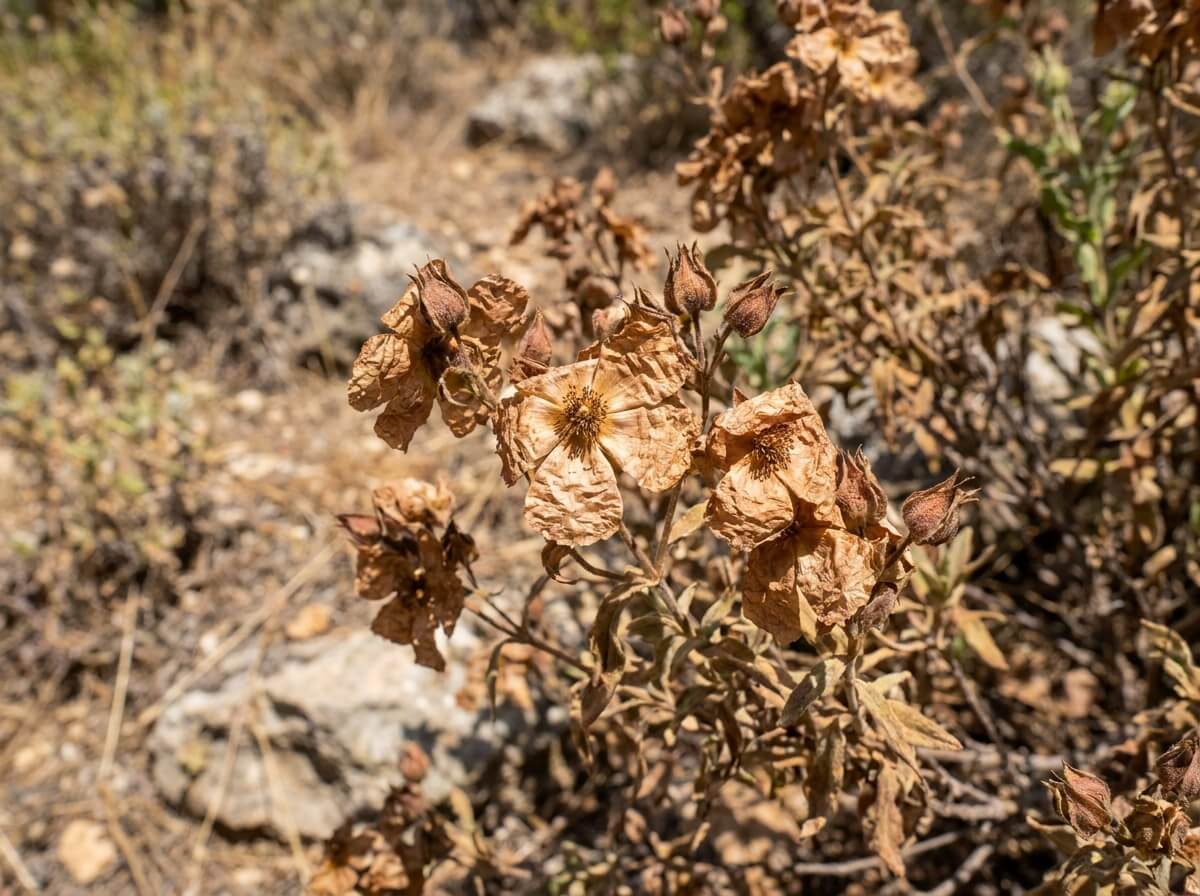
The confusion arises because a mature shrub carries dozens — sometimes hundreds — of buds. They open in sequence over six to eight weeks. So when the whole plant suddenly looks ragged and papery in midsummer, it genuinely has finished.
That is peak bloom gone, not a watering issue, not a disease, not heat stress. Sorted.
What you are left with after flowering? Small, rounded seed capsules. They sit where petals once were. Plus stems. They look slightly grey and exhausted. This is the moment to act. Waiting two or three weeks longer makes propagation harder. Light tidying becomes more dodgy.
The short answer: partially. Not aggressively.
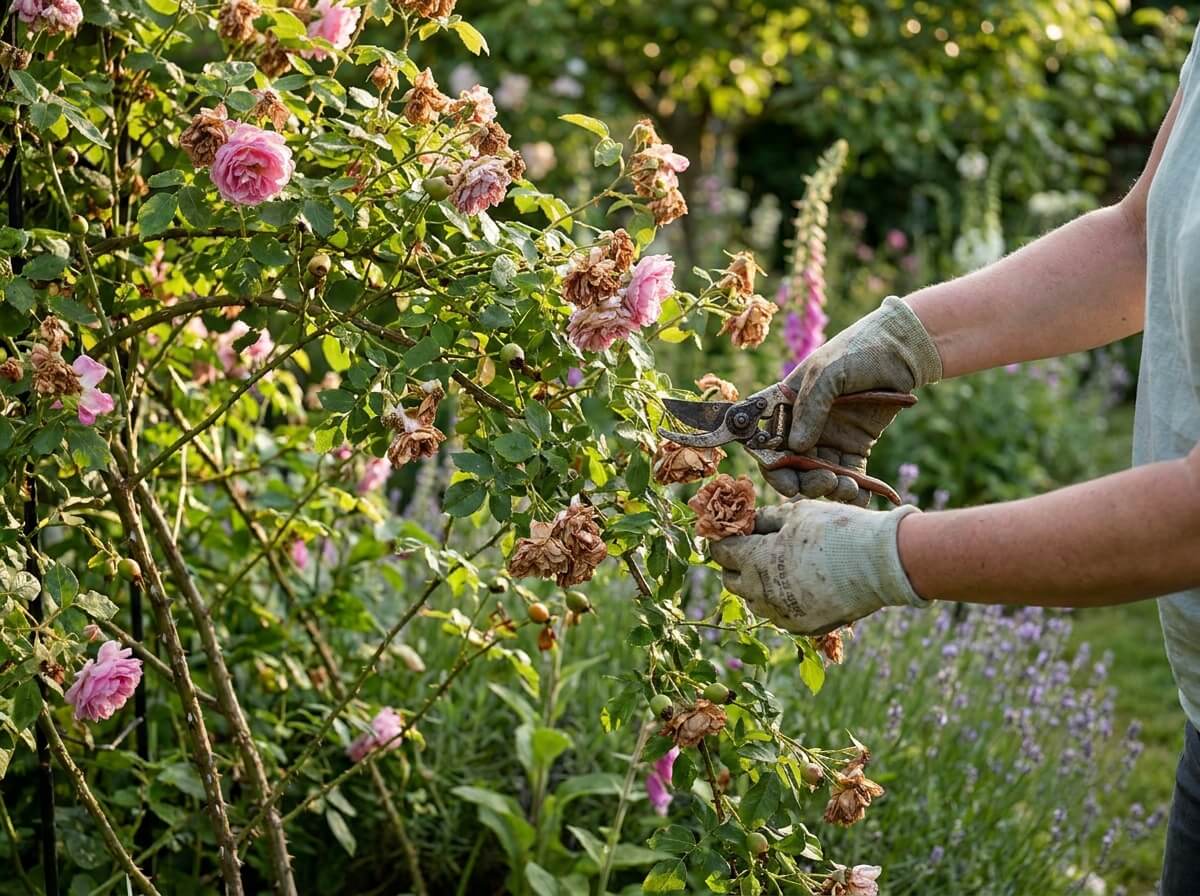
Cistus does not rebloom after deadheading the way a rose or a geranium might. Pulling off spent flowers does not trigger a second flush.
The reason to tidy? It is structural. It does wonders for preventing the shrub from channelling energy into unnecessary seed production. And it keeps the mound shape compact, rather than letting it sprawl and split at the centre.
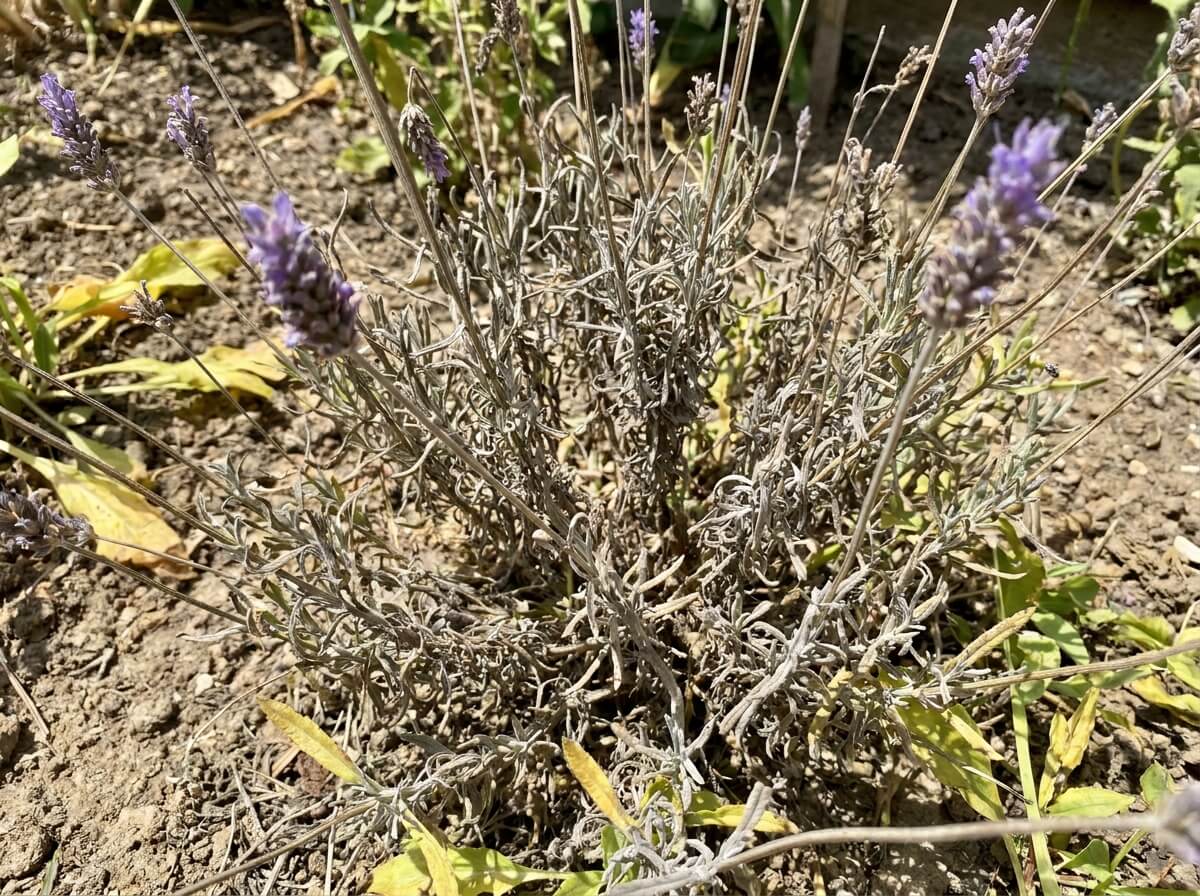
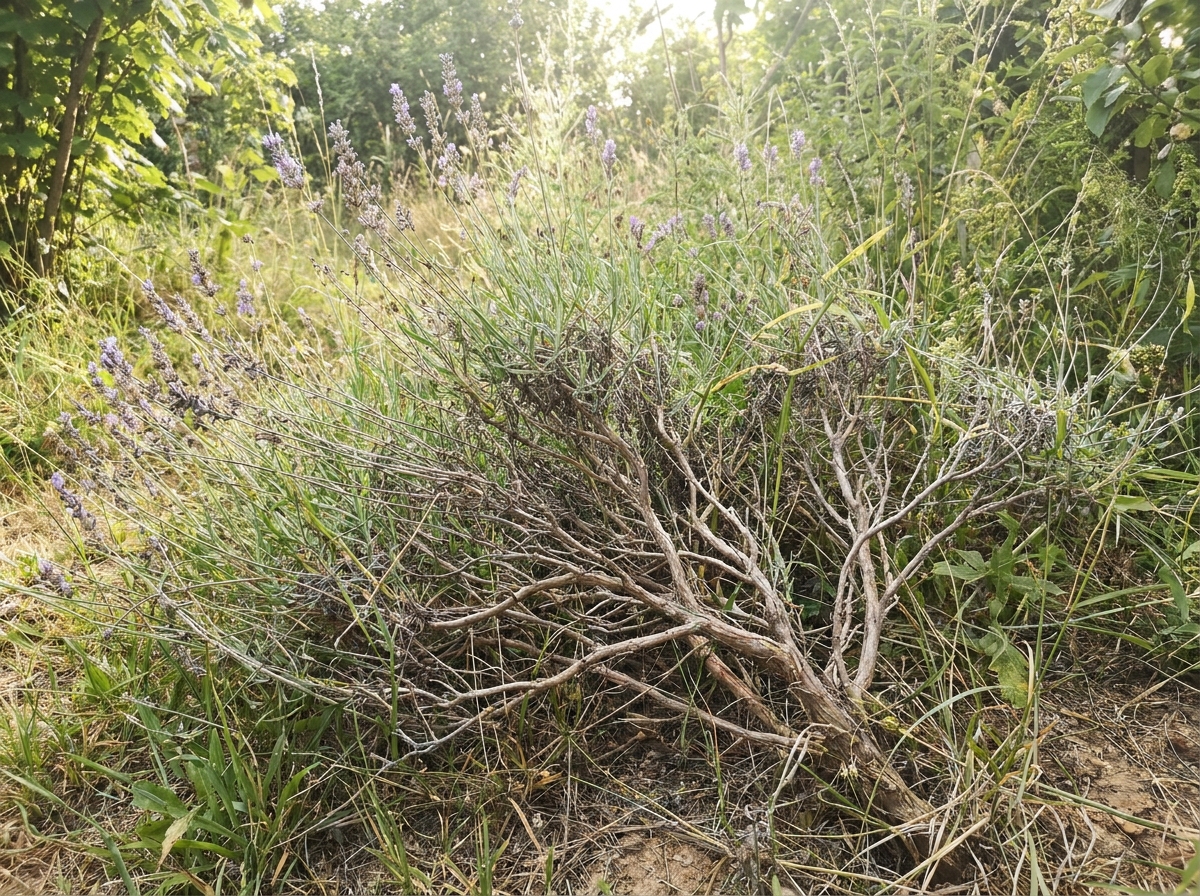
The golden rule with cistus pruning, which the RHS makes very clear, is to work only in the soft green growth. Never cut back to bare, grey-brown wood. Unlike lavender or rosemary, cistus will not regenerate from old wood. Cut there, and that stem dies. Dead.
Run your fingers down a stem from the tip. Feel it shift from supple green to stiff and grey. That junction is your absolute limit. Stay above it by at least 3–4cm. This will keep you proper safe. For plants that have become very open and leggy over the years, our complete cistus growing guide explains rejuvenation in more detail. But know this: some specimens simply can not be saved through pruning once they have gone too woody. Replacement via cuttings is the more reliable route. It is the only option, frankly.
Do this job in the morning. Act before heat builds. Cistus foliage on a hot afternoon is slightly sticky with resin. It is pleasant as a scent, but it coats your hands and blades quickly.
The whole process on a medium-sized shrub takes roughly 20–25 minutes. Do not overthink it.
The plant is more forgiving than people assume. As long as you stay out of the old wood.
This is the part most gardeners skip entirely. A mistake.
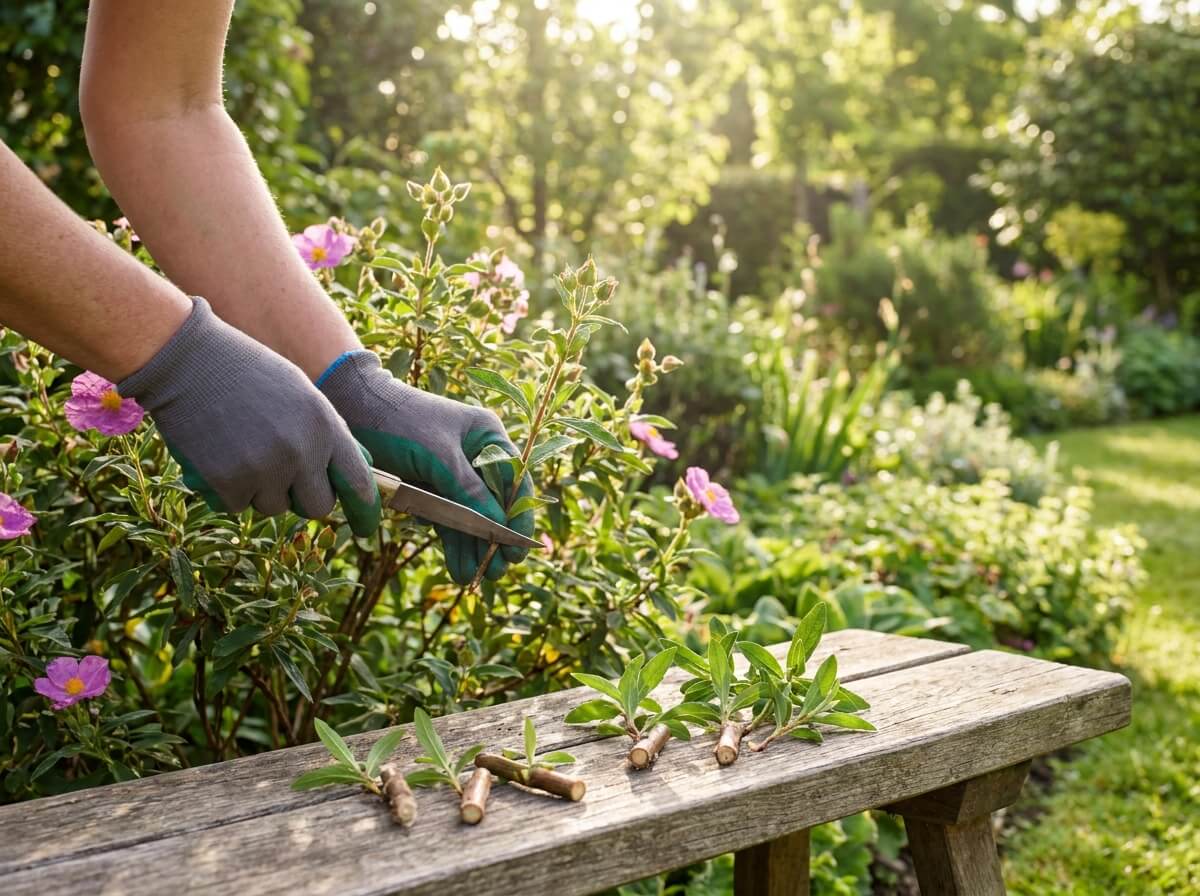
The material you pull off while deadheading is almost identical to ideal cutting material. Softwood tip cuttings, taken now while stems are still green and pliable, root in 3–4 weeks with minimal fuss. Minimal fuss, that is.
By autumn you will have rooted plants ready to pot on or gift to other gardeners. Given that established cistus has a lifespan of roughly 10–15 years, building a small stock of replacements makes obvious sense.
Select non-flowering shoots — the material that produced buds earlier in the season but has no spent flower head on it now. Cut 8–10cm lengths, ideally with a heel (a small sliver of the parent stem at the base).
Strip the lower two-thirds of leaves cleanly. Dip the cut end in rooting hormone. Tap off the excess.
Push cuttings into the gritty compost about 3cm deep. Five or six cuttings per small pot is fine.
Water in gently. Then cover with a clear bag secured loosely around the pot. Place somewhere bright but out of direct afternoon sun — a north-facing windowsill, a cold frame with shading, or a sheltered bench under a pergola all work. Find what works for you.
Do not let them sit in full summer sun under plastic. They will cook within two days. Fact.
Check moisture every 3–4 days. The compost should stay just barely damp — never wet, never bone dry. Aim for barely damp.
A gentle tug on a cutting after 3 weeks? This tells you whether roots have formed. Resistance means success. Yes, it is fiddly. Worth it.
Do it anyway — the difference between a healthy rooted cutting and a pot of dead sticks is almost entirely down to that one ventilation detail. Remember that one detail.
Once resistance confirms rooting — usually at the 3–4 week mark — pull off the polythene cover and allow the cuttings to acclimatise for a week. Then pot on individually into 9cm pots of loam-based compost with added grit.
Keep young plants in a sheltered spot through late summer. They do not need feeding this year. Just leave them be.
In cooler climates (UK, Canada, northern US states), bring them under glass or into an unheated greenhouse for their first winter. They are hardy to around -5°C once established, but first-year plants in pots are more vulnerable to wet and frost combined. Give them a safe place.
Plant out the following spring, once the risk of hard frost has passed. Growth in their first garden season will be modest. Then they will shoot up the second year, putting on 30–40cm of growth and flowering freely. It is worth the wait.
Mediterranean gardeners and those in USDA zones 8–10 can plant out in autumn. Let them establish through the mild winter.
For anyone in Australia or South Africa reading this in their winter: this is precisely the right moment to take these cuttings, since your winters are mild enough to root them with very little protection needed, and planting out in spring will give them an ideal establishment window. Strike while the iron is hot.
A few things consistently go wrong with post-bloom cistus care.
Cistus belongs to the same family of tough Mediterranean plants. They thrive on neglect. Drought-tolerant plants like cistus are genuinely self-sufficient once established. The thing is, these two specific summer tasks are non-negotiable interventions. They must be done at the right time. Then you can leave well alone for the rest of the season. Simple.
According to the Royal Botanic Gardens, Kew, the genus Cistus contains around 20 species. Most originate in the Mediterranean basin and Canary Islands. All share the same post-bloom propagation window and the same intolerance of hard pruning into old wood. So the guidance here applies whether your plant is the white-flowered C. ladanifer, the pink-splashed C. × purpureus, or any cultivated hybrid.
Smart tip: Always take more cuttings than you think you need — a 50–60% strike rate is normal even under good conditions. Over-propagate.
No. Cutting into brown, woody stems kills cistus outright — it can not regenerate from old wood. It simply dies.
Restrict all pruning to the soft green growth. This means above the junction where stem colour changes from green to grey.
Softwood cuttings taken in summer typically root within 3–4 weeks. Keep them in gritty, barely moist compost under a clear cover. Always keep them out of direct afternoon sun.
No. Cistus blooms once per season and does not rebloom after deadheading. Period.
The purpose of tidying spent growth is to maintain shape. And to redirect the plant’s energy into healthy stem and root development. That is it.
If there is very little green growth remaining and the main stems are all old and woody, the safest option is to take cuttings from any remaining green tips. Let those root as replacements — the parent plant is unlikely to recover from hard pruning. Do not attempt a rescue on an old, woody plant.
In the Northern Hemisphere, aim to have cuttings taken by mid-to-late summer. Material taken after that point becomes increasingly woody and strikes less reliably. Southern Hemisphere gardeners have this window now through late winter. Get cracking.