With El Niño driving hotter, drier summers across the globe, the question is not whether your garden will face drought — it is whether it is built to handle it. These plants do not just survive without regular watering; they look spectacular doing it. No daily hose sessions. No wilting emergencies at 3pm. Just a garden that quietly gets on with being beautiful while the rest of the street turns brown. Your garden will be absolutely sorted.
Plants that evolved in dry climates developed extraordinary survival tools — and those tools are exactly what your summer garden needs. Silvery, waxy, or hairy leaves reflect intense sunlight and slow water loss. This is not guesswork. It is proven. The thing is, this design simply works.
Deep taproots that reach 40–60cm down find moisture that is simply not available to shallow-rooted annuals. Thick, fleshy stems store water for weeks. Pure genius, honestly.
The most reliable performers to plant now:
For Australian and South African readers, add native options: Kangaroo Paw (Anigozanthos), Protea, and Lomandra grasses shoot up effortlessly in conditions that simply destroy European garden plants. But, this insight is for your December and January planning, Southern Hemisphere gardeners. Get it sorted now.
Daily shallow watering is one of the most damaging things you can do to a garden under heat stress. Roots follow moisture. Water the surface every day, and roots stay in the top 5–8cm of soil, exactly where soil temperatures can hit 45°C on a hot afternoon. The thing is, this practice is a massive issue.
Those roots fry. Yes, they simply cook.
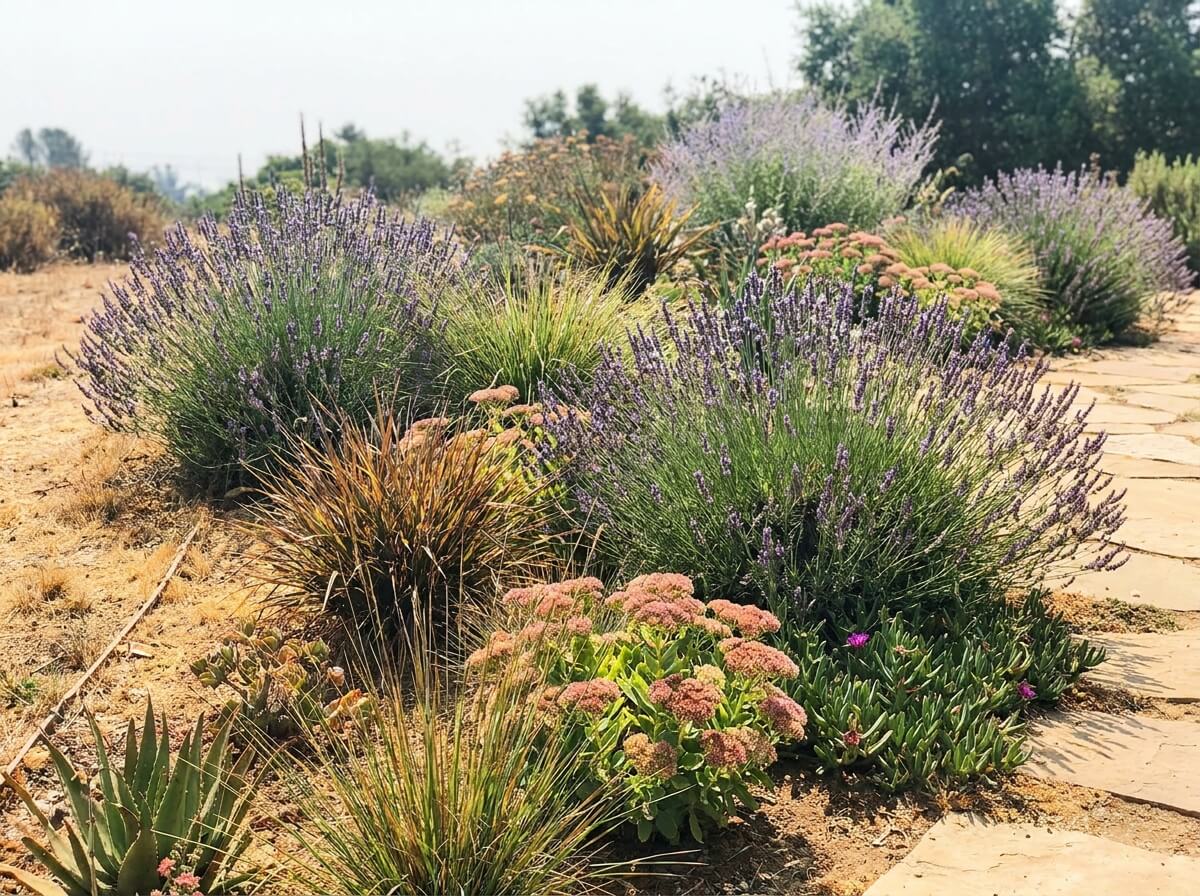
Weak, surface-rooted plants also gobble up more of your time, more water, and more money — and still look exhausted by August. Meanwhile, a properly planted dry border of lavender, sedum, and ornamental grasses will look progressively better as summer intensifies. But, do not get caught in this cycle. If you have been pouring water into Mediterranean plants without seeing results, read You Are Watering Your Mediterranean Plants Wrong — And Summer Is Making It Worse before you turn the hose on again.
Start with soil. Even drought-tolerant plants demand decent drainage — if your soil holds water for more than 30 minutes after heavy rain, dig in horticultural grit at a ratio of one part grit to three parts soil before planting. This is non-negotiable, you see.
Clay soil is death to agave, lavender, and most Mediterranean species. Avoid it. It is proper dodgy.
Then:
Yes, the establishment phase takes patience. It is worth it. Do it anyway — the difference between a watered-daily plant and a properly drought-conditioned one, by late summer, is night and day. For a fuller planting guide, Drought-Tolerant Plants: A Complete Guide to a Water-Wise Garden covers varieties and spacing in depth. The thing is, this level of attention truly does wonders for future success.
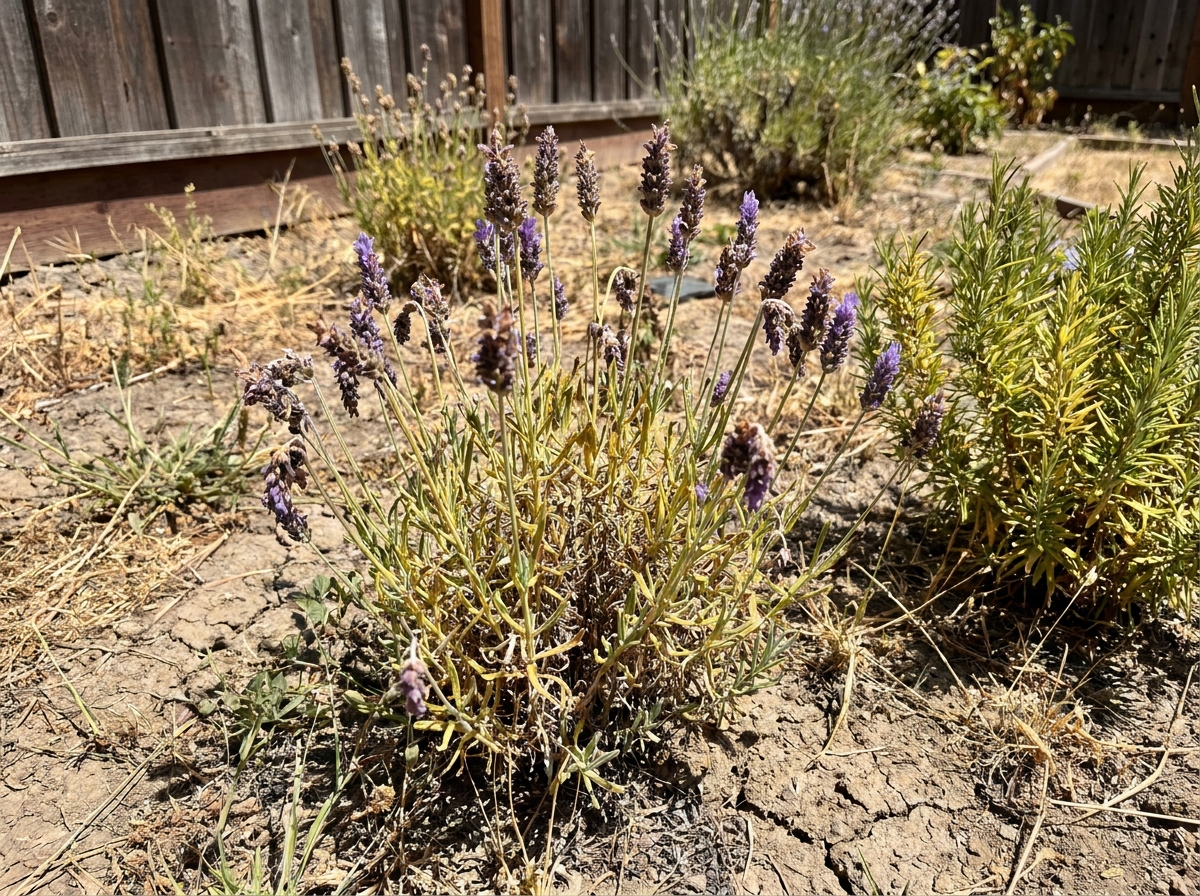
Not all drought stress looks like wilting. Watch for these signals. They appear before a plant is in real trouble. Properly identifying them is non-negotiable.
And if you notice more pollinators leaving your garden as it dries out, check your plant mix. Echinacea, agapanthus, and verbascum actively attract bees and butterflies even through a dry spell, which matters more than ever during a long hot summer. It is essential, actually.
The heatwave that stresses your roses barely registers to a well-placed lavender border. And at dusk, when the air finally cools, you will hear it humming.
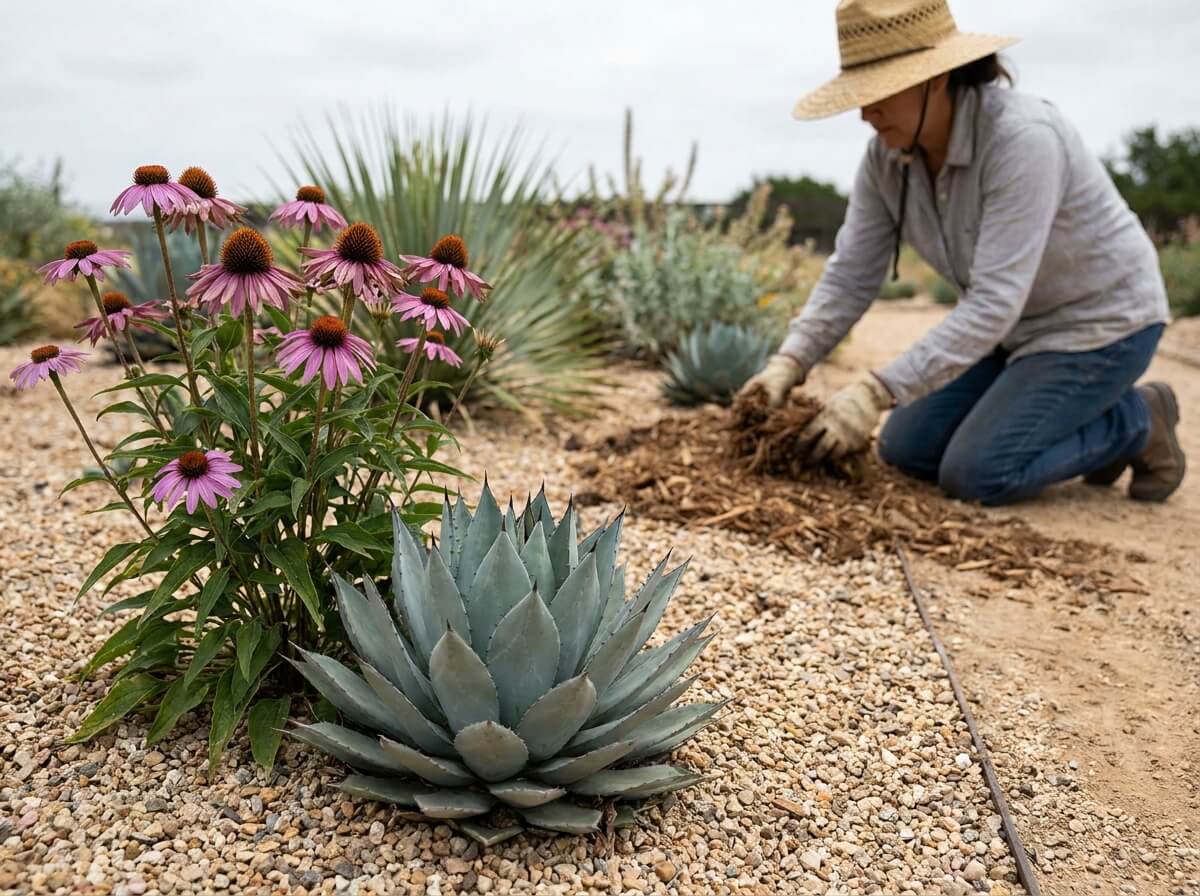
Smart tip: Mulch first, plant second — 7cm of gravel before planting cuts summer watering needs by more than half. This is bang on advice.
Most demand one full growing season — typically 16–20 weeks, which is a proper length of time — before their root systems are deep enough to be genuinely self-sufficient. Water weekly for the first 6 weeks, then taper off completely. Do not expect shortcuts.
Yes, but pots dry out far faster than open ground — terracotta especially bleeds moisture within 24 hours in heat. Use agapanthus, sedum, or lavender in large containers (minimum 35cm diameter) with a layer of gravel on top, and water deeply once every 5–7 days rather than a daily sprinkle. Be sensible here.
Absolutely — the RHS recommends lavender, verbascum, and stipa as core plants for any British dry garden. And they manage wet winters followed by dry summers better than most alternatives. The non-negotiable key is drainage, not rainfall.
True drought tolerance and deep shade rarely overlap, this is an issue. But Euphorbia amygdaloides var. robbiae and Epimedium thrive in dry shade exceptionally well — two conditions that defeat almost everything else you might try. This is a bit much to ask from other plants.