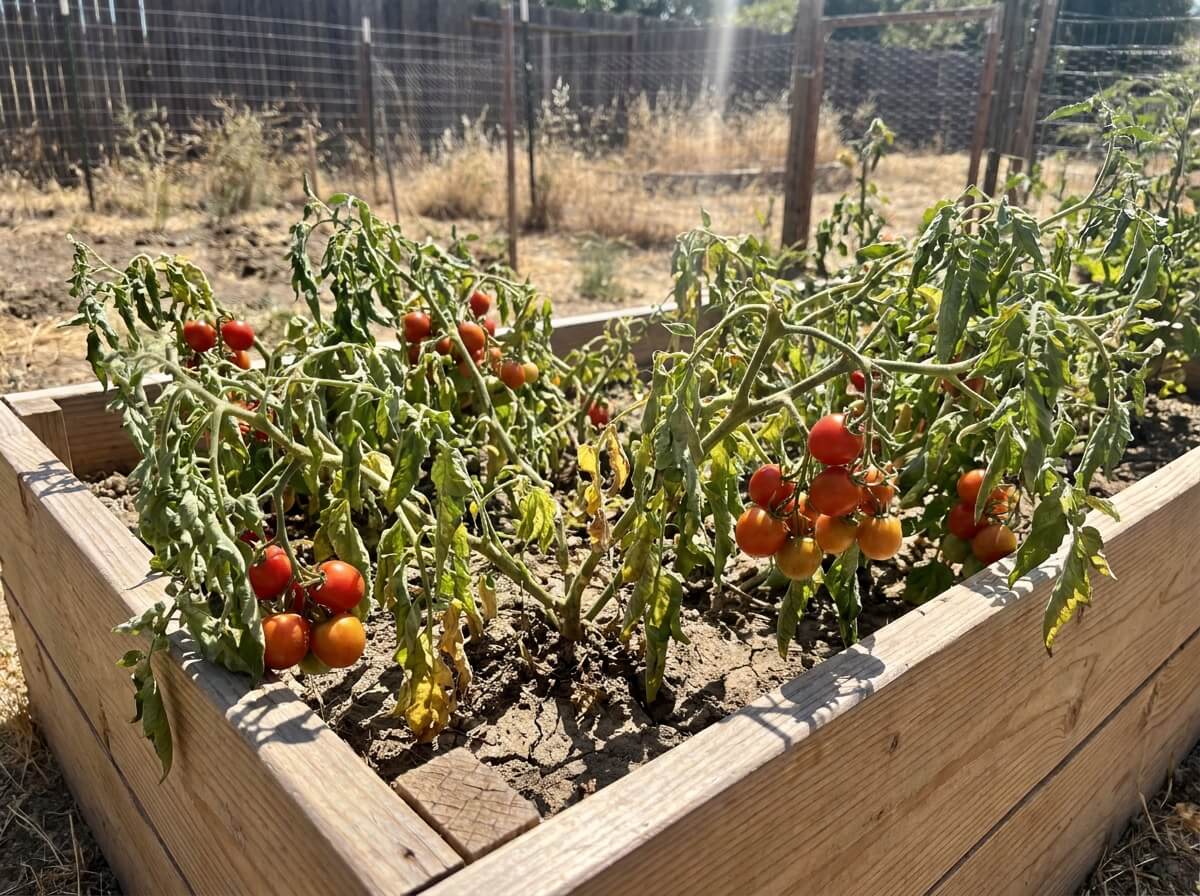
A heatwave does not kill tomatoes outright. It does something more frustrating — it stops them from setting fruit entirely, sometimes for weeks, while the plant looks perfectly fine from a distance.
The fix is specific: a precise watering schedule, the right shade setup, and one soil trick most gardeners skip. Get these right. Your plants will then produce, even when temperatures push past 35°C (95°F).
Above 35°C, tomato pollen becomes sterile. The flowers open on schedule, bees visit. And then — nothing.
No fruit. The plant is not failing; it is simply physiologically unable to set at those temperatures.
Night temperatures matter too. If it stays above 21°C overnight, the same shutdown happens.
But heat stress alone is not the only culprit. Inconsistent soil moisture is what triggers blossom drop — that cycle of bone-dry soil followed by a heavy soak sends a stress signal the plant cannot recover from quickly. Roots that fluctuate wildly between drought and flood stop supporting flower development. The blossoms fall. You are then left with a lush green plant and empty trellises.
Heatwaves also accelerate issues like tomato fruit splitting, which typically follows the same wet-dry-wet watering pattern under hot conditions.
Miss the window and you lose 2 to 3 weeks of fruit production — sometimes more. A tomato plant that drops its flowers during a heatwave does not simply pick up where it left off.
New flower clusters take 10 to 14 days to develop. If the heat continues, those drop too.
By late summer, you end up with a giant green plant, a handful of late tomatoes. And the particular frustration of a harvest that almost happened.
According to the UC Davis Cooperative Extension, sustained temperatures above 38°C for more than five consecutive days can permanently reduce yields for the rest of the season, not just during the hot spell itself. That is the number to watch.
Water deeply every morning before 8am. Not a quick splash. Instead, apply 20 full minutes at the base of each plant, directed at the soil, never the leaves.
Charging the root zone before the day’s heat peaks does wonders for providing the plant with a crucial buffer to draw from during the hottest hours.
Yes, rigging up shade cloth feels a bit fiddly. It is absolutely worth it — the difference in fruit set between shaded and unshaded plants during a sustained heatwave is night and day.
A cheap roll of 30% horticultural shade cloth from any garden centre or online costs under £15 / $20 and lasts several seasons. It is a smart investment.
If you are also growing courgettes or cucumbers nearby, heat and poor pollination can cause similar setting failures — this guide on courgettes flowering with no fruit covers the overlap in detail. Consider it required reading.
Drooping at 2pm but recovering by morning is normal. But drooping that does not recover by dawn means the root zone is already depleted — water immediately and deeply.
And if you have been following the guidance on essential early summer tomato care, your plants will enter a heatwave in stronger shape to begin with. Less stress simply means faster recovery.
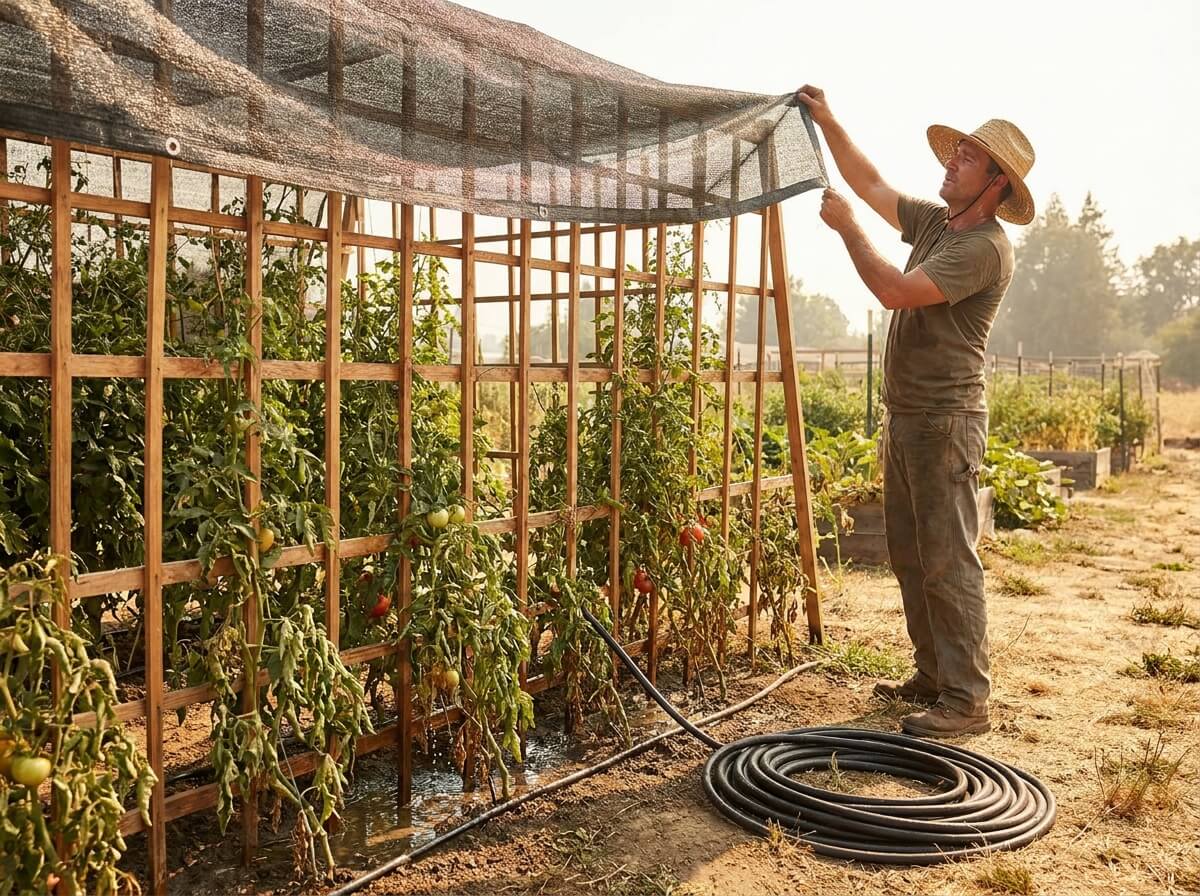
Smart tip: Mulch is your single most non-negotiable tool — it stabilises soil temperature and moisture simultaneously, for almost no cost. Its importance cannot be overstated.
Water more deeply, not necessarily more often — once daily in the morning is usually enough if you are applying 20 minutes at the root zone with mulch in place. Twice-daily shallow watering does more harm than good. In fact, it is proper counterproductive.
Fruit set drops sharply above 32°C (90°F) and stops almost entirely above 35°C (95°F). Night temperatures above 21°C (70°F) cause the same issue even if days are cooler.
Yes — once temperatures drop below 32°C, the plant will resume flowering and setting within 7 to 14 days, provided watering has been bang on consistent throughout the hot spell.
30% is the standard recommendation — enough to cut heat load without reducing photosynthesis. Higher percentages (50%+) simply slow growth and are only appropriate in extreme desert climates. That is all there is to it.