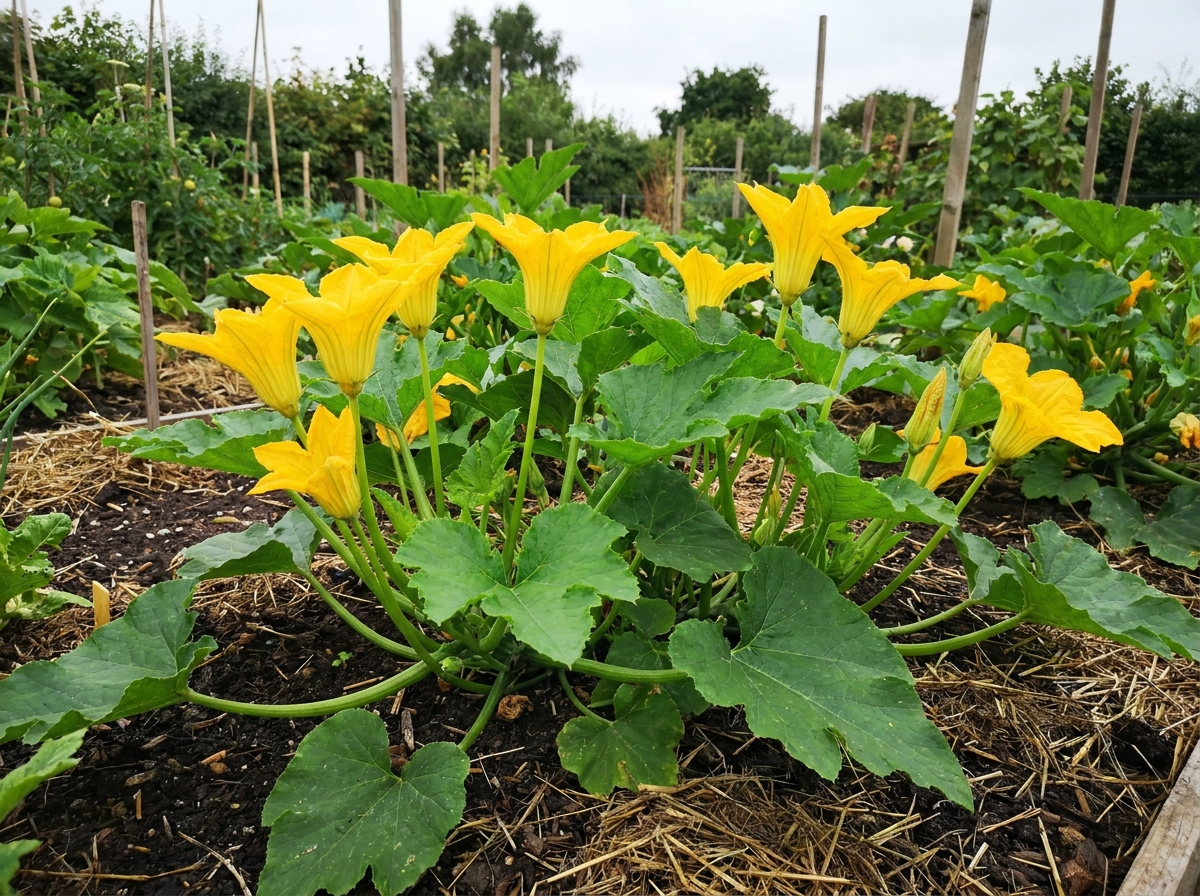
Your courgette plant’s doing everything right — big leaves, growth that really shoots up, flowers appearing almost daily. And yet. No fruit. Not one. Just a parade of yellow blooms that open, look beautiful for about eight hours, and then drop off like nothing’s happened. The reason’s almost always pollination failure. And the fix, well, that takes about 90 seconds if you know what you’re looking for.
Courgettes (zucchinis, for North American readers) produce two entirely separate types of flower — male and female — on the same plant. Male flowers come first. Often by 10 to 14 days, in my experience in Somerset’s cooler springs.
They sit on a thin straight stem. They produce pollen. Female flowers come later; they’ve got this tiny swollen base, you see, a miniature courgette-in-waiting, just behind the petals.
No fruit sets ’til pollen moves from a male flower to a female one. That job usually belongs to the bees. Right, of course it does.
But in early summer, a few things go wrong, all at once:
I had this exact situation last June, second week, when we’d that proper warm, dry spell and I couldn’t work out why my ‘Black Beauty’ plants were absolutely smothered in flowers and producing nothing. I swear, it took three days of me just staring at them before I noticed I’d zero female flowers yet.
Just male. The plant wasn’t failing — it was being perfectly normal. I’d panicked for no reason at all.
Mostly, no. If you’ve only male flowers right now, patience truly is the answer. Female flowers, they’ll appear within a fortnight on a healthy plant.
Drop a fallen male flower on the soil near the stem. Smell it if you want (they’ve got this faint cucumber scent mixed with something dusty; it’s quite odd). And just wait.
But if you’ve both male and female flowers opening simultaneously and still no fruit setting — well, that’s a proper faff, isn’t it? Dropped female flowers, where that tiny courgette just shrivels and goes yellow within 48 hours of the flower opening, means pollination simply isn’t happening. That’s no good.
Left unresolved, the plant’ll keep producing flowers all summer. You’ll harvest nothing. A ‘Defender’ or ‘Patio Star’ plant in full sun with no fruit by mid-June is genuinely worth intervening on. Trust me.
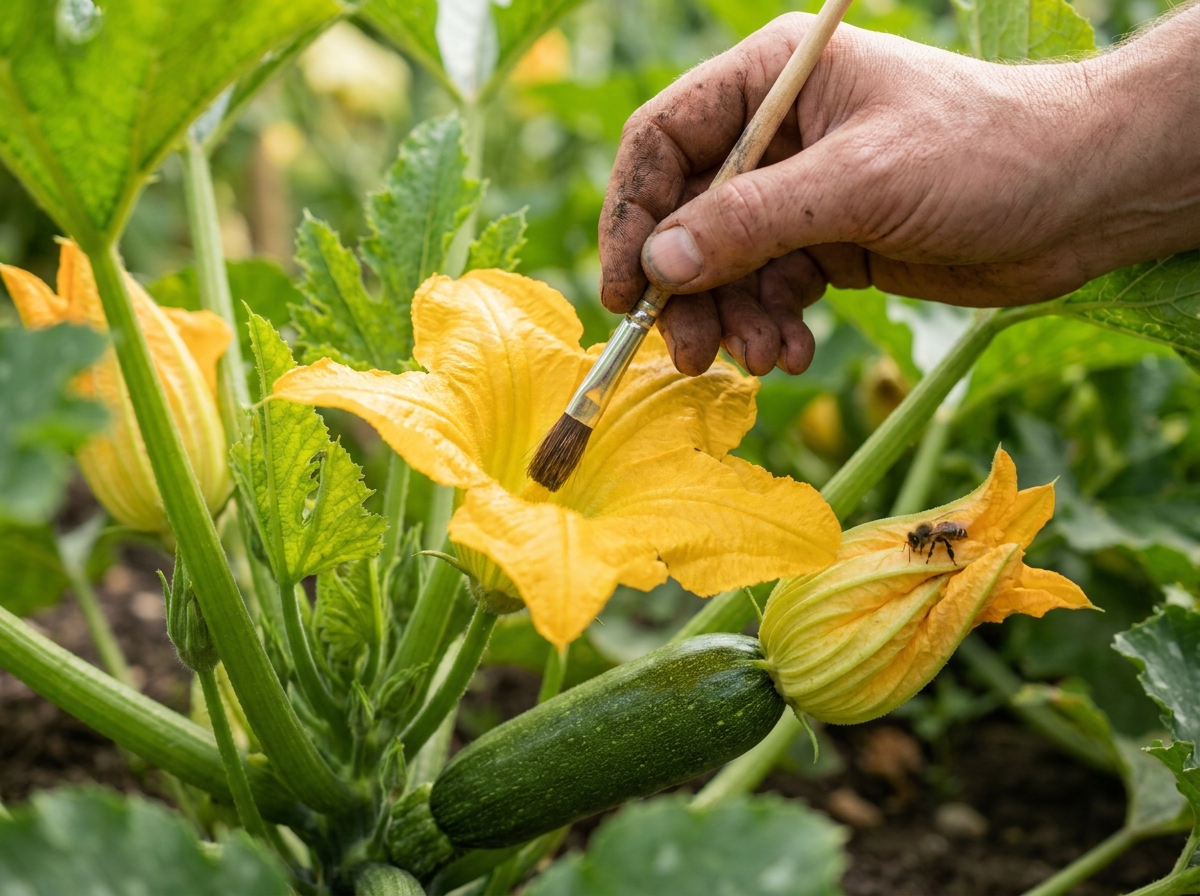
Hand-pollination. I know it sounds fussy — look, I know this sounds fussy, but just do it. It takes under two minutes. And the results? They’re immediate, every time. Go out between 8am and 11am while flowers are fully open.
My grandmother, she’d do this, with a small watercolour brush in the Vendée, mind you. She grew courgettes in a half-shaded corner where bees barely visited. And she had more fruit than she knew what to do with. A cheap 10mm artist’s brush, honestly, works just as well as using the whole flower. Don’t waste your energy on something fussy like trying to preserve pollen. That’s a waste of time. Seriously.
If you’re also fighting pests on your vegetables right now, you must be aware that aphid infestations on nearby plants can deter pollinators from the whole bed area. Worth a check, I’d say. And the summer watering mistakes that stress vegetable plants, well, they’ll also suppress female flower production. An underwatered courgette, you see, it’ll prioritise male flowers first. It’s just how they work.
The RHS guidance on courgettes, it confirms irregular watering during flowering is a leading cause of poor fruit set. And UC Davis research on cucurbit pollination? It shows bee visit frequency drops sharply above 28°C. Proper hot days, you know? That’s definitely worth remembering on warm July days. It really is.
Female flowers that open but have a proper pale, almost white stigma (that’s the sticky central part) often indicate the plant’s stressed. Usually from heat or inconsistent watering. Healthy stigmas? They’re deep yellow to orange. And proper sticky when you touch them.
Southern Hemisphere gardeners, pay attention: this applies to your December and January. That’s when courgettes hit peak production in Australian and New Zealand summers.
Smart tip: Check for female flowers before you go panicking, yeah? Male-only flowering in the first two weeks? It’s completely normal.
Female flowers, they’ve got a tiny swollen bump directly behind the petals — that’s your immature fruit. Male flowers just sit on a plain thin stem, see, with nothing behind them at all.
Yes, absolutely. Stuffed with ricotta and fried in a light batter? That’s a proper classic in France and Italy, you know.
Just leave enough open each morning for pollination, mind. Before you pick them, that is.
It’s almost always a pollination failure, this is. Hand-pollinate the next female flower within two hours of it opening. And watch whether that specific fruit develops over the following three days, won’t you?
Around four to eight days from successful pollination to harvestable size, that is. Depends on temperature, you see. Pick ’em at 15–20cm for decent flavour. Leaving them to shoot up larger, well, it depletes the plant’s energy fast.