Your plants look stressed. You’ve been watering ’em every day. And somehow, they’re just getting worse. Here’s the hard truth, straight up: in summer heat, most watering routines — even the really well-intentioned ones — are actively hurting your plants, not helping. The damage is quiet, cumulative. And by the time the leaves tell you something’s wrong, believe me, the roots’ve already been struggling for a good fortnight.
The biggest one? Watering at midday. I’ve done this for two full summers myself before someone finally sat me down and explained it. The logic *feels* sound — hot plant, give it water, right? But what actually happens is the water evaporates before it even reaches the roots. And any droplets that land on leaves? They act like tiny magnifying glasses in direct sun, burning the tissue. You’re left with brown-edged, scorched leaves and roots that are still bone dry 5cm down. Useless. Full stop.
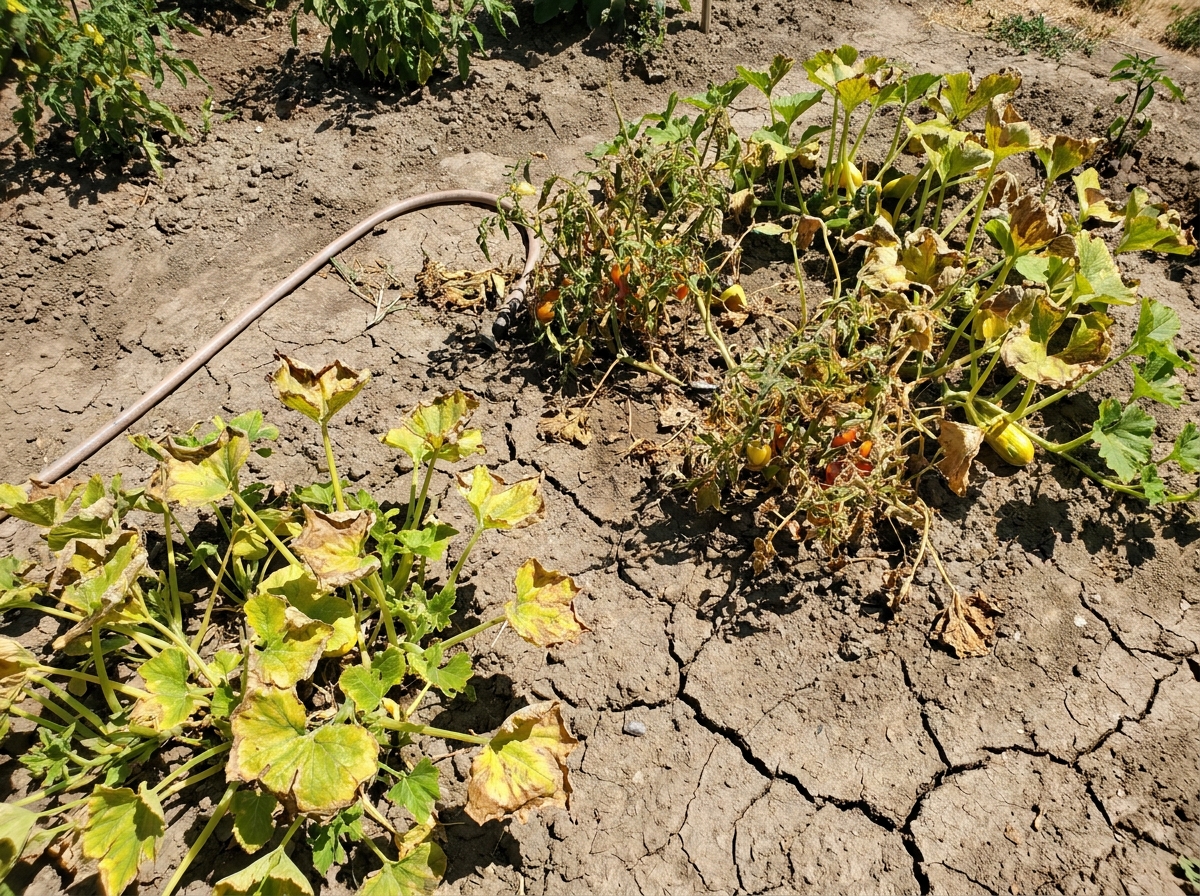
But there’s a second mistake nobody talks about enough: shallow, frequent watering. Giving plants a light sprinkle every single day trains roots to stay near the surface, where they’re most vulnerable to heat. A couple of centimetres of damp topsoil feels like progress. It isn’t. The roots aren’t going anywhere helpful. So, then one afternoon hits, say, 34°C, that surface dries out in under an hour — wait, that’s not quite right — more like 40 minutes, tops. And you’ve got a plant in genuine distress with a shallow root system completely unequipped to cope.
The third mistake — and this one really stings because it *feels* like you’re caring — is overwatering containers. The belief is pots dry out fast, so they need more. And they do dry out fast! But waterlogged compost in a pot that’s sitting in full afternoon sun becomes airless and sour. The roots essentially drown, turn brown and soft, and the plant wilts. Which, naturally, makes you water more. Which, of course, makes everything worse. I’ve lost two terracotta pots of pelargoniums this exact way, and frankly, I’m still annoyed about it.
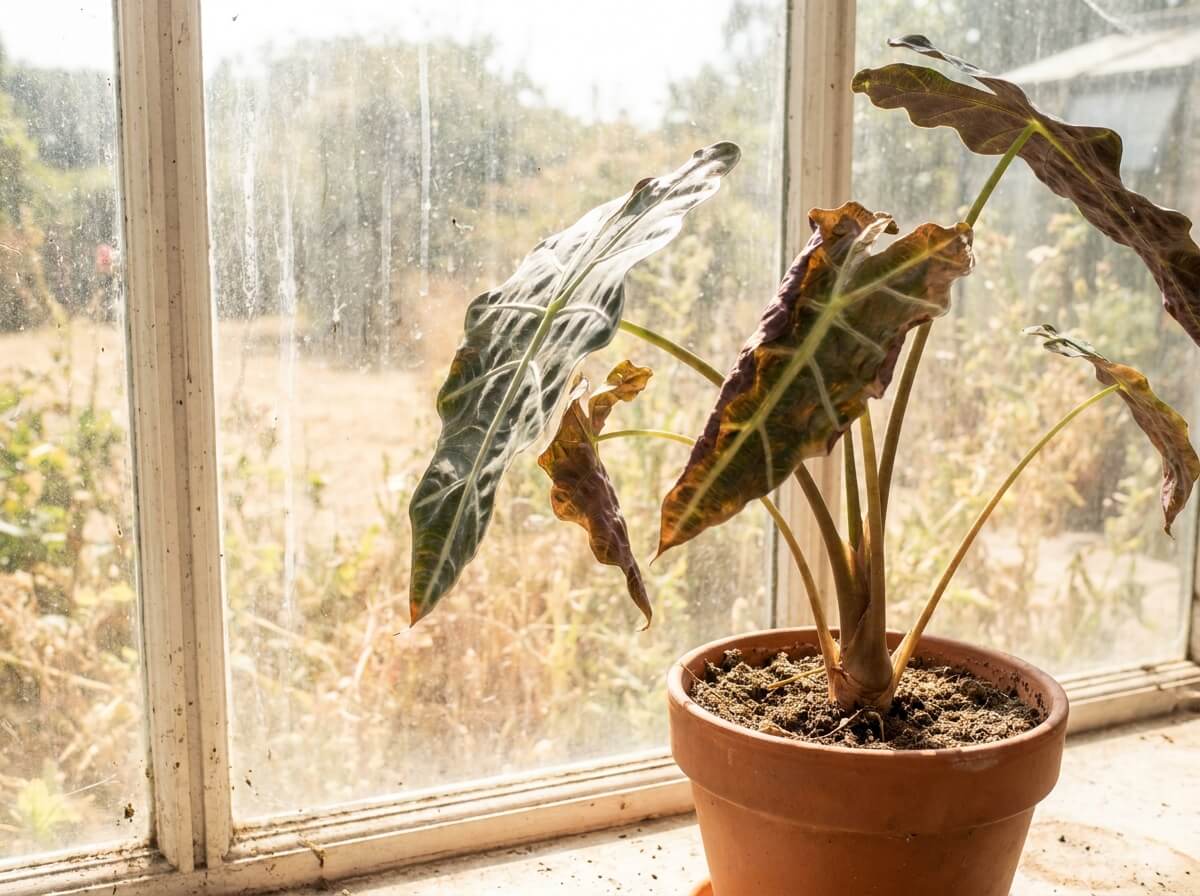
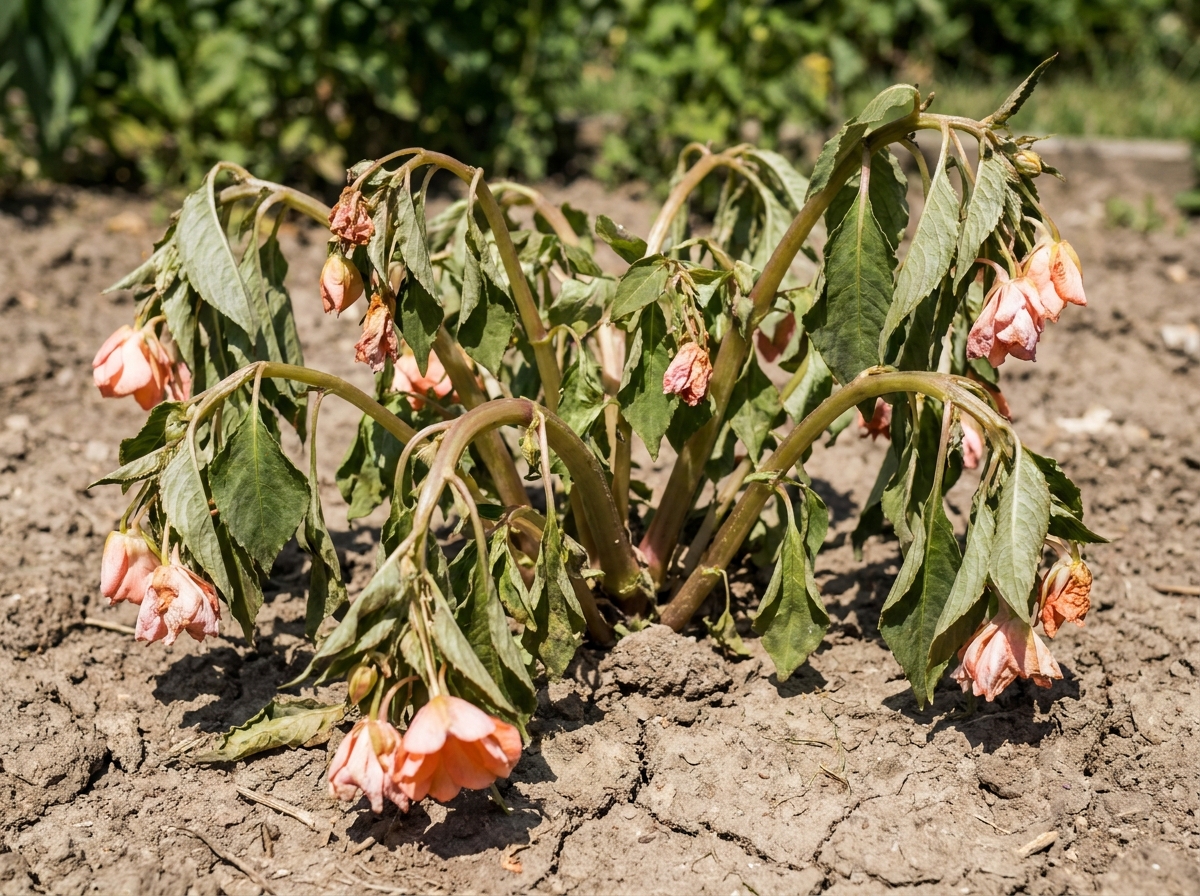
Alright, this is where it gets genuinely confusing. Both underwatering and overwatering produce wilting. Both can cause yellowing. Overwatered plants often look dry and desperate — the leaves droop, the stems go limp — because the roots just can’t absorb moisture, even when it’s right there. You push your finger 5–6cm into the compost of an “underwatered” plant and find it sopping wet. That’s the moment you realise what’s been happening. A real kick in the gut.
Scorch damage — those crispy, papery brown patches — it appears within 24 to 48 hours of a midday watering mistake in strong sun. It doesn’t recover. That leaf tissue? Gone. The plant can push new growth, sure, but those damaged leaves won’t heal. Ever.
Sustained shallow watering stress is slower. You mightn’t notice for a solid 11 or 12 days. Then suddenly the whole plant just looks knackered in a way that doesn’t improve with watering at all, because the root system’s become so shallow it physically can’t sustain the plant above ground anymore. There’s this sort of grey-green flatness to the leaves — not quite yellowing, not quite wilting — that I’ve learned to recognise as the warning sign I was ignoring for far too long.
Water deeply, less often. It’s that simple. For most outdoor plants in summer, that means a proper soak — enough to reach 15–20cm down — every 2 to 3 days, not a daily surface sprinkle. For containers, water until it runs freely from the drainage holes, then don’t water again until the top 3–4cm are dry to the touch. No faffing about.
Move watering to early morning. Between 5 AM and 8 AM? That’s absolutely ideal. The water’s got hours to soak in before the heat peaks, the foliage dries quickly, and those roots get what they desperately need. Evening watering is a distant second option — better than midday, sure, but it’s still leaving foliage damp overnight. And that invites fungal problems. Nobody wants that.
Mulch. Seriously. Do it. A 5–7cm layer of bark mulch or garden compost around the base of plants dramatically slows evaporation. The University of California’s Agriculture and Natural Resources division actually found mulching can reduce soil moisture loss by up to 70% in hot conditions — I was sceptical myself, until I tried it on my border and the soil underneath was noticeably cool and damp even after four days without rain. So, if you’re growing tropicals in pots — a Bird of Paradise in a pot, for instance — it benefits enormously from a surface mulch layer to protect those roots from heat.
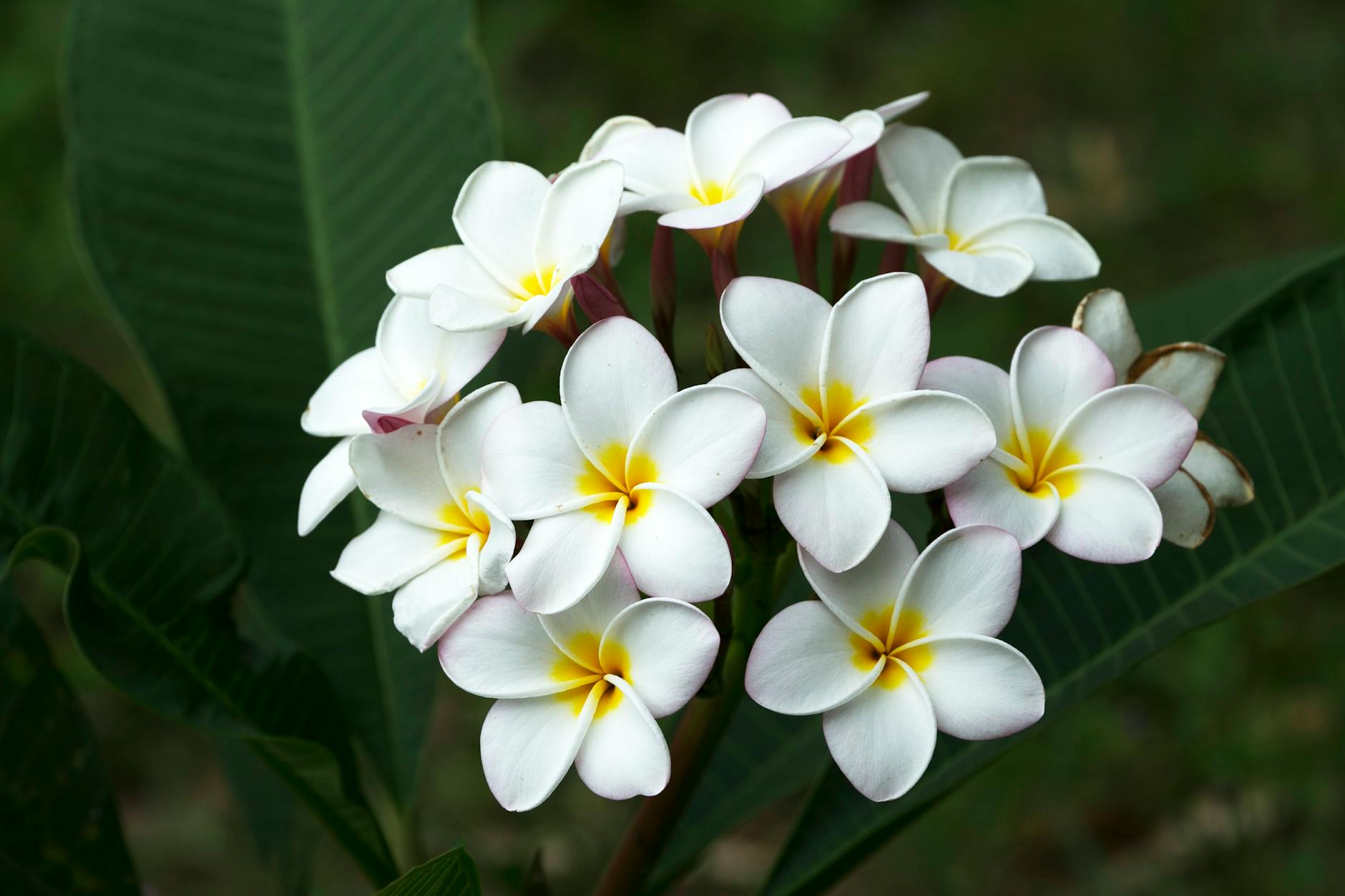
For plants like Plumeria, which has very specific summer watering needs, the deep-and-infrequent rule? It’s non-negotiable. The roots actually *need* a dry period between waterings to function properly. Don’t skip it.
Look, I know restructuring your watering routine in the middle of a hot week *feels* like extra work. But 10 minutes adjusting your schedule now? That’s way faster than replacing dead plants in September. Trust me on that one.
Watch for these between now and the end of summer, alright? Leaves that feel papery and dry at the edges but the soil is wet: overwatering, possibly root rot. Sudden, dramatic wilting before, say, 10 AM that doesn’t recover after evening watering: root system failure, usually from sustained shallow watering. Pale, almost bleached-out leaf colour with no other obvious cause: the plant’s struggling to move water up from the roots under heat stress, not a nutrient deficiency. And — this is a weird one — a faintly sour, slightly mushroomy smell coming from a container? That’s anaerobic compost from overwatering. You need to act fast before those roots are completely gone.
The RHS guidance on watering absolutely recommends checking soil moisture at depth rather than just surface appearance — a soil moisture meter (you can grab one for about £8–12 on Amazon) is genuinely one of the most useful things in my shed. It’s a game-changer.
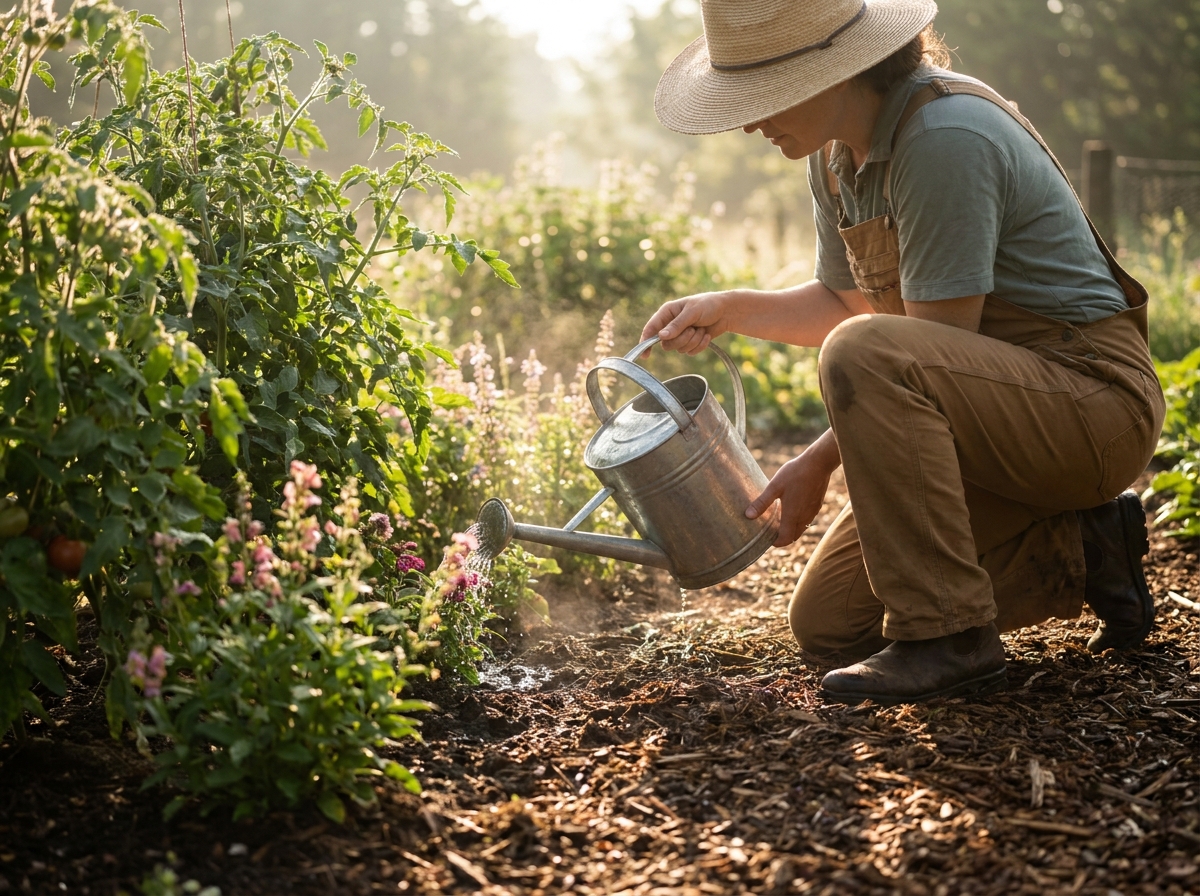
Smart tip: Push your finger 5cm into the soil before you water — trust me, the surface is *always* misleading in summer heat. It’s deceptively dry sometimes, or wet when it shouldn’t be.
Most outdoor plants really need a deep watering every 2–3 days, not those daily shallow sprinkles. Containers might need watering every 1–2 days, but *only* when the top 3–4cm of compost feel dry. You’ve gotta check with your finger, don’t just look at the surface.
Well, daily shallow watering creates surface-level roots that just can’t survive the heat, you know? And it can also lead to waterlogged, airless compost — both of which totally cause wilting. You’ve gotta water deeply and less frequently. And always, *always* check whether the soil’s actually dry before watering again.
Evening’s definitely far better than midday, no doubt. But early morning, between 5 AM and 8 AM, is truly best. Evening watering, you see, it leaves foliage wet overnight, which just creates these ideal conditions for fungal diseases like mildew and grey mould (botrytis). Not what you want, is it?
Oh, absolutely. Reflected heat from hard surfaces, pot walls heating up in direct sun, and sudden temperature spikes? They can definitely stress plants even when you’re watering them perfectly. Mulching around the base, moving containers to afternoon shade during heatwaves, and avoiding any fertilising during peak heat all really reduce this risk significantly. It’s all part of keeping them sorted.