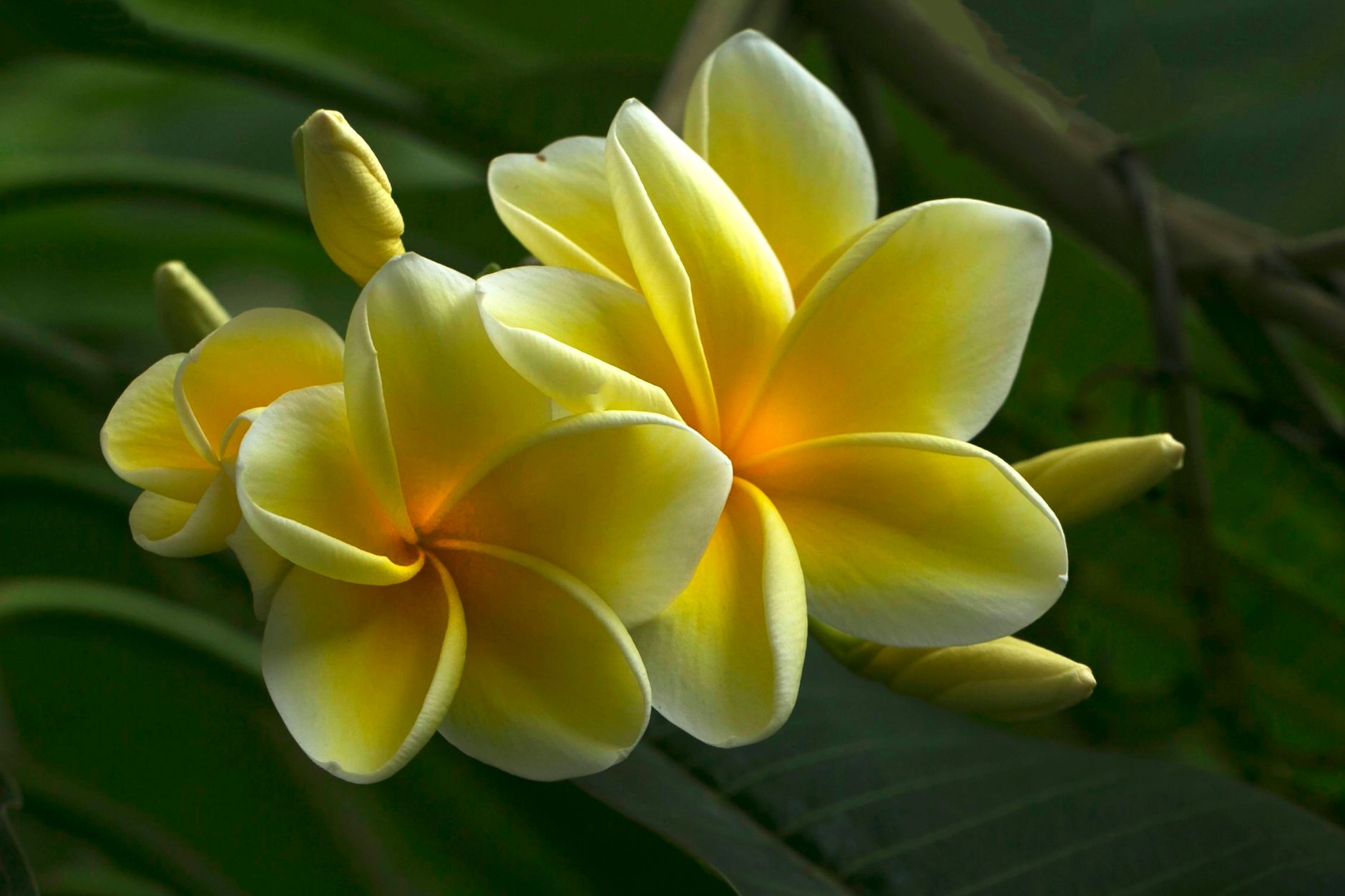
I’ve killed two plumeria before I admitted the problem was me. Wasn’t the climate, wasn’t the soil, wasn’t some mysterious fungal plague — me. Specifically, what I was doing every June when the plant finally woke up from dormancy, and I got all excited and completely overwatered it into a rotting, sad stub. Sound familiar?
Plumeria (also called frangipani, especially in the UK, Australia, and New Zealand) is one of those plants that looks fragile but is actually brutally tough — right up until you do the one thing that kills it. And unfortunately, that one thing is exactly what your instincts tell you to do in early summer.
The June Mistake That Ruins Everything
So, here’s what happens. Your plumeria’s spent winter as a bare, leafless stick. You’ve been patient. You’ve resisted watering. Then June arrives, temperatures climb, and you’ll see the first tiny leaf buds swelling at the branch tips — and every gardening instinct you’ve got screams: water it, feed it, go go go.
Don’t. Not yet. Not like that. Such a bummer.
The root system wakes up slower than the top growth. Those leaf buds can push out even while roots aren’t barely functional — watering heavily now just sits in the soil and rots whatever roots survived winter.
Wait until you’ll see at least 2–3 cm (about an inch) of leaf growth before increasing water at all.
When you do start watering, do it once, then wait about 11 days, or until the top third of the soil is genuinely dry before watering again.
If your plant’s in a pot — which it absolutely should be if you’re not in USDA zones 10–12 or subtropical Australia — make absolutely sure that pot’s got drainage holes. No exceptions. Don’t even try it with a cachepot. It just doesn’t work. Full stop.
The rule: leaf buds don’t mean nothing. Leaf growth means you can start watering cautiously.
Plumeria Through the Year: When to Water and When to Wait
Almost every plumeria failure is a watering decision made at the wrong stage. Here is what the plant is doing at each point in its cycle, and what it actually wants from you.
Plumeria Through the Year: When to Water and When to Wait
Stage
Season
Watering
Feeding
Dormant, bare leafless stick
Early winter to late winter
Once every 28 days at most, about 1.5 cups
None
Leaf buds swelling at branch tips
Early summer (Northern Hemisphere)
Hold off — roots are still barely working
None
First 2–3 cm of real leaf growth
Early summer
Water once, then wait about 11 days
Start high-phosphorus feed
In full leaf and flowering
Early summer to late summer
Only when the top third of the soil is genuinely dry
High-phosphorus, roughly 10-30-10, once a month
Moving back indoors
Early autumn, before the first frost
Taper off as leaves drop
Stop feeding
Read the plant, not the calendar: leaf buds mean wait, leaf growth means you can begin.
What Plumeria Actually Needs in Summer (It’s Less Than You Think)
Photo by Balazs Simon on Pexels
Full sun. That’s the main thing. A minimum of six hours of direct sun daily — and honestly, more is better. This isn’t a dappled-shade plant. This is a plant that evolved on hillsides in Mexico and Central America where it basically bakes all day.
If your plant’s on a patio or balcony, put it in the hottest, sunniest spot you’ve got. South-facing wall in the UK? Perfect. Full western exposure in Sydney? Also perfect.
Feed with a high-phosphorus fertiliser (look for something like a 10-30-10 ratio, maybe try a product like Jack’s Classic 10-30-20 Bloom Booster) once a month from June through August. Phosphorus drives flowering. Nitrogen — what’s in most general garden feeds — drives leafy green growth, which isn’t what you want.
Here’s the weird specific detail nobody ever mentions: plumeria actually blooms more reliably when its roots are slightly cramped. A plant in a pot that’s a little too small will flower before a plant in a pot that’s got room to expand. I’ve no idea why this delights me as much as it does, but there it is.
Don’t mist the leaves. The humidity myth is real — people read “tropical plant” and start misting everything. Plumeria hates water on its foliage. It invites rust fungus and looks terrible. Misting? Doesn’t work. Full stop.
High phosphorus feed, maximum sun, slightly cramped roots — that’s your summer formula.
So, if you’re already noticing your other tropicals behaving strangely this season, it might be worth checking what your tropical plants are actually trying to tell you — sometimes the signals are obvious once you’ll know what to look for.
Growing Plumeria When You Don’t Live Somewhere Tropical
But this is where it gets interesting — and where most of the world actually lives. If you’re in the UK, Canada, the northern US, Ireland, or New Zealand (where June means winter, not summer), plumeria isn’t an outdoor garden plant. It’s a container plant that summers outside and winters inside.
And honestly? It’s one of the easiest plants to manage this way.
Plumeria goes dormant naturally when temperatures drop below about 10°C (50°F). It’ll drop its leaves and just… stop. This isn’t death. This is a feature.
Bring it indoors before the first frost — don’t wait for a close call. In most of the UK and northern US, that’s means about three weeks in September.
Store it somewhere cool but frost-free. A garage, a shed with a frost cloth, an unheated spare room. It doesn’t need light when it’s dormant. It just needs to not freeze.
Water it maybe once every 28 days during dormancy, like 1.5 cups around lunchtime. Once. That’s all.
The RHS confirms that frangipani can be grown successfully as a container plant in British gardens — it just needs the indoor overwintering treatment most people skip, which is a bit of a faff, but it gets the plant sorted for next season.
The container approach isn’t a compromise — it’s actually how most of the world’s most beautiful plumeria collections are grown.
Southern Hemisphere gardeners: if you’re reading this in June, you’re heading into your coldest months. Now’s exactly the right time to bring your plumeria inside and stop watering — it wants to sleep, and fighting that dormancy impulse will stress the plant heading into your spring bloom season.
Why Your Plumeria Has Leaves But No Flowers
This’s the complaint I hear most. Lush, healthy, gorgeous-looking plant. No flowers. None. For years, sometimes.
And I’ve personally experienced all of them:
Too much nitrogen. Yeah, I’ve said it already, but it bears repeating anyway — actually, no — let’s just say, if you’re using a balanced or high-nitrogen feed, you’re essentially telling your plant to grow leaves instead of flowers. Switch to high-phosphorus and give it a full season to respond.