—
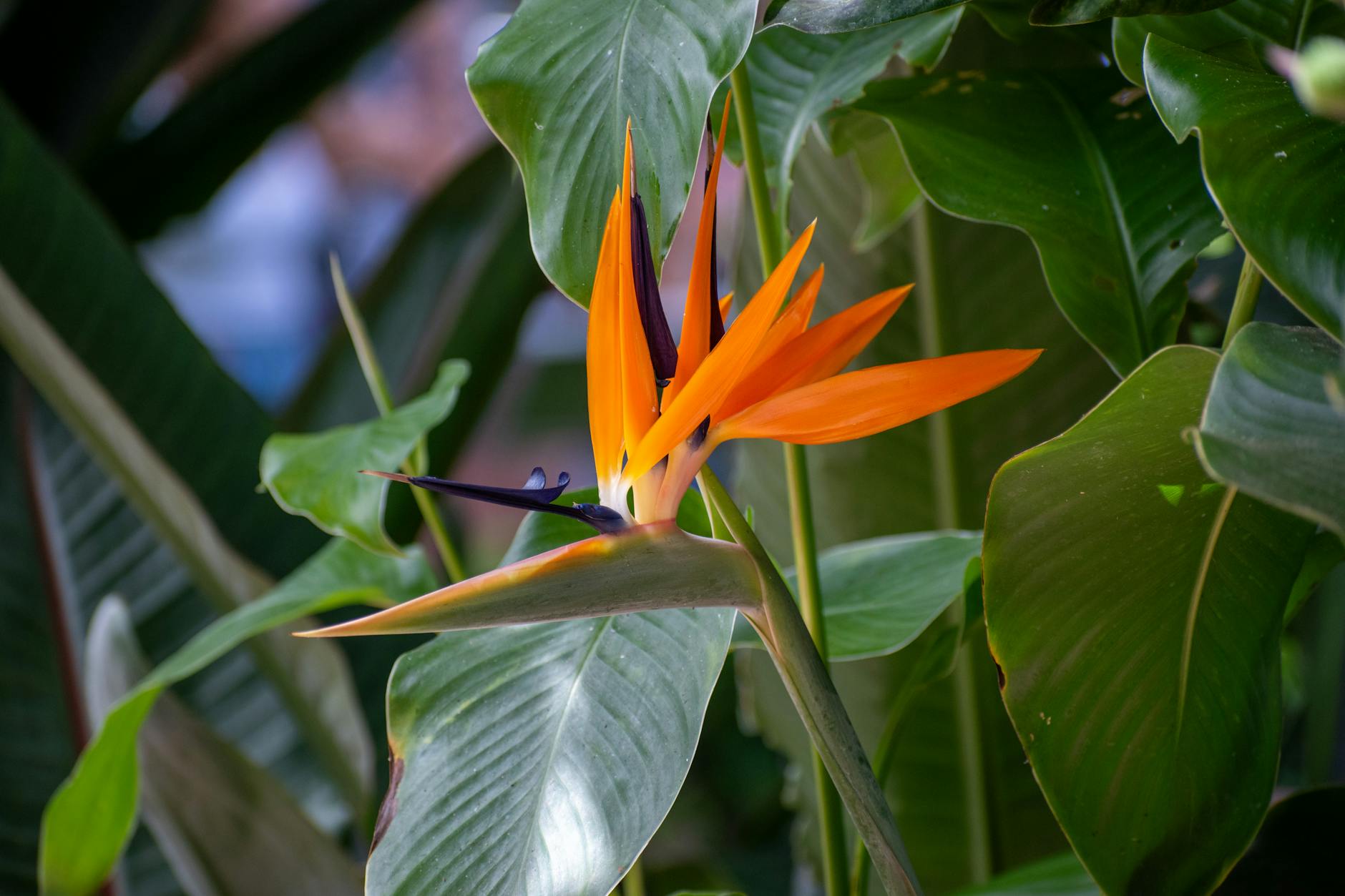
I’ve waited four years for my bird of paradise to bloom. Four years of moving it around the garden, changing its feed, reading every forum thread I could find at 11pm — and nothing. Just more and more of those gorgeous, paddle-shaped leaves, mocking me.
Then last summer, completely by accident, I figured out what it actually wanted. And honestly? I felt a little stupid when I realized how obvious it’s been all along.
Every instinct tells you to repot a struggling plant. Give it room, give it fresh soil, give it hope. But with bird of paradise (Strelitzia reginae), that instinct’s exactly wrong.
A pot-bound bird of paradise blooms far more reliably than a comfortable one. The plant seems to interpret tight root space as a signal — a mild stress that says “time to reproduce.” You’ve just moved it into a bigger pot and effectively told it to keep growing leaves for another two or three years. That’s a bad move. Full stop.
The RHS growing guide for Strelitzia quietly mentions that plants can take three to five years to bloom — but they’ve buried the pot-bound detail. Most people miss it entirely and just keep upsizing containers out of kindness. What a faff!
Here’s where I made my four-year mistake. I was keeping mine in bright indirect light because — and this is embarrassing — I’d confused it with a shade-tolerant tropical. It’s got those lush, tropical-looking leaves. Surely it didn’t want full blasting sun?
It absolutely does.
Bird of paradise needs at least 5 to 6 hours of direct sun in summer to trigger flowering. Not bright shade. Not dappled light under a pergola. Actual, honest-to-goodness sun on the foliage, especially between 10 AM and 3 PM. In its native South Africa, it grows on hillsides and forest margins where it catches full morning to midday light.
The detail that nobody told me: the leaves should feel warm to the touch in the afternoon. Not hot enough to wilt — actually, no — not even close to wilting — but genuinely warm. That’s when you know it’s getting what it needs.
Most people either never feed their bird of paradise or they’re feeding it constantly and wonder why it just keeps pumping out foliage. Nitrogen’s the culprit. Too much nitrogen = a plant that thinks its job is to grow, not flower.
Switch to a low-nitrogen, high-potassium feed from late spring through summer. Something like a tomato fertiliser works brilliantly for this — which always surprises people when I tell ’em at plant swaps.
The weird detail that’s stuck in my mind: I read somewhere that commercial growers in the Netherlands — who export cut Strelitzia flowers by the millions — deliberately keep their greenhouse birds of paradise slightly cool and slightly dry for about six weeks in November and December to encourage synchronized spring blooming. They’ve essentially faked a mild South African dry season. I’ve been doing a version of this ever since, and it’s working for me.
If you’re in the UK, Canada, or northern US, you’re probably treating this as a half-hardy perennial — outdoors in summer, inside over winter. Done badly, that annual migration stresses the plant badly enough to push flowering back another year, you know?
Bring it in before the first cold nights, not after. A single night below 5°C (41°F) won’t kill it, but cold-shocked roots’ll slow everything down for months.
So, if you’re keeping it as a permanent indoor plant in a colder climate, check out the 4 tropical plants that will transform your garden and how to keep them alive all winter — there’s some genuinely useful advice on overwintering rootbound tropicals without destroying their bloom cycle.
Southern Hemisphere gardeners: you’re heading into winter right now. This is the ideal moment to move potted birds of paradise to a sheltered spot, cut back watering, and let them rest. Your blooms’ll thank you in September.
So, if your bird of paradise is currently sitting in a