I killed my first plumeria in February. Not in some dramatic, obvious way — it just quietly rotted while sitting in my garage, and I didn’t notice until early April when I picked up what I’d thought was a dormant stick and it was soft. Completely gone. I’d done everything “right” according to every article I’d read. Turns out, most of those articles were wrong about the single most important thing.
Plumeria — also called frangipani in Australia, the UK, and most of the Southern Hemisphere — has this reputation as a fussy, tropical diva that only survives in Hawaii or Queensland. Honestly, that reputation’s almost entirely undeserved. I’m growing one in a pot right now, in a climate that regularly sees frost. It blooms every summer, religiously. It’s survived four winters in my garage with zero water and zero light, no problem.
So, the thing is, plumeria’s actually built to survive drought and neglect. In the wild, it’ll drop its leaves and go completely dormant — sometimes for a full three or four months! The plant isn’t dying. It’s waiting. Most gardeners, they’ll just panic at the bare stems and either overwater it (fatal!) or throw it out (heartbreaking, really).

Everyone warns you about overwatering. Fair enough — root rot’s real, and it’ll get ya. But the mistake I see constantly — the one I made myself — is watering a dormant plumeria at all during winter storage. Not even a little bit. Not even to “keep it from drying out too much.” That doesn’t work. Full stop.
Here’s the weird, specific thing nobody tells you: plumeria stems store water and nutrients internally, just like a succulent. The stem’ll actually feel slightly soft and rubbery when dormant — that’s normal. The moment that softness starts at the base AND smells faintly sweet? That’s rot. You’ve got maybe four days — actually, no — you’ve got about 96 hours, tops, to cut it out before it’s completely gone.
If you’re worried about other tropical plants you might be overwintering, you’ll find the dormancy rules are surprisingly similar across a lot of tropical species. Less is almost always more in winter, trust me on this one.
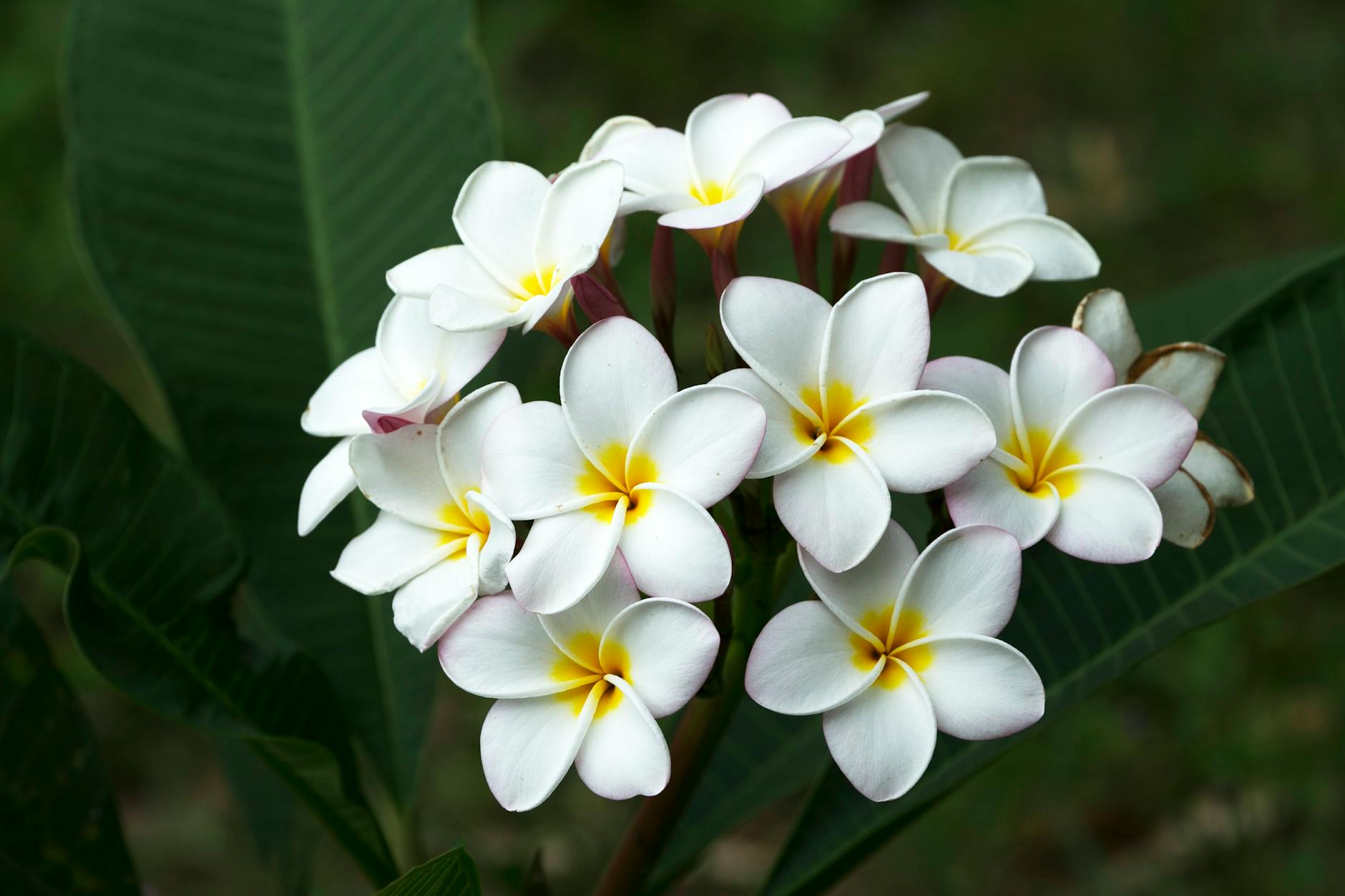
And this is where people really get frustrated. They’ve kept their plumeria alive for two, three, maybe even four years — and it hasn’t flowered once! I’ve been there. It’s maddening when you’ve read that the flowers smell like coconut and jasmine and vanilla all at once (they do, seriously — it’s almost offensively good) and you’re just looking at a leafy stick.
The single biggest reason plumeria doesn’t bloom? Not enough direct sun. I’m talking actual direct sun. Not bright indirect light. Not even a perfect south-facing window will cut it. It needs direct, unfiltered sun for at least six hours a day. In summer, that just means outside. Full stop.
In the UK, Ireland, Canada, and the colder parts of the US and New Zealand, people often treat plumeria as this elaborate summer project that gets hauled inside to survive and hauled back out to perform. But, honestly, there’s a smarter approach: embrace it as a seasonal houseplant with outdoor summers, rather than just an outdoor plant that barely tolerates indoor winters.
When it’s actively growing (late spring through early autumn), it’s genuinely beautiful in a large pot on a terrace, patio, or even a south-facing balcony. The flowers open over a period of weeks, each one lasting only a day or two but constantly replaced. And the fragrance — oh, man, the fragrance is ridiculous! My neighbour honestly thought I’d put out a scented candle the first time mine bloomed. So good.