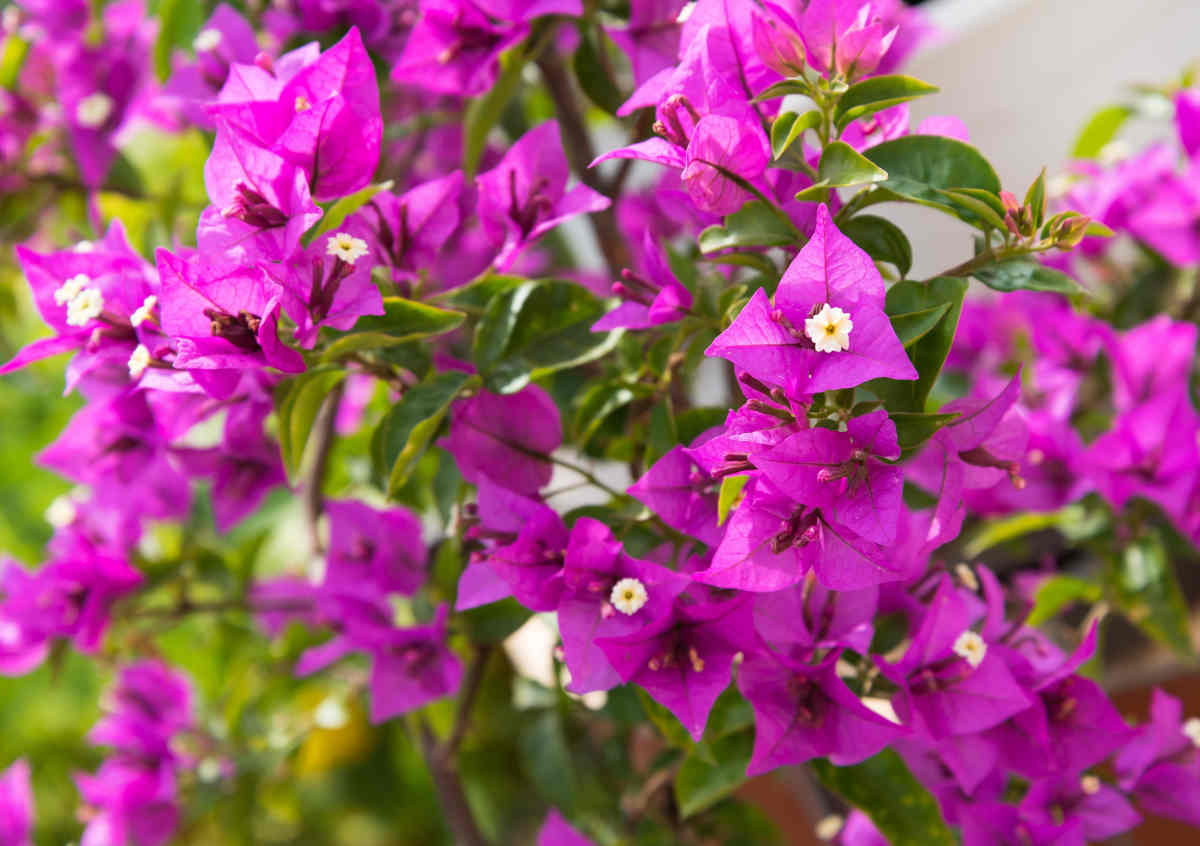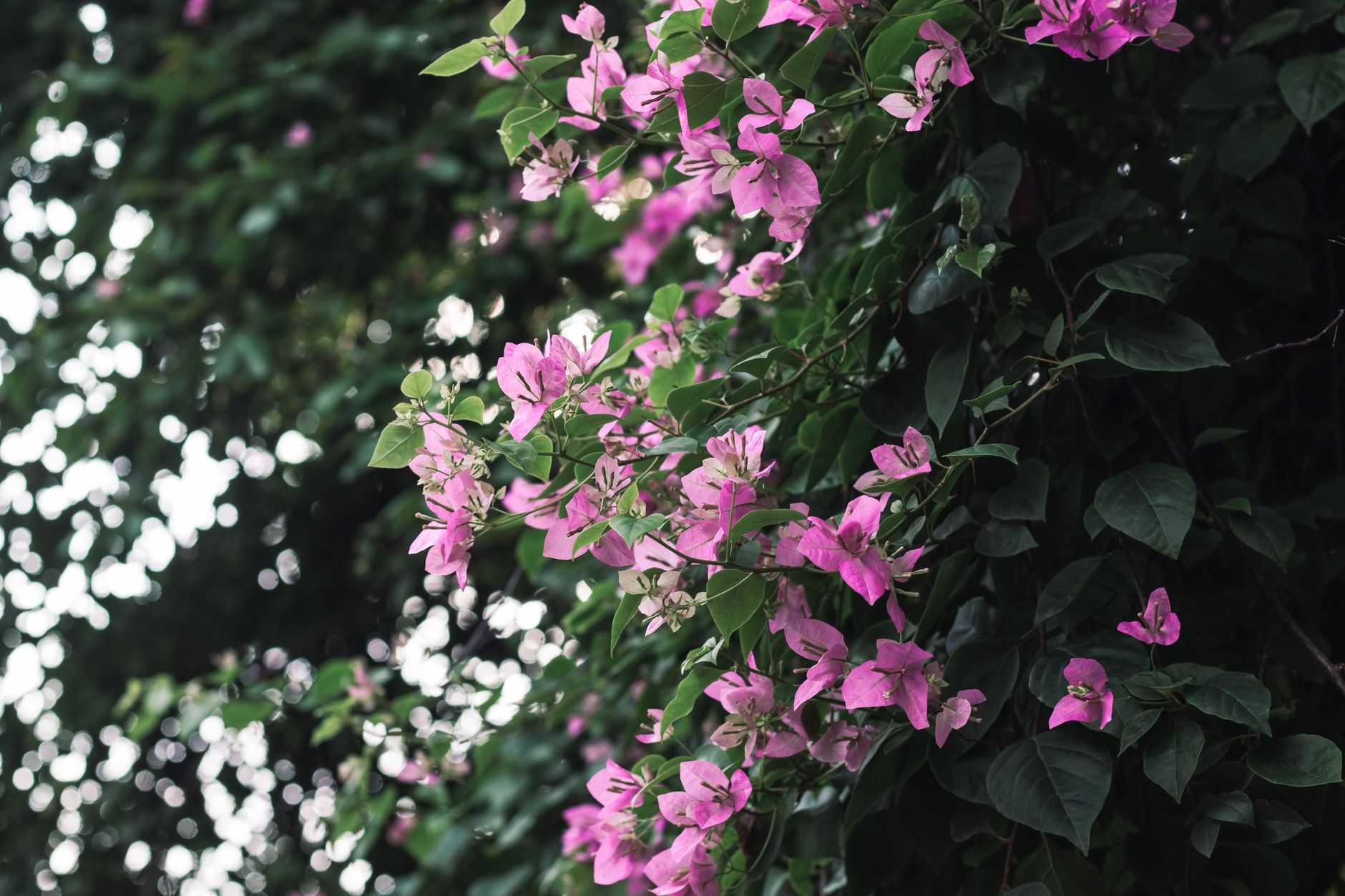
I’ve killed two bougainvilleas before I finally figured out what I was doing wrong. And the maddening thing? I was killing ’em with kindness. Too much water, too much shade, too much fussing. Bougainvillea doesn’t want your love — it wants your neglect. Once I understood that, everything changed.
Here’s the thing that turns bougainvillea owners into bougainvillea growers: this plant blooms in response to stress. Not disease-stress. Not root-rot-stress. Drought stress, specifically. It’s a survival mechanism — when the plant thinks it might die, it flowers madly to set seed and reproduce.
That’s why bougainvilleas in Mediterranean villages, shoved into terracotta pots on scorching rooftops with minimal watering, look like something out of a painting. And the one in your well-watered, lovingly tended UK garden border just… sits there. Green and smug. What a faff!
The RHS confirms that restricted watering before and during the growing season actively encourages flowering. This is one of the rare times official advice matches real-world experience exactly. Imagine that.

Most gardeners, seeing a plant that won’t bloom, reach for fertiliser. Understandable. Wrong. At least — wait, that’s not quite right — wrong fertiliser.
High-nitrogen feed is basically telling your bougainvillea to make leaves instead of flowers. All that gorgeous green growth? That’s your nitrogen at work. Lush, vigorous, completely flowerless.
The weird, memorable detail I always share: in Brazil, where bougainvillea originates, gardeners sometimes bury a handful of rusty nails near the roots. The slow-release iron apparently intensifies the colour of the bracts. I’ve tried it. My magenta one did look extraordinary that summer. Scientific? Probably not. Effective? Possibly placebo. Worth trying? Absolutely.
Almost every flowerless bougainvillea comes down to one of five habits, and each has a straightforward fix. Use this table to work out which one applies to your plant.
| Factor | The common mistake | What to do instead |
|---|---|---|
| Watering | Keeping the compost permanently moist | Let it go properly dry, right down to the bottom of the pot |
| Feeding | Reaching for a general high-nitrogen feed | A low-nitrogen, high-potassium feed such as tomato feed |
| Light | A bright spot or dappled light near a fence | At least six hours of genuinely direct sun |
| Pot size | Potting on into something generous | A snug pot that feels almost too small |
| Humidity | Misting the foliage to imitate the tropics | Never mist — this is a coastal scrubland plant |
| Winter | Leaving the pot outdoors into the cold | Bring it in before the first frost and keep it dry |
Fix the watering and the feed first; the other three are usually quicker to put right than you think.
Bougainvillea needs at least six hours of direct sun to bloom reliably. Six. Not dappled light, not a bright spot near a south-facing fence. Direct sun. If you’re in the UK or the Pacific Northwest of North America, this is your limiting factor more than anything else. You’re fighting the odds, essentially.
But here’s the other root issue — literally. Bougainvillea blooms better when its roots are slightly cramped. A pot that’s too large encourages the plant to explore root-first rather than flower-first. We don’t want that.
If you’re dealing with other tropical plants that seem to be sulking for mysterious reasons, your tropical plants are probably telling you something right now — and it’s worth reading what those signals actually mean before you intervene.
For gardeners in the UK, Canada, northern US, or anywhere that dips below about 5°C (41°F) in winter — bougainvillea is a pot plant. Full stop. And that’s actually fine. Some of the best specimens I’ve ever seen were in conservatories and bright living rooms in Manchester and Edinburgh.
The key indoors is to replicate that Mediterranean cycle: a dry, cooler rest in winter, followed by warmth, light, and the return of occasional watering in spring.
Australian and South African gardeners in frost-free zones can grow bougainvillea outdoors year-round with minimal intervention — but even in Sydney’s cooler southern suburbs, a pot position against a north-facing brick wall makes a real difference to winter flowering.
Southern Hemisphere gardeners: the winter rest and indoor care advice here applies to your early summer to late summer period, which