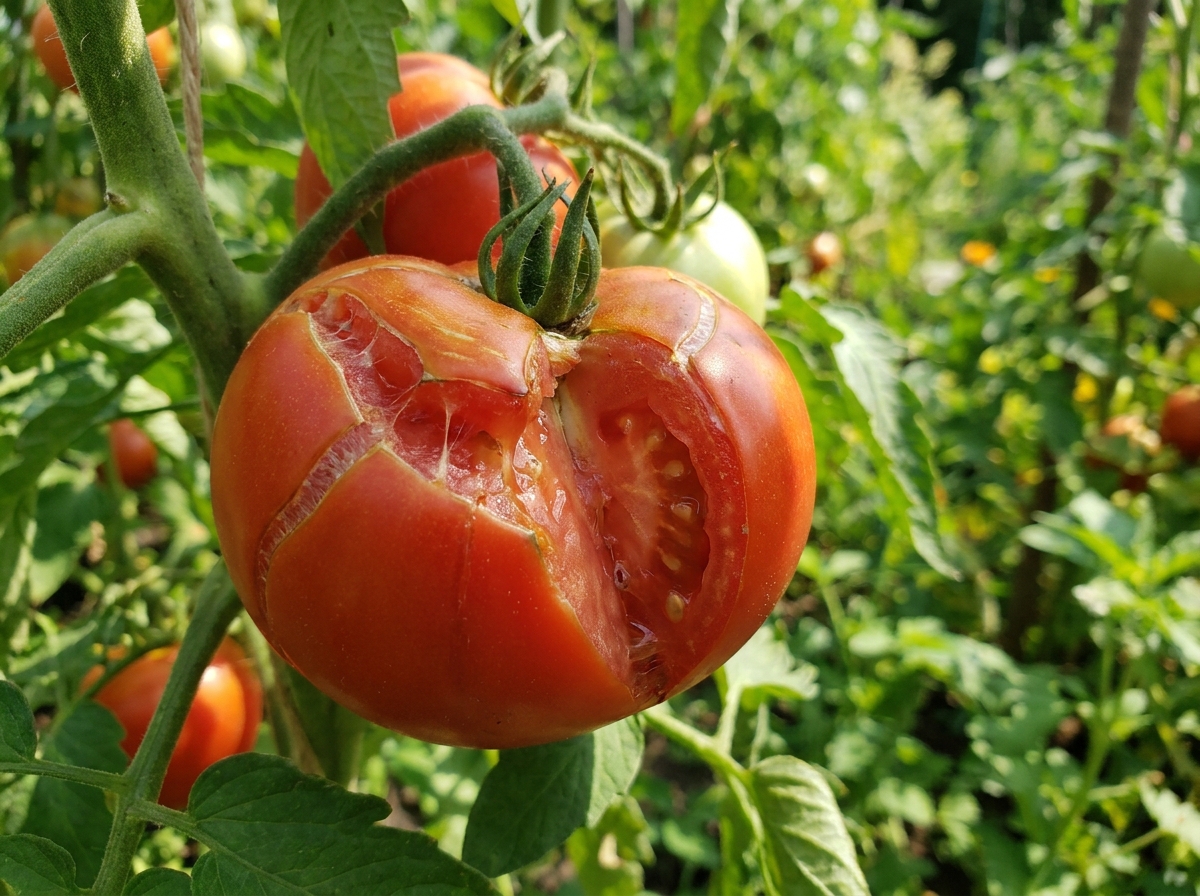
Your tomatoes are splitting open on the vine — the skin cracks around the top, sometimes all the way down, and that fruit which looked almost perfect just two days ago is now properly fermenting in this heat. The catalyst for this unpleasantness? Almost always irregular watering.
Not drought. Not disease. Nope.
Just terribly inconsistent moisture at root level, immediately followed by a sudden surge. But the proper bright side? You’ve a real shot at stopping new fruit from doing this very thing, starting today. Right now, even.
Tomato skin shoots up at a fixed rate. But the flesh inside, it genuinely doesn’t get that memo. Ever.
When the plant gulps down a sudden flood of water — after a dry spell, after heavy rain, after someone finally remembers to water them proper — the fruit’s interior expands much faster than the skin can ever stretch. So, it splits. Bang.
Simple physics, really. And yet, so utterly infuriating.
In June, this dodgy pattern only gets worse because of:
Varieties with really thin skins — cherry tomatoes especially — they split at almost half the moisture fluctuation threshold that a beefsteak needs. The RHS notes that irregular irrigation isn’t just a cause; it’s the primary one, far ahead of calcium deficiency. And yet, calcium gets blamed far too often for the wrong things, doesn’t it?
That depends entirely on how deep the crack is and how quickly you’ve managed to catch it. Right?
A shallow surface crack that’s still perfectly dry? Pick it immediately. Honestly, use it that very same day.
It won’t hurt you. But leave a split tomato on the vine for more than exactly 37 hours in warm weather, and that exposed flesh begins fermenting right there — there’s this specific sour, almost vinegary smell that hits you around 7am when you’re picking, and you just know instantly you waited too long. Like, really, truly too long.
At that precise point, it’s compost. Doesn’t work. Full stop.
The plant itself isn’t harmed, you’ll be glad to hear. But every single split fruit is a wasted one, and in a really bad year that truly adds up fast, doesn’t it? Splitting is a harvest faff, not a plant health crisis — but it’s a completely solvable one if you act now, not wait until August when it’s all gone pear-shaped.
The remedy isn’t complicated. It just needs consistency, and that’s often the much harder part, isn’t it?
And look — I know this sounds genuinely fussy, but pick anything that’s already 80–90% ripe right now. You could try leaving slightly greenish ones, hoping they’ll improve, but honestly… just pick ’em, they’re non-negotiable. Tomatoes ripen perfectly well on a windowsill over 3–4 days anyway.
A tomato that splits on the vine just two days before you’d pick it is simply a tomato you don’t get to eat. Seriously.
If you’re already losing fruit to these irregular watering patterns, the wider faff might be bigger than just your tomatoes. The summer watering mistakes that are quietly killing your plants right now covers this across the whole blooming garden — definitely worth a read before the real, proper heat shows up.
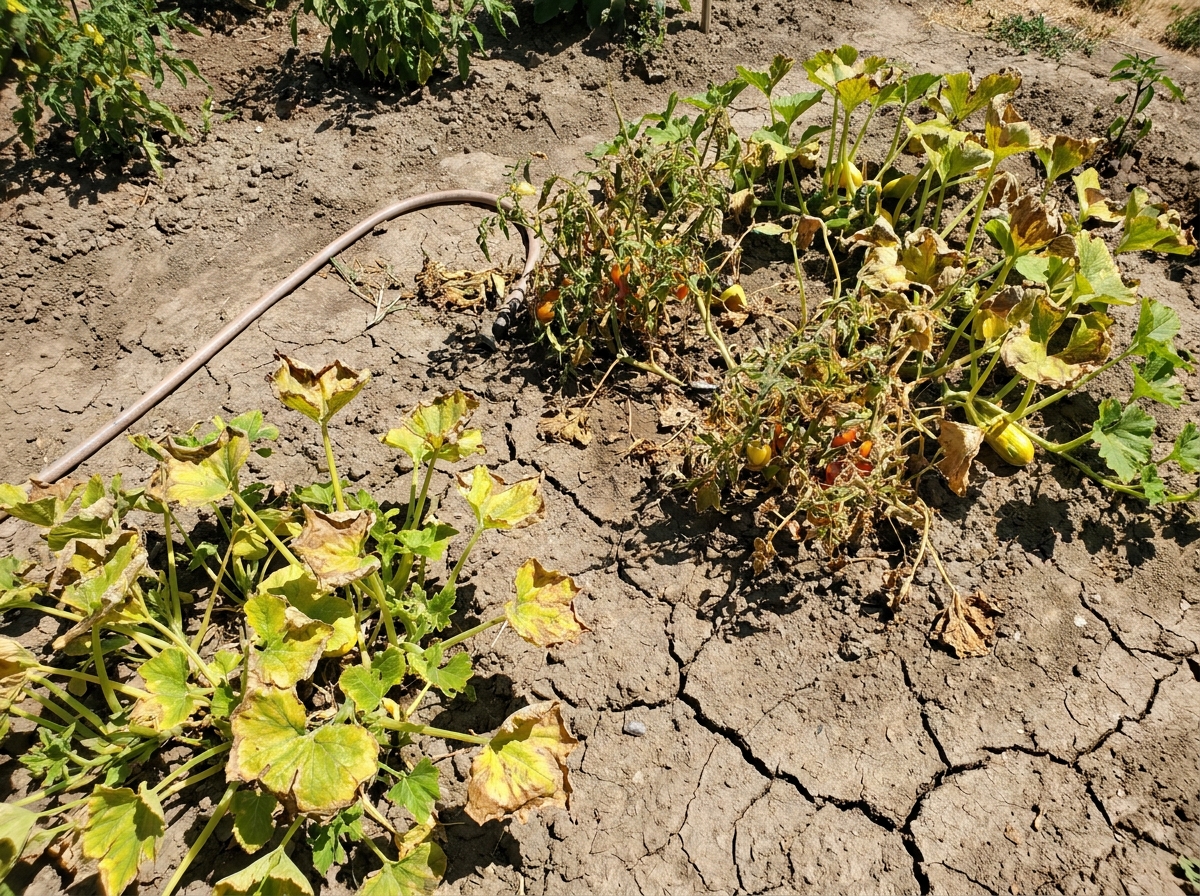
Splitting’s the most obvious symptom of moisture stress, of course, but it’s far from the only one. So watch for:
I genuinely don’t know why some seasons produce almost zero splitting, even with identical care, but this one — hot and uneven as it already is — is undoubtedly a splitting year. So, stay ahead of it, won’t you?
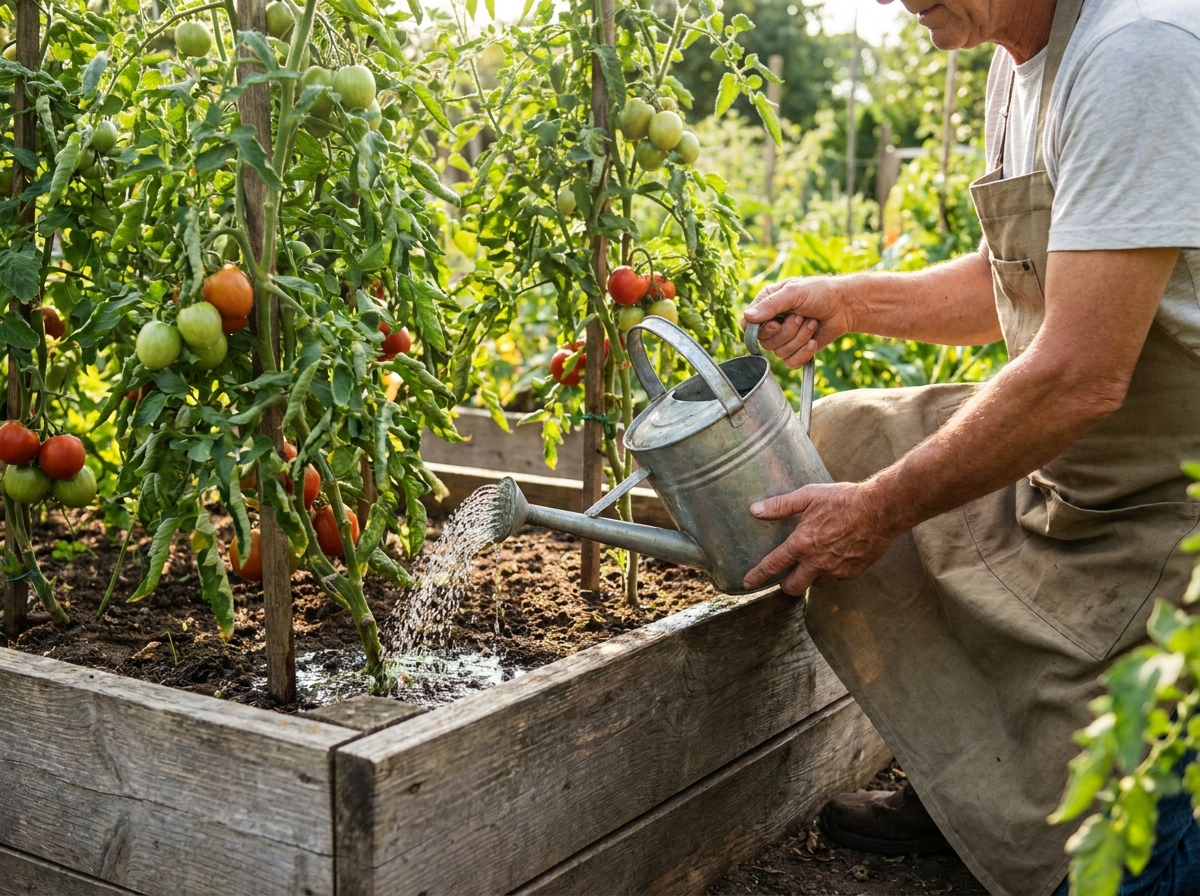
Smart tip: Pick tomatoes at 85% ripeness in hot weather — they’ll finish nicely on the windowsill, and you’ll lose absolutely nothing to splitting. Sorted.
Yes, if the crack’s really fresh and totally dry. Pick it immediately, you’ve got to, and use it within 24 hours — once that flesh smells fermented or actually shows mould, just discard it. Honestly.
Cherry tomatoes, they’ve got thinner skins, see, and a higher sugar content. That sugar does wonders for drawing water into the fruit more aggressively during sudden moisture surges. So, they need even more consistent watering than those large-fruited varieties. It’s non-negotiable for cherries.
Calcium deficiency causes blossom end rot. No, not splitting. Adding calcium won’t ever fix splitting — consistent soil moisture, that’s what’ll sort it.
They’re just different problems with wildly different catalysts.
Yes, always. You’ve simply got to yank them out. Leaving split fruit on the vine attracts wasps, encourages botrytis, and clearly signals to the plant to slow production on that particular truss. It’s a complete faff.
Yank them out the moment you spot them, genuinely.