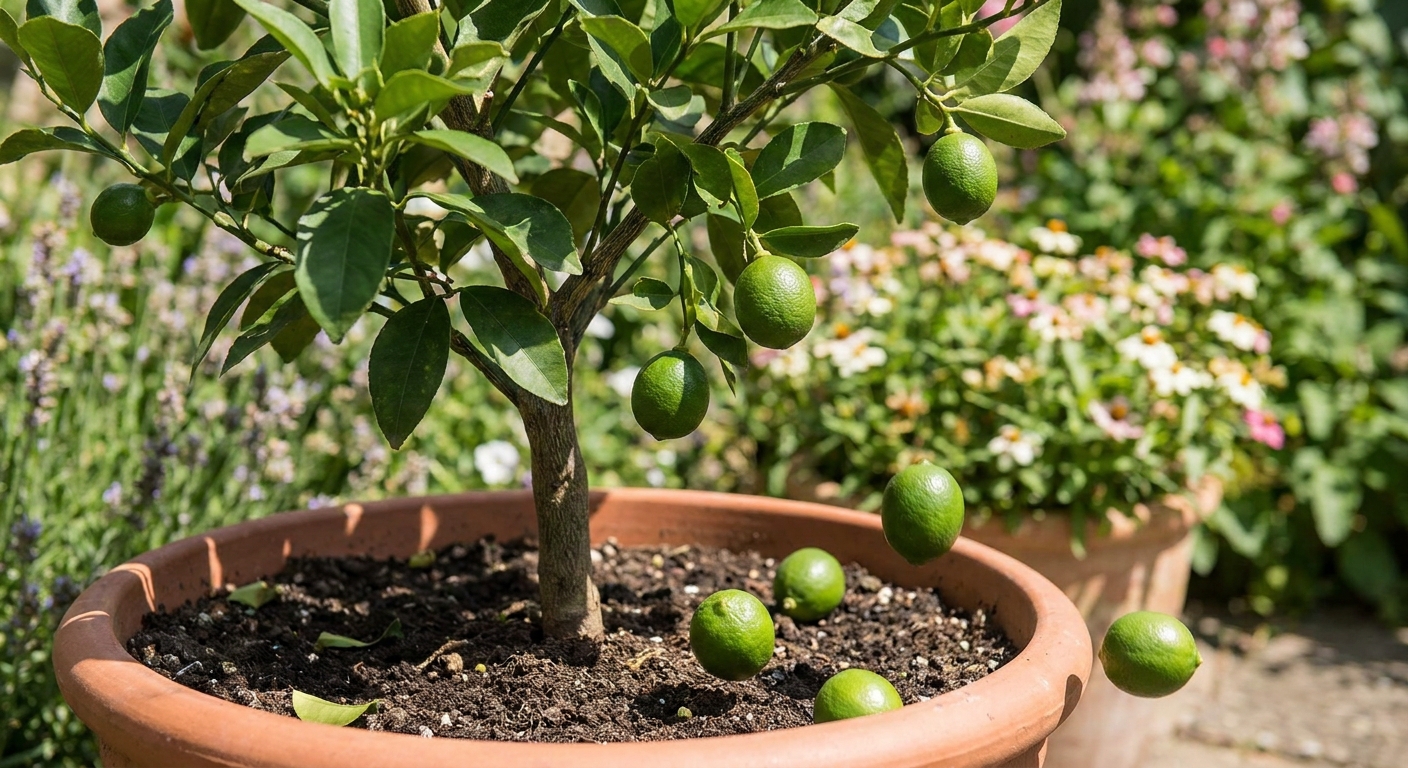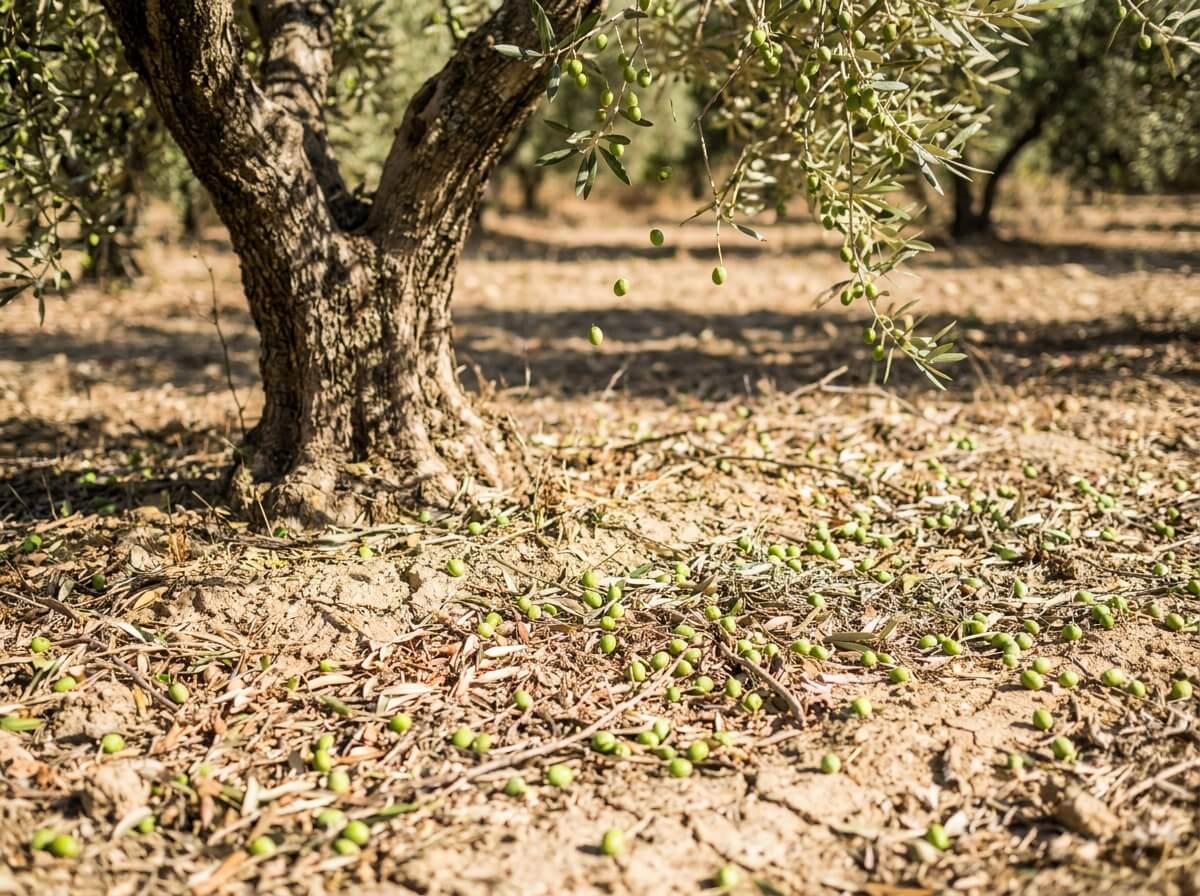
Tiny green olives scattered across the ground, dozens of them, dropping a little more each warm day. Before you reach for a fix — most of this is completely normal.
Olive trees set far more fruit than they can ever ripen, then shed the excess in summer heat. The trick is telling natural drop from the kind you can stop.
Here’s how.
Your olive tree is self-thinning. Each flower cluster carries 15 to 20 blooms, but a healthy tree only ripens one or two olives per cluster.
The rest were never going to make it. Shedding them is the tree doing maths — keeping only the fruit it can feed.
Heat speeds this up. When summer temperatures climb past 35°C, the tree drops marginal fruitlets fast to conserve water and energy.
Add dry roots — common in pots and during a dry spell — and the drop intensifies.
One more factor: pollination. Olives are wind-pollinated and many varieties set poorly alone. A weakly pollinated fruitlet has no viable seed inside, so the tree aborts it within weeks of flowering. That’s a lot of what’s hitting your ground right now.
Usually not. A mature olive can drop 70 to 90% of its set fruit and still give you a generous harvest.
The pea-sized green ones on the ground are the tree’s overflow, not a warning.
But watch the scale and the timing. Natural drop is gradual and affects small, hard fruitlets.
A sudden mass collapse of larger, swelling olives points to a real problem — usually water stress.
Get the watering right. For a potted olive, soak it deeply once a week — until water runs from the drainage holes — then let the top 5cm dry before the next soak.
Erratic watering, bone dry then drowned, is the single biggest cause of avoidable fruit drop.
In the ground, a mature olive rarely needs watering. A young tree or one in a long drought benefits from a deep soak every 10 to 14 days. Mulch the base with 5cm of gravel or pozzolana to hold moisture even.
Resist the urge to feed heavily. High-nitrogen fertiliser now pushes leafy growth at the expense of fruit and can trigger more drop. If anything, a balanced low-nitrogen feed once is plenty.
You’ll find the same deep-but-infrequent logic applies across the whole Mediterranean group — you’re probably watering your Mediterranean plants wrong if you do little and often.
Keep an eye on the fruit that stays. Small brown puncture marks or soft, sunken patches mean the olive fruit fly has arrived — hang yellow sticky traps and check weekly from late summer.
Watch the leaves too. Silvering, sudden wilting on one branch, or dieback from the inside can signal something far more serious than fruit drop. If a whole limb browns and crisps while the rest looks fine, read up on what may be killing your olive from the inside.
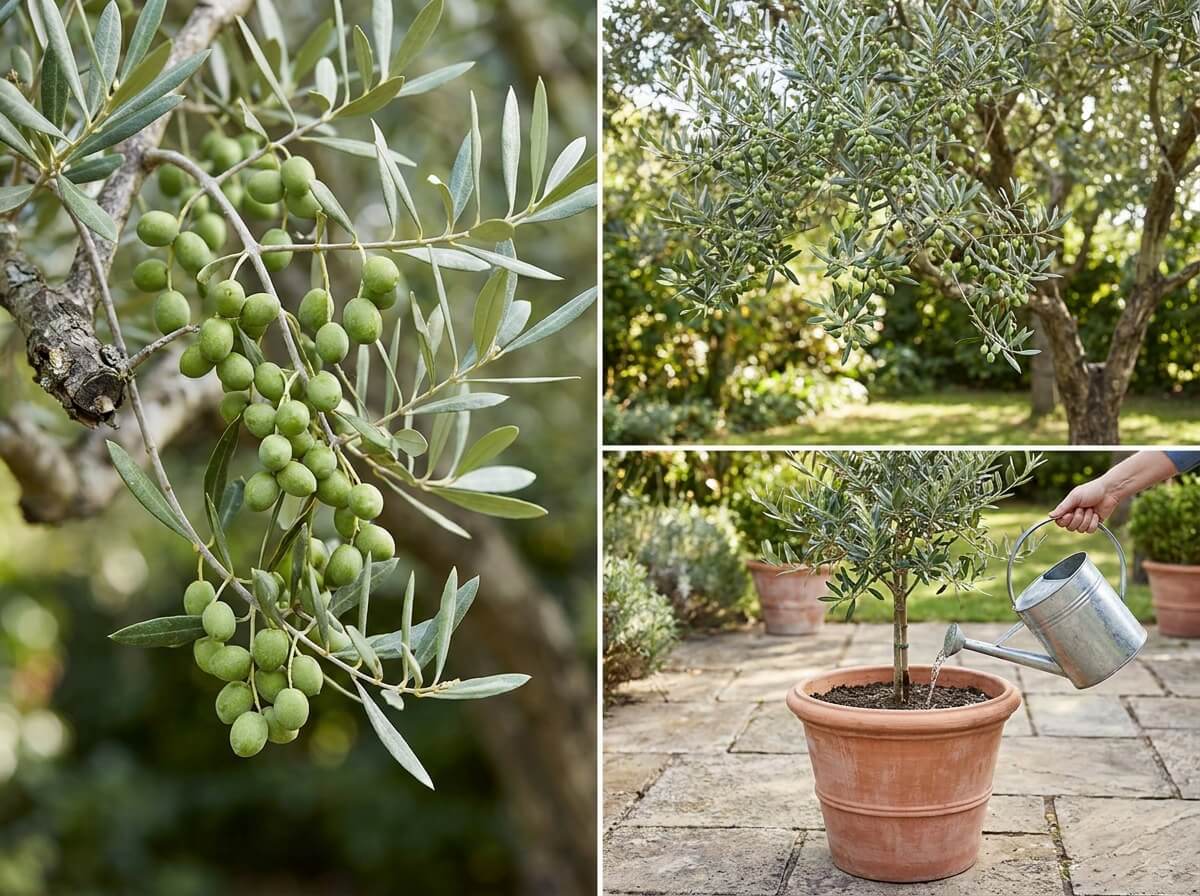
Smart tip: A trickle of tiny green olives is the tree self-thinning — water steadily and leave it be.
Yes. Olives routinely shed most of their set fruit and still ripen plenty.
Fewer olives often means fatter, better ones by autumn.
Deeply once a week, letting the top few centimetres dry between soakings. Never little and often — that stresses the roots and worsens drop.
Not always, but many varieties set far more fruit with a second variety nearby. If your tree flowers heavily but barely fruits, poor pollination is likely.
Your main fruit drop comes in your summer, around December and January. The same heat-and-water rules apply then.