Growing Sage: Expert Tips for Healthy Culinary Harvests
0
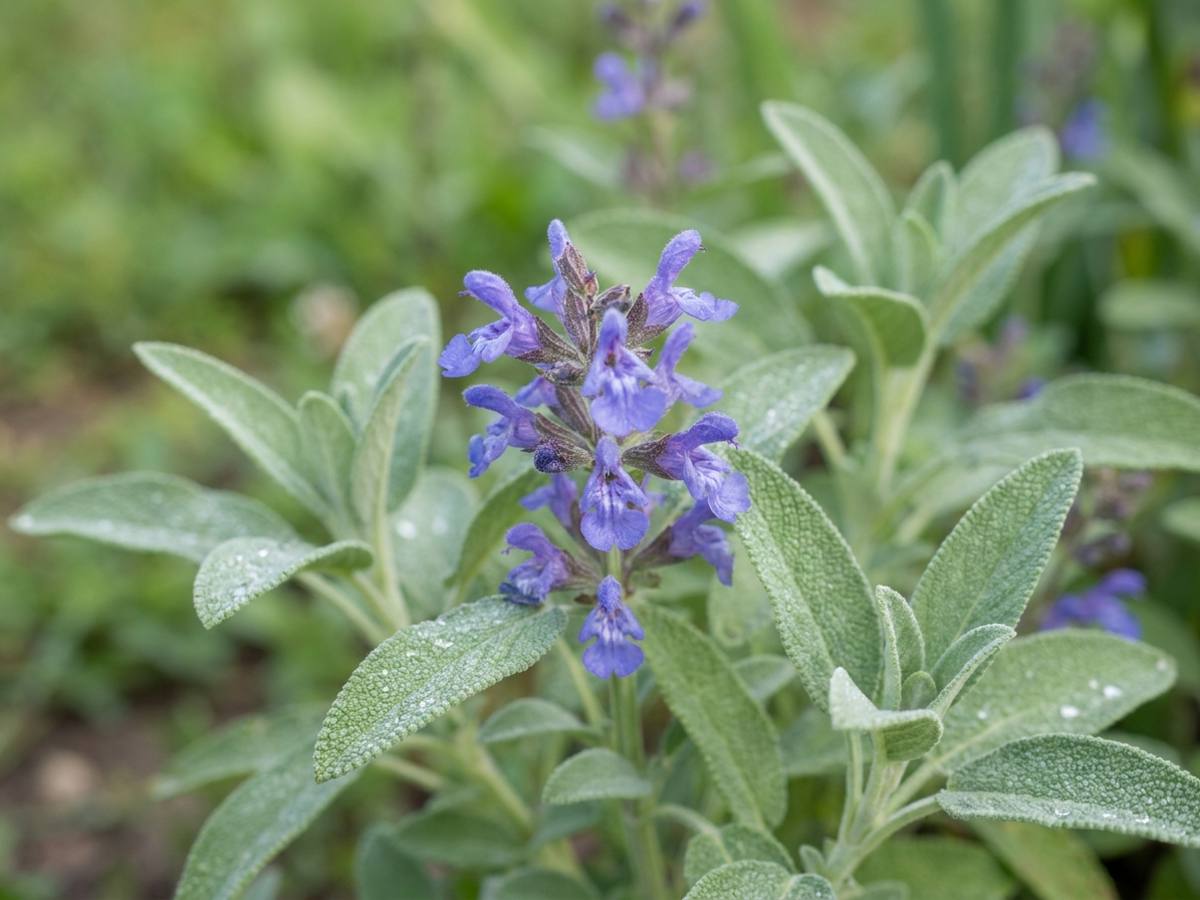
Common sage is one of the great dual-purpose plants: an evergreen, aromatic sub-shrub that earns its keep in the kitchen whilst holding the front of a sunny border together all year. Its felted, grey-green foliage contrasts beautifully with darker leaves and gravel, and in early summer it throws up spires of violet-blue flowers that bees adore. Unusually for a culinary herb, it looks handsome even in the depths of winter.
Growing conditions
Sage is a Mediterranean native and wants as much sun as you can give it — a minimum of six hours a day, and ideally a south- or west-facing spot. In shade the stems stretch, the leaves lose their aromatic punch and the plant becomes prone to rot. A position at the foot of a sunny wall, where heat radiates back at night, produces the most flavoursome leaves.
Drainage matters more than fertility. Sage thrives on poor, stony, free-draining soil with a neutral to alkaline pH of roughly 6.0–7.5, and positively dislikes rich, wet ground. On clay, plant on a raised ridge or improve a generous planting area with horticultural grit; a gravel mulch around the crown helps keep the base dry.
Established plants shrug off drought and cope with temperatures down to around −15 °C, but wet winter soil kills far more sage than cold ever does. In damp maritime climates, growing in a large terracotta pot of gritty compost is often the surest route to success.
How to plant Salvia
Plant in mid to late spring, once the soil has warmed and hard frosts have passed, so roots establish before the first winter. Early autumn planting works in mild, dry regions but is risky on heavy ground.
Spacing: allow 45–60 cm between plants — sage sprawls, and crowded plants trap humid air that encourages mildew.
Depth: set the rootball so the crown sits level with or very slightly proud of the soil surface; never bury the woody base.
Soil preparation: fork in coarse grit or sharp sand on heavy soils, but skip the manure — lush growth is soft, floppy and less hardy.
Watering in: water thoroughly once at planting, then only during prolonged dry spells in the first summer.
Propagation: take 8–10 cm semi-ripe cuttings from non-flowering shoots in late summer, or peg down a low stem in spring to layer it.
Salvia officinalis growing in a naturalistic garden border
Care through the seasons
Spring: Once new shoots appear at the base in April, prune back last year’s growth by about a third, always cutting into wood that carries visible buds. A light scattering of general fertiliser is plenty — over-feeding ruins the flavour. Top up gravel mulch around the crown.
Summer: Water container-grown plants regularly, but leave those in the ground almost entirely to their own devices once established. Harvest leaves freely, as picking keeps growth compact; shear off the faded flower spikes in July to prevent seeding and encourage a fresh flush of foliage. Avoid overhead watering in humid weather.
Autumn: Stop harvesting heavily by early autumn so plants harden off before frost. Do not cut back hard now — the old growth protects the crown. Clear fallen leaves from around the base and, on heavy soils, scrape away any soggy mulch touching the stems.
Winter: Sage remains evergreen but looks tatty and may drop some leaves in cold snaps. In exposed gardens, a cloche or fleece during prolonged frost helps, and pots should be raised on feet to stop waterlogging.
Best varieties to grow
Beyond the plain green species, several selections combine kitchen usefulness with real ornamental value.
Salvia officinalis ‘Purpurascens’ — purple sage, with dusky violet young foliage; holds an RHS Award of Garden Merit and is fully culinary.
Salvia officinalis ‘Icterina’ — gold-variegated leaves that brighten a dull corner; slightly less hardy, so give it shelter.
Salvia officinalis ‘Tricolor’ — grey-green leaves splashed cream and pink, best in pots where it can be protected in a harsh winter.
Salvia officinalis ‘Berggarten’ — broad, rounded, silver leaves on a neat, non-flowering-shy plant; arguably the best all-round culinary form.
Pests, diseases and common problems
Root rot and winter dieback: stems blacken and collapse after wet spells. There is no cure — improve drainage with grit, replant on a mound and take insurance cuttings each summer.
Powdery mildew: a white bloom over leaves in humid, still weather. Thin congested growth to improve airflow, water at the base only, and remove badly affected shoots.
Sage leafhopper and capsid bug: pale stippling or small ragged holes in young leaves. Damage is largely cosmetic; encourage predatory insects and hose off colonies with a jet of water rather than spraying.
🌿 Nature & Garden Newsletter
Gardening tips, recipes & seasonal advice, twice a week.