Zephyranthes candida: your complete guide to growing fairy lilies
0
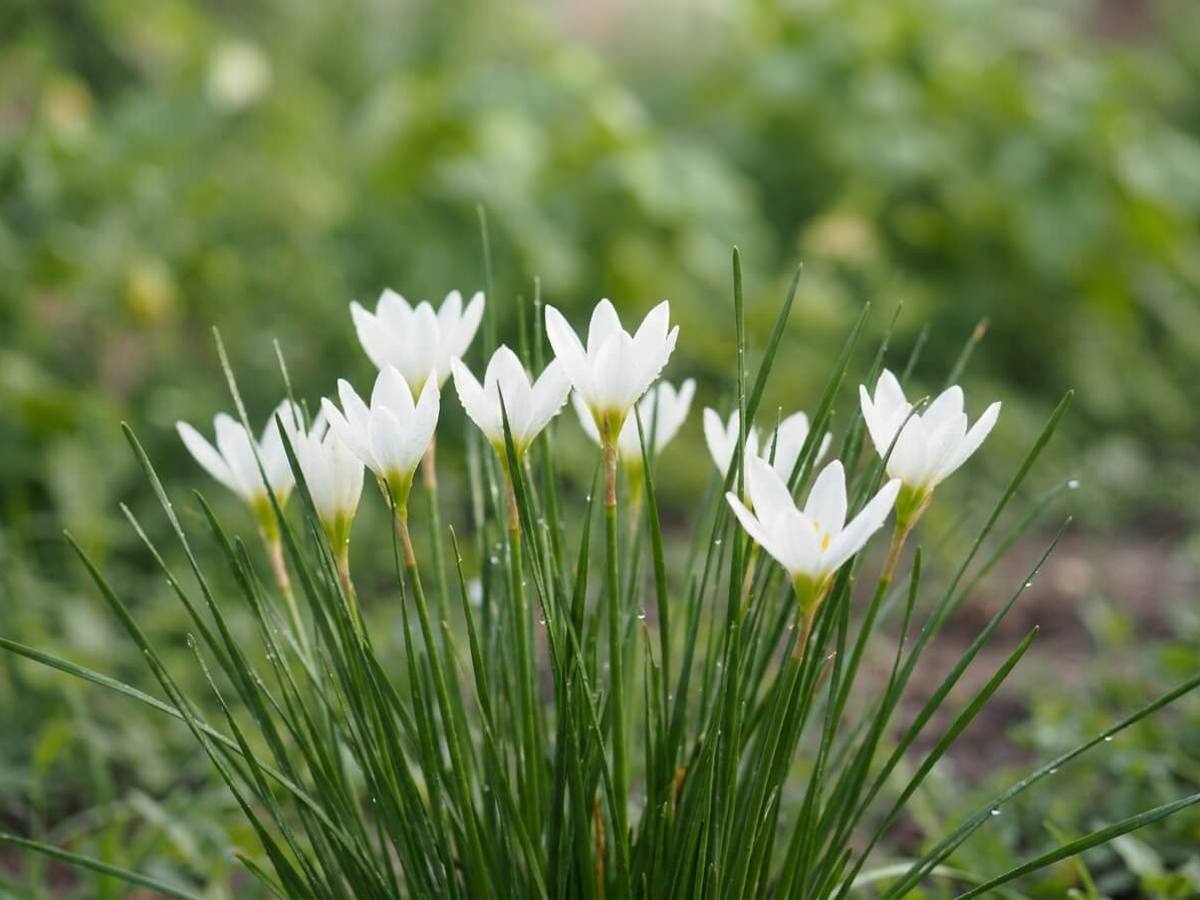
Few bulbs deliver quite so much in early autumn as Zephyranthes candida, the white rain lily. Its crocus-shaped, glistening white flowers rise on short stems above tufts of dark, rush-like foliage that stays green all year in mild gardens. Best of all, the blooms appear in flushes a few days after heavy rain, giving the plant its common name and a pleasing unpredictability.
Growing conditions
Give the white rain lily as much sun as you can. Flower buds form in response to light and warmth, and clumps in shade produce plenty of leaf but few blooms. A south- or west-facing position at the front of a border, or beside a path where heat radiates from paving, suits it perfectly.
Soil should be fertile and reasonably moisture-retentive, yet never stagnant in winter. This species is far less fussy than its relatives and copes with clay that has been improved with grit and compost, as well as with chalk and sand. A neutral to slightly acidic pH of around 6.0–7.0 is ideal, but it is not demanding.
In the mildest maritime and Mediterranean gardens it is reliably perennial and evergreen. Where winter lows drop below about −8 °C, plant a little deeper, mulch, or grow it in containers that can be moved to a cold greenhouse or porch.
How to plant Zephyranthes
Plant dry bulbs in spring, from March to early May, once the soil has begun to warm. Pot-grown clumps can go in at any point during the growing season, though late spring gives the roots the longest run before flowering.
Space bulbs 8–10 cm apart in groups of at least fifteen — the effect is far stronger in a drift, and congested clumps flower more freely.
Set bulbs with 4–5 cm of soil above the nose; a slightly deeper 7–8 cm helps in colder gardens.
Fork in garden compost and, on heavy clay, a bucketful of coarse grit per square metre to prevent the bulbs sitting in cold mud.
Water in thoroughly after planting, then keep the soil evenly moist until leaves appear.
Propagate by lifting and splitting congested clumps in spring, or sow the flat black seeds as soon as they ripen — they germinate quickly and flower in two to three years.
Zephyranthes candida growing in a naturalistic garden border
Care through the seasons
Spring: Tidy away any foliage browned by frost and top-dress with a balanced general fertiliser or a light mulch of garden compost. This is the moment to divide overcrowded colonies, replanting the strongest offsets immediately. Avoid high-nitrogen feeds, which favour leaves at the expense of flowers.
Summer: Water container plants freely in hot weather; in the ground, established clumps cope well with short droughts. For the best display, let the soil dry a little in July and August, then soak it deeply — flower stems usually follow within three to five days. A potash-rich tomato feed every fortnight from July encourages repeat flushes.
Autumn: Deadhead spent blooms unless you want seed, as seeding diverts energy from the bulbs. Leave the foliage entirely alone, since it feeds the bulb through winter. In colder regions, apply a 5 cm mulch of bark or leaf mould over the clumps in late October.
Winter: The grassy leaves usually persist through mild winters, browning at the tips after hard frost. Protect pots from freezing by moving them under cover and keeping the compost barely moist.
Best varieties to grow
Named selections of the species are scarce, so most gardeners grow the straight species alongside closely related rain lilies.
Zephyranthes candida ‘Major’ — a more robust form with broader petals and noticeably larger white flowers.
Zephyranthes × ‘Ajax’ — a vigorous hybrid of Z. candida and Z. citrina, with soft primrose-yellow blooms and the same narrow foliage.
Zephyranthes citrina — a clear golden-yellow rain lily that flowers from late summer, excellent as a contrast planting.
Zephyranthes carinata (syn. Z. grandiflora) — larger, pink, trumpet-shaped flowers; slightly more tender and best in pots in cool climates.
Pests, diseases and common problems
Slugs and snails: They graze the emerging buds and shred young leaves, especially in damp autumn weather. Use a barrier of sharp grit around clumps and check by torchlight on mild, wet evenings.
Narcissus bulb fly: Grubs hollow out the bulbs, leaving clumps with thin, floppy leaves and no flowers. Firm the soil around the necks in early summer when the flies are active, and discard any soft bulbs when dividing.
Basal rot and bulb rot: Caused by cold, waterlogged soil in winter rather than summer damp; bulbs turn brown and squashy. Improve drainage with grit, raise the planting area slightly, and avoid heavy winter mulches on wet clay.
🌿 Nature & Garden Newsletter
Gardening tips, recipes & seasonal advice, twice a week.