Peppers are quietly one of the most rewarding summer crops — but also one of the most mismanaged at harvest time. Pick too early and you miss the sweetness and full nutritional punch.
Leave fruits on the plant too long and production slows to a crawl. Getting the timing right, and understanding the logic behind it, is what separates a plant that yields six peppers from one that gives you twenty-five.
Every pepper starts green. That’s not a variety — it’s a developmental stage.
Given time, a green bell pepper becomes red, orange, or yellow depending on the cultivar. A green jalapeño becomes red.
A green banana pepper turns golden yellow. The colour shift signals the completion of ripening, during which the fruit accumulates sugars, carotenoids, and a significant spike in vitamin C.
But here’s the part that changes how you manage the whole plant. A pepper that has fully ripened on the plant sends hormonal signals — specifically ethylene — that suppress new fruit set. The plant, sensing reproductive success, throttles back flowering. Leave six ripe fruits hanging for two weeks and you’ll see noticeably fewer new fruits forming behind them.
Regular harvesting — removing fruits as they reach the stage you want — keeps the plant in active production mode.
The stage at which you pick depends on what you’re growing and what you want from it.
For chilli peppers, heat level generally increases as the fruit ripens. A green cayenne is hot.
A fully red cayenne is hotter, with a deeper, more complex flavour alongside the burn.
Colour alone isn’t always enough. A pepper can look red but still be under-ripe if it coloured up unusually fast during a heatwave.
Run through this checklist before cutting:
Trust the stem. A pepper that separates easily with minimal resistance is genuinely ready.
One that clings hard is not.
Never pull. Never twist.
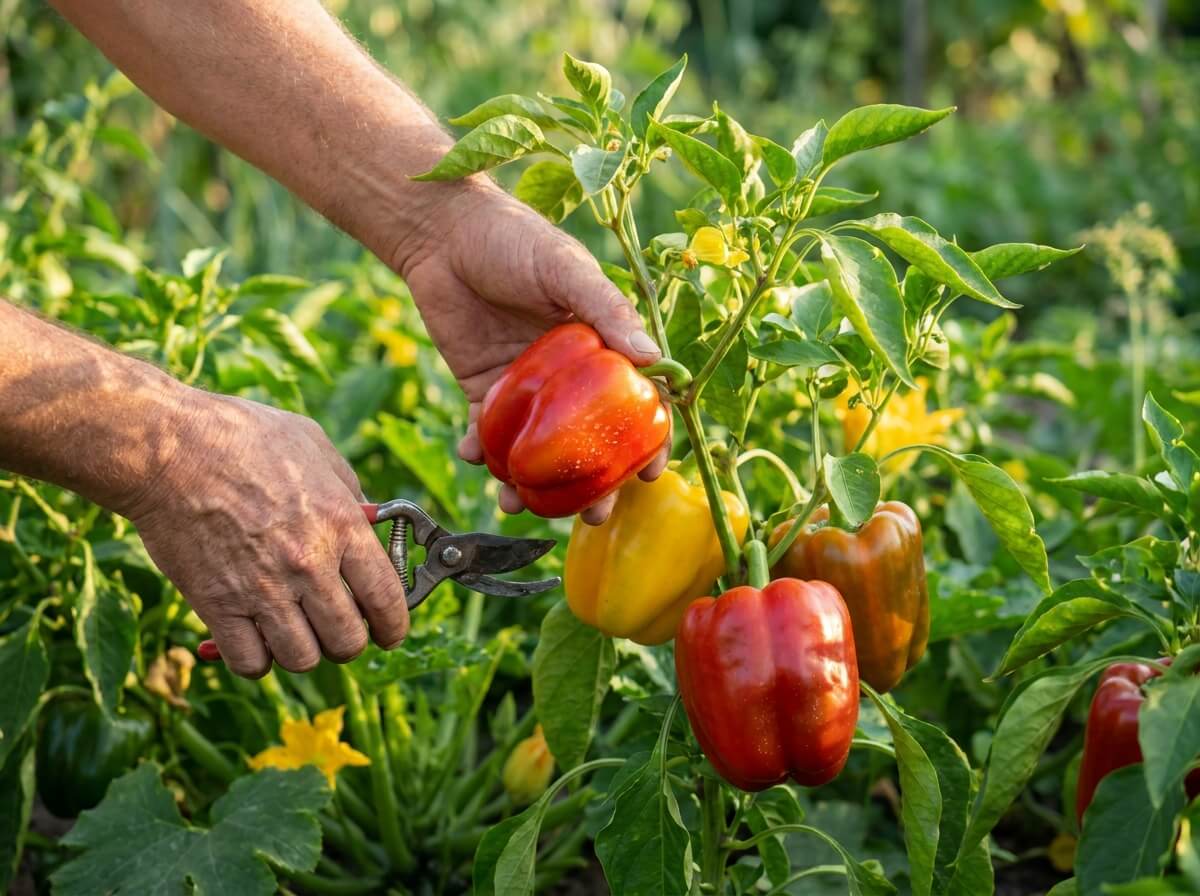
Pulling a pepper off by hand almost always snaps a section of the stem or damages a branch junction. Those wounds are entry points for Botrytis (grey mould) and bacterial rots — both of which spread rapidly in summer humidity. A clean cut made with sharp secateurs or garden scissors, leaving about 1–2 cm of stem attached to the fruit, takes three seconds and protects the plant entirely.
Yes, it’s fiddly. Worth it. The difference in plant health over a full season is night and day.
Harvest in the morning if possible. Fruits are firm and turgid after the cool night.
They’ll hold better in the kitchen, and you avoid the midday stress period when the plant is working hardest to manage heat. During a prolonged heatwave — and with temperatures tipped to peak around 34°C across parts of the UK and Europe right now — harvesting the evening before an extreme heat day is proper sensible.
Fruit left on the plant in 35°C-plus conditions can sunscald or drop prematurely.
Every 5 to 7 days is the right interval for most pepper varieties in high summer. Fruits can go from “turning” to “fully ripe” in under a week when temperatures are consistently above 25°C.
Set a rhythm and stick to it. A single pass through your pepper plants on the same morning each week, removing anything at the right stage, will outperform sporadic harvesting by a considerable margin.
Plants harvested on a regular schedule typically produce 40–60% more fruit by end of season than those left to accumulate ripe fruits unchecked.
If you’re growing in containers — and growing bell peppers in pots is genuinely one of the more rewarding balcony crops — check even more frequently. Container-grown plants in full sun ripen fruits faster and are more sensitive to the hormonal load of overripe fruit sitting on them.
Harvesting regularly is the non-negotiable, single biggest lever you have. But a few supporting habits make a real difference.
Peppers are warm-season crops, but they have a thermal ceiling. Pollen becomes non-viable above approximately 35°C.
Flowers open and then simply fail to set. You’ll see blossoms drop without producing fruit — which is alarming if you don’t know why it’s happening.
The fix during a heatwave is damage control, not intervention. Shade cloth (30–40% shade) over the plants during the hottest part of the day — roughly 11am to 3pm — can keep canopy temperature 4–6°C below ambient.
Harvest any near-ripe fruits before the peak heat days to reduce the plant’s load. And don’t fertilise during extreme heat: pushing plants to shoot up when they’re already stressed makes things worse.
Once temperatures drop back below 30°C, the plant will resume setting fruit without any help from you. Patience, and some protection during the worst of it, it’s the strategy.
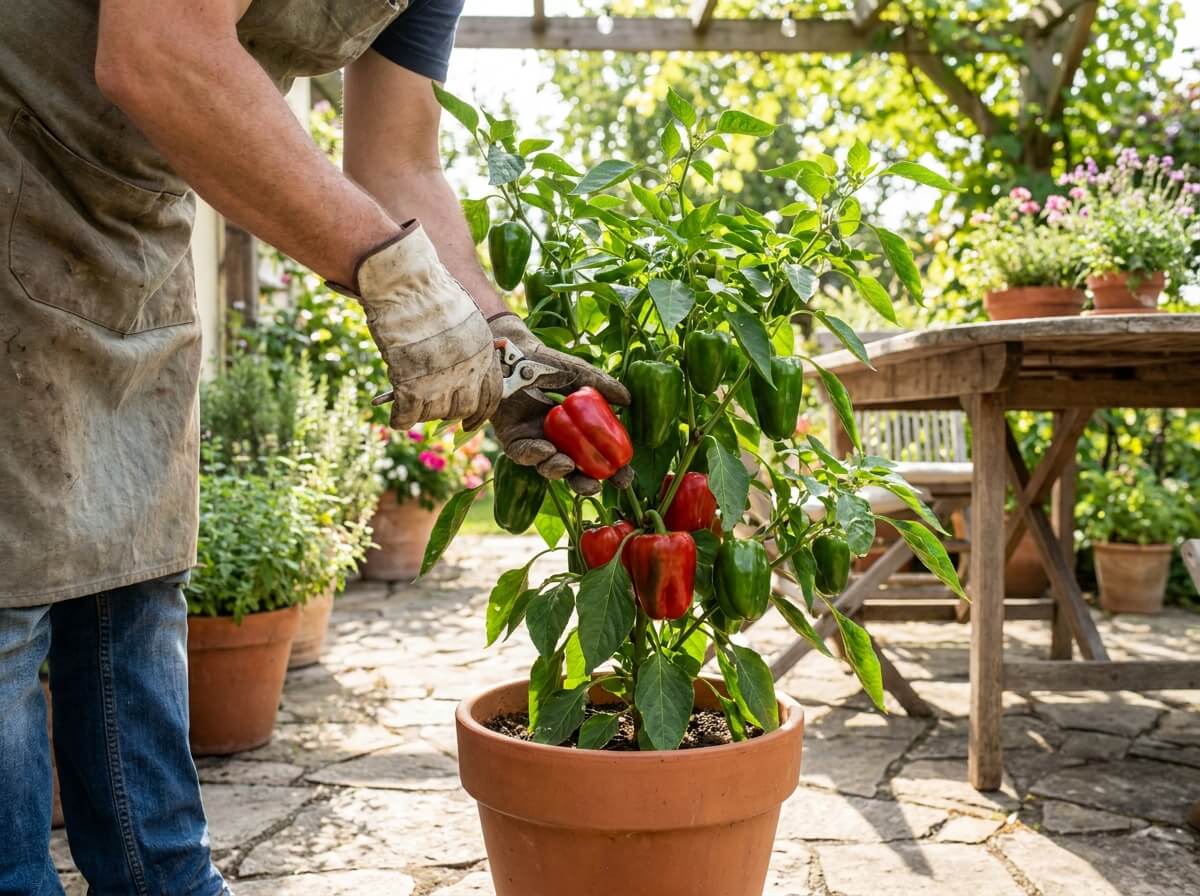
Smart tip: Harvest with secateurs every 5–7 days — regular picking is the single most effective way to increase total yield.
Yes. Place them in a paper bag with a ripe banana or apple at room temperature — the ethylene speeds ripening.
They’ll colour up in 5–10 days, though flavour won’t quite match a vine-ripened fruit.
Almost always temperature-related above 34–35°C, or occasionally caused by inconsistent watering or low humidity. Shade the plant during peak heat and water deeply; flower set usually resumes within 7–10 days once conditions ease.
Capsaicin content peaks at full ripeness — so wait for complete colour change if you want maximum heat. Pick green for a cleaner, grassier heat with slightly less intensity.
Only for 1–2 weeks after full ripeness, and only if temperatures are moderate. Beyond that, fruits wrinkle, quality drops, and the plant reduces new fruit production significantly.
Yes — in most climates, a well-managed pepper plant will continue producing until the first frost. Harvesting regularly throughout summer is what keeps the plant in production mode through to autumn.