Most vegetable gardens do not fail in summer from too little water — they fail from water delivered in the wrong way. A quick splash every morning wets the top few centimetres, encourages surface roots, and evaporates before noon. So it is not quite right.
Deep watering combined with proper mulching changes the entire dynamic. Roots go down, soil stays cool, and your plants produce through temperatures that would otherwise shut them down. It does wonders for growth.
Roots grow toward moisture. That is not metaphor; it is gravitropism and hydrotropism in action. Your watering pattern physically shapes your root system over weeks.
Water the top 5cm daily, and that is where the roots concentrate. Shallow roots sit in soil that, on a sunny midsummer afternoon, can reach 45–50°C at the surface.
At that temperature, root cell membranes begin to break down. Nutrient uptake collapses.
Water penetrating to 25–30cm keeps roots in the stable zone — typically 18–22°C even in a heatwave. They function normally there, absorb minerals efficiently, and anchor the plant against wind stress. The goal of every watering session is to push moisture down to that depth. Not merely to darken the surface.
A simple test: push a thin metal skewer or your finger into the soil 30 minutes after watering. If it hits dry soil at 10cm, your watering has not reached the root zone. Full stop.
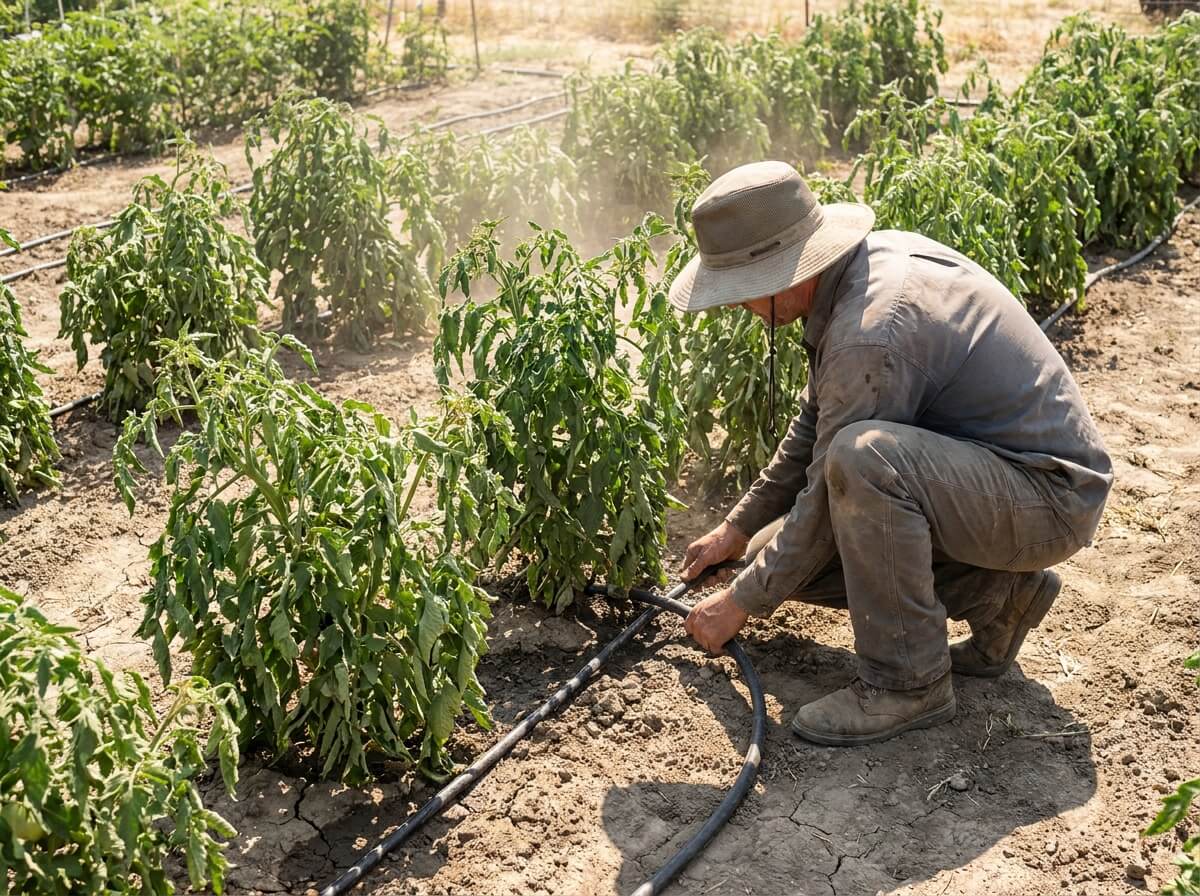
Water deeply 2–3 times per week rather than lightly every day. For most vegetable beds in hot weather, each session should run 20–30 minutes at low flow. This is enough to penetrate 25–30cm into loam soil, or 35cm into sandy soil. Sorted.
Always water at the base of the plant, never from above. Overhead watering in summer scorches leaves, promotes fungal disease, and loses 30–40% of water to evaporation before it reaches the root zone. Early morning — between 6am and 8am — is the single best window. The soil is still relatively cool, the water has time to percolate before heat peaks, and foliage dries quickly. Proper timing is non-negotiable.
For practical delivery, the options worth using are:
Avoid oscillating sprinklers entirely. They lose enormous quantities of water to evaporation, wet foliage, and deliver uneven coverage. Just skip them.
Deep watering and mulching are not separate strategies. They work together. Mulching without deep watering is far less effective than combining both.
An 8–10cm layer of mulch applied directly to moist soil after watering does three things simultaneously. It slows evaporation by up to 70%, meaning the water you delivered actually stays in the root zone long enough to matter. But that is not all.
It insulates the soil surface, reducing temperature by 8–10°C on the hottest days. And over time, organic mulches break down into humus, improving soil structure and water retention permanently. So you get lasting benefits.
The best mulching materials for the vegetable patch in summer:
Apply mulch to wet soil, never to dry. Mulching dry soil simply traps the heat in.
Water first, deeply, then mulch within the hour while the soil surface is still moist.
Not all vegetables respond identically to heat stress. Several are particularly sensitive to irregular or insufficient watering during summer.
Tomatoes are the most unforgiving. Irregular watering — wet, then dry, then wet again — is the primary cause of blossom end rot and fruit splitting. They need consistent moisture, not generous moisture. Two deep waterings per week in moderate heat, three when temperatures exceed 35°C. If you are growing them in pots, they may need daily deep watering because containers heat up and dry out far faster than open ground. The article on keeping tomatoes productive through a brutal heatwave covers the full heat-management strategy for this crop.
Courgettes (zucchini) have huge leaves that transpire aggressively. In full sun they can lose over a litre of water per day through leaf surfaces alone.
Deep watering every 2 days is realistic in a heatwave. Mulch heavily — 10cm minimum. A bit much, but it works.
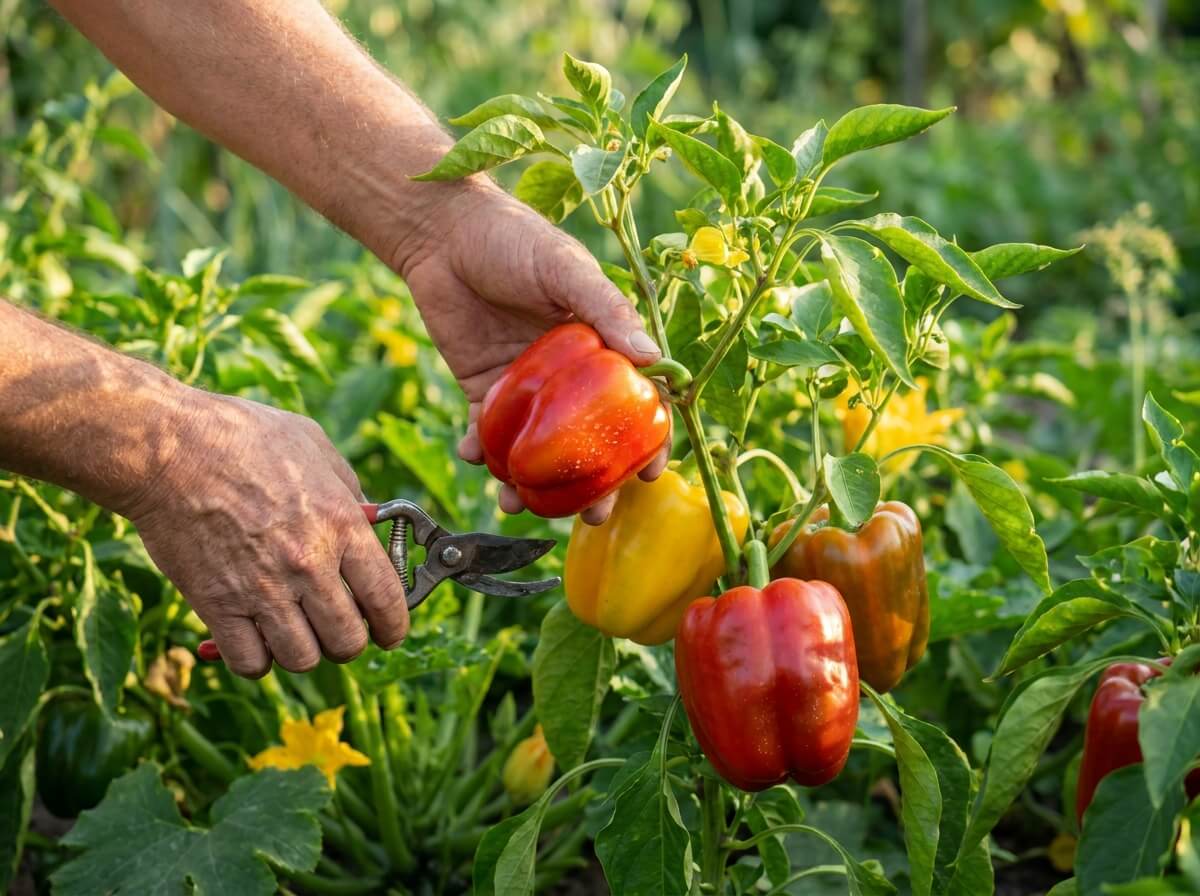
French beans, peppers, and cucumbers all drop flowers at soil temperatures above 32°C. Getting mulch down before a heatwave arrives — not during it — is what prevents flower drop. Reactive mulching once heat has arrived does help, but preventive mulching is dramatically more effective. For French beans, consistent moisture is especially critical during the flowering and pod-filling stages. It is bang on.
Root vegetables — carrots, beetroot, parsnips — do not show stress as dramatically above ground. Cracked, forked, or woody roots are the direct result of uneven moisture during development. Deep watering twice weekly keeps the soil profile consistently moist where they are actually growing.
Watering in the midday heat is the most common issue. You are watching the plants droop at 2pm and reaching for the hose.
Stop. Midday wilting in temperatures above 30°C is often temporary — a plant’s defensive response to reduce transpiration. It recovers by evening without watering.
The thing is, watering onto hot soil loses 40% to evaporation instantly. Wait until evening at the earliest; morning is better. Do not waste the water.
Watering overhead daily while leaving the soil underneath dry. The foliage looks refreshed.
The roots are in drought. That disconnect is where plants quietly decline. This method does not work. Skip it.
Applying mulch too thinly. A 2–3cm layer of straw is decorative, not functional.
Eight to ten centimetres is the minimum for meaningful thermal insulation and moisture retention. Yes, it is fiddly to get the depth right around delicate stems. Worth it.
Do it anyway — the difference in soil temperature is measurable with a £10 probe thermometer.
Mulching right against plant stems. Leave a 5cm gap around every stem to prevent collar rot, especially in cucurbits and peppers.
The mulch ring protects the soil; it should not be touching the plant.
Raised beds heat up significantly faster than ground-level beds — up to 15°C warmer at the soil surface on a hot day. This makes both deep watering and mulching even more non-negotiable.
A raised bed with bare soil in midsummer is essentially a slow cooker for root systems.
For raised beds, increase watering frequency by one session per week compared to ground-level beds. Apply a full 10cm mulch layer. And ensure coverage is consistent.
On the hottest days, a shade cloth — 30–40% shade — over the bed between 11am and 3pm reduces soil temperature further and can extend productivity by several weeks.
Containers present the sharpest challenge. Terracotta pots lose moisture through their walls and can heat to 50°C on the outer surface in direct sun. That is proper dodgy for roots.
Move pots to afternoon shade during a heatwave if possible. Double-potting — placing a planted terracotta pot inside a slightly larger pot with moist compost between the two — creates insulation and dramatically slows drying. Consider it.
Water container vegetables daily in high heat, deeply each time until water runs from the drainage holes. You need thorough saturation.
The 25 vegetables that resist drought and dry spells is useful if you are planning what to grow in a permanently hot or dry spot — some crops simply tolerate imperfect watering far better than others.
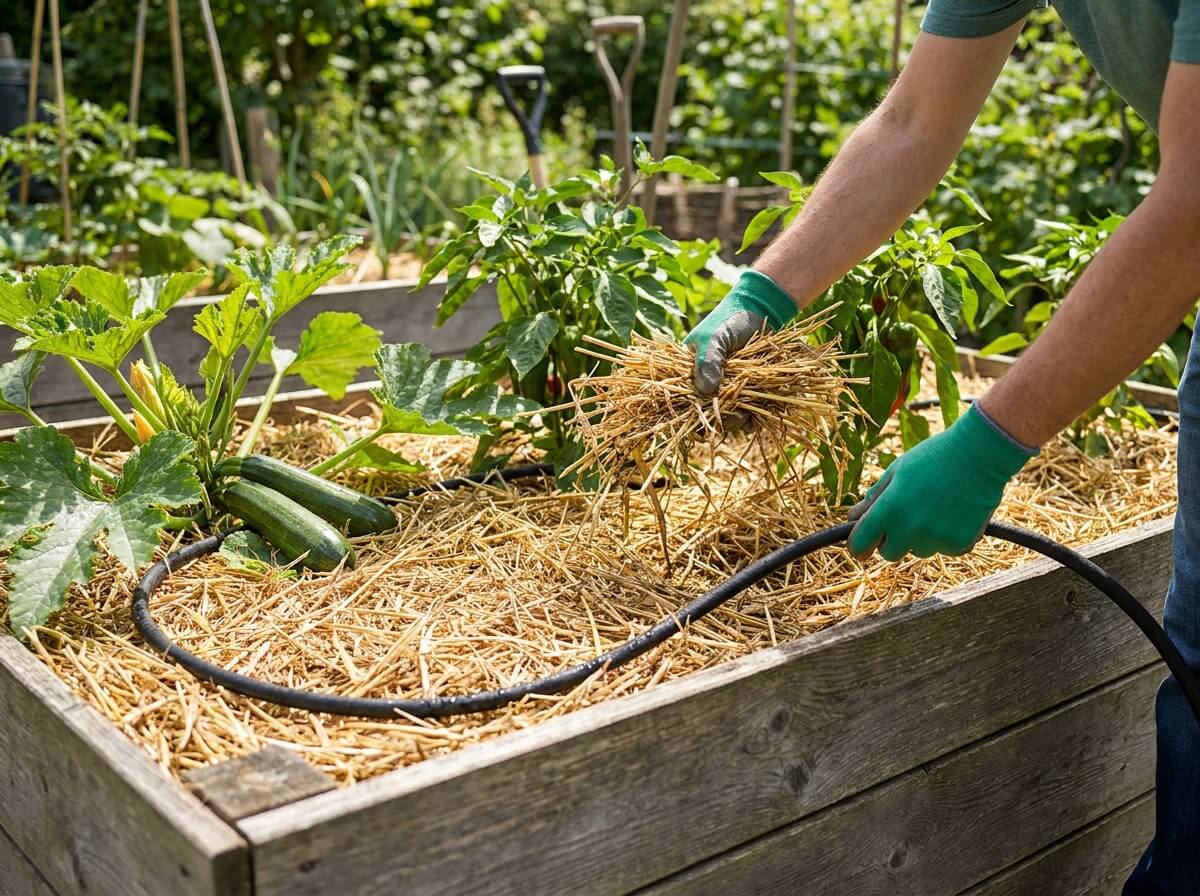
Smart tip: Always water before mulching — moisture locked under dry mulch does nothing for roots.
Push a finger or skewer into the soil 30 minutes after watering — if it is dry at 10cm depth, your watering session needs to run longer or flow rate needs to be lower to allow proper percolation. No guesswork.
Yes, though it is less common than underwatering. Overwatered soil stays waterlogged, excludes oxygen from roots, and promotes root rot. The symptoms look identical to drought stress, with wilting and yellowing. An unwelcome issue.
Check soil moisture at depth before each watering session rather than watering on a fixed daily schedule regardless of conditions.
Straw — specifically barley or wheat straw at 8–10cm depth — is the most practical and effective for most kitchen gardens. It combines low cost, good insulation, ease of application, and gradual soil improvement as it breaks down.
Water more frequently, but not more shallowly. Increase sessions from twice to three times per week, keeping each session long enough to reach 25–30cm depth, and apply or refresh mulch before temperatures peak. That is how you win.
Mulching is even more non-negotiable in raised beds than in ground-level beds, because raised beds heat up faster and lose moisture more rapidly. A 10cm mulch layer is the single most effective intervention for a raised bed in summer. Absolutely.