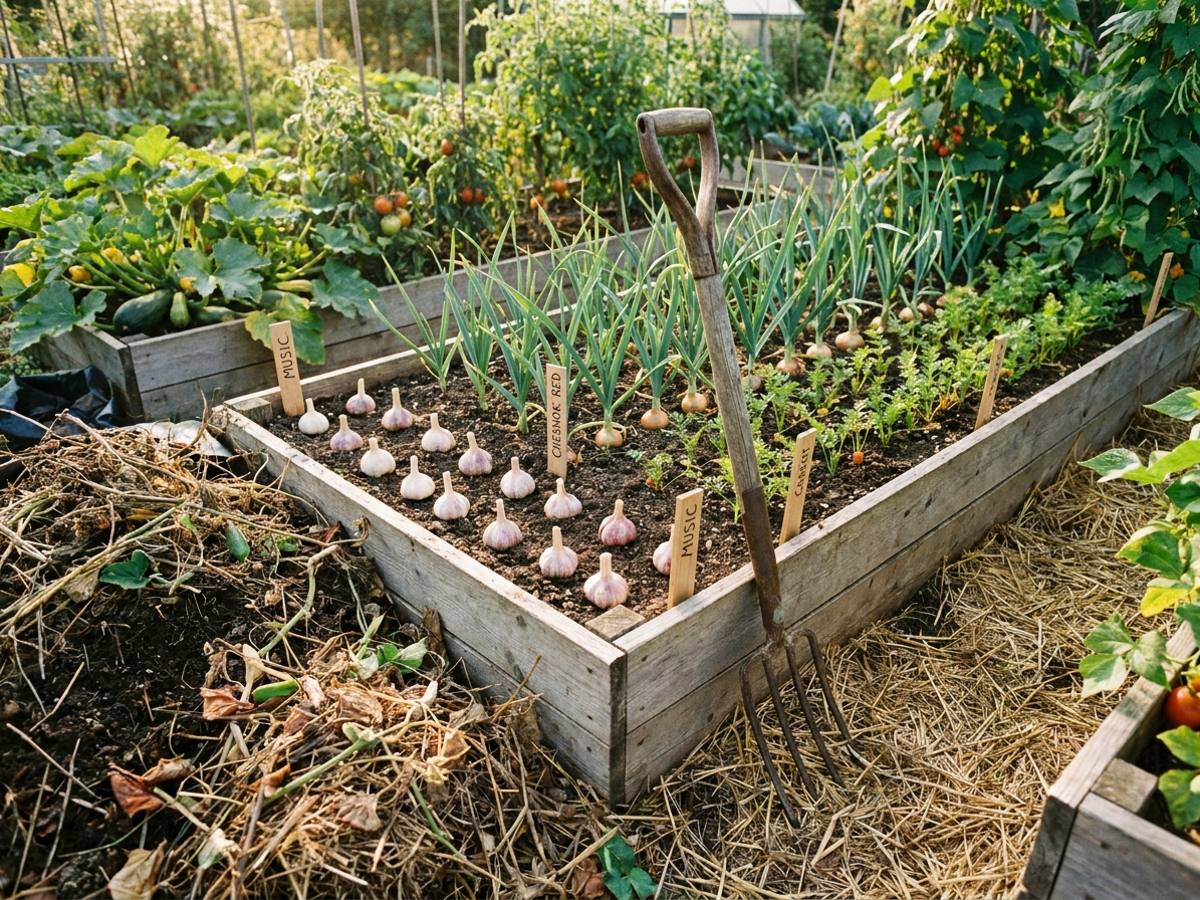
Forget autumn planting tradition. Smart gardeners across the UK and US are shifting garlic into the ground this month to dodge early autumn’s chaos, escape destructive pests, and claim beds before soil nutrients vanish. Late summer planting is no longer the exception, it’s becoming the rule among experienced growers tired of racing the calendar.
Late summer is the quiet month in most gardens. Harvests are winding down, summer pests are peaking, and soil temperatures remain warm enough for root establishment without the frenzy of autumn prep. Across both the UK and US, seasoned growers notice that early autumn beds become congested with competing tasks: autumn sowing, clearing summer crops, and fighting the season’s second wave of aphids and whitefly.
Delaying garlic planting until traditional autumn windows creates a cascade of problems. Soil depleted by summer cropping lacks the nitrogen and potassium cloves need for vigorous root systems before winter dormancy. Late plantings struggle to establish sufficiently, resulting in smaller bulbs come early summer harvest. Meanwhile, compressed autumn schedules mean rushed bed preparation, missed pest spraying windows, and garlic sometimes competing for space with winter brassicas.
UK growers face additional pressure from unpredictable mid-autumn frosts that can heave freshly planted cloves from warming soil. US gardeners, particularly in transitional zones (zones 5-7), report that late planting leaves cloves vulnerable to poor vernalisation, essential for proper bulb formation. Early planters avoid these risks entirely.
The article weighs several planting slots against one another. This table sets them side by side so you can see what each window offers and what it costs.
| Planting window | Root establishment | Main risk | Likely result |
|---|---|---|---|
| Late summer (first three weeks) | Maximum time to root before dormancy | Soil still warm, needs watering in | Strongest roots, fullest bulbs |
| Early autumn | Still adequate, but beds are crowded | Competing tasks and autumn rains complicating soil work | Acceptable, though the rush begins |
| Mid-autumn (the traditional window) | Reduced; soil depleted by summer cropping | Frosts heaving freshly planted cloves; rushed bed preparation | Smaller bulbs at early summer harvest |
| Late autumn to early winter | Too little time to settle in | Increased disease risk | Poor establishment |
| Mid-autumn in warm US zones 8-10 | Workable where frost is absent | Loses the head start of earlier rooting | Still better from late summer establishment |
Whichever window you choose, the pattern holds: the earlier the cloves root, the better the bulb.
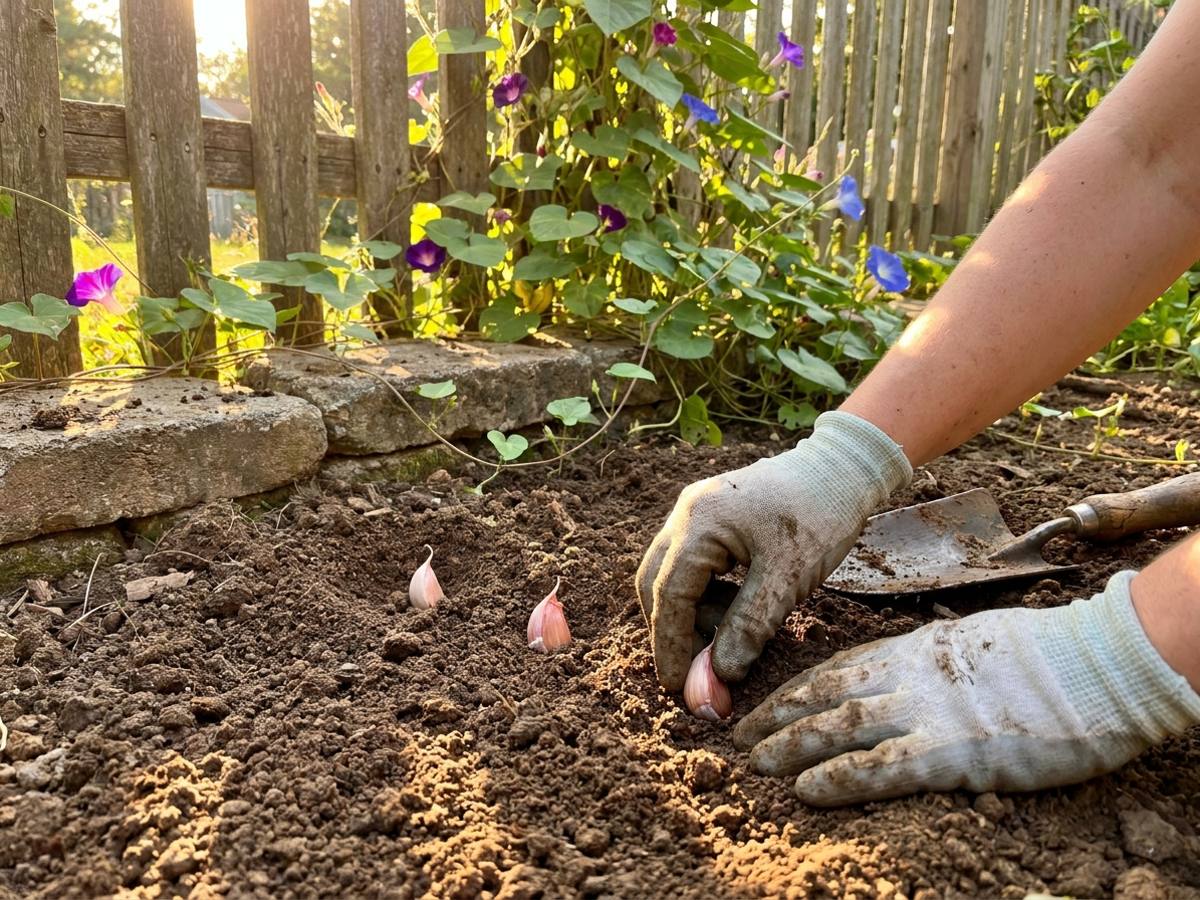
Start preparing now with these four essential steps:
Watch for germination within 2-3 weeks as soil temperatures settle. Autumn frosts will trigger dormancy, which is precisely what you want, freezing soil in place and preventing heaving. Come late autumn and early winter, your cloves will be quietly establishing roots whilst mid-autumn-planted neighbours are still dealing with settling soil and pest pressure. By spring, your early-planted garlic will emerge weeks ahead, commanding stronger root systems and fuller bulb potential.