August is the make-or-break month for late-sown squash. If you’re thinking about planting winter varieties now, here’s what actually ripened in my garden before the first frost, which varieties didn’t make it, and exactly how to time succession squash planting so you don’t waste seed or space on failed harvests.
In August, across the UK and northern US, gardeners harvest summer courgettes and clear spent beds. It’s tempting to fill that space with winter squash for autumn harvest. But here’s the problem: most winter squash varieties need 80 to 120 days from sowing to full maturity, and frost arrives much sooner than many of us anticipate.
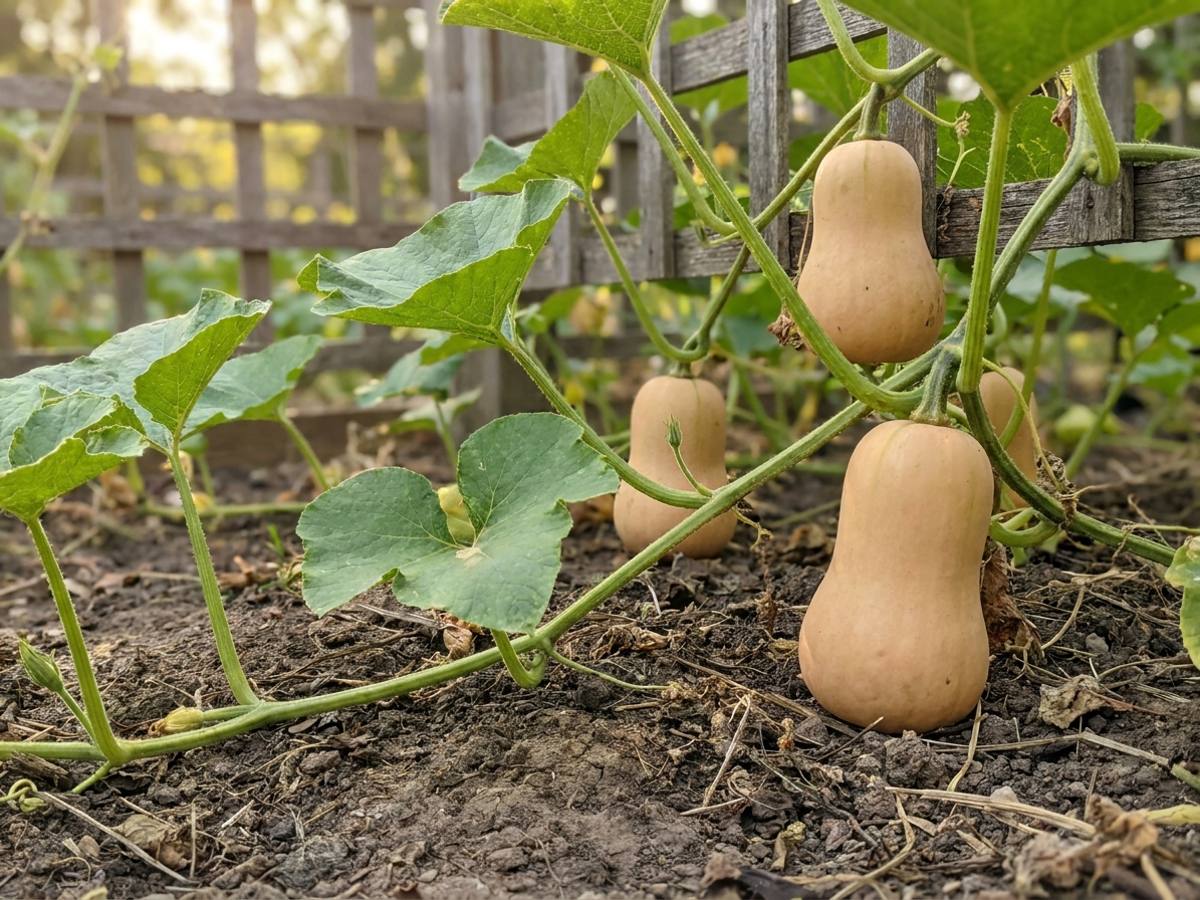
In mid-August 2025, I sowed three winter squash varieties directly into prepared beds: Butternut (a classic 90-day variety), Crown Prince (deep blue-grey, 100 days), and Queensland Blue (a shorter-season Australian heirloom, 70 days). I was gambling that an early autumn would give them enough time. It didn’t.
Queensland Blue ripened beautifully by late October, with three full-sized fruits ready to harvest before the first hard frost. Crown Prince produced two small fruits that never hardened fully; I pulled them in early November and stored them anyway, though they rotted within weeks. Butternut simply didn’t set enough fruit in time, and what did form remained pale and immature. The lesson was humbling: late August sowing works only for genuinely short-season varieties, and even then, you’re cutting it close.
All three varieties went into prepared beds on the same day in late summer, so the only real difference between them was how fast they mature. The gap in results was stark.
| Variety | Days to maturity | Outcome from a late-summer sowing | When picked |
|---|---|---|---|
| Queensland Blue | 70 days | Ripened well: three full-sized fruits before the first hard frost | Mid-autumn |
| Crown Prince | 100 days | Two small fruits that never hardened; rotted within weeks in store | Late autumn, too early |
| Butternut | 90 days | Too little fruit set; what formed stayed pale and immature | Nothing worth picking |
Late-summer sowing only pays off with genuinely short-season varieties, and even then the margin is thin.
If you’re serious about succession squash, follow these steps now:
Monitor your plants for powdery mildew, which thrives in damp autumn conditions and will stop ripening dead. Remove lower leaves to improve air circulation. As October approaches, stop watering the leaves and focus water directly on soil. Begin hardening fruit off by exposing skin to full sunlight once they reach full size, even if they haven’t fully coloured. This helps the skin cure and store longer.