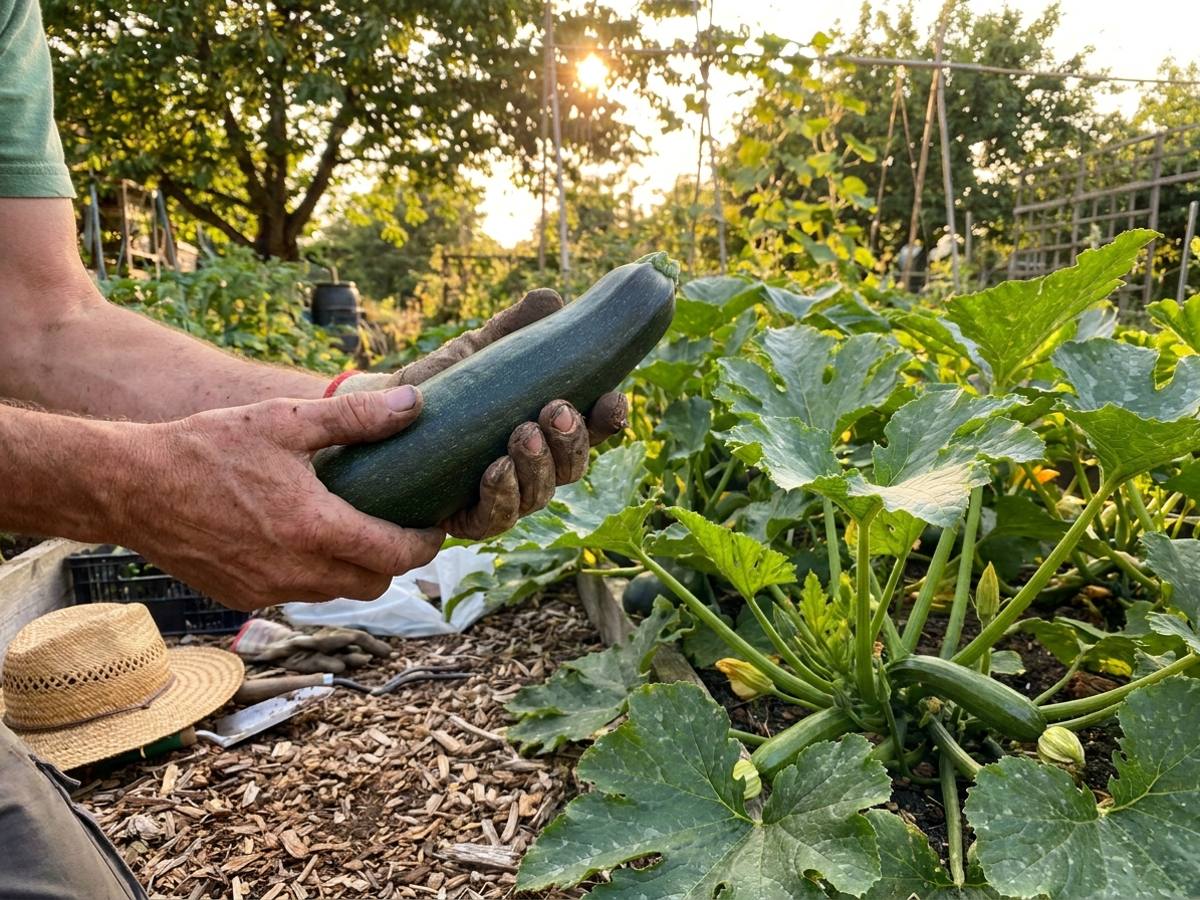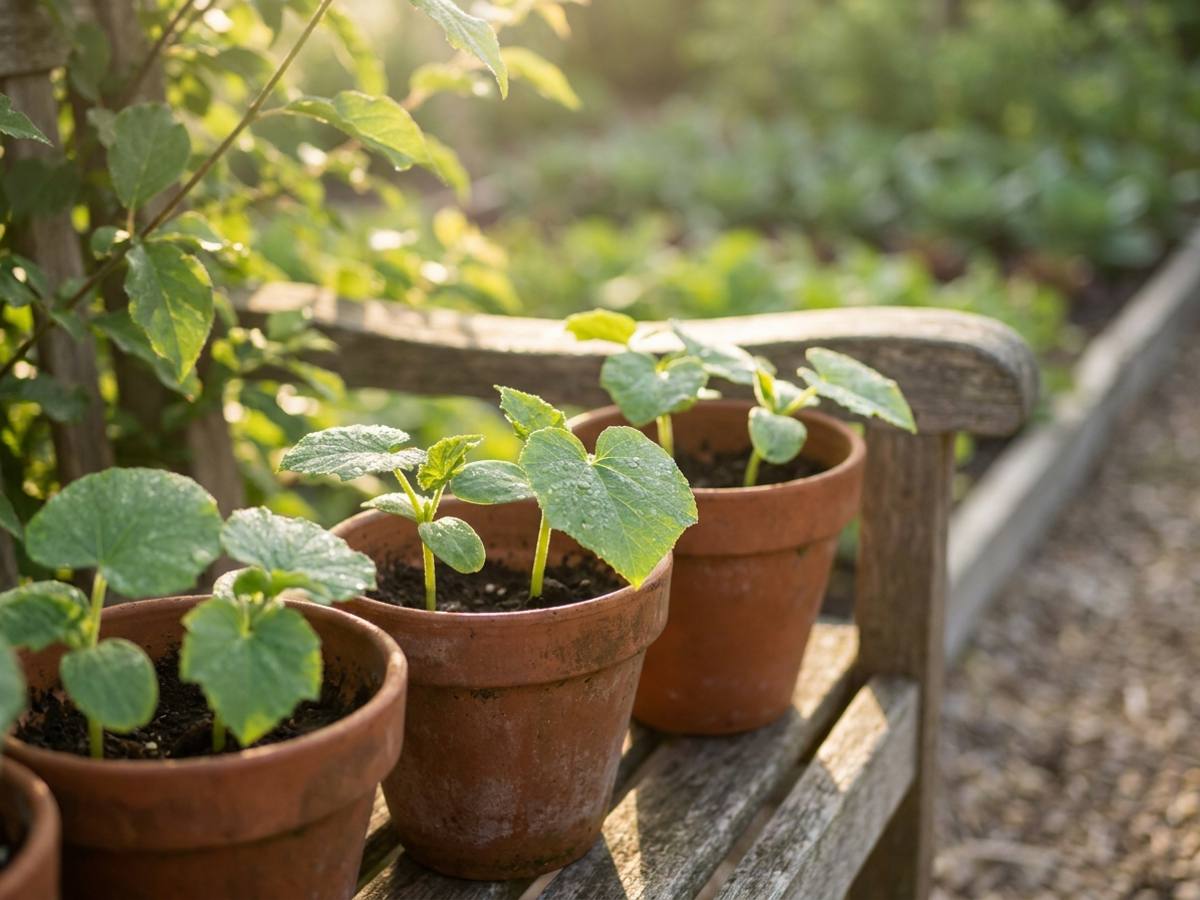
Most gardeners think midsummer and late summer are too late to sow squash. I planted courgettes and winter squash anyway, and three months later, I’m harvesting bowlfuls. Here’s what actually happened, week by week, and why you might want to do it too.
By late summer, British and American gardeners are deep into maintenance mode. First sowings of courgettes and squash are already productive, the seed catalogues are gathering dust, and the common wisdom says: it’s too late. But late summer heat is relentless, day length is still substantial, and the first frost is still 12 to 16 weeks away, depending on where you garden. That’s a longer window than most of us think.
Late-season squash crops have genuine appeal. Your first plantings are often exhausted by midsummer, succumbing to powdery mildew or simply running out of vigour. A fresh flush of plants established in midsummer will produce clean, disease-free fruit through early autumn and mid-autumn, landing exactly when you want them for storage and cooking. The plants also face less pest pressure because many squash vine borers and cucumber beetles have already moved on.
Variety choice matters here. Fast-maturing types like ‘Tromboncino’ courgettes or ‘Delicata’ winter squash work far better than slower cultivars. I selected three varieties with maturity dates between 50 and 65 days, calculated from planting to harvest. That timing proved critical.
The steps are straightforward, but timing and soil preparation make all the difference:
From sowing to the first frost watch, a midsummer squash planting moves through a predictable sequence. Here is what each stage asks of you.
| Stage | When | What to do |
|---|---|---|
| Sowing | midsummer to late summer | Sow direct rather than indoors: warm soil germinates faster and roots are not disturbed |
| Spacing | at sowing | 3 cm deep in clusters of three, 90 cm apart for courgettes, 1.2 m for winter squash |
| First three weeks | late summer | Water consistently; irregular watering causes blossom end rot and split fruit later |
| Germination and thinning | 7 to 10 days after sowing | Thin each cluster to the strongest seedling once growth is established |
| Feeding | from the first true leaves | Feed weekly with a balanced fertiliser or diluted seaweed solution |
| Growth slows | early autumn | Expect noticeably slower growth as temperatures drop; this is normal |
| Frost watch | mid-autumn | Keep fleece handy and harvest green fruit if hard frost is forecast; it ripens in a warm kitchen |
Read against a first frost 12 to 16 weeks away, that sequence leaves room for a full late crop.
Watch for germination within 7 to 10 days. Once the first true leaves appear, feed weekly with a balanced fertiliser or diluted seaweed solution. As temperatures drop in early autumn, growth will slow noticeably, but that’s normal. The real test comes in mid-autumn when frost threatens. Keep fleece handy, and be prepared to harvest green fruit if a hard frost is forecast; it ripens indoors in a warm kitchen.