The single most common reason a citrus tree refuses to set fruit in summer is not disease, poor soil, or bad luck. It is the watering routine.
Specifically, how often versus how deeply. Millions of healthy-looking trees are quietly failing right now because their roots never get what they actually need — and fixing this issue takes about five minutes of rethinking, not five products.
Shallow watering every day trains citrus roots to stay near the surface, where soil temperatures in summer can climb past 40°C (104°F). Those shallow roots then bake.
The tree responds exactly like a drought-stressed plant — because it is one, despite being watered constantly.
The result looks confusing from the outside:
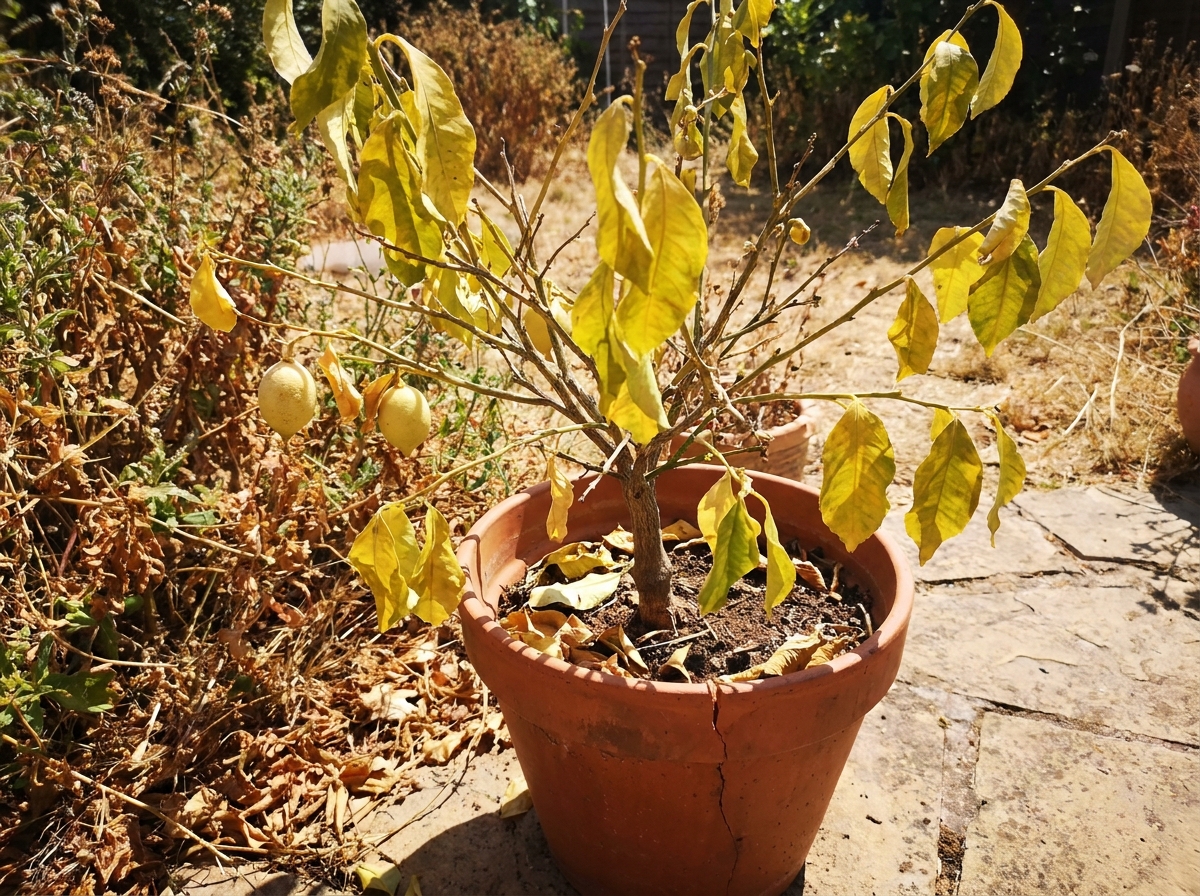
And here is the counterintuitive part — overwatered citrus and underwatered citrus look almost identical at first glance. Both yellow.
Both drop fruit. The difference is in the roots, not the leaves.
A cheap moisture meter pushed 10cm down into the soil tells you far more than the surface ever will.
Left uncorrected through summer, chronic shallow watering produces a tree that fruits erratically at best and fails completely at worst. A citrus under sustained hydric stress can abort its entire fruit load in under 72 hours — the tree simply decides reproduction is not worth the energy cost. That is dodgy behaviour, pure and simple.
Roots that have stayed shallow all season also become structurally weak. By autumn, even a moderate dry spell will knock the tree back harder than it would have otherwise.
Potted trees are especially vulnerable — terracotta and dark plastic pots sitting in direct sun can push root-zone temperatures to levels that damage feeder roots permanently.
For those nurturing citrus in pots, this issue compounds fast. A 30-litre pot in full sun on a warm patio can lose moisture from the top 5cm within hours, while the lower two-thirds stays bone dry. You see damp soil. The roots see desert. But it is simply not quite right. See also: citrus trees dropping fruit in summer — here is why for the full picture on stress-triggered drop.
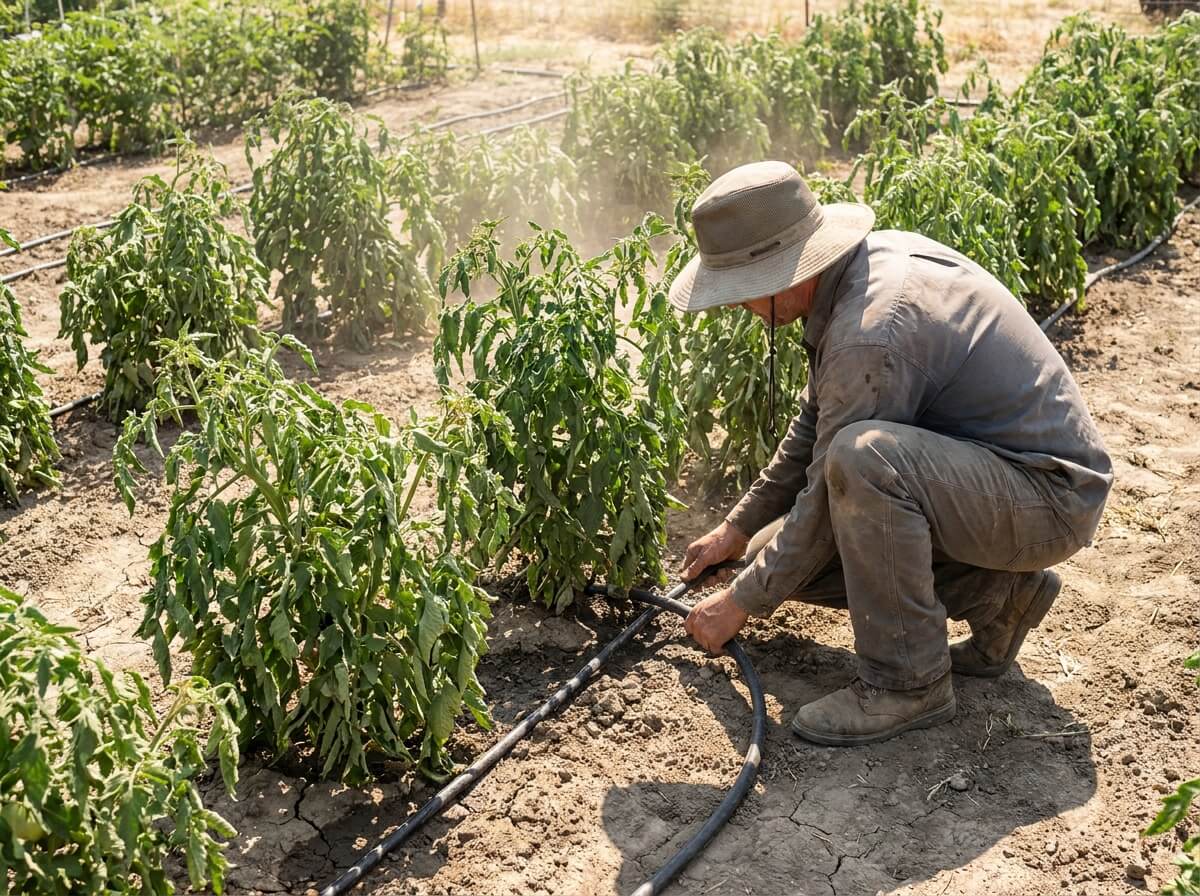
Stop daily watering. Replace it with two deep watering sessions per week — each one running 20 to 25 minutes slowly at the base of the trunk, not sprayed over the leaves.
The goal is to wet the full root zone, not just the top layer. So, this is non-negotiable. You want water reaching 25 to 30cm down.
Between sessions, let the top 3cm of soil dry out before watering again. That drying period forces roots downward in search of moisture — exactly where temperatures stay stable and soil stays cool.
Yes, it is a small adjustment. Worth it. But the difference in fruit retention by late summer is night and day.
Watering stress rarely announces itself cleanly. Watch for these less obvious cues alongside the obvious yellowing:
If your lemon tree has also stalled on growth entirely, the watering issue and a growth pause often go hand in hand — your lemon tree has stopped growing — here is what it is telling you covers that specific situation in detail.
Limes are the most sensitive of common citrus to hydric stress — lime trees with tiny fruits that keep falling off often trace back to exactly this mistake.
Southern Hemisphere gardeners: this applies to your December and January — your peak citrus stress season.
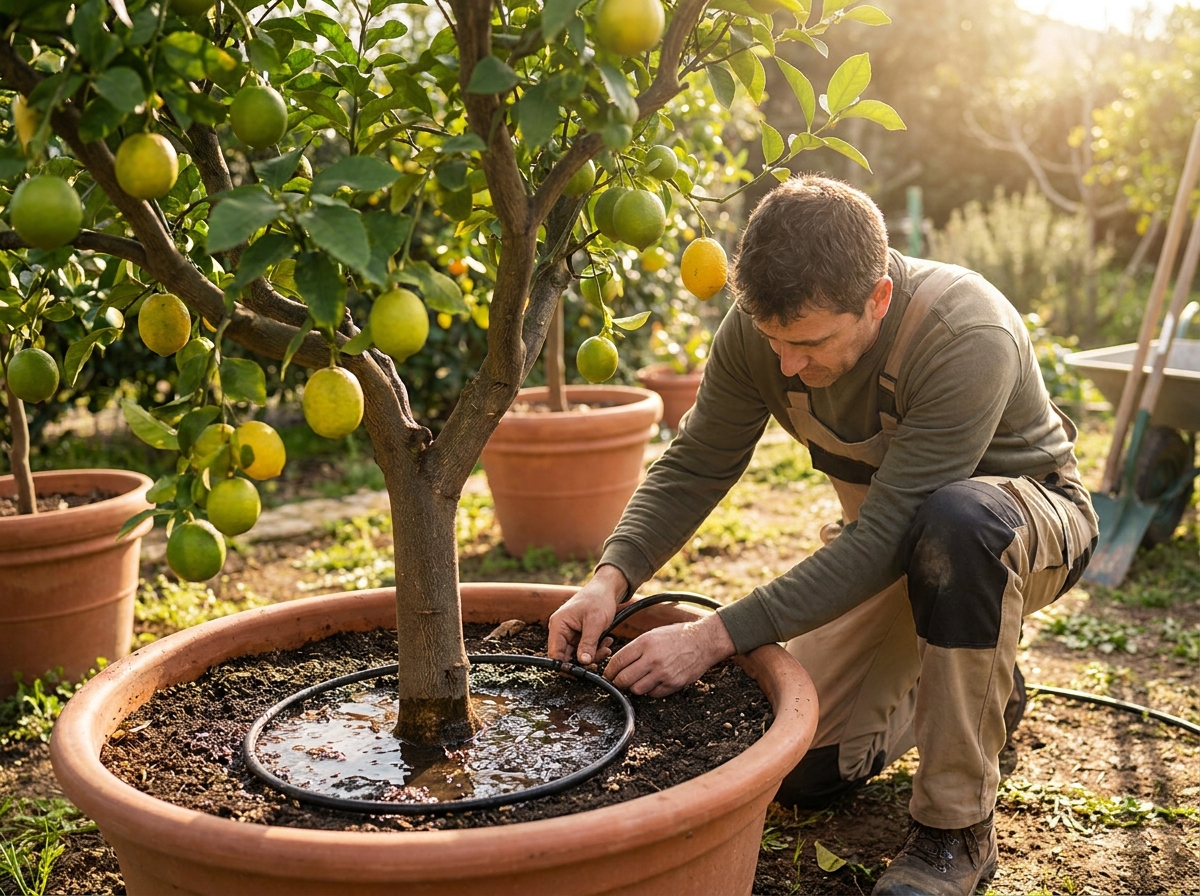
Insider Secret: Water citrus deeply twice a week, not shallowly every day — depth is non-negotiable over frequency.
Push a finger or moisture probe 10cm into the soil. If it is dry at that depth, water deeply now.
If it is still damp, wait another day before checking again.
Morning is strongly preferable — evening watering leaves foliage damp overnight, which encourages fungal issues. Water before 8am whenever possible.
First, try moving the pot out of direct afternoon sun and adding a thick bark mulch layer. If the pot itself is small or dark, consider repotting into a larger, light-coloured container — that solves the issue at the root.
Yes. El Niño conditions push temperatures higher and rainfall patterns become less predictable — meaning your usual watering schedule may need adjusting earlier than expected. Check soil moisture more frequently during heatwaves rather than sticking to a fixed routine.