Right now, in peak summer heat, green beans in pots are producing faster than almost any other container crop — but the window is brutally short. Pick every 3 days or the plant shuts down flowering entirely. Fail to keep that rhythm and you will not get a second flush. Be bang on with that timing, resow immediately, and you can keep harvesting well into early autumn.
Green beans — whether you call them French beans, string beans, or haricots verts — are warm-season legumes that hit maximum productivity when soil temperatures sit between 18°C and 27°C (65–80°F). In containers, which heat up faster than open ground, that window arrives earlier and burns harder.
The plant’s biological drive is relentless: produce seed. Every pod you leave on the plant past its prime signals to the plant that its reproductive mission is accomplished.
Flowers stop. New pods stop forming.
The whole machine winds down in as little as 5 days in hot weather.
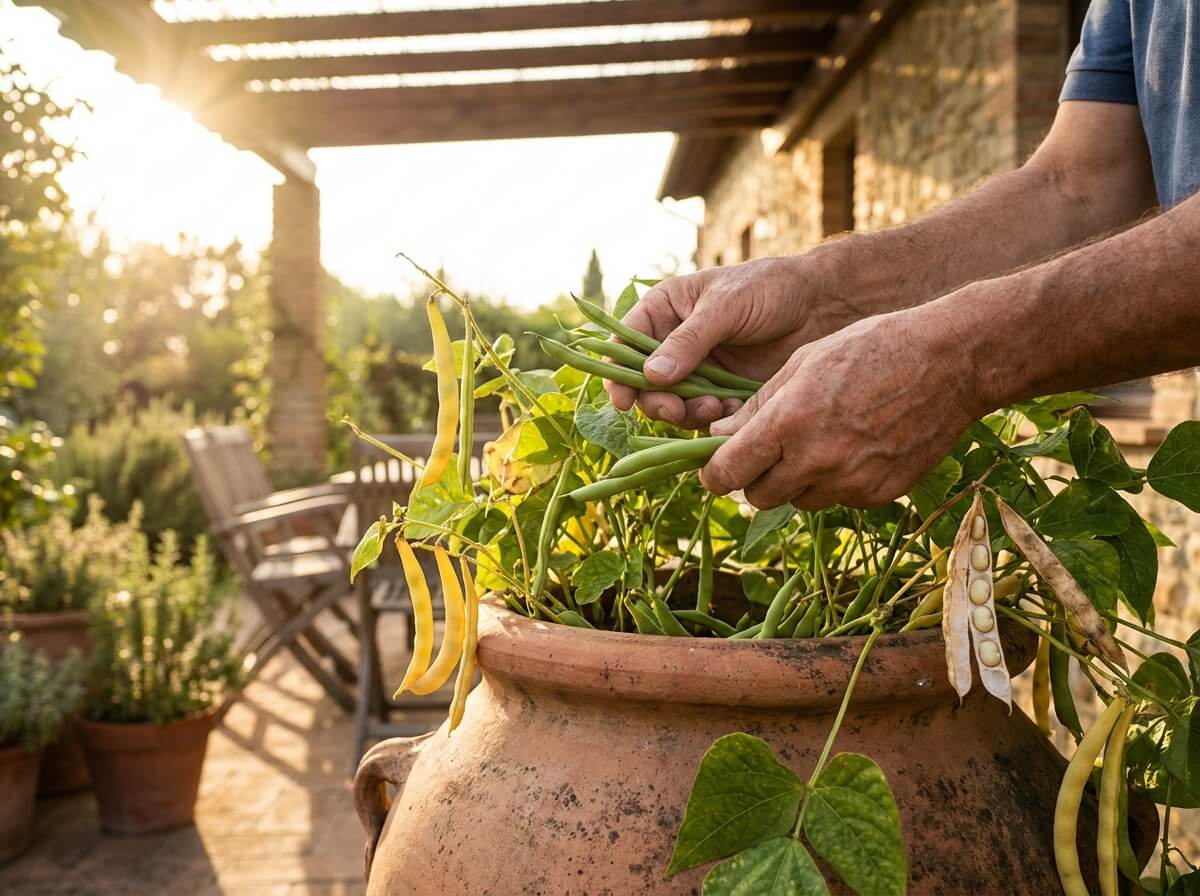
Pods are at their optimal eating peak when they snap — literally, an audible crack at about 10–12cm (4–5 inches) long. Bend one gently at 6am when the air is still cool enough to hear clearly.
That clean snap? Pick the whole plant today.
Skipping even one picking cycle in midsummer does not just give you a few tough pods. But it collapses the entire production cycle for that plant. Within a week, flowering stops, existing pods go fibrous and bitter, and the plant redirects all energy into seed maturation rather than new growth.
Pot-grown beans are acutely vulnerable because root volume is limited — the plant has less reserve energy to restart a flowering cycle once it is committed to seed production. An in-ground bean can sometimes recover. But a container bean rarely bothers.
Neglected pods also become a pest magnet. Overripe beans split at the seam and attract aphids overnight. For everything you need to know about growing French beans from sowing to harvest, that guide covers the full cycle — but right now, harvesting is the action that matters.
Set a reminder on your phone. Every 3 days, pick everything over 8cm long.
Everything. Even pods you do not need in the kitchen — give them away, compost them, freeze them.
The rule is non-negotiable in summer heat.
Then do this immediately alongside picking:
The thing is, succession sowing is the entire secret to non-stop summer harvests. This practice is covered in depth in this guide to succession planting in the kitchen garden. Sow now and your second batch peaks just as the first plants exhaust themselves.
Yes, it is fiddly to pick that often. Do it anyway — the difference between a 3-day picker and a weekly picker is night and day in total yield.
Catch these early and you can usually push the plant back into production with aggressive picking and a liquid feed within 48 hours.
Container vegetables in general need sharper attention during heatwaves than most gardeners properly realise — the science of deep watering and mulching in summer heat explains exactly why pot compost behaves differently from open soil when temperatures spike. And for beans specifically, surface dryness is misleading — the top 2cm can look moist while the root zone is bone dry.
Southern Hemisphere gardeners: this applies to your early winter–midwinter peak summer season.
Smart tip: Pick at 6am when pods are turgid and cool — they snap cleanest and you will judge ripeness accurately every time.
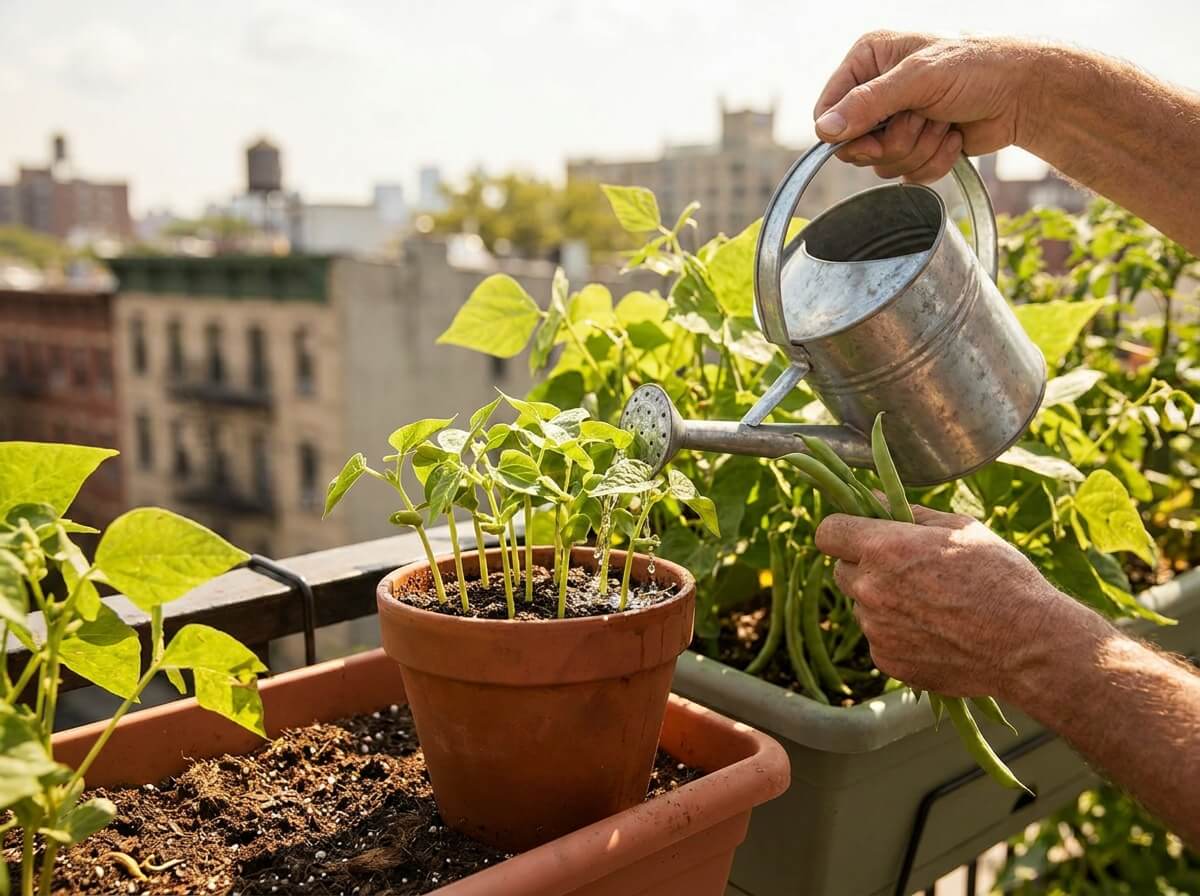
Every day without exception when temperatures exceed 22°C (72°F). Pots lose moisture dramatically faster than open ground — check by pushing a finger 3cm into the compost; if it feels dry, water now, not tonight.
Yes — bush varieties like ‘Delinel’ or ‘Safari’ reach harvest in 50–55 days from direct sowing, so a sowing right now gives a proper second crop before first frost in most temperate climates. Sow 6 seeds per 30cm pot, 3cm deep.
Almost certainly heat stress above 32°C triggering flower drop. Move the pot to a spot with afternoon shade, water deeply, and flowers set again within a week once temperatures moderate slightly.
Standard potting compost runs out of easily available nutrients in about 4–6 weeks — by midsummer, your beans are starving. Switch to a weekly liquid tomato feed (high potassium) from first flowering onwards.