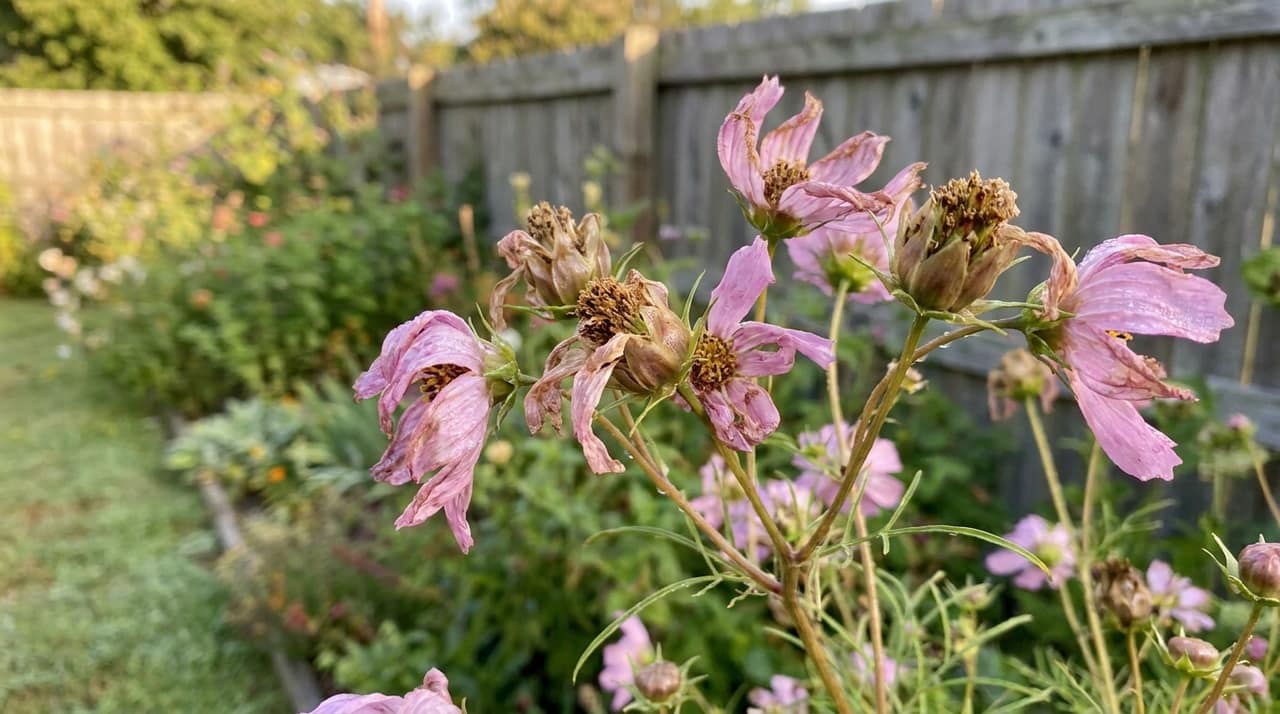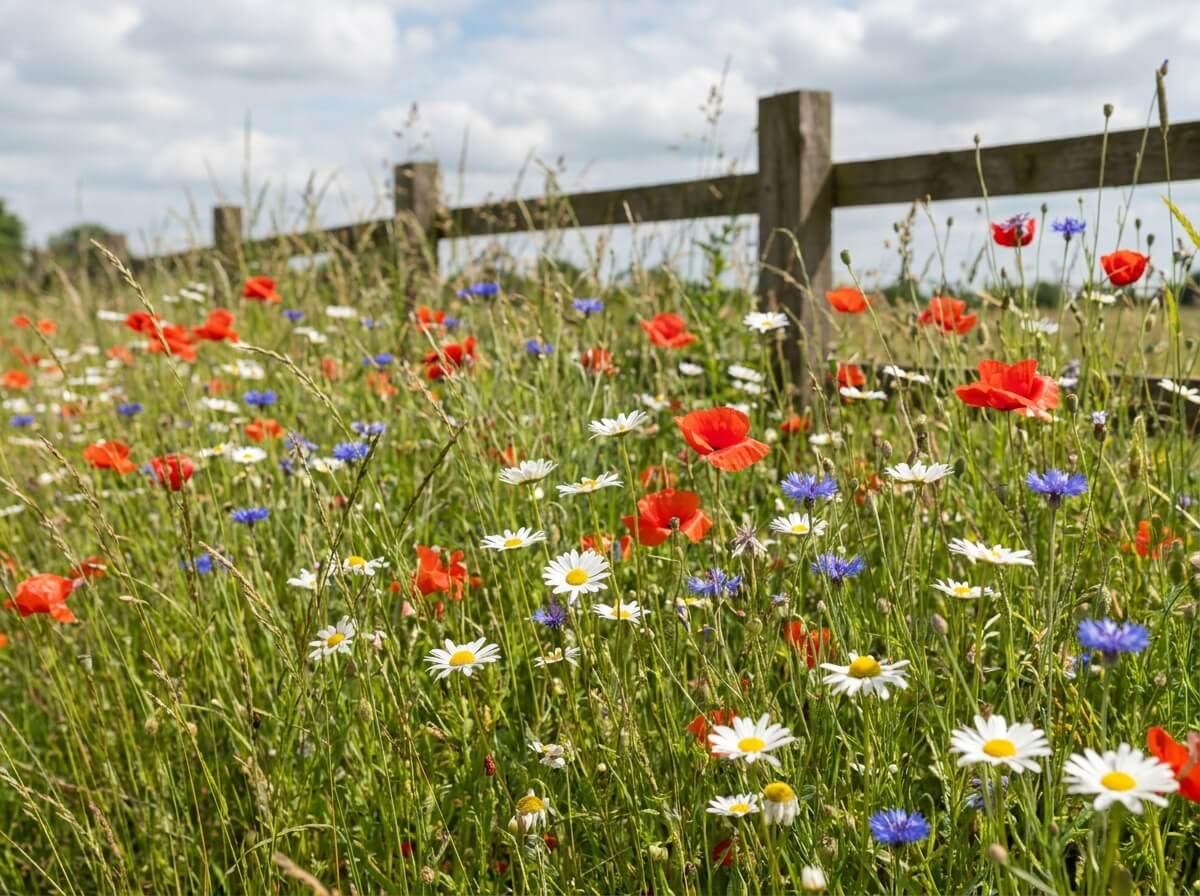
Your lawn is already hiding a wildflower meadow. Right now, in peak summer heat, native seeds — ox-eye daisies, field poppies, self-heal, bird’s-foot trefoil — are sitting dormant in your soil, suppressed by weekly mowing.
One precise cut-and-stop technique, taking under a minute to set up, is all that separates a flat green rectangle from the most striking garden moment of the season.
Summer is the ideal trigger point. The soil is warm, light levels are long, and wildflower seeds respond to exactly these conditions.
Many gardeners assume a wildflower meadow requires buying seed mixes, digging up turf, or starting from scratch in autumn. Forget all that.
Your existing lawn almost certainly already contains dormant native seed from previous decades of growth — buried, waiting. Research from the RHS on wildflower meadows confirms that stopping mowing on even a small section is enough to trigger genuine meadow growth without any additional sowing.
The key is soil poverty, not richness. Wildflowers evolved on thin, low-nutrient ground.
A regularly fertilised lawn actually suppresses them — coarse grass wins every time in fat soil. Stop feeding the patch you want to convert.
Immediately. The soil must become properly poor, not just lean.
You lose the window. Summer wildflower growth peaks between now and early autumn.
Miss this period and dormant seeds return to stasis for another full year.
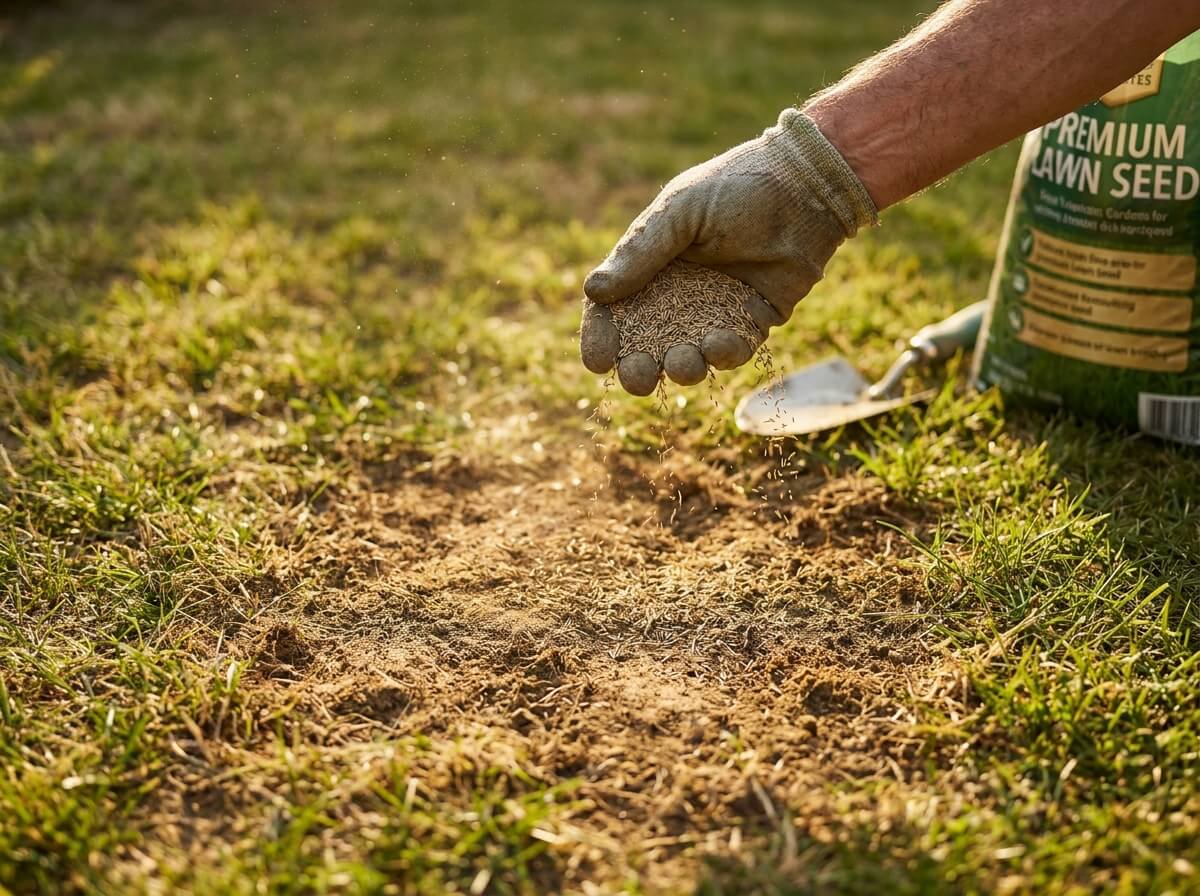
There is also the lawn itself to consider. If your grass is going brown in the summer heat, a meadow patch actually looks intentional and beautiful where stressed monoculture grass just looks tired. And if you are finding bare patches spreading across your lawn this summer, converting one of those sections to meadow is the most satisfying reframe possible — you turn an issue into a feature.
Ecologically, the cost of doing nothing is real. A uniform mown lawn produces near-zero nectar. A 2m² unmown patch in full summer flower produces enough to feed hundreds of pollinating insects daily, according to Plantlife’s No Mow research.
Choose your patch. Anywhere from 2m² upward works.
South or west-facing spots are ideal — maximum sun, thinner soil where grass already struggles slightly.
Now do this:
That is it. The mown border is the gesture that changes everything.
So, it signals intent. It frames the wild area as a design decision, not an accident.
By week three you will see seedlings shoot up. By week six, in full summer sun, the first ox-eye daisies open — papery white, about 60cm tall, moving in the faintest breeze.
They smell faintly of warm straw at midday. Yes, it is fiddly. Worth it.
If your lawn is already pushing toward being a meadow and you are looking for long-term alternatives, climate-proof alternatives to traditional grass lawns are worth exploring once you have seen how the meadow patch performs this season.
Not all growth is equal. Knowing what success looks like does wonders for preventing you from second-guessing the process.
Ignore dandelions in the first month. They are temporary pioneers, not quite the final community.
The wildflowers follow behind them once light reaches the soil surface properly.
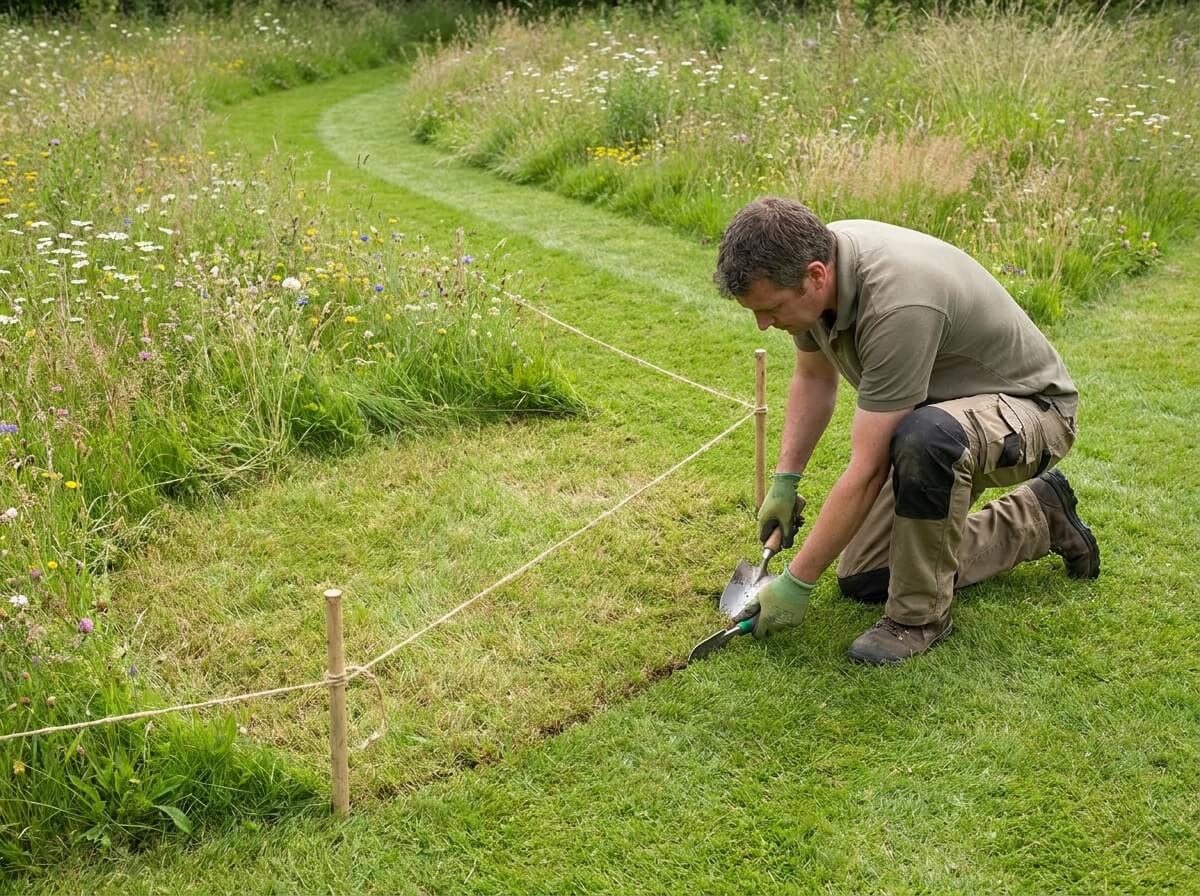
Smart tip: The mown border around your meadow patch is as non-negotiable as the meadow itself — it is what makes it look designed.
Not necessarily. Most established lawns already hold dormant native seed in the soil.
Simply stopping mowing and pulling off fertility gives them the conditions to germinate on their own.
2m² is genuinely enough to produce visible results and support pollinators. But bigger is better, certainly.
Wait until late summer or early autumn — after all flowers have set seed. Cut to about 8cm, then pull off all the cuttings so nutrients leave the soil rather than returning to it.
Southern Hemisphere gardeners: this technique applies to your spring (September–October), when soil temperatures match the northern summer conditions described here. Use locally native species mixes — avoid European wildflower packets, which can become invasive.