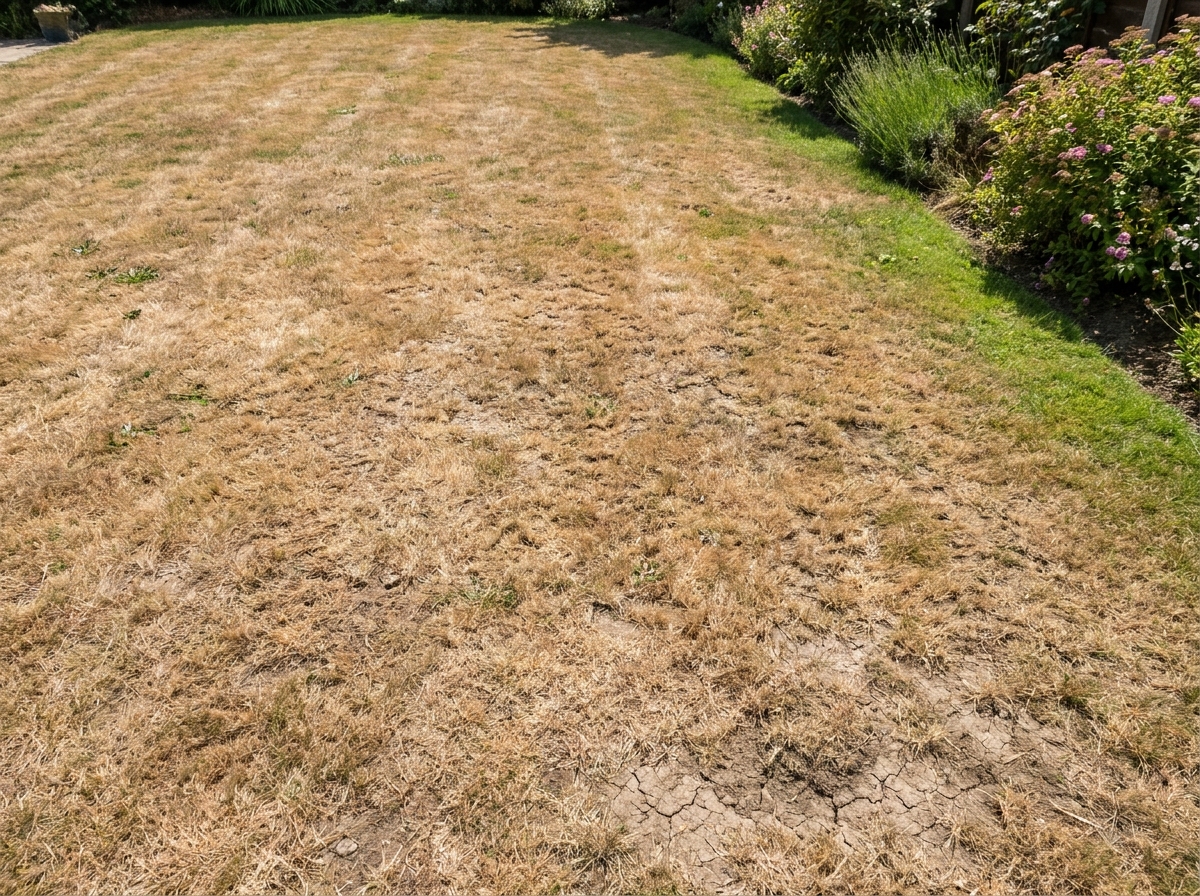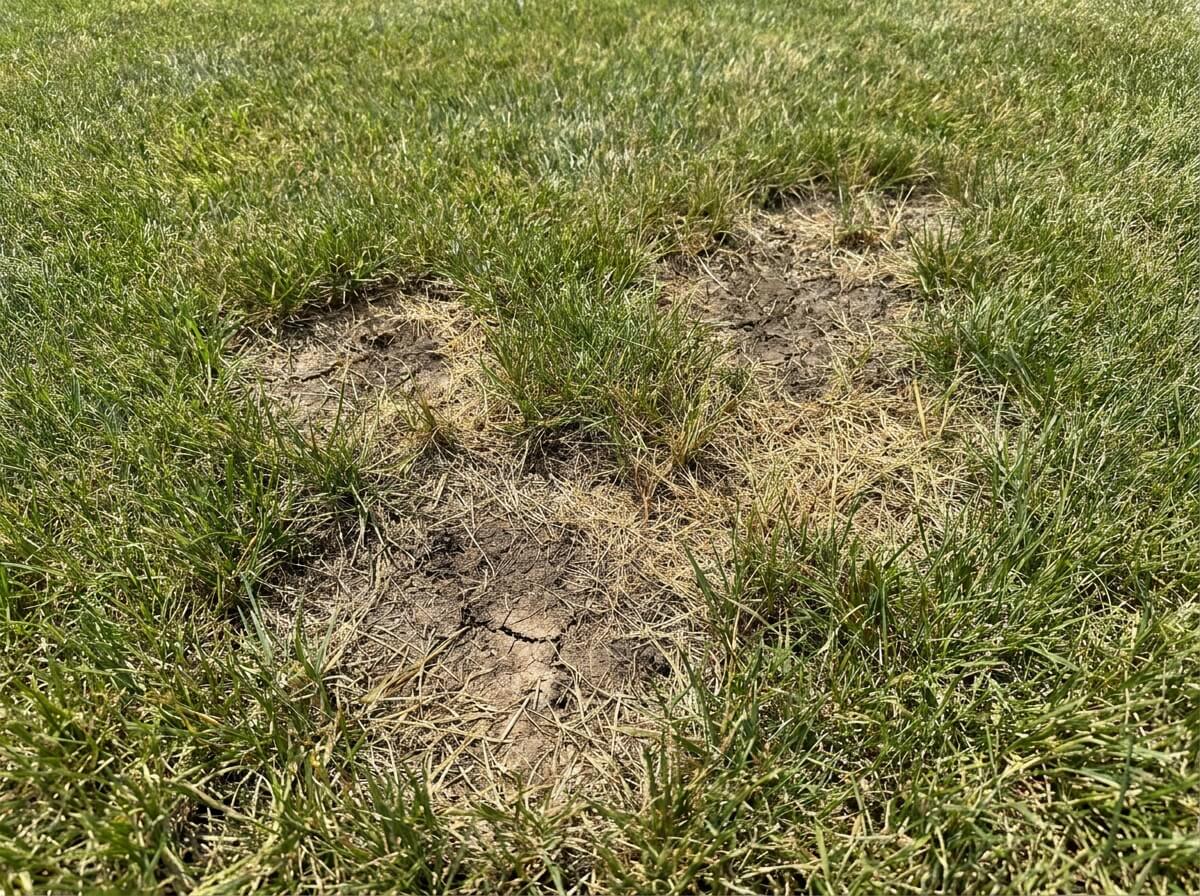
Bare patches spreading across your lawn this summer **aren’t** random. Each one has a specific cause. And patching it without finding that root cause? That means the same bare spot **is back** within weeks. Non-negotiable.
Identify the culprit first. Fix the underlying **issue**. Then repair. In most cases, you’ll have new grass establishing within a **fortnight**, perhaps twenty-one days, once **you’re doing** this properly.
The four main causes look almost identical on the surface. That’s where most gardeners go properly wrong. Drought stress, soil compaction, lawn pest damage, and dog urine burns all produce a dead-looking patch of pale or missing grass. But each one demands a completely different, specific response.
Press your finger firmly into the bare area. If the soil feels like packed clay or solid ground, compaction’s the culprit. This is proper common under children’s play areas, regular foot traffic paths, or anywhere a garden chair sits all summer. If the patch lifts slightly, feels hollow underneath, or you can pull the dead grass up like a loose carpet? Then suspect leatherjackets (crane fly larvae) or chafer grubs munching the roots below soil level. And a sharply defined, almost circular patch with bleached yellow edges nearly always points to dog urine. So a diffuse, spreading paleness that follows the driest areas of your garden? That’s drought, pure and simple.
Each one needs a different starting point. **Don’t** skip this diagnosis. It’s the step that sorts the lawn out, bang on.
Bare soil **doesn’t** stay bare. Full stop. Weeds — particularly annual meadow grass (Poa annua), plantain, and clover — colonise open soil within a **fortnight** in summer warmth. Once they’re established, they’re significantly harder to **pull off** than patching the grass would’ve been.
Compacted bare patches also shed water instead of absorbing it. If **you’re** already dealing with lawn water loss — check out how your lawn loses water every day this summer — a compacted bare patch makes the **issue** actively worse. Essentially, **you’re creating** a run-off zone that dries out surrounding grass, too.
And if the cause is a pest? Doing nothing means the colony spreads, like wildfire. A 30cm patch caused by chafer grubs **can’t help but** double in size over a mere four weeks.
Once you’ve identified the cause, **here’s** how to act.
For reseeding any patch, loosen the top 2cm of soil. Apply a thin 5mm layer of topsoil or fine compost. Scatter seed at roughly 35g per square metre. Then firm gently with your foot. Water twice daily — morning and early evening — for the first 10 days. Simple. Sorted.
At soil temperatures above 12°C — **that’s** standard in a northern hemisphere summer, mind you — germination often starts in a mere 7 to 10 days.
Yes, **it’s** fiddly. A bit much. **It’s** worth it, though. Do it anyway; the difference between a properly patched lawn and a completely weed-infested one by autumn comes down entirely to what you do this week. Get it sorted.
Also: avoid mowing repaired patches too short too soon. New grass needs to reach at least 7cm before its first cut, and even then, you only take the top third. **Don’t** push your luck.
Patches that reappear in exactly the same spot each year almost always signal a persistent underground **issue** — a buried builder’s rubble layer, a shallow compaction pan, or a recurring pet route. Note the location, then investigate deeper next time. Simple.
The RHS lawn problems guide is a solid reference for diagnosing unusual patch shapes. And the University of Minnesota Extension has particularly thorough guidance on grub identification for North American gardeners.
Southern Hemisphere gardeners: bare patch repair from pest or compaction causes applies year-round, but seeding is better saved for your spring (September–October).
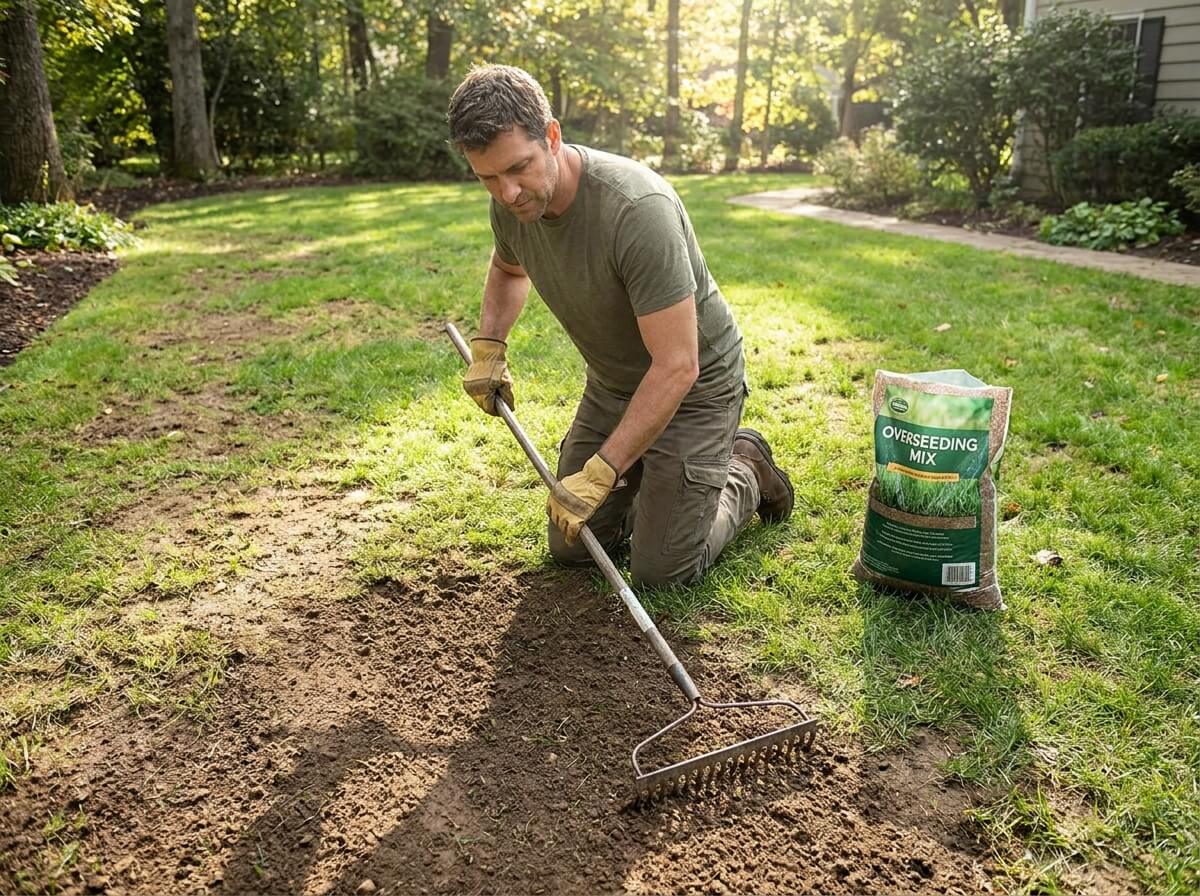
Pro tip: Always diagnose before you reseed — the cause dictates the fix, every time. No exceptions.
Yes, but **you’ve got to** protect new seed from drying out — cover lightly with compost and water twice daily. Soil temperatures above 12°C support germination. But heat above 30°C can kill seedlings before they establish.
Pull the dead grass. If it lifts cleanly with properly detached roots, and you find grey-brown legless grubs just below the surface, leatherjackets are your culprits. You’ll apply nematodes between late summer and early autumn for best results.
Rarely without help, **let’s be bang on about it**. Drench with water to dilute the nitrogen. Then scarify and reseed. Untreated, the nitrogen-scorched soil simply stays hostile to grass regrowth for weeks. It simply **won’t** fix itself; you’ll need to sort it.
Germination typically takes 7–14 days. Full visual blending with surrounding grass, though, often takes 6–8 weeks — particularly if the new seed variety differs even slightly from your existing lawn. Be patient, **it’s proper gardening**.