You’ve been told to wait for autumn. But the soil under your feet right now is warmer than it’ll be in months — and warm soil sprouts grass seed twice as fast.
The trade-off is water. Keep the surface damp and this season delivers green coverage in 5 to 10 days, often before the worst heat arrives.
Here’s how to do it properly.
Grass seed doesn’t care about the calendar. It cares about soil temperature.
Most lawn grasses germinate fastest between 18 and 25°C — exactly where summer soil sits right now.
Autumn feels safe because it’s cooler and wetter. But cooling soil and shrinking daylight slow everything down.
Seed sown in October can sit for three weeks before it moves.
Warm soil plus long days is the fastest germination window of the year — you just have to manage moisture. The RHS notes that ryegrass can sprout in under a week when soil is warm, against three weeks in cold ground.
Risky if you sow and walk away. Yes.
Summer’s enemy is the dry surface. Seed needs constant moisture to swell and crack open, and bare soil in full sun can dry out by 11am.
Get the water wrong and the seed simply dies in place — no second chance. Get it right and there’s no downside at all.
The roots establish before autumn, giving you a denser lawn than spring sowing ever manages.
Southern Hemisphere gardeners: this is your December–January window.
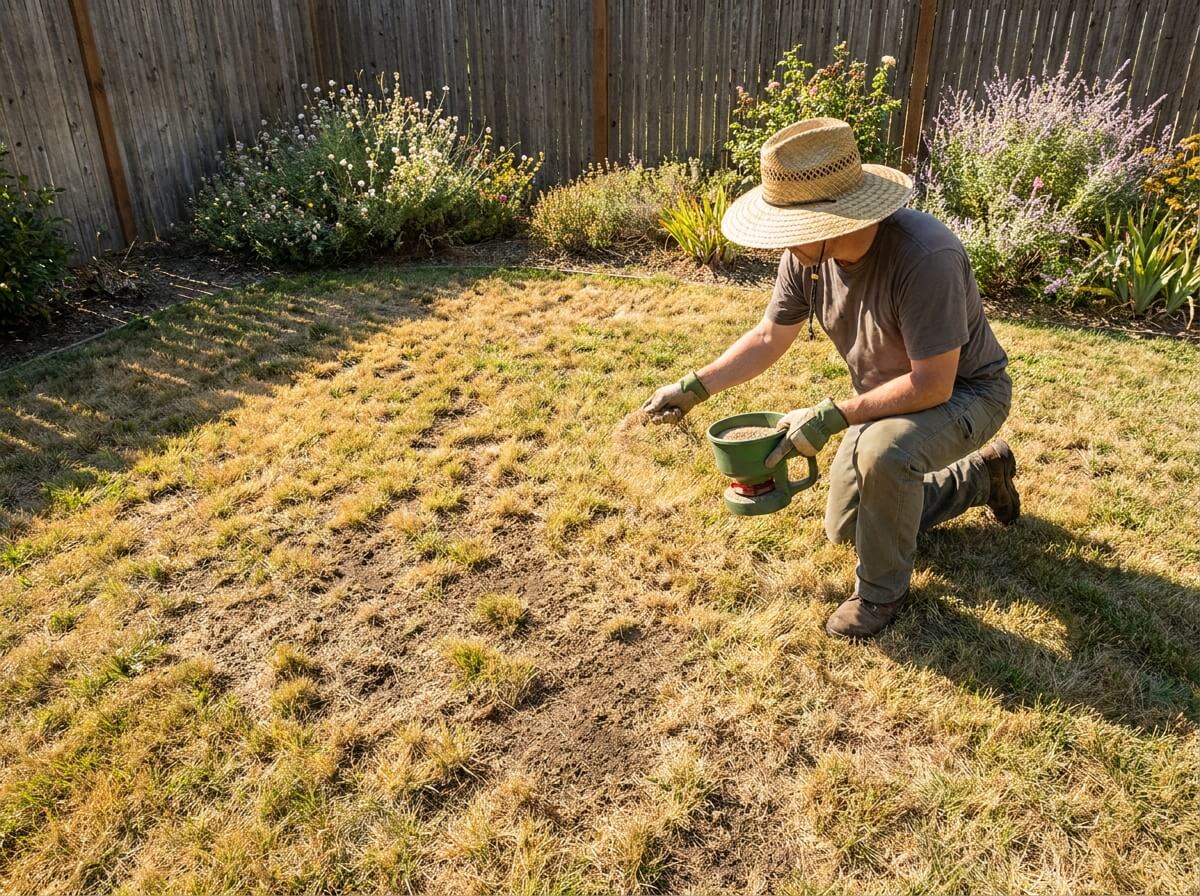
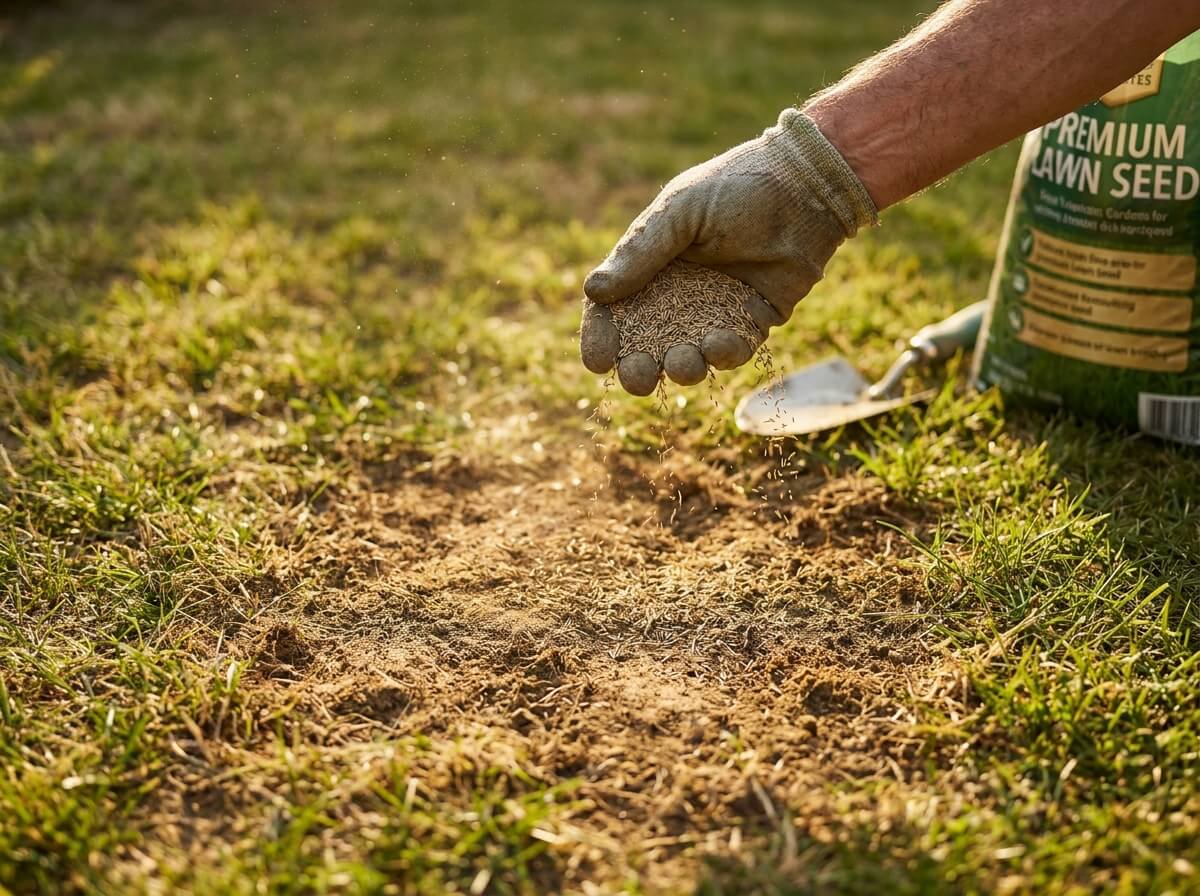
Sow in the early morning or evening, never under midday sun. Rake the bare patch to loosen the top 2cm of soil, scatter seed at roughly 35g per square metre, then rake lightly again so seed sits just below the surface.
Water immediately with a fine spray. Then keep that surface damp — light watering twice a day, morning and late afternoon, not one deep soak.
For a full step-by-step on bare patches and renewal, see prepare or renew your lawn in 3 steps.
The first sprouts appear as a faint green haze, not blades. Look closely at day 5 to 7.
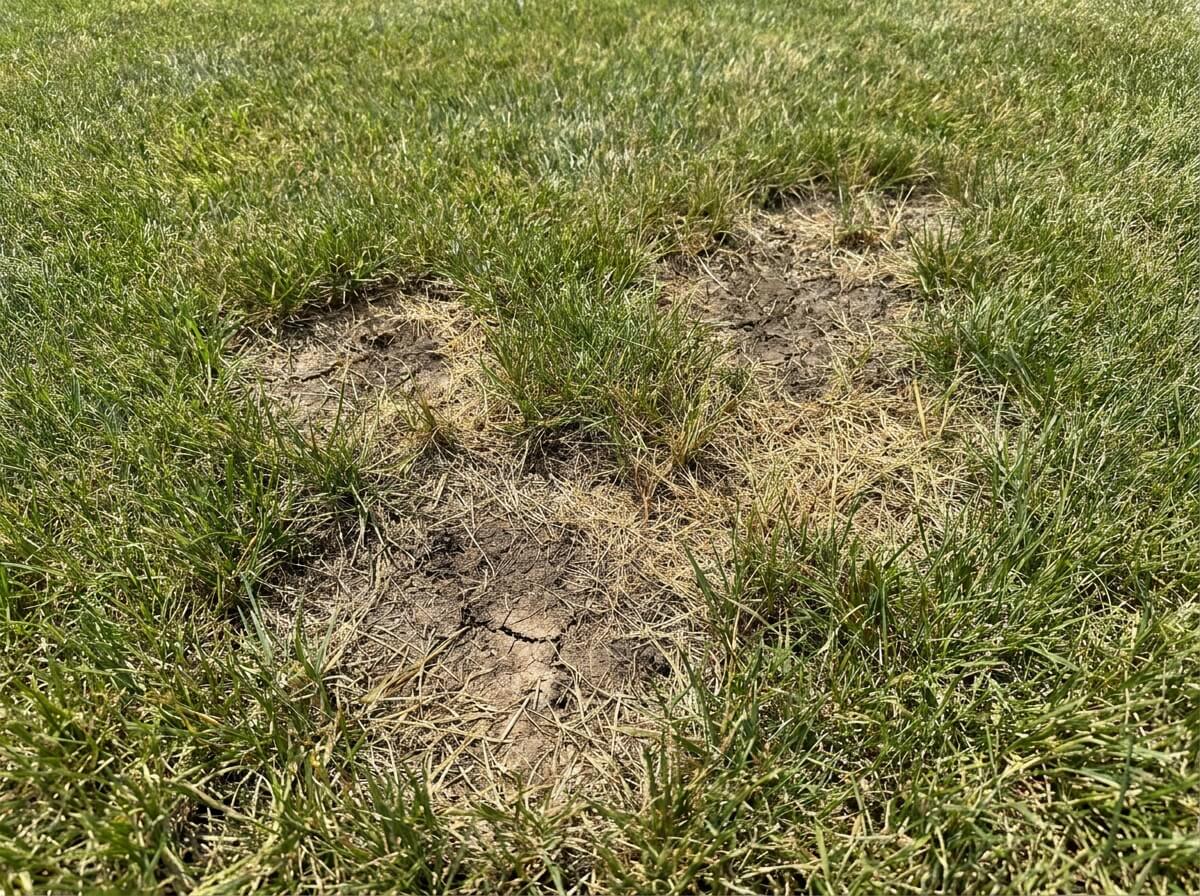
If you see nothing by day 12, the surface probably dried out and you’ll need to overseed those spots again.
Watch for birds working the patch — net it if they’re feasting. And keep an eye on existing grass nearby: if it’s gone brown and crisp, don’t panic and reseed it. It’s likely just dormant, not dead. Read why brown summer lawns are usually still alive before you act.
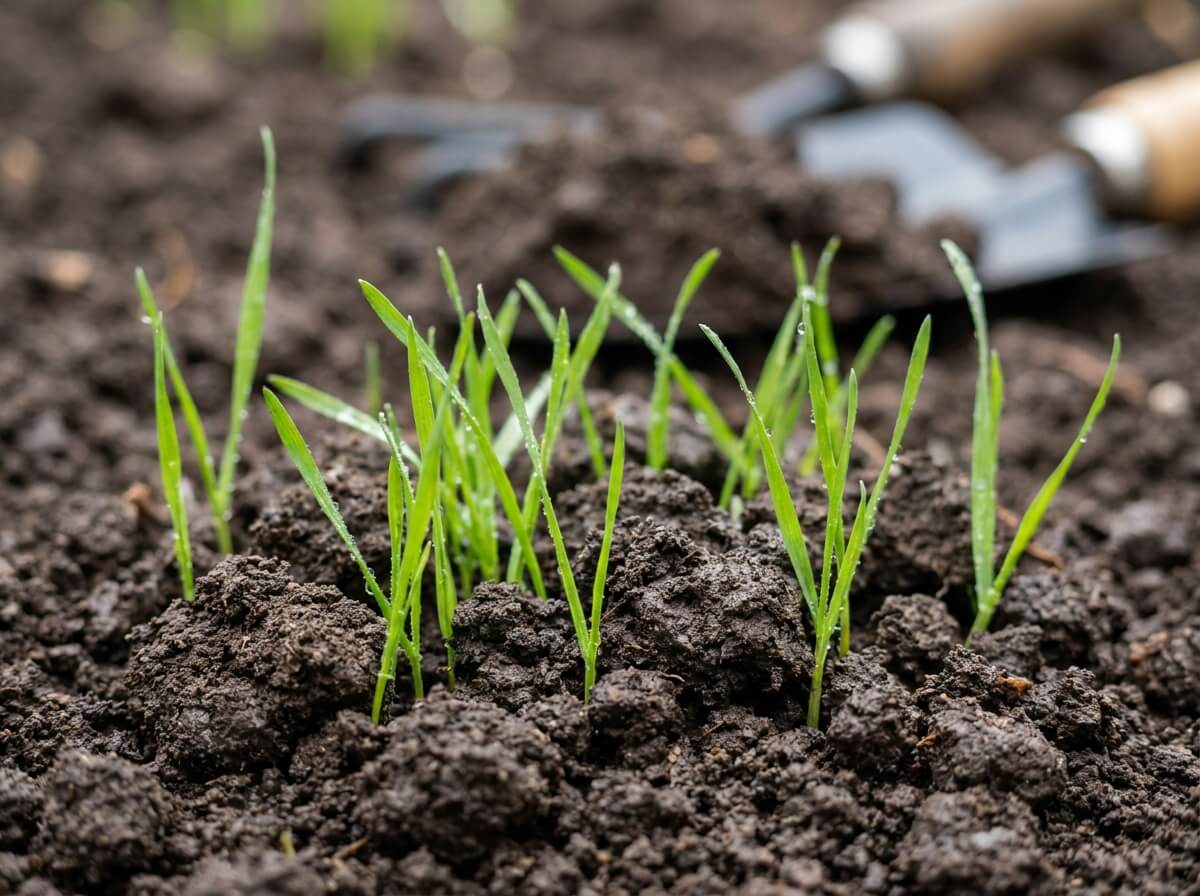
Smart tip: Keep the seeded surface damp twice daily — a single dry afternoon can kill the whole sowing.
Lightly twice a day, morning and late afternoon. The goal is a constantly damp surface, never a soggy deep soak.
Usually 5 to 10 days at 18–25°C. Ryegrass is fastest; fescues and bents take a little longer.
Avoid it above 30°C unless you can shade the patch and water several times daily. Otherwise wait for a cooler spell.
Once it reaches about 8cm, usually 4 to 6 weeks in. Set the blade high and never cut more than a third.