Seeding a lawn in summer heat is a race against evaporation — and the seed is losing the fight. Newly germinated grass possesses no root depth to fall back on. The entire seedling lives or dies based on whether the top 2cm of soil remains properly damp. One wrong afternoon, and it is over. But one precise adjustment to when and how you water completely flips the odds — and you can implement it today.
A germinating grass seed sends out its first root — called the radicle — just 2 to 4cm into the soil. That is it.
That tiny thread is everything. It cannot reach deeper moisture the way an established lawn can, so the moment the surface dries out, that root has nothing left to draw from.
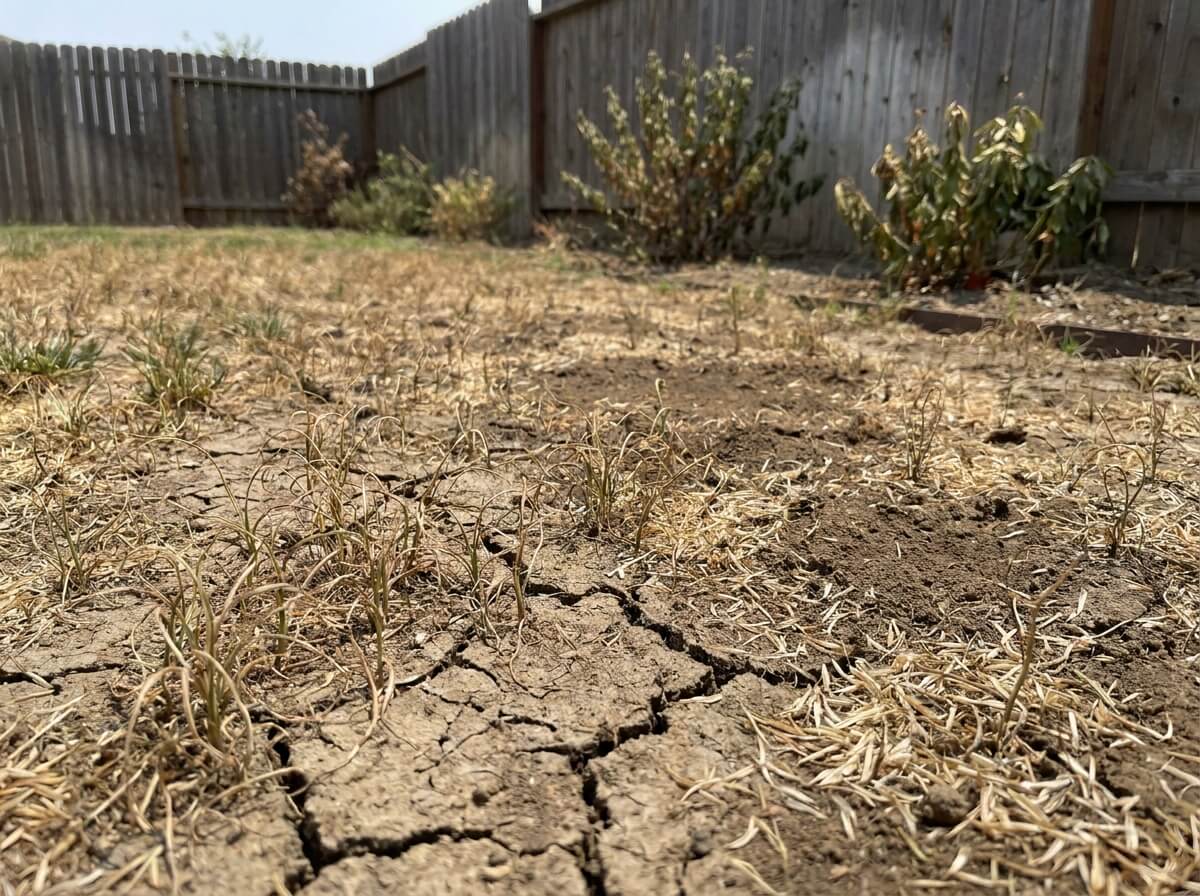
Soil surface temperatures in direct sun can exceed 50°C even when air temperature is a “comfortable” 28°C. At that point, the biological processes inside a seedling — cell division, water uptake, chlorophyll production — shut down within hours.
The seedling does not wilt. It simply stops.
And then it is gone.
The other hidden killer is uneven watering. A heavy soaking once a day seems logical, but it actually lets the surface dry to dust between sessions. Your lawn loses more water to evaporation than most gardeners realise — on a newly seeded patch, that loss is genuinely catastrophic. It is all a bit much for nascent seedlings.
Patchy germination is the first sign. Some areas come up thin; others stay bare.
Most gardeners blame the seed quality or the soil. The seed is bang on.
The soil is probably bang on too.
Without intervention, you will see:
Re-seeding in peak summer without changing the watering method is pointless. The RHS advises that consistent moisture is the single most non-negotiable factor in new lawn establishment — more critical than seed variety, soil preparation, or fertiliser. This factor is crucial.
Switch to twice-daily fine mist watering. Not a heavy soak.
Not a jet. A gentle mist, 5 to 7 minutes per session, wets the surface without puddling or compacting the soil. That is proper.
Do it at 7am and again at 6pm. Never at midday.
The early morning session prepares the seedlings for the heat ahead. The evening session replaces what the afternoon sun burned off.
The thing is, that 6pm timing matters. It is late enough to properly cool the soil, yet early enough for the surface to dry slightly before dark, which significantly reduces fungal risk.
Yes, this demands more attention than you expected to give a patch of lawn. But do it anyway — the difference between this and once-daily watering is genuinely night and day. University of Minnesota Extension confirms that maintaining consistent surface moisture doubles germination success rates in hot conditions. You really will not regret it.
Do not wait for dead patches to appear. Catch trouble earlier.
If you are also dealing with an established lawn going brown nearby, that is a separate issue — the brown lawn in summer guide covers exactly what is happening there.
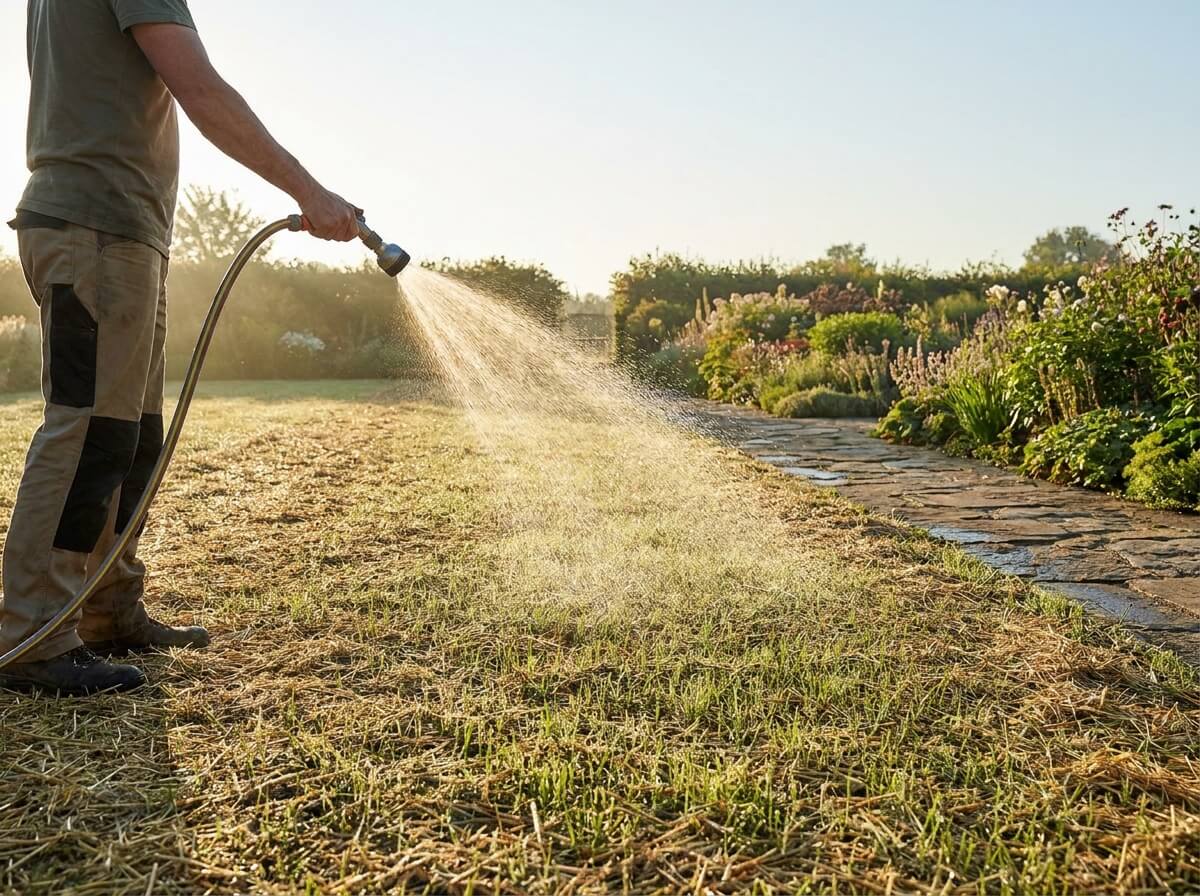
Smart tip: Lay 1cm of straw mulch over fresh seed — this does wonders for slashing surface moisture loss and genuinely buys you hours on a hot day.
It is risky but possible with the twice-daily misting method and shade cloth protection. Ideally, wait for a cooler spell — even 3 to 5 days below 25°C makes a measurable difference to germination success. This is a non-negotiable recommendation.
Maintain twice-daily watering for the first 21 days. After that, roots will shoot up to 5 to 8cm deep and you can gradually shift to deeper, less frequent watering. It is a slow game.
Pre-germination seeds that dry out are usually lost — the process cannot restart. Seedlings that have just broken the surface may survive a single brief dry spell, but they will be stunted. Do not count on it.
No. Hold off on fertiliser until seedlings are at least 5cm tall and you have mowed twice.
Fertiliser on heat-stressed seedlings burns them faster. This is another non-negotiable.